


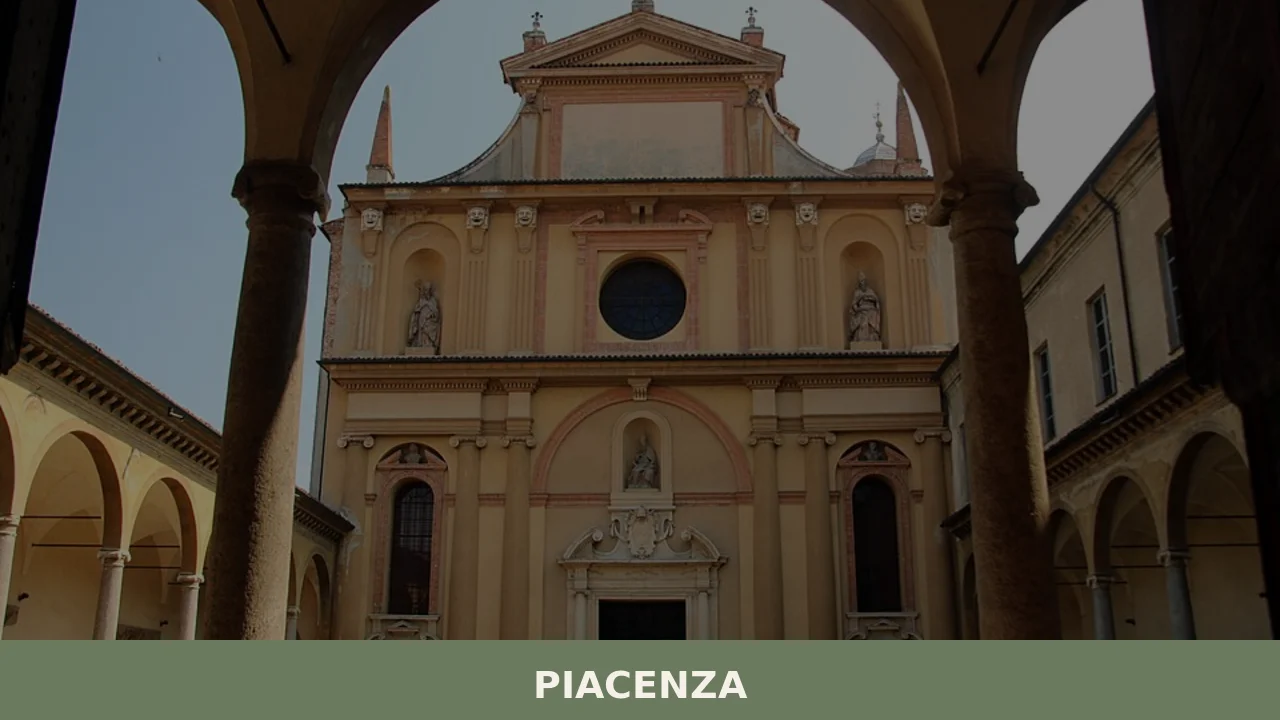
Piacenza
Piacenza, with its 100,843 inhabitants and an altitude of 62 m a.s.l., presents itself as a significant urban center in the heart of Emilia-Romagna, strategically positioned among the communication routes connecting Northern Italy. In this article History and Origins of Piacenza What to see in Piacenza: main attractions Typical cuisine and products of Piacenza Festivals, […]
Discover Piacenza
Piacenza, with its 100,843 inhabitants and an altitude of 62 m a.s.l., presents itself as a significant urban center in the heart of Emilia-Romagna, strategically positioned among the communication routes connecting Northern Italy.
Its Roman foundation and its position on the right bank of the Po have determined a key role over the centuries, making it a historical and commercial landmark.
For those wondering what to see in Piacenza, the city offers a remarkable artistic and architectural heritage, ranging from the medieval era to the Renaissance, with impressive squares and ancient basilicas.
Its historic center preserves the Roman urban layout, enriched by buildings from various eras that tell its evolution.
This plain village, despite being a city, maintains a strong connection to local traditions and a well-defined historical identity.
History and Origins of Piacenza
The history of Piacenza has deep roots in the Roman era, when it was founded in 218 BC with the name of Placentia, simultaneously with Cremona, as a Latin-right colony. This foundation occurred during a critical period, the Second Punic War, and its purpose was to create a military and agricultural outpost in Cisalpine Gaul, a strategically important territory for controlling the routes leading to the north and center of the peninsula.
Its position along the Po river made it a crucial hub for trade and river transport, contributing to its rapid growth and prosperity in subsequent centuries.
The Roman walls, of which some traces remain, testify to the city’s importance as a defensive stronghold.
After the fall of the Western Roman Empire, Piacenza suffered barbarian invasions, passing under the rule of Goths, Byzantines, and Lombards, who made it an important duchy within their kingdom.
In the 9th century, with the advent of the Franks and the subsequent birth of the Holy Roman Empire, the city acquired a prominent role also thanks to the influence of the Church and its bishops, who often held significant temporal powers.
The communal period, starting from the 11th century, saw Piacenza establish itself as one of the most powerful city-states in Northern Italy, expanding its control over surrounding territories and actively participating in the struggles between Guelphs and Ghibellines, often siding with the papal faction.
During this period, the city developed intense mercantile and banking activity, consolidating its economy.
An example of a center that shares an important historical heritage and similar evolution in Emilia-Romagna is San Pietro in Cerro, which, although of different dimensions, saw its destiny intertwined with the events of local lordships.
The 13th century was an era of great splendor for Piacenza, culminating in the construction of public and religious buildings that still define its urban profile today.
Its rise, however, was followed by a period of instability and disputes among noble families, which led to the end of the communal experience and the establishment of various lordships.
Among these, the Visconti of Milan stand out, who dominated the city for much of the 14th and 15th centuries, and subsequently the Sforza.
In 1545, Piacenza became part of the Duchy of Parma and Piacenza under the Farnese family, who made it one of the capitals of their state and promoted an intense work of urban and cultural renewal, with the construction of palaces and works of art that enriched its heritage.
This phase of Farnese rule lasted until the 18th century, leaving an indelible mark on the city’s architecture and identity.
What to see in Piacenza: main attractions
Piazza Cavalli and Palazzo Gotico
The beating heart of Piacenza is undoubtedly Piazza Cavalli, one of Italy’s most significant medieval squares, dominated by the majestic Palazzo Gotico.
This building, also known as Palazzo Comunale (Town Hall), was built starting in 1281 and represents an exceptional example of civil architecture from the communal era.
Its brick and marble facade, with its mullioned windows and arcaded portico, reflects the Lombard and Piacentine Gothic style, creating a harmonious visual contrast with the surrounding elements.
The palace was originally intended to host civic assemblies and commercial activities, serving as the center of the city’s political and economic life, and still today houses municipal offices and hosts cultural events.
Its grandeur suggests the importance of the free commune of Piacenza in the Middle Ages.
In the center of the square stand the two famous bronze equestrian monuments dedicated to Alessandro Farnese and Ranuccio I Farnese, works by the sculptor Francesco Mochi, created between 1620 and 1625.
These dynamic and pathos-rich statues are considered masterpieces of Baroque sculpture and lend the square a solemn and regal character.
Around Piazza Cavalli overlook other historic palaces that bear witness to the different eras and architectural styles that have shaped Piacenza, making it an ideal place to begin exploring its artistic heritage.
A stroll through this space allows one to appreciate the historical stratification and elegance of the buildings.
For those wishing to discover what to see in Piacenza, this square is an essential starting point for understanding the city’s soul.
Piacenza Cathedral
The Cathedral of Santa Maria Assunta and Santa Giustina, commonly known as Piacenza Cathedral, is a masterpiece of Romanesque architecture, whose construction began in 1122 after a fire destroyed the previous early Christian basilica.
The facade of pink and Veronese marble, characterized by three richly sculpted portals with biblical scenes and allegorical figures, captures the eye with its refinement and iconographic complexity.
The central rose window and the upper loggiated gallery further enrich the exterior appearance, while the 67-meter-high bell tower, added in the 15th century, houses a gilded copper statue of the Angel.
The interior of the cathedral, with its three naves supported by massive pillars, presents an atmosphere of solemn grandeur, typical of Emilian Romanesque, and invites contemplation.
Inside, the Cathedral preserves a cycle of frescoes of great artistic value, created by important 17th-century masters, among whom stand out the works of Giovanni Francesco Barbieri, known as Guercino, who decorated the dome with scenes from the Old Testament, and those of Camillo Procaccini.
These frescoes, with their vibrant colors and dynamic composition, represent one of the pinnacles of Emilian Baroque painting.
The crypt, accessible from the central nave, houses the relics of Saint Justina and presents an evocative forest of columns.
Visiting the Cathedral means immersing oneself in centuries of art and faith history, and represents a significant experience for those looking for what to see in Piacenza.
It is advisable to consult the official website of the Diocese of Piacenza-Bobbio to check opening hours and any celebrations.
Palazzo Farnese
Piacenza’s Palazzo Farnese, an imposing ducal residence, is one of the symbols of the power and prestige of the Farnese family, who dominated the city for over two centuries. Its construction began in 1561 based on a design by architect Jacopo Barozzi da Vignola, commissioned by Ottavio Farnese and Margaret of Austria. Although the original project envisioned an even larger work, it remained unfinished in the southern part, but this does not diminish its magnificence.
The building, with its massive bulk and elegant lines, is a significant example of Renaissance architecture, characterized by a central arcaded courtyard and spacious halls that once hosted the ducal court.
The choice of local materials and the craftsmanship of Piacentine artisans contributed to its realization.
Today, Palazzo Farnese houses the Civic Museums of Piacenza, a museum complex that gathers various collections of great historical and artistic interest.
Among the most important sections are the Archaeological Museum, with artifacts ranging from prehistory to the Roman era, including the famous Etruscan Liver of Piacenza, a bronze sculpture used for divinatory practices.
Also found are the Pinacoteca (Art Gallery), with works by Emilian and other artists, the Carriage Museum, which exhibits a rich collection of vintage vehicles, and the Risorgimento Museum. Access to the palace and museums offers a journey through Piacentine history and culture, from its Roman foundation
Those preparing to visit Piacenza cannot miss a visit to this cultural hub to appreciate the richness of its collections and the grandeur of the building.
Basilica of Sant’Antonino
The Basilica of Sant’Antonino is the oldest church in Piacenza and holds primary historical and religious importance, being dedicated to the city’s patron saint, Sant’Antonino of Piacenza.
Its origin dates back to the 4th century, although the current structure is mainly the result of reconstructions and enlargements that occurred between the 11th and 12th centuries, in Romanesque style.
The most distinctive feature of the basilica is its ‘portico paradisiaco’ (heavenly portico), an elegant quadriporticus that precedes the facade and served as a welcoming place for pilgrims and a space for civic activities.
The bell tower, with its octagonal shape, is a recognizable element in the urban landscape and dates back to the 13th century, adding a Gothic touch to the Romanesque ensemble.
The main facade, despite having undergone modifications over the centuries, retains original decorative elements.
The interior of the basilica, with three naves, is sober yet evocative, featuring a crypt that houses the relics of the martyr Sant’Antonino, a soldier of the Theban Legion and a Christian martyr.
The basilica has been a place of great historical significance, hosting in 1183 the signing of the Peace of Constance between Frederick Barbarossa and the municipalities of the Lombard League, an event that marked a fundamental stage in the history of Italian city autonomies.
This fact underlines its role not only spiritual but also political.
The presence of frescoes and minor artworks enriches the visiting experience, offering insights into Piacenza’s devotion and sacred art.
The atmosphere inside invites reflection and allows visitors to connect with centuries of local history and spirituality.
Municipal Theatre
The Teatro Municipale (Municipal Theatre) of Piacenza, designed by architect Lotario Tomba and inaugurated in 1804, is a significant example of neoclassical architecture and an important center of the city’s cultural life.
Its construction was commissioned by Duchess Maria Luigia of Austria, who intended to provide Piacenza with a theatre comparable to those in the most important European capitals.
The external facade, with its columned portico and bas-reliefs, reflects the aesthetics of the era, while the interiors are characterized by an elegant horseshoe-shaped hall, four tiers of boxes, and a gallery, richly decorated with stuccoes and frescoes that create a sumptuous and welcoming atmosphere.
The theatre has undergone several restorations over the centuries to preserve its beauty and functionality, adapting to modern scenic requirements.
The Teatro Municipale (Municipal Theatre) of Piacenza is a benchmark for opera, prose, and concerts, hosting a rich artistic season each year that attracts audiences from across the region and beyond.
Numerous internationally renowned artists have performed on its stage, and it continues to be a cultural driving force for the area.
Its acoustics are renowned and contribute to making every performance a memorable experience.
For those interested in culture and entertainment, checking the event calendar on the official website of the Teatro Municipale of Piacenza is an excellent way to complete your itinerary and discover a vibrant aspect of the city.
A visit, even if only to the exterior, allows you to appreciate its architectural elegance and its importance in Piacenza’s urban context.
Typical cuisine and products of Piacenza
Piacenza cuisine stands out for its robustness and its deep connection with the agricultural territory of the Po Valley and the surrounding hills, which offer high-quality ingredients. Local gastronomic traditions are the result of centuries of influences, from lordly dominations to peasant culture, which have shaped a repertoire of rich and flavorful dishes.
Piacenza’s geographical position, a crossroads between Emilia, Lombardy, and Liguria, has contributed to uniting diverse culinary flavors and techniques, creating a unique gastronomy.
Fresh stuffed pasta and cured meats are central elements of the Piacenza table, often accompanied by local wines that enhance the flavors.
Attention to raw materials and care in preparation are distinctive traits of this culinary tradition.
Among the typical dishes of Piacenza, Tortelli con la coda represent a true gastronomic icon.
These tortelli, with their characteristic candy-like shape and a twisted “tail”, are traditionally filled with ricotta, spinach, Grana Padano, and nutmeg, and are usually seasoned with melted butter and sage, or with meat sauces. Another essential first course is Pisarei e Fasò, small gnocchi made of flour and breadcrumbs served with a sauce of borlotti beans, tomato, lard, and onion, a dish rooted in humble tradition but rich in taste and substance.
Among the main courses, pork is a protagonist in many preparations, often accompanied by polenta or seasonal vegetables.
The Piacenza territory also offers a variety of fresh and aged cheeses, which complete the gastronomic offering.
Although the database does not list specific certified products for this area, Piacenza cuisine is renowned for its traditional cured meats.
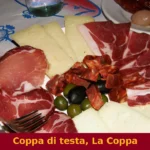
Among these, the Piacenza coppa, pancetta, and salame stand out, which are the result of artisanal processing handed down for generations, using selected meats from locally raised pigs. These cured meats are distinguished by their intense aromas and balanced flavors, often consumed as an appetizer or as an ingredient in other preparations.
The Gutturnio, a sparkling or still red wine made from Barbera and Bonarda grapes, is the ideal companion for traditional Piacenza dishes, with its lively and fruity character.
It is a wine that fully expresses the terroir of the Piacenza hills.
For those who want to savor local specialties, many restaurants and trattorias in the historic center offer menus that celebrate these authentic flavors.
Local markets, such as the weekly market held in Piazza Cavalli and other areas of the city, are an excellent opportunity to buy fresh products directly from producers and discover the excellences of the territory.
Throughout the year, Piacenza hosts various food and wine events that celebrate seasonal products and culinary traditions, offering tastings and opportunities to deepen knowledge of local cuisine.
Although there are no specific festivals documented in the database, food culture is a living and present element in every city event.
Visitors can find specialized shops and delis selling cured meats, cheeses, and baked goods, allowing them to take home a memory of Piacenza flavors.
Even in nearby villages like Fontanelice, you can find gastronomic specialties that share a common Emilian imprint.
Festivals, events and traditions of Piacenza
The life of Piacenza is marked by centuries-old traditions and celebrations that reflect its religious and cultural identity.
The patron saint festival, dedicated to Saint Antoninus of Piacenza, Saint Cyprian and Justina, is celebrated on July 4th and is one of the most deeply felt events by the community.
On this day, the city comes alive with religious celebrations, including solemn masses and processions that carry the image of the saint through the streets of the historic center, involving the faithful and citizens.
The celebrations are often accompanied by civil events, such as markets, concerts, and shows that enliven the squares.
This festival represents a moment of gathering and a renewed sense of belonging for the people of Piacenza, who honor their historical and spiritual roots.
In addition to religious celebrations, Piacenza hosts numerous cultural, artistic, and musical events throughout the year that enrich the offerings for residents and visitors.
The city’s cultural institutions, such as the Teatro Municipale (Municipal Theatre) and the Musei Civici (Civic Museums), offer seasons rich in shows, exhibitions, and concerts, keeping the city’s artistic tradition alive. Sporting and trade fair events contribute to making Piacenza a dynamic center.
Although no information on specific food festivals has been provided, food culture is omnipresent and manifests itself on multiple occasions, often linked to holidays or the seasonality of products.
Those wishing to immerse themselves in local life can consult the Municipality of Piacenza website for an updated calendar of events.
When to visit Piacenza and how to get there
The best time to visit Piacenza is spring (April-June) and autumn (September-October), when the climate is mild and ideal for walking in the historic center and visiting outdoor attractions.
During these months, the city offers pleasant temperatures and fewer tourists compared to summer peaks, allowing for a more relaxed and in-depth experience.
Spring offers blossoms and a lively atmosphere, while autumn provides warm colors and the chance to participate in events related to the grape harvest and seasonal products. Summer can be hot and humid, typical of the Po Valley, but evenings are often enlivened by outdoor events.
Winter is colder and foggier but offers the opportunity to enjoy indoor attractions and the Christmas atmosphere.
Piacenza is easily accessible thanks to its strategic location. Those arriving by car can use the A1 motorway (Milan-Naples), with exits at Piacenza Sud or Piacenza Ovest, or the A21 motorway (Turin-Brescia), with the Piacenza Est exit.
From the main cities of Northern Italy, travel times are short: from Milan, it takes about 50 minutes (65 km), from Bologna about 1 hour and 30 minutes (150 km), and from Turin about 1 hour and 40 minutes (160 km). The city is also served by an important train station, with frequent connections to Milan, Bologna, and other Italian cities.
For updated train schedules, it is advisable to consult the Trenitalia website.
The closest airport is Milan Linate (LIN), about 60 km away, reachable in approximately 45 minutes by car, while Bologna Airport (BLQ) is about 140 km away and requires approximately 1 hour and 20 minutes of travel.
Another interesting destination, not far from Piacenza, is Castel d’Aiano, which offers a different, more mountainous experience for those wishing to explore the region.
| Starting point | Distance |
|---|
Photo Gallery of Piacenza
Do you have photos of Piacenza?
Share your photos of the village: the best ones will be added to the official gallery, with your credit.
Send your photosIn Emilia-Romagna More villages to discover
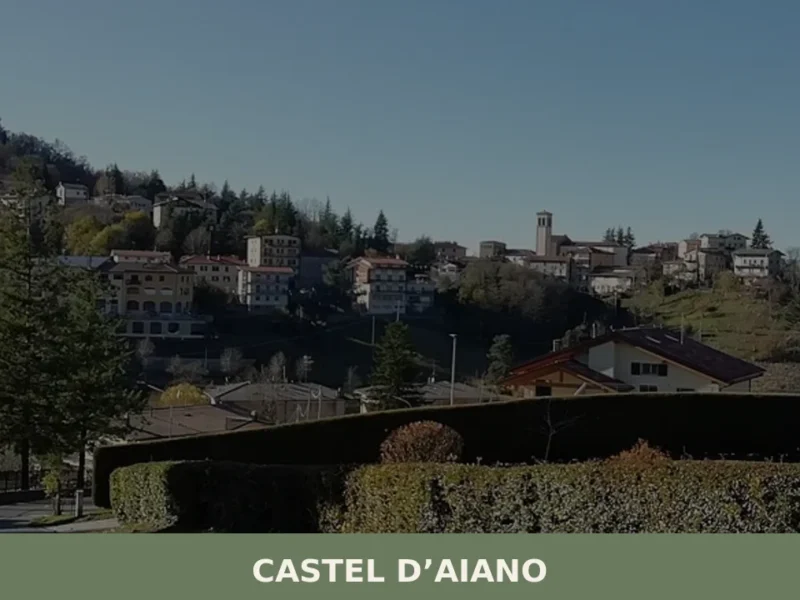
Castel d’Aiano
In 1944 the Gothic Line cut through these mountains, and Castel d’Aiano found itself at the centre of the clash between Allied forces and German troops: the hamlets of Villa d’Aiano, Sassomolare and Rocca di Roffeno still bear the marks of that period. Today the municipality has 1,916 inhabitants spread across a vast, hilly territory […]
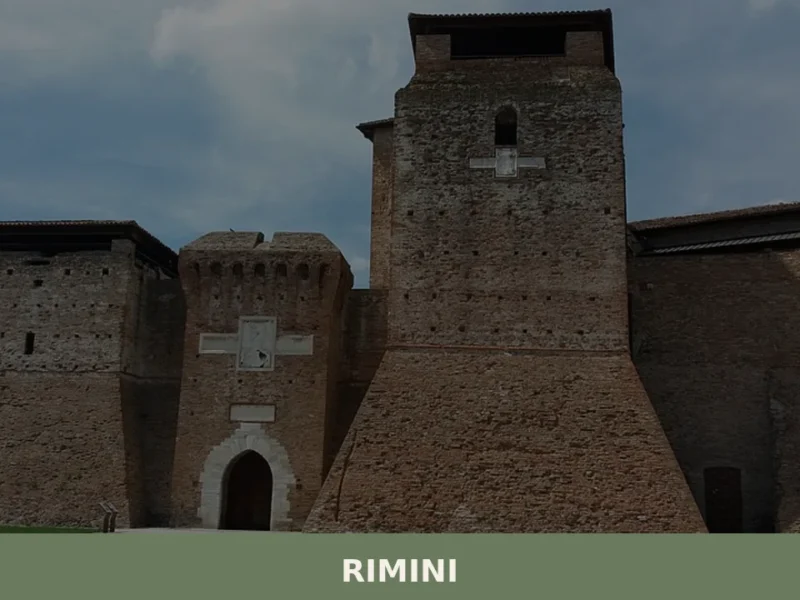
Rimini
What to see in Rimini: 149,211 residents, Arch of Augustus, Tempio Malatestiano, Fellini Museum. Plan your visit with our complete guide to Roman history and local food.
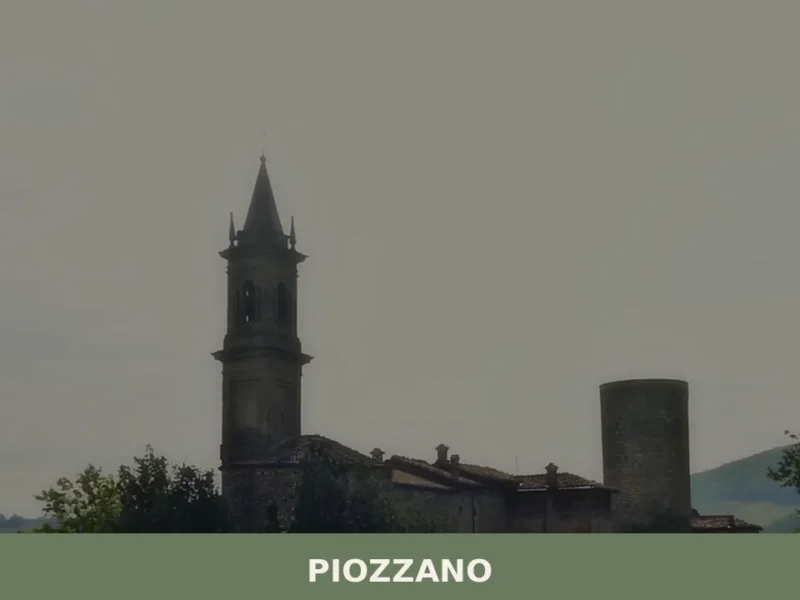
Piozzano
Piozzano, a village in Emilia-Romagna with 645 inhabitants, is situated at an elevation of 222 meters above sea level within the province of Piacenza. This location places it amidst the agricultural landscape of the Piacentine hills, where the transition from the Po Valley to the Apennine foothills is evident. For those considering what to see […]
📝 Incorrect information or updates?
Help us keep the Piacenza page accurate and up to date.