


Pisa
What to see in Pisa: Leaning Tower, UNESCO Piazza dei Miracoli, Regata di San Ranieri on 17 June — city of 86,263. Plan your visit with our complete guide.
Discover Pisa
Pisa owes its historical importance — even before its appeal to visitors — to its position on the Arno river and to the commercial and military role it played during the Middle Ages as a maritime republic. Founded in the Etruscan period and later developed under Roman rule, the city reached its peak between the 11th and 13th centuries, when its ships crossed the Mediterranean and the profits of trade funded monumental construction projects that still define the urban landscape today. With a population of 86,263 and an elevation of just 4 metres above sea level, Pisa is a low-lying city that holds an exceptionally dense cultural heritage.
For anyone researching what to see in Pisa, the answer inevitably begins at Piazza dei Miracoli — but extends well beyond it.
History and Origins of Pisa
Pisa’s origins trace back to an Etruscan settlement, later consolidated under Roman rule under the name Pisae.
The city became a Roman municipality and an active military port on the Tyrrhenian Sea, positioned where the Arno flowed more directly toward the coast — before the shoreline gradually advanced over the following centuries. Its geographical position made it strategically important for connections with Gaul and Spain, and the presence of shipyards and port infrastructure drove its growth even in the imperial period. Historical sources document Pisa as one of the most active cities on the Tyrrhenian coast during the early Middle Ages.
The period of greatest power coincided with the age of the free Commune, between the 11th and 13th centuries, when Pisa was one of the four Italian maritime republics alongside Venice, Genoa, and Amalfi.
During those years the city funded the construction of the Cathedral of Santa Maria Assunta, begun in 1063 following the victorious naval battle against the Saracens at Palermo, and of the famous bell tower, started in 1173.
Commercial prosperity gave rise to a distinctive architectural style — the Pisan Romanesque — characterised by alternating white and green marble and tiered loggias that appear across several of the city’s monuments. The Republic of Pisa controlled ports, trading posts, and commercial routes across both the eastern and western Mediterranean.
The decline began with defeat at the Battle of Meloria in 1284, when the Genoese fleet destroyed Pisan naval supremacy. From that point on, the city gradually lost political and commercial influence, eventually coming under Florentine control in 1406. The Medici maintained Pisa as a university and cultural centre: the University of Pisa, founded in 1343 by a papal bull of Clement VI, is among the oldest in Europe and remains a central institution in city life. Galileo Galilei, born in Pisa in 1564, studied and taught there, linking the city permanently to the history of modern science.
These historical roots are inseparable from any consideration of what to see in Pisa.
What to See in Pisa: Main Attractions
Piazza dei Miracoli and the Monumental Complex
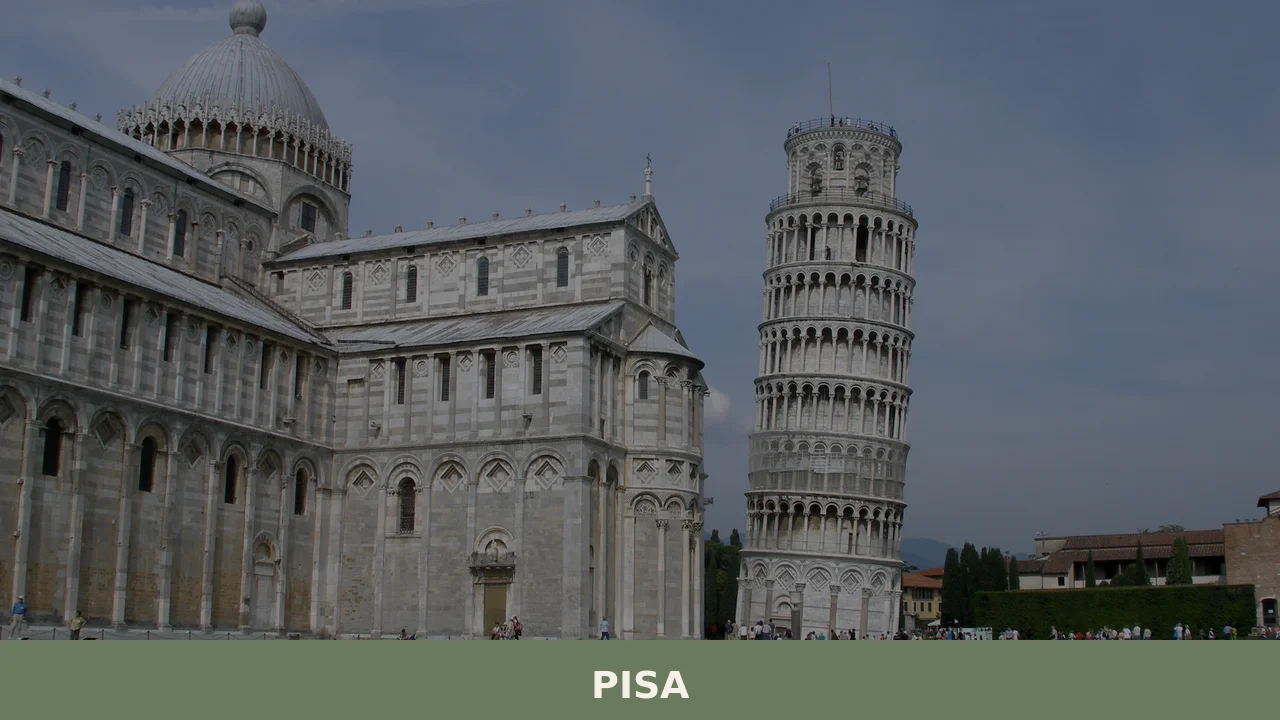
The Piazza dei Miracoli, officially known as Piazza del Duomo, is the city’s monumental centrepiece and has been listed as a UNESCO World Heritage Site since 1987.
The complex includes the Cathedral, the Baptistery, the Bell Tower, and the Monumental Cemetery, all built in white marble and set across a broad lawn. The square is located in the northern part of the historic centre and is easily reached on foot from the city centre. Its construction spanned several centuries, from 1063 through to the 14th and 15th centuries for the later sections. The architectural ensemble represents the city’s most significant visual and historical point of reference.
The Leaning Tower of Pisa
The Cathedral Bell Tower, universally known as the Leaning Tower, stands approximately 55.86 metres tall on its lower side and displays an inclination that developed during construction, which began in 1173 on unstable alluvial ground. Work was interrupted several times and was only completed in the 14th century. Between 1990 and 2001, a stabilisation project reduced the lean to approximately 3.97 degrees, securing the structure. Visitors can climb the 294 interior steps to reach the top, from which there is a direct view over the square and the rooftops of the historic centre.
The tower is one of the most photographed buildings in the world.
Baptistery of San Giovanni
The Baptistery of San Giovanni is the largest in Italy, with a diameter of 34.13 metres and a total height of approximately 54.86 metres.
Construction began in 1152 to a design by Diotisalvi and continued until the 14th century, when the upper sections were added in Gothic style. Inside, the pulpit by Nicola Pisano, completed between 1255 and 1260, is considered one of the masterpieces of Italian medieval sculpture for the quality of its narrative relief and the influence it had on later sculptural work. The Baptistery’s interior acoustics are exceptional, producing sonic effects that have been documented since early historical descriptions.
Monumental Cemetery
The Monumental Cemetery occupies the northern side of the Piazza dei Miracoli and is an open-air medieval burial ground surrounded by a marble cloister built from 1278 onwards, attributed to Giovanni di Simone. According to a tradition recorded in historical sources, the soil within was brought from Golgotha during the Crusades. The cloister walls hold a cycle of medieval frescoes of considerable importance, including the celebrated Triumph of Death, attributed to Buonamico Buffalmacco and dated to the mid-14th century, partially damaged during the Second World War.
The collection is completed by numerous sculptures and Roman sarcophagi.
The Lungarni and the National Museum of San Matteo
The Lungarni are the riverside embankments that run along the Arno through the historic centre and form one of the city’s most frequented urban routes, lined with historic palaces facing directly onto the river.
Along this axis stands the National Museum of San Matteo, housed in the former Benedictine convent of the same name, which holds one of the most important collections of medieval sculpture and painting in Tuscany, with works by Simone Martini, Masaccio, and a series of Pisan painted crosses from the 12th and 13th centuries. Those looking at what to see in Pisa beyond the most well-known monuments will find in this museum an essential exploration of local artistic production from the Middle Ages through the Renaissance.
Traditional Food and Products of Pisa
Pisan cuisine belongs to the lowland and coastal Tuscan tradition, shaped by the proximity to the sea, the mouth of the Arno, and the agricultural land of the surrounding countryside. Historically the city was a major commercial port, which encouraged the introduction of ingredients and techniques from the eastern Mediterranean as far back as the Middle Ages. Local gastronomy is defined by the use of simple raw ingredients — pulses, grains, river fish, and seafood — with recipes that reflect both a peasant and a maritime culinary tradition.
This is not elaborate cooking; it is a cuisine of substance, with dishes found in trattorias throughout the historic centre and in osterie across the hinterland.
Among the documented dishes of the Pisan tradition, torta coi bischeri is a typical local dessert made with rice, cocoa, raisins, pine nuts, and candied fruit in a shortcrust pastry shell, its name deriving from the characteristic edges folded outward.
Cecìna, also known as farinata di ceci, is a preparation made from chickpea flour, water, extra-virgin olive oil, and salt, baked in copper pans and served hot. Among savoury dishes, farro soup and legume-based soups are stable features of the local table. River fish from the Arno, such as carp and eel, have historically featured in the area’s cooking, though they are less common today than in the past.
Regarding certified products, no DOP, IGP, PAT, or DOC designations specifically attributed to the municipal territory of Pisa appear in the official databases consulted. Tuscany is, however, a region with well-documented olive oil and wine production: Tuscan extra-virgin olive oil and wines from regional appellations are readily available in the city’s markets and wine shops.
The Piazza delle Vettovaglie market, in the historic centre, is one of the city’s oldest covered markets, active for centuries and still used by residents to buy fruit, vegetables, local cheeses, and cured meats.
The area also offers products from the Pisan hinterland, including Sorana beans, which carry IGP recognition.
Those interested in exploring the area’s food production can extend their itinerary toward the villages of the Lunigiana, a zone with its own strong culinary identity. In Bagnone, a Lunigiana village in Tuscany, local specialities include testaroli and herb tarts — preparations that share with the Pisan tradition the use of simple ingredients and long-established cooking techniques.
Festivals, Events and Traditions of Pisa
The patron saint of Pisa is San Ranieri, whose feast day falls on 17 June. Ranieri Scacceri, born in Pisa around 1115 and died in 1161, is one of the religious figures most closely tied to the city’s civic identity.
On the eve of the feast, 16 June, the Luminara di San Ranieri takes place — one of the oldest celebrations of its kind in Tuscany: the palaces and embankments are lit by around 70,000 white candles placed on the facades of buildings facing the Arno, creating a spectacle that draws visitors from across the region.
The following day, the Regata di San Ranieri is held, a rowing race between the four historic Pisan districts — San Francesco, Sant’Antonio, Santa Maria, and San Martino — competing on the Arno.
June also sees the Gioco del Ponte, a historical re-enactment in which teams representing the two banks of the Arno — Tramontana and Mezzogiorno — face each other in a contest with roots documented back to the 17th century. Participants wear historical costumes and compete on the Ponte di Mezzo, at the centre of the city, pushing a cart along a track in a collective test of strength. The event is accompanied by a procession in Renaissance dress through the historic centre.
These events, grounded in the city’s civic history, make June one of the most eventful months of the year for anyone visiting Pisa.
When to Visit Pisa and How to Get There
The most favourable time to visit the city is in spring, between April and May, and in autumn, between September and October. During these months temperatures are mild, rainfall is limited, and visitor numbers — while still significant — are lower than at the summer peak in July and August, when queues at the Leaning Tower and in Piazza dei Miracoli can be considerable. Anyone planning what to see in Pisa with more ease and fewer crowds would do well to avoid August and to opt for weekdays. June, though warm, offers the patron saint festivities of genuine historical and cultural interest.
Pisa is easy to reach from several directions. By car, the main access routes are the A11 Florence–Pisa Nord motorway, via the Pisa Nord junction, and the A12 Genoa–Livorno motorway, via the Pisa Sud junction.
The city is approximately 80 km from Florence and around 20 km from Livorno. By rail, Pisa Centrale station is a major stop on the Genoa–Rome line and on the Florence–Livorno route, with frequent direct services.
Travellers arriving by air can use Pisa Galileo Galilei International Airport, located just 2 km from the city centre and connected to the central station by a shuttle train. For information on municipal services, the official website of the Municipality of Pisa is available.
Those arriving from the north who wish to explore the Lunigiana can make a detour to Fosdinovo, a medieval village in northern Tuscany, or to Filattiera, a small centre in the Magra Valley that preserves Romanesque structures of historical interest comparable in quality to Pisan architecture.
Both are located in the same region and can serve as stops on a broader itinerary through northern Tuscany.
Similarly, Tresana, in the Lunigiana, offers a rural and medieval setting that pairs well with a visit to the regional capital.
Where to Stay in Pisa
Accommodation in Pisa is extensive and varied, in keeping with the volume of visitors the city receives each year. The historic centre has hotels across different price ranges, as well as B&Bs and guesthouses occupying historic buildings, within easy walking distance of the main monuments. Those who prefer a quieter setting can look at the agriturismo options in the Pisan hinterland, in the hills to the east of the city, where the Tuscan countryside provides an alternative to the urban environment. There is also a notable range of accommodation close to the airport, useful for travellers managing early or late flights. Advance booking is strongly recommended for June, July, and August.
In Tuscany More villages to discover
Tresana
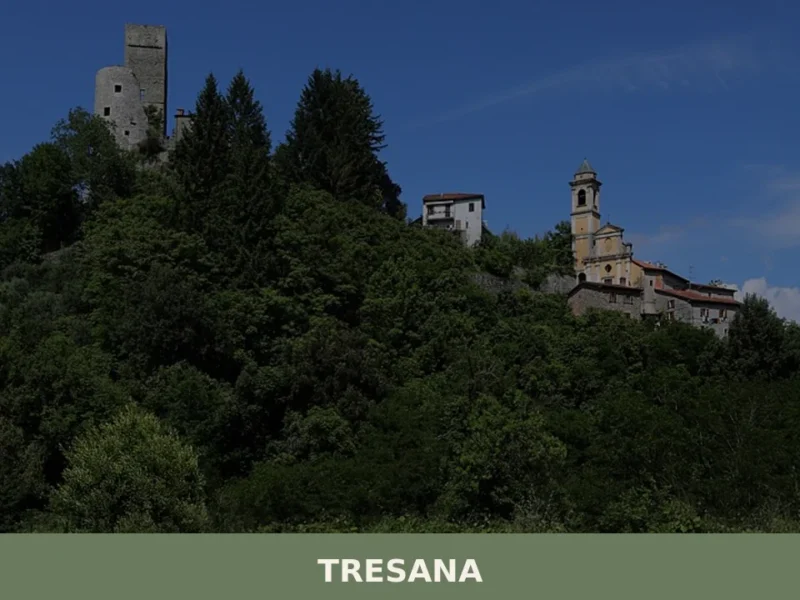
Standing at 112 metres above sea level, in the valley floor where the Osca stream flows into the River Magra, Tresana is a scattered municipality in the province of Massa and Carrara, made up of over thirty hamlets spread between the plain and the surrounding hills. With a population of 2,071, it is one of […]
Prato
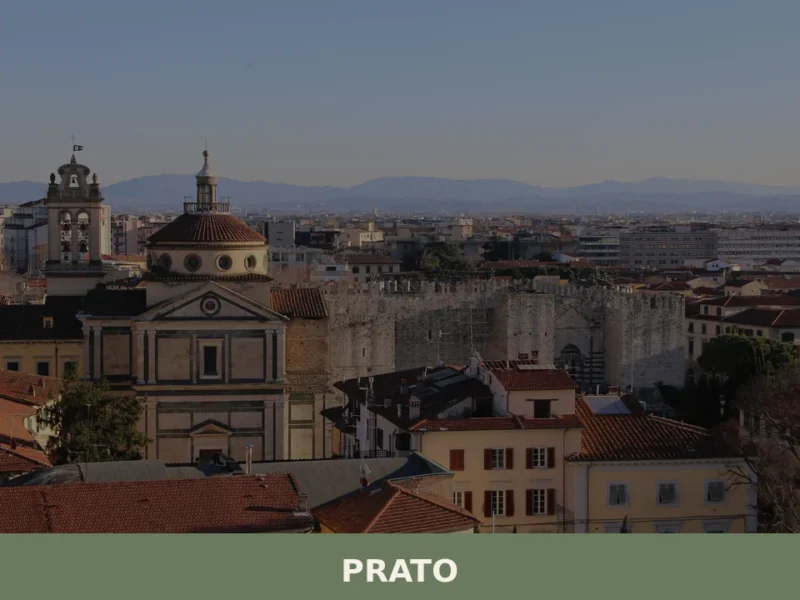
With nearly 187,000 inhabitants, Prato is the second most populous city in Tuscany and one of the largest urban centres in central Italy. Located on the plain between the Bisenzio river and the first foothills of the Apennines, the city has built a distinct identity over the centuries, defined by its textile industry, medieval art, […]
Livorno
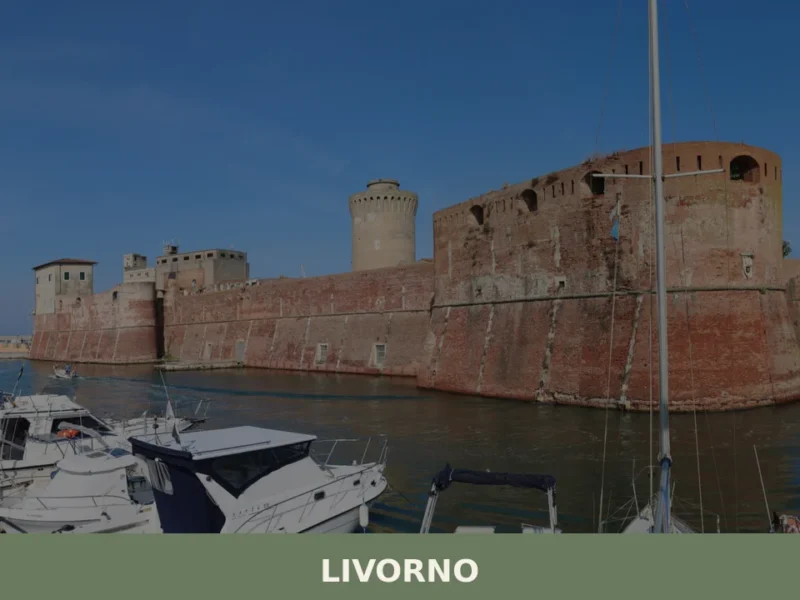
What to see in Livorno, a port city of 157,000 on the Tyrrhenian coast: Fortezza Vecchia, Quartiere Venezia, cacciucco, Terrazza Mascagni. Plan your visit now.
📝 Incorrect information or updates?
Help us keep the Pisa page accurate and up to date.