


Livorno
 Sea
Sea
What to see in Livorno, a port city of 157,000 on the Tyrrhenian coast: Fortezza Vecchia, Quartiere Venezia, cacciucco, Terrazza Mascagni. Plan your visit now.
Discover Livorno
At just 3 metres above sea level, Livorno is Tuscany’s second-largest city by population, with nearly 157,000 inhabitants, and one of the most active ports in the Mediterranean.
Anyone wondering what to see in Livorno will find a city that follows none of the usual rules of Tuscan tourism: no medieval towers on hilltops, no textbook Renaissance centre.
What Livorno offers is something more irregular and more interesting — a port city built around canals, bastioned fortresses, merchant-quarter districts and a seafood culinary tradition unlike anything else in the region.
History and Origins of Livorno
The earliest documented evidence of a settlement in the Livorno area dates to the 11th century, when the name appears in Pisan records as a modest coastal stop of little importance.
The turning point came in 1421, when Florence purchased the port from Genoa for 100,000 gold florins, recognising sea access as a strategic priority for its own commercial expansion. From that moment, Livorno ceased to be a secondary landing point and began a period of growth that would radically transform it over the following two centuries.
The decisive shift came in the second half of the 16th century, under the Medici.
Cosimo I de’ Medici launched the first systematic efforts to develop the port, but it was his son Ferdinando I who gave the city its definitive push. In 1593, the celebrated Livornina was issued — a charter of religious tolerance granting full freedom of worship to Jews, Muslims, Greeks, Armenians and anyone else willing to settle and trade in the city. This policy, exceptional for its time, drew communities from across the world, and they built the multicultural, mercantile structure that defines the modern city.
The 17th and 18th centuries marked the peak of Livorno’s prosperity.
The port operated as a free port, attracting trade from across the Mediterranean and the Atlantic.
The Quartiere Venezia, with its network of navigable canals, took shape during this period as an internal logistics hub. A relative decline began in the 19th century, as international trade patterns shifted and the political landscape of the Risorgimento changed. Livorno was annexed to the Kingdom of Italy in 1860 as part of the Grand Duchy of Tuscany.
In the 20th century, the port maintained its central role, despite the heavy Allied bombing of World War II that caused severe damage to the urban fabric and required extensive post-war reconstruction.
What to See in Livorno: Main Attractions
Fortezza Vecchia
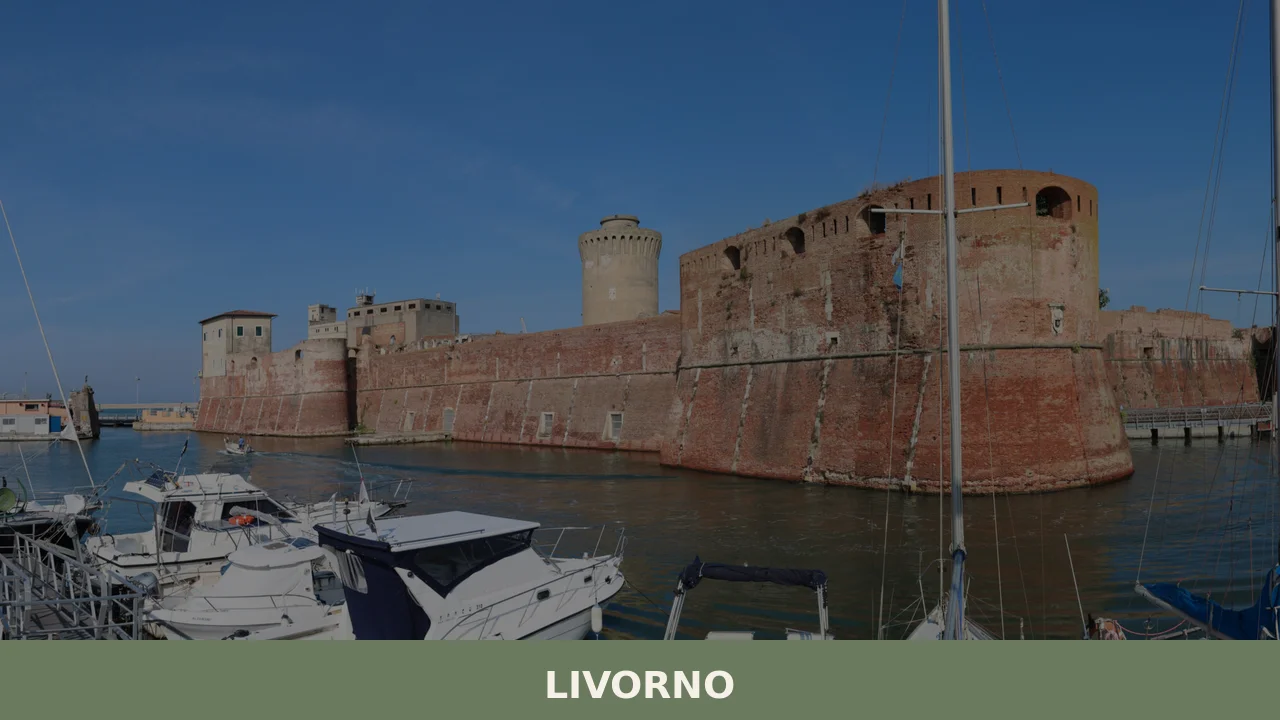
The Fortezza Vecchia stands directly on the historic port and is the city’s defining monument. Its construction dates to the 16th century, designed by the architect Antonio da Sangallo the Younger on behalf of the Medici. The structure incorporates an earlier medieval tower known as the Torre Matilde, which dates to 1439. The irregular bastioned layout was designed to withstand the artillery of the time. Today the fortress hosts cultural events and is open to visitors during seasonal opening periods.
Its direct contact with the port basin makes it one of the most significant vantage points in Livorno.
Quartiere Venezia and the Fossi Medicei
The Quartiere Venezia is the most recognisable part of historic Livorno.
Built between the 17th and 18th centuries on a system of canals known as the Fossi Medicei, the district reflected the logistical function of the free port: the canals allowed goods to be moved directly from warehouses to boats.
Today the canals can be explored by small rowing or electric boats. The buildings facing the water retain the architectural characteristics of the period, with ground-floor arcades and storage spaces. The district is also home to the historic Synagogue, a legacy of the Jewish community that settled here following the Livornina of 1593.
Fortezza Nuova
The Fortezza Nuova is a second defensive structure built between 1590 and 1600 by order of the Grand Dukes of Tuscany, as part of the city’s broader defensive system. Unlike the Fortezza Vecchia, the Fortezza Nuova sits within the urban inland area, surrounded by a moat that still holds water today.
The interior has been converted into a public park used by local residents, with trees and green areas accessible throughout the year.
The star-shaped bastioned structure is one of the best-preserved examples of Renaissance military architecture in Tuscany, and is clearly recognisable even from the surrounding avenues.
Natural History Museum of the Mediterranean
The Museo di Storia Naturale del Mediterraneo is one of the most comprehensive scientific institutions on the Tuscan coast.
Founded in the 19th century, the museum holds collections covering zoology, botany, mineralogy and palaeontology, with a particular focus on the Mediterranean ecosystem. Among its most visited exhibits is the skeleton of a large sperm whale. The museum is located within the Villa Henderson complex on Via Roma and is open to the public on a regular schedule.
It is a key reference point for visitors exploring Livorno with families or with an interest in natural sciences and marine biology.
Terrazza Mascagni
The Terrazza Mascagni is a piece of urban engineering built in the 1930s, named after the Livorno-born composer Pietro Mascagni, who was born in the city in 1863 and composed the celebrated opera Cavalleria Rusticana.
The terrace extends directly over the sea, its black-and-white chessboard surface covering more than 8,000 square metres and making it instantly recognisable. On the seaward side, a balustrade runs for hundreds of metres along the promenade.
The structure has become one of Livorno’s most frequented public spaces, used by residents and visitors alike as they walk the seafront.
Traditional Food and Local Products of Livorno
Livorno’s cuisine took shape over centuries of commercial and demographic exchange through the port.
The foreign communities that settled in the city from the 17th century onwards — Sephardic Jews, Greeks, Dutch, English, Armenians — brought ingredients, techniques and food customs that blended with the inland Tuscan culinary tradition.
The result is an independent coastal gastronomic culture, in which fish from the Tyrrhenian Sea occupies centre stage and flavours lean toward acidity and spice rather than the restraint typical of the Tuscan interior.
The most emblematic dish is undoubtedly cacciucco, a fish soup made with molluscs, crustaceans and mixed fish cooked in a thick broth of tomato, red wine, garlic and chilli pepper. Tradition holds that cacciucco must contain at least five different species of fish — one for each letter of the word. It is served poured over slices of stale bread that have been toasted and rubbed with garlic.
Another dish closely identified with the city is baccalà alla livornese, made with salted cod fillets dredged in flour and pan-cooked with tomato, onion and parsley.
Among the dishes of popular origin is bordatino, a soup of cornmeal and beans with maritime roots, historically eaten on board fishing vessels.
On the subject of certified products, the available database records no PDO, PGI or DOC designations specifically attributed to the municipal territory of Livorno. Local cuisine draws on raw ingredients from fishing in the northern Tyrrhenian Sea and from the vegetable gardens of the surrounding plain. Fresh fish — anchovies, red mullet, octopus, cuttlefish, gurnard — is sold at the Mercato Centrale in Piazza Cavour, a covered market operating since the 19th century that remains the city’s main food supply point.
Visitors to Livorno in summer will find a concentration of trattorias and osterie along the port and in the Quartiere Venezia, where cacciucco features as a fixture on the menu.
The Sagra del Cacciucco, held in autumn, is a well-documented food event that draws visitors from across Tuscany and offers public tastings of the dish in its traditional variations.
Those with an interest in inland Tuscan food traditions can compare Livorno’s coastal cooking with that of the Apennine areas: in Fivizzano, in the Lunigiana, the culinary tradition is built around filled pastas, chestnuts and cured meats — a sharp contrast to the port’s gastronomic culture.
Festivals, Events and Traditions of Livorno
On 22 May, Livorno celebrates the feast day of its patron saint, Santa Giulia di Corsica.
The saint, a martyr from the 5th century, has been venerated in the city through a tradition rooted in the medieval period. The celebrations include solemn religious services in the cathedral and processions through the historic centre. Devotion to Santa Giulia has historically been strong within the port community, which regarded her as a protector of sailors and merchants.
The date of 22 May is recognised as both a civic and a religious occasion.
Beyond the patron saint’s feast, Livorno hosts Effetto Venezia, a summer festival held in the Quartiere Venezia featuring concerts, theatrical performances and cultural events along the canals and in the squares of the historic district.
The event generally takes place in July and draws a wide audience. During summer, the seafront and the Terrazza Mascagni become the setting for open-air music and performance events. The city also maintains a Carnival tradition, with allegorical float parades held in the weeks before Lent.
When to Visit Livorno and How to Get There
The best periods to visit Livorno are April to June and September to October.
In spring, temperatures are mild, the light is good for walking the seafront and the port, and the city has not yet been affected by the summer influx concentrated in the beach areas. In autumn, the climate remains favourable, food festivals are active and museums can be visited without queuing.
Summer is the busiest season, with arrivals driven partly by the beaches along the Livorno coastline and by ferry departures to Sardinia, Corsica and Elba.
For those focused solely on the historic centre and urban attractions, spring is the optimal season.
By car, Livorno is accessible from the A12 Genoa–Livorno motorway at the Livorno exit, or from the A1 via the SGC FI-PI-LI expressway (Florence–Pisa–Livorno), which ends directly in the city. The distance from Florence is approximately 95 km. By train, Livorno Centrale station has direct connections to Pisa (around 20 minutes), Florence (around 1 hour 20 minutes) and Rome, either directly or with a change at Pisa.
Up-to-date timetables are available on the Trenitalia website.
The nearest airport is Pisa Galileo Galilei, approximately 25 km away, connected to Livorno by car, shuttle and regional trains via Pisa Centrale.
The official municipal website at comune.livorno.it provides updated information on events and services.
Visitors arriving in Livorno who wish to extend their itinerary into the Lunigiana can reach villages such as Bagnone and Licciana Nardi in around two hours — two centres in the Magra valley that preserve medieval castles and a hilly landscape very different from the coastal plain.
Those who prefer to travel along the Tuscan-Ligurian Apennines will find that Podenzana offers a hilltop village experience with views over the Gulf of La Spezia, less than two hours by car from Livorno heading north.
Frequently asked questions about Livorno
What is the best time to visit Livorno?
The best periods to visit Livorno are April to June and September to October, when temperatures are mild and the city is less crowded than in peak summer. July and August bring beach tourism and outdoor events along the Terrazza Mascagni seafront. On 22 May, the city celebrates its patron saint Santa Giulia di Corsica with religious processions and ceremonies in the historic centre. Autumn is also the season for the Sagra del Cacciucco, a food festival dedicated to Livorno's iconic fish soup, drawing visitors from across Tuscany.
What are the historical origins of Livorno?
Livorno appears in Pisan records as early as the 11th century as a modest coastal settlement. Its transformation began in 1421, when Florence purchased the port from Genoa for 100,000 gold florins. The decisive turning point came in 1593 under Grand Duke Ferdinando I de' Medici, who issued the Livornina — a charter granting religious freedom to Jews, Muslims, Greeks, Armenians and other communities willing to settle and trade. This exceptional policy shaped Livorno's multicultural, mercantile identity and drove its growth into one of the Mediterranean's most active free ports.
What to see in Livorno? Main monuments and landmarks
Key sites include the Fortezza Vecchia, a 16th-century Medici fortress designed by Antonio da Sangallo the Younger, open seasonally for visits and cultural events. The Quartiere Venezia features navigable Medici canals and the historic Synagogue. The Fortezza Nuova (1590–1600) is surrounded by a water-filled moat and houses a public park open year-round. The Terrazza Mascagni, a striking chessboard-patterned seafront terrace of over 8,000 square metres, is freely accessible at all times. The Natural History Museum of the Mediterranean on Via Roma is open on a regular public schedule.
What are the main natural or scenic attractions of Livorno?
Livorno sits at just 3 metres above sea level along the Tyrrhenian coast, offering direct access to the sea. The Terrazza Mascagni provides a long seafront promenade over the water. The canals of the Quartiere Venezia can be explored by small rowing or electric boats, offering a waterborne perspective on the historic district. The Natural History Museum of the Mediterranean, located in the Villa Henderson complex, presents a comprehensive collection focused on Mediterranean ecosystems, including a sperm whale skeleton.
Where to take the best photos in Livorno?
The Terrazza Mascagni is Livorno's most photogenic spot — its vast black-and-white chessboard surface stretching over 8,000 square metres above the sea is instantly recognisable and best captured at sunrise or golden hour. The Fortezza Vecchia photographed from the port basin offers a classic Livorno composition combining water, ramparts and historic architecture. The canal-facing buildings of the Quartiere Venezia, especially along the Fossi Medicei, provide atmospheric reflections and architectural detail typical of the city's 17th–18th century mercantile character.
Are there museums, churches or historic buildings to visit in Livorno?
The Natural History Museum of the Mediterranean (Museo di Storia Naturale del Mediterraneo), housed in the Villa Henderson complex on Via Roma, is open to the public on a regular schedule and holds collections in zoology, botany, mineralogy and palaeontology, with a sperm whale skeleton among its highlights. The historic Synagogue in the Quartiere Venezia reflects the city's Sephardic Jewish heritage dating to the 1593 Livornina. The Fortezza Vecchia opens seasonally for cultural events and guided visits. Admission and hours are best verified directly with local institutions before visiting.
What can you do in Livorno? Activities and experiences
Visitors can explore the Fossi Medicei canals of the Quartiere Venezia by small rowing or electric boat — a unique experience in Tuscany. The Terrazza Mascagni seafront promenade is ideal for walking at any time of year. In summer, the Effetto Venezia festival brings concerts and theatre performances to the canals and squares of the historic district, typically in July. Autumn offers the Sagra del Cacciucco for food enthusiasts. The Mercato Centrale in Piazza Cavour is the place to shop for fresh Tyrrhenian fish, anchovies, red mullet and octopus.
Who is Livorno suitable for? Families, couples, hikers, solo travelers?
Livorno suits a wide range of visitors. Families will find value in the Natural History Museum of the Mediterranean with its marine collections and whale skeleton, and in the open green spaces of the Fortezza Nuova park. Food lovers will be drawn by the cacciucco tradition and the Mercato Centrale. Couples and cultural travellers will appreciate the canal district, the port-side fortress and the seafront promenade. History enthusiasts can follow the layered story of the Medici port, the Livornina and the multicultural merchant communities. It is not a hiking destination but an urban, coastal and gastronomic one.
What to eat in Livorno? Local products and specialties
Livorno's most celebrated dish is cacciucco, a rich fish soup made with at least five species of fish, molluscs and crustaceans cooked in tomato, red wine, garlic and chilli, served over garlic-rubbed toasted bread. Baccalà alla livornese — salted cod with tomato, onion and parsley — is another local staple. Bordatino, a cornmeal and bean soup with maritime origins, is a dish of popular tradition. Fresh fish including anchovies, red mullet, octopus, cuttlefish and gurnard is available at the Mercato Centrale in Piazza Cavour, a covered market operating since the 19th century.
Nearby Villages near Livorno
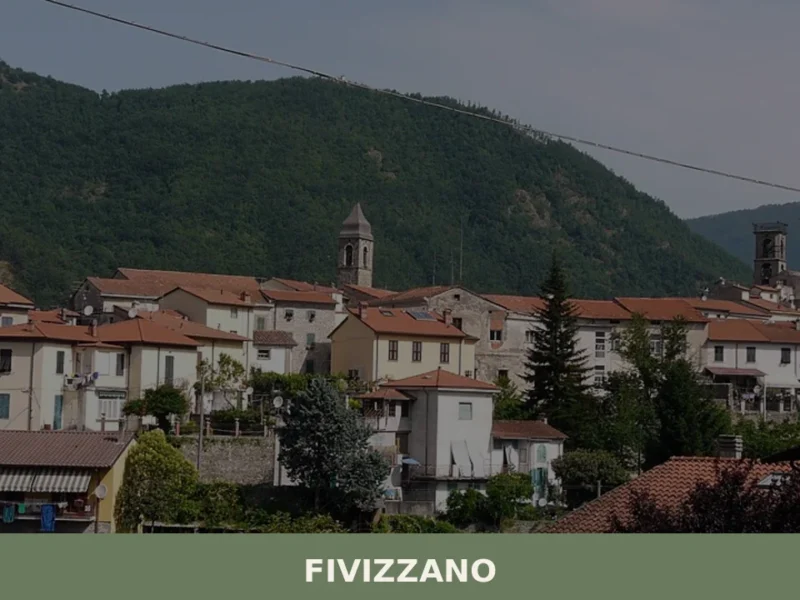
In Tuscany More villages to discover
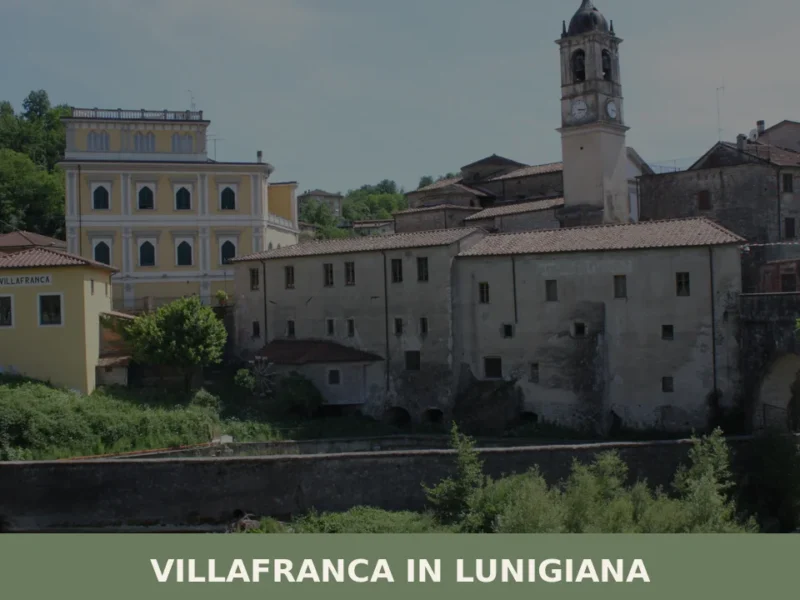
Villafranca in Lunigiana
 Plains
What to see in Villafranca in Lunigiana: explore the Via Francigena, medieval churches and local cuisine in Toscana, Italy. Population 4,803. Discover it now.
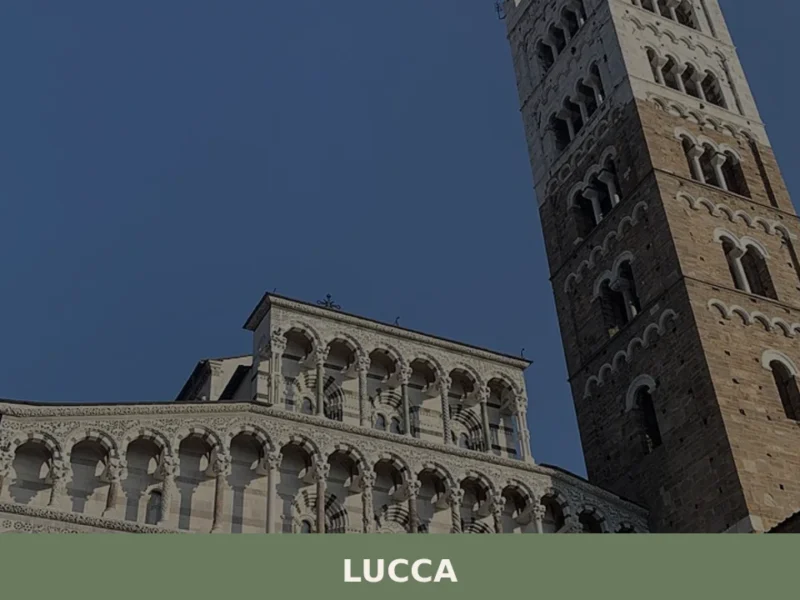
Lucca
Plains
Discover Lucca, Tuscany's enchanting walled village in Italy. Explore medieval streets, stunning architecture, and rich culture in this timeless Italian treasure.
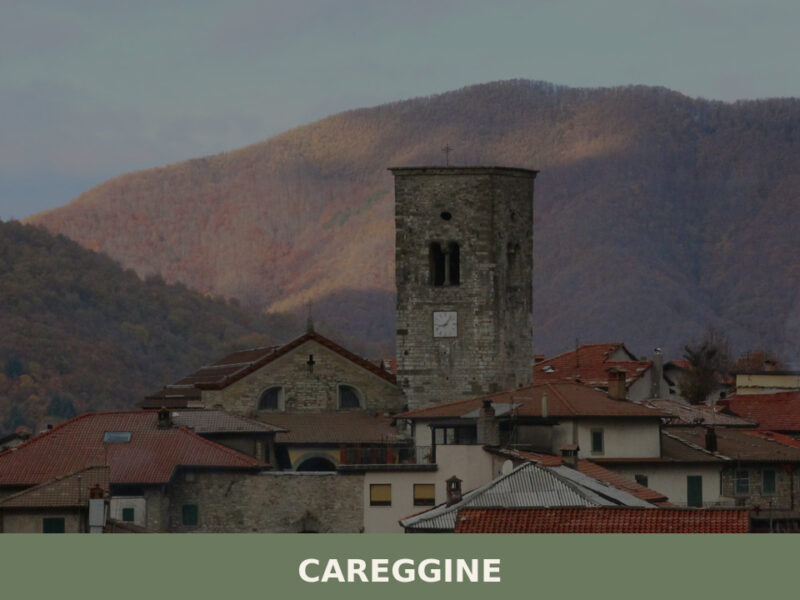
Careggine
 Mountain
Morning fog lifts from the Apuan Alps in slow, pale sheets, revealing a scatter of stone houses along a ridgeline above the Garfagnana valley. A church bell marks seven o’clock — the sound carries far in this thin, mountain air, reaching nobody in particular. With only 585 inhabitants, Careggine keeps its own unhurried tempo. Understanding […]
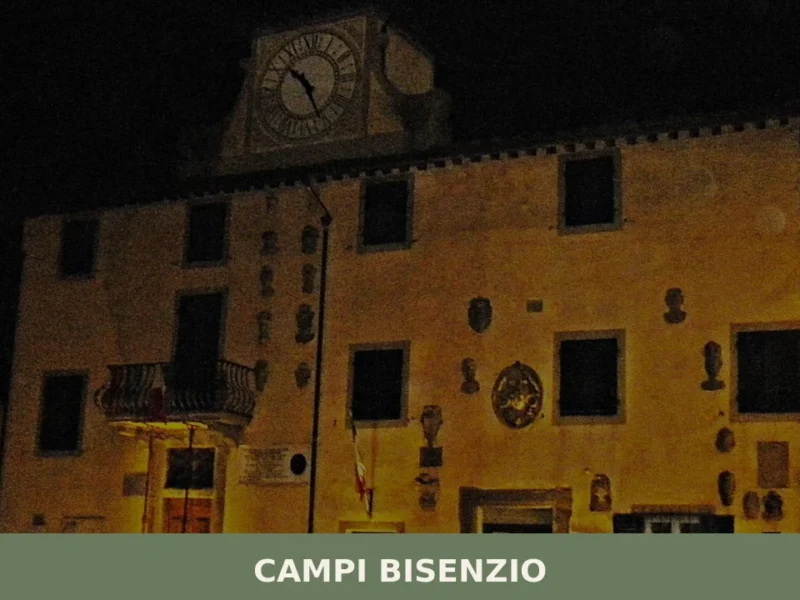
Campi Bisenzio
Plains
What to see in Campi Bisenzio, Italy: 43,580 inhabitants, 10 km from Florence. Discover the birthplace of the internal combustion engine, Renaissance art and more.
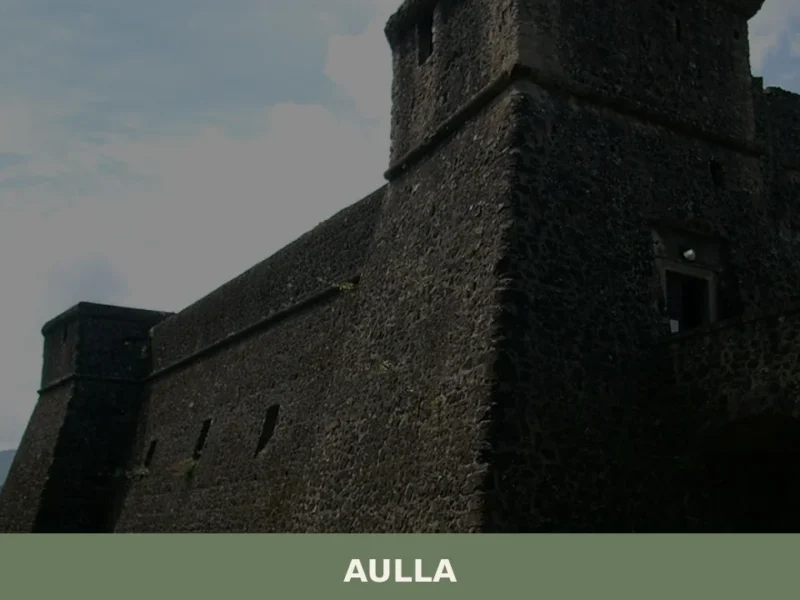
Aulla
Plains
In 884 AD, Marquis Adalbert of Tuscany founded an abbey dedicated to Saint Caprasius at the confluence of the Magra and Aulella rivers, transforming a modest valley-floor settlement into an obligatory stopping point on the Via Francigena. Today, anyone wondering what to see in Aulla will find a lowland town at 64 metres above sea […]
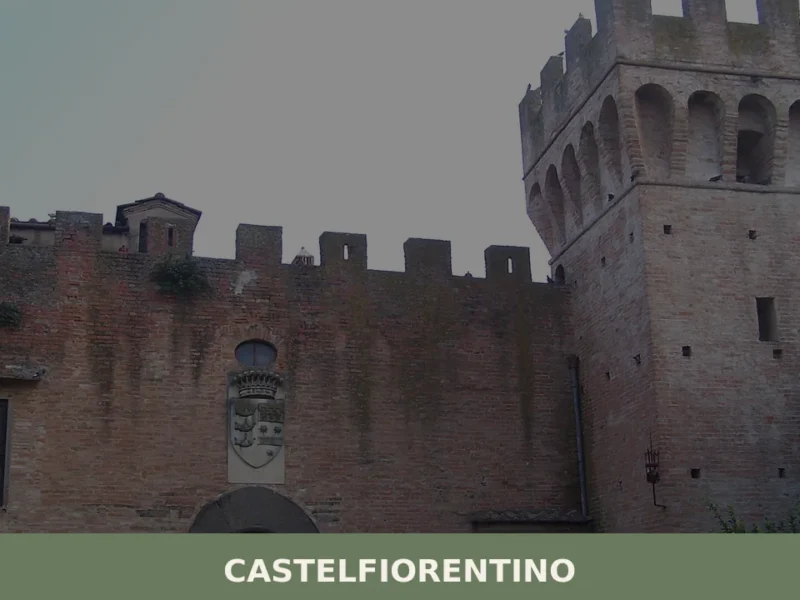
Castelfiorentino
Plains
What to see in Castelfiorentino, Italy: 6 top attractions, history from 1149, the Sanctuary of Santa Verdiana and a crucifix by Giovanni Pisano. Discover now.
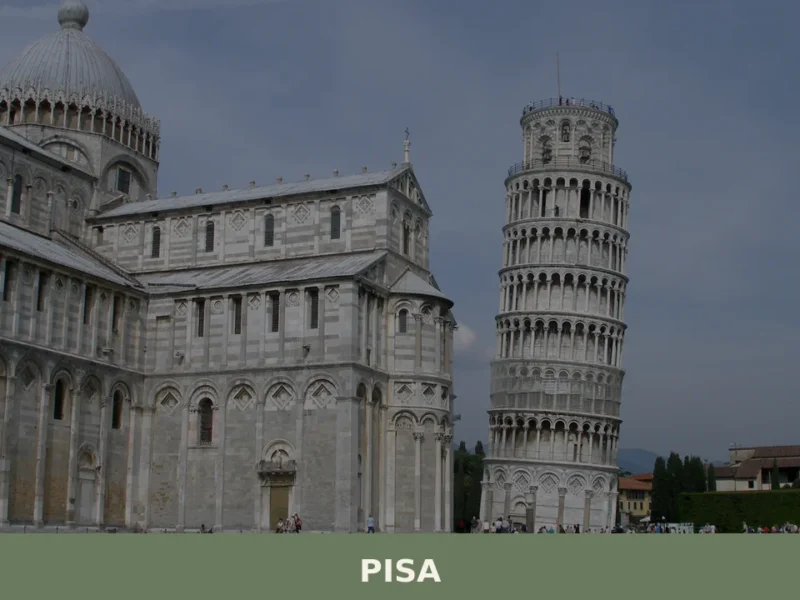
Pisa
Sea
What to see in Pisa: Leaning Tower, UNESCO Piazza dei Miracoli, Regata di San Ranieri on 17 June — city of 86,263. Plan your visit with our complete guide.
Bagni di Lucca
Plains
A comune of 5,560 residents in Lucca province, Bagni di Lucca centres on warm springs and the Serchio river corridor. Its identity rests on water and geology.
Firenze
Plains
Founded by the Romans as a military colony around 59 BC under the name Florentia, the city we know today as Florence has passed through nearly two millennia of history without ever ceasing to reinvent itself. The regional capital of Tuscany, it sits 50 metres above sea level along the banks of the Arno, with […]
Podenzana
 Hills
Hills
The panigaccio — a disc of unleavened dough cooked between red-hot terracotta moulds — is listed as a Traditional Agri-Food Product of Tuscany and bears the name of Podenzana in the regional specification. Anyone looking into what to see in Podenzana will find a scattered municipality at 350 metres above sea level in eastern Lunigiana, […]



🏡 Know Livorno better than we do?
If you’re a local or have been there, your knowledge matters: add what’s missing or fix a detail on this page.