


Savona
What to see in Savona: Ligurian port city at 4 m a.s.l. with Priamàr Fortress, a second Sistine Chapel. Plan your visit to 5 key sites and local cuisine.
Discover Savona
Farinata di ceci emerges from the wood-fired oven on large tin-lined copper pans, thin as paper, its surface mottled with amber bubbles that crackle under your fingers.
It is the oldest gesture of Savona’s street food tradition, the same one that the port bakers were already repeating in the sixteenth century to feed sailors and dockworkers.
Understanding what to see in Savona means starting from this relationship between the sea and the city: an urban centre of 58,194 inhabitants facing the Tyrrhenian Sea at just 4 metres above sea level, where medieval towers coexist with the cranes of the commercial port and the salt breeze reaches every alley of the old town. A real, industrious, layered Ligurian city that does not give itself up easily to the casual tourist but rewards those who explore it with care.
History and Origins of Savona
The name Savona has origins debated among scholars. Some trace it to the pre-Latin root sav-, which may indicate a watercourse or a hollow, referring to the city’s position between the Letimbro and Quiliano torrents. Other linguists suggest a Ligurian origin connected to the term saba, meaning sand, consistent with the coastal nature of the settlement.
Livy mentions the Ligures Sabatii among the peoples who inhabited this area, and the Latin term Savo appears in classical sources as a toponym for the torrent and, by extension, for the settlement itself.
The earliest traces of human activity date back to the Iron Age, with ceramic finds on the Priamàr, the rocky promontory overlooking the shore. The Ligurian oppidum later fell within the Roman sphere of influence, although Savona never achieved the status of a colony like neighbouring Vada Sabatia — present-day Vado Ligure.
The medieval period marked Savona’s rise as a free maritime commune, in direct competition with Genoa. In the twelfth century the city possessed its own fleet, minted its own coinage and took part in Mediterranean trade with warehouses in North Africa and the Levant. In 1191 Emperor Henry VI confirmed broad privileges upon it. The rivalry with Genoa erupted into open conflict: after shifting fortunes, the defeat of 1528 proved definitive.
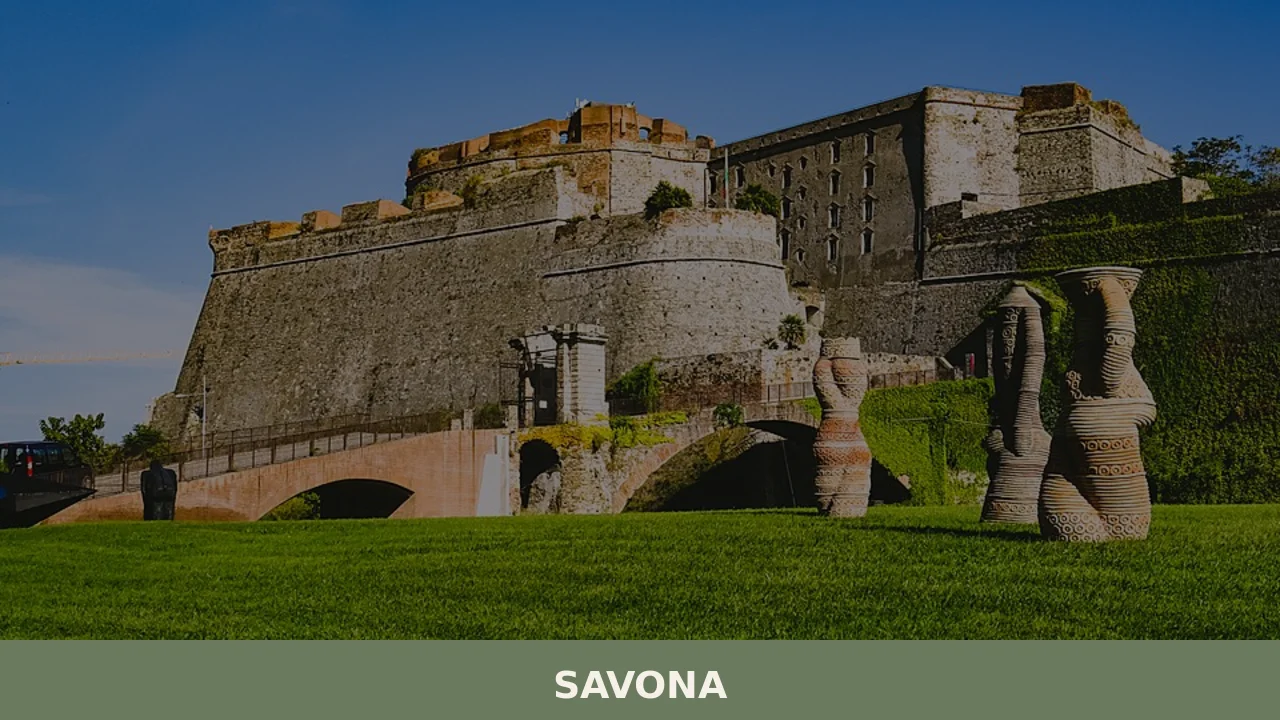
Andrea Doria, allied with Charles V, ordered the demolition of the port and the construction of the Priamàr Fortress directly over the old harbour quarter, physically erasing Savona’s commercial core. It was an act of urban subjugation that still shapes the city’s topography today.
Savona’s history produced figures of European significance. Sixtus IV, born Francesco della Rovere in Celle Ligure in 1414, grew up in the Savona countryside; he served as pope from 1471 to 1484 and commissioned the construction of the Sistine Chapel.
His nephew Giuliano della Rovere, also closely tied to the city, became pope under the name Julius II in 1503. In the nineteenth century Savona served as the place of imprisonment of Pius VII, held by Napoleon in the bishop’s palace between 1809 and 1812.
The Industrial Revolution transformed the city into a steelmaking and railway hub: the population, which in 1861 stood at around 20,000, exceeded 70,000 in the 1960s before settling at the current 58,194 residents, reflecting an economic fabric that today balances port activity, tourism and services. Detailed information on the municipality’s history is available on the official website of the Municipality of Savona.
What to See in Savona: 5 Essential Attractions
1. Priamàr Fortress
The Priamàr Fortress rises on the promontory of the same name, sheer above the port. Built by the Genoese from 1542 onwards over the ruins of Savona’s medieval quarter, the structure extends across multiple levels with bastions in local stone, interior courtyards and casemates. Inside it houses the Archaeological Museum — with artefacts from the Iron Age to the late Middle Ages — and the Pertini Museum, dedicated to the President of the Republic Sandro Pertini, born in Stella San Giovanni in 1896. The walk along the walls provides a direct view over the inner harbour and the old town.
Entry to the complex is free and it represents the ideal starting point for any visit to the city.
2. Sistine Chapel of Savona
Few people know that a Sistine Chapel also exists outside Rome. It stands next to the Cathedral of the Assumption, in Piazza del Duomo, and was commissioned by Pope Sixtus IV in 1481 as a mausoleum for his parents. The building, square in plan with a cross vault, preserves late-fifteenth-century frescoes and an inlaid wooden choir of remarkable craftsmanship. The late-Gothic façade bears the Della Rovere coat of arms. Compared to its famous Roman namesake, this chapel is modest in scale, but its historical value is extraordinary: it documents the direct link between Savona and the Renaissance papacy, a chapter often overlooked in general guidebooks.
3. Brandale Tower and Medieval Complex
The Brandale Tower, approximately 50 metres tall, dominates Piazza del Brandale in the heart of the old town. It is the most prominent of the surviving medieval towers — along with the Guarnero Tower and the Corsi Tower — and served as the civic tower of the free commune. The bell, known as A Campanassa, dates from 1311 and still rings on public occasions today. The surrounding square retains its thirteenth-century layout with low arcades and tower-houses. From here the decisions of the medieval city council were proclaimed. The Brandale complex is managed by a local cultural association and hosts exhibition events, keeping alive the function as a civic space that it has held for over seven centuries.
4. Cathedral of Our Lady of the Assumption
The Cathedral stands in Piazza del Duomo, erected between 1589 and 1605 after the previous medieval church, located on the Priamàr, was demolished to make room for the Genoese fortress.
The interior, with three naves and side chapels, holds a fourteenth-century wooden crucifix, a Renaissance marble baptistery and a seventeenth-century wooden choir. The façade, completed in the nineteenth century, features a portico with three arches. Adjacent to the Cathedral is the cloister of the former bishop’s palace, where Pius VII spent his Napoleonic imprisonment. To learn more about the Cathedral’s history and Savona’s papal connections, the Wikipedia entry on Savona is a useful resource.
5. Sanctuary of Our Lady of Mercy
Located in the hamlet of San Bernardo, approximately 7 kilometres from the centre, the Sanctuary of Our Lady of Mercy is the principal Marian place of worship in the diocese and a regional pilgrimage destination. Construction dates to the sixteenth and seventeenth centuries, on the site where, according to tradition, the Virgin appeared to the farmer Antonio Botta on 18 March 1536. The building, designed with contributions from Pace Antonio Salmone and Giorgio Magenta, has a Latin-cross plan with an octagonal dome.
Inside it preserves paintings of the Genoese school and a Baroque decorative scheme.
The patronal feast of 18 March draws worshippers from across Liguria every year, confirming the sanctuary’s role in the life of the Savona community.
What to Eat in Savona: Local Cuisine and Regional Products
Savona’s cuisine arises from the meeting of the coast and the immediate hilly hinterland, a landscape where terraced vegetable gardens descend almost to the shoreline. Traditional recipes reflect a food culture that is both rural and maritime, founded on a few quality ingredients: olive oil, aromatic herbs, seasonal vegetables, oily fish. The historic frugality of the Ligurian diet produced dishes in which nothing is wasted and every flavour is extracted with patience, from the long cooking of soups to the elaborate fillings of savoury pies, to the systematic use of mortar and pestle to create dense, fragrant sauces.
The most representative dish is farinata, an extremely thin flatbread of chickpea flour, water, olive oil and salt, baked in a wood-fired oven on copper pans up to a metre in diameter. It is eaten hot, peppered, in the sciamadde — traditional fry shops with counters open to the street. Panissa is another chickpea-based preparation: a dense polenta that is left to cool, cut into sticks and fried in oil.
In the colder months, minestrone alla genovese is prepared — common across the entire Riviera — a thick soup of vegetables, beans and short pasta, dressed with a spoonful of pesto and served even at room temperature in summer.
The foundation of Ligurian cooking is extra-virgin olive oil produced from the Taggiasca cultivar, a variety native to the hills of the western Riviera.
Pesto alla genovese, a sauce prepared with basil, garlic, pine nuts, pecorino, Parmigiano and olive oil, traditionally accompanies trofie or trenette pasta. Taggiasca olives are also eaten in brine, as an ingredient in focaccia and condiments. Along the Savona coastline, oily fish — anchovies and sardines — is prepared stuffed and oven-baked, salt-cured or fried. Ligurian focaccia, no more than a centimetre thick, oily and scattered with coarse salt, is the quintessential street food, available in every bakery in the city from the early hours of the morning.
The covered market of Savona, situated in Piazza del Popolo, is the place to find fresh produce from the hinterland: basil, ox-heart tomatoes, trombetta courgettes, artichokes.
During the summer months, the port area hosts evening food markets with focaccia and fried-food stalls. There is no single dominant food festival, but the city calendar includes several neighbourhood fairs between June and September, during which gastronomic clubs set up open-air kitchens serving traditional dishes. For those seeking artisanal products, the food shops of the old town — concentrated between Via Pia and Via Quarda Superiore — sell fresh pesto, brined olives and local oil.
The western Ligurian Riviera produces wines that deserve attention.
The Riviera Ligure di Ponente DOC denomination covers the hillside area behind Savona and includes whites from Vermentino and Pigato grapes — the latter an almost exclusively Ligurian variety, capable of producing structured wines with notes of Mediterranean herbs. Among the reds, Rossese is found.
These bottles, rarely distributed outside the region due to limited production, are available in the wine shops of the town centre and in restaurants that offer pairings with local fish. As reported by the Touring Club Italiano, the Savona wine territory remains among the least known in Liguria while offering labels of notable character.
When to Visit Savona: The Best Time
Its coastal position gives Savona a mild climate for much of the year, with temperate winters — the January average sits around 7–8 °C — and warm summers tempered by the sea breeze. The busiest period runs from June to September, when the city also serves as a base for the beaches along the coast between Albissola Marina and Bergeggi. August brings the peak in tourist numbers, driven largely by cruise ship traffic through the port.
Those who prefer to visit the monuments without the summer pressure will find ideal conditions in April–May and October: temperatures between 15 and 22 °C, long daylight and accessible spaces.
The events calendar revolves around the patronal feast of 18 March, dedicated to Our Lady of Mercy, with a solemn procession from the centre to the sanctuary.
On Good Friday a historical procession takes place with wooden caskets carried on shoulders, a tradition dating back to the seventeenth century that involves the city’s confraternities. In summer, the Festival della Parola and music programmes in the Priamàr Fortress enliven the evenings. In December, the Christmas market in Piazza Sisto IV adds a reason to visit during the quieter months.
For those travelling with the aim of combining culture and the sea, the window between mid-May and mid-June offers the best balance of climate, events and calm.
How to Get to Savona
Savona is connected to the motorway network via the A6 Turin–Savona motorway — the Savona exit is approximately 2 kilometres from the centre — and the A10 Genoa–Ventimiglia, which runs along the coast. From Turin the distance is around 150 kilometres, about one hour and forty minutes’ drive. From Milan it can be reached in approximately two and a half hours via the A26 and then the A10, covering a total of around 170 kilometres. From Genoa, the distance is just 45 kilometres, drivable in under an hour.
The Savona railway station is served by regional trains on the Genoa–Ventimiglia line and by Intercity services to Turin and Milan.
From Genova Brignole the journey by regional train takes around 50 minutes. The nearest airport is Genoa’s Cristoforo Colombo, 50 kilometres away, reachable by car in about 45 minutes or by train with a change at Genova Piazza Principe. The port of Savona-Vado receives cruise ships and ferries to Corsica, making the city a transport hub that links road, rail and sea. Urban public transport is operated by TPL Linea, with buses connecting the centre to the sanctuary and the hillside hamlets.
Other Villages to Discover in Liguria
Visitors to Savona have the opportunity to explore the western Ligurian hinterland, where rural settlements maintain a distinct identity from the coast.
Approximately 70 kilometres to the south-west, in the hinterland of Diano Marina, lies Diano Arentino, a small centre surrounded by the olive groves of the Diano Valley. The village, standing at around 300 metres above sea level, offers an agricultural landscape where Taggiasca olive cultivation still sets the rhythm of the seasons. The visit can be completed in half a day and combined with a stop in the nearby hamlets, where the silence of the hills contrasts sharply with the bustle of the Riviera.
In the opposite direction, towards the Genoese hinterland, Crocefieschi is a worthwhile stop for those heading up the Scrivia Valley along the road linking the coast to the Apennines.
Situated at over 700 metres above sea level, this village in the upper Vobbia valley offers a mountain landscape of beech forests and rock faces, with the imposing Castello della Pietra — wedged between two natural conglomerate towers — as its main point of interest.
From Savona it can be reached in approximately an hour and a half by car, crossing the Turchino pass or taking the A26 motorway. The Savona–Crocefieschi route allows you to traverse all of Liguria’s climatic and landscape bands within just a few dozen kilometres, from the coastline to the Apennine ridges, illustrating the diversity of a region compressed between sea and mountains like few others in Italy.
In Liguria More villages to discover
Favale di Malvaro
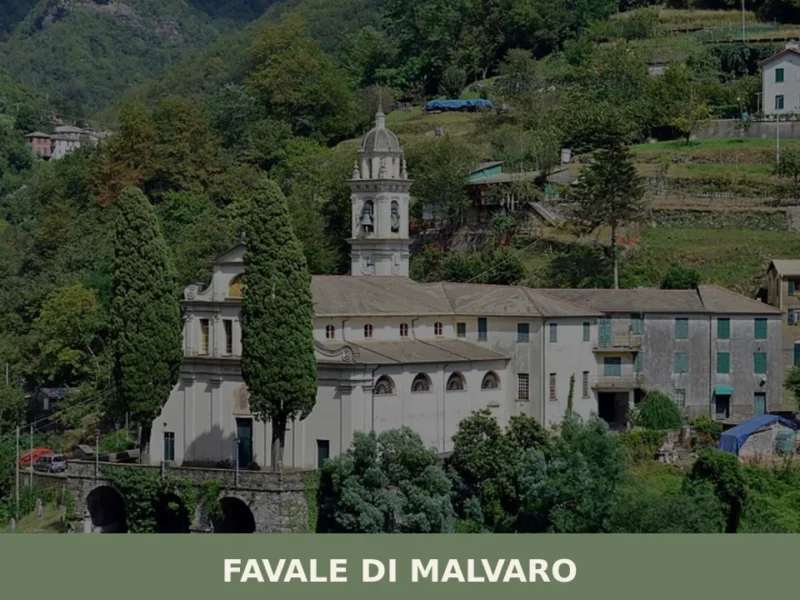
In 1892, Amadeo Pietro Giannini left Favale di Malvaro for America. The son of Ligurian emigrants, he went on to found the Bank of Italy in San Francisco in 1904, which later became Bank of America — for decades the largest banking institution in the world. This small village in the Fontanabuona valley, home to […]
Castiglione Chiavarese
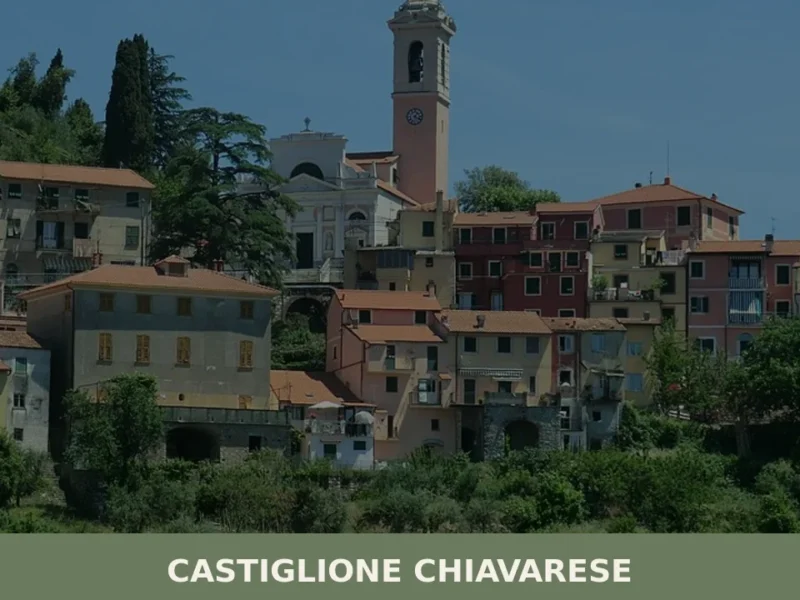
Castiglione Chiavarese sits at 271 metres above sea level in the province of Genova, its 1,586 inhabitants spread across a constellation of hamlets — or frazioni — that dot the hillsides above the Petronio valley. The comune’s territory stretches from the Ligurian ridge down toward the coast between Sestri Levante and Moneglia, covering a patchwork […]
Lumarzo
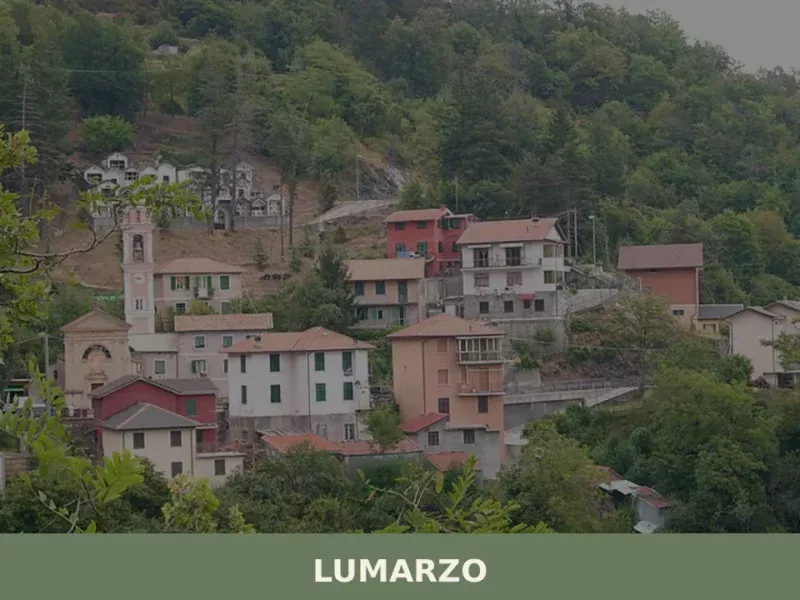
What to see in Lumarzo: a Ligurian village at 228m with 1,419 residents, historic oratories, Fontanabuona valley trails and the Saint Camillus feast. Plan your visit now.


📝 Incorrect information or updates?
Help us keep the Savona page accurate and up to date.