


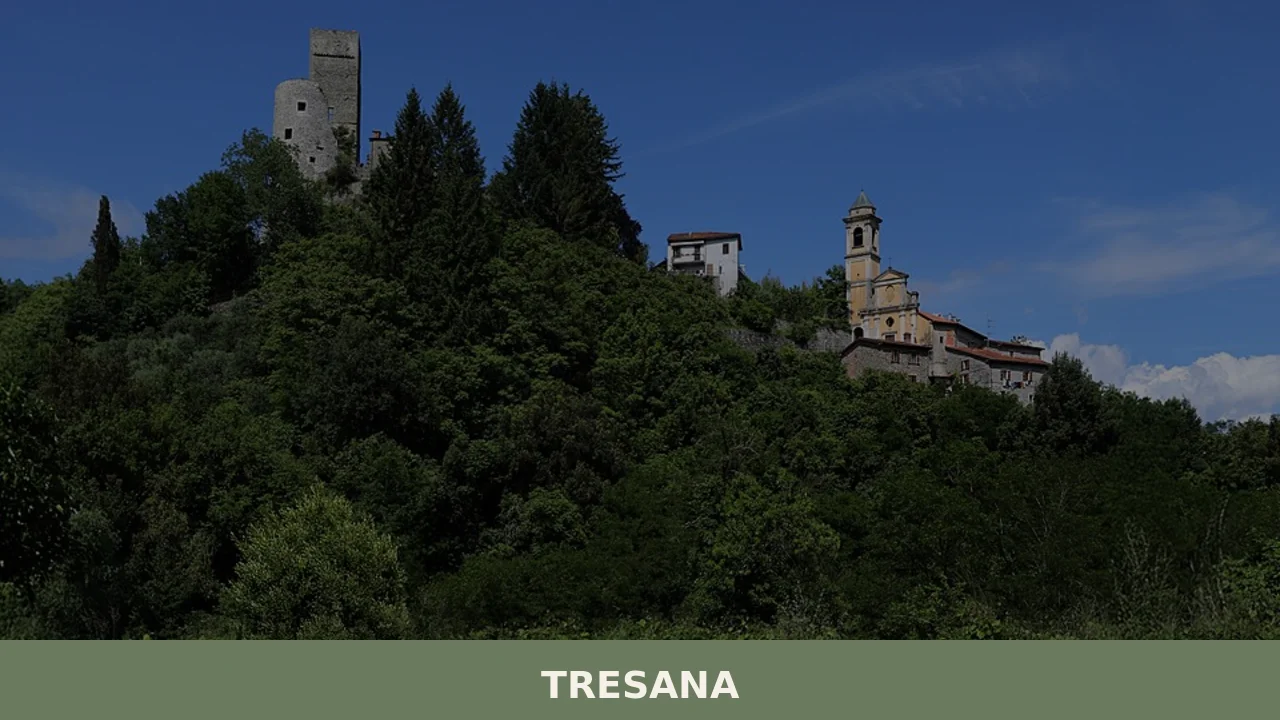
Tresana
Standing at 112 metres above sea level, in the valley floor where the Osca stream flows into the River Magra, Tresana is a scattered municipality in the province of Massa and Carrara, made up of over thirty hamlets spread between the plain and the surrounding hills. With a population of 2,071, it is one of […]
Discover Tresana
Standing at 112 metres above sea level, in the valley floor where the Osca stream flows into the River Magra, Tresana is a scattered municipality in the province of Massa and Carrara, made up of over thirty hamlets spread between the plain and the surrounding hills. With a population of 2,071, it is one of the key settlements of lower Lunigiana, a borderland between Tuscany, Liguria and Emilia. Asking what to see in Tresana means exploring a territory marked by Malaspina castles, Romanesque parish churches and a network of mule tracks that once connected the Tyrrhenian coast to the Apennine passes.
History and origins of Tresana
The name Tresana first appears in a document dated 1164, when Emperor Frederick I Barbarossa confirmed the Malaspina marquises’ feudal holdings in Lunigiana, including this territory. The etymology remains debated: some hypotheses link it to a Roman praedial name derived from the personal name Tertius, while others trace it to a pre-Latin word related to the shape of the terrain. What is certain is the territory’s centuries-long belonging to the Malaspina feudal system, which left visible traces in the civic and military architecture of the village.
In 1221, with the division of Malaspina possessions between the Spino secco (Dry Thorn) and Spino fiorito (Flowering Thorn) branches, Tresana passed to the Spino secco line. The marquises maintained control of the fief until the arrival of Napoleon, when in 1797 the feudal structure was abolished. In the nineteenth century, Tresana became part of the Grand Duchy of Tuscany and subsequently the Kingdom of Italy. Its position along the route connecting Pontremoli to Aulla made the territory an obligatory passage for merchants and pilgrims, a strategic function that explains the density of fortifications and hospices documented in the area.
During the Second World War, Lunigiana was the scene of partisan resistance and the construction of the Gothic Line. Tresana suffered bombings and roundups between 1944 and 1945. Post-war reconstruction and the rural exodus towards coastal cities drastically reduced the population, which in the first half of the twentieth century exceeded five thousand residents.
What to see in Tresana: 5 main attractions
1. Castle of Tresana
A Malaspina construction documented from the twelfth century onwards, the castle dominates the main settlement from the top of a rise. The complex retains a quadrangular tower and remains of the curtain wall. After centuries of abandonment, structural consolidation works have stabilised the masonry. The position offers a direct vantage point over the confluence of the Osca into the Magra and the surrounding hamlets.
2. Parish Church of Saints Quiricus and Julitta
Dedicated to the patron saints of the municipality — celebrated on 15 July — this parish church features architectural elements dating back to the Romanesque period, with subsequent alterations between the sixteenth and eighteenth centuries. The interior preserves a marble altar and sacred furnishings of local production. The dedication to the two fourth-century martyrs is shared with other churches in Lunigiana, a sign of a devotion widespread across the region since the early Middle Ages.
3. Village of Giovagallo
A hillside hamlet of Tresana, Giovagallo is known for its castle and for the historical figure of Alagia Fieschi, a Genoese noblewoman and wife of Marquis Moroello Malaspina, mentioned by Dante in Canto XIX of Purgatorio. The settlement retains its concentric medieval layout with buildings in local sandstone and portals dated between the fifteenth and seventeenth centuries.
4. Church of San Martino in Corneda
Located in the hamlet of Corneda, this Romanesque-plan church has a gabled façade built with sandstone ashlars. The building, documented from the thirteenth century, represents an example of the network of rural churches that served the scattered communities of lower Lunigiana. Inside, there are decorative stucco elements added during eighteenth-century restorations.
5. Medieval bridge over the Osca
A humpback stone structure crossing the Osca stream, this single-span bridge served the connection between the valley-floor hamlets. The construction technique — a round arch of sandstone ashlars without mortar — is consistent with medieval bridges documented along Lunigiana’s communication routes. The structure is visible from the provincial road that crosses the municipal territory.
Cuisine and local products
The table in Tresana follows the repertoire of Lunigiana cooking, built on flours, wild herbs and woodland produce. Testaroli, discs of wheat-flour batter cooked in cast-iron or terracotta moulds and then dressed with Genoese pesto or extra-virgin olive oil, are the most emblematic dish of the area. Torte d’erbi — thin pastry cases filled with a mixture of chard, borage and other wild greens, combined with Parmesan and eggs — appear in every home kitchen. Panigacci, small flatbreads cooked between stacked terracotta plates and filled with stracchino cheese or cured meats, are another preparation shared with the Podenzana area. Focaccetta, fried in oil and served with cured meats or fresh cheeses, often accompanies aperitivo in local trattorias. Among the first courses are also lasagne bastarde, made with a dough that blends wheat flour and chestnut flour.
Lunigiana chestnut flour has been awarded DOP status (Farina di castagne della Lunigiana DOP) and is used in desserts such as castagnaccio and pattona, a chestnut-flour flatbread baked on chestnut leaves. Miele della Lunigiana DOP, in its acacia and chestnut varieties, is another protected-designation product from the territory. Olio extravergine di oliva Toscano IGP features in local production thanks to the olive groves that survive on the hillside belt. Spalla cotta (cooked shoulder) and lardo produced in the mountain hamlets are constant presences on charcuterie boards. Among food-related events, the testaroli festival and the summer village fairs held across the various hamlets offer the chance to taste these preparations in the settings where they originated. For direct purchasing, the weekly farmers’ markets in Aulla and Pontremoli bring together producers from the valley.
When to visit Tresana: the best time
The climate of lower Lunigiana is temperate, with hot summers cooled by valley breezes and mild winters compared to the mountain centres. The period between May and June offers long days, temperatures between 18 and 25 degrees and vegetation at its most lush: the chestnut groves are in full leaf, the trails are walkable and the spring rains begin to ease. September and October are the months of the chestnut harvest and the grape harvest, and food festivals are concentrated in this window.
The feast of Saints Quiricus and Julitta, on 15 July, is the most important liturgical and civic occasion for the community. In August, the hamlets organise communal outdoor dinners and minor patron saint celebrations that punctuate the summer calendar. Those who prefer to avoid the heat — in July temperatures can exceed 32 degrees on the valley floor — will find the first half of June or the second half of September the most suitable conditions for exploring the territory on foot.
How to reach Tresana
By car, the reference motorway exit is Aulla on the A15 (Autostrada della Cisa, Parma–La Spezia), from which Tresana is approximately 8 kilometres along the provincial road that follows the Magra valley. From Massa, the route is around 40 km along the SS63; from La Spezia, approximately 45 km via the A12 and then the A15. From Parma, take the A15 for around 100 km heading south.
The nearest railway station is Aulla-Lunigiana, served by the Pontremolese line (Parma–La Spezia) and the Lucca–Aulla line. From Aulla, Tresana can be reached by local bus or by private transport. The closest airport is Galileo Galilei in Pisa, approximately 110 km away, connected to the motorway network via the A12 and A15. Parma airport is around 115 km away and can be reached entirely via the A15.
What to see in Tresana and in the nearby villages of Lunigiana
Heading up the Magra valley to the south-east, less than fifteen kilometres from Tresana you reach Bagnone, a municipality where the stream of the same name flows between the houses of the old centre, creating a direct outlook over the water. The castle and the arcades of the old village document a different model of Lunigiana settlement — more vertical and compact compared to Tresana’s dispersed layout. Bagnone also hosts an antiques market during the summer months that draws visitors from across the province.
To the north-west, towards the Apuan Alps, Casola in Lunigiana serves as the gateway to the Apuan mountains from the Lunigiana side. The territory of Casola, rougher and more wooded, offers a sharp contrast with the river plain of Tresana. The two realities — valley floor and mountain — together convey the dual nature of Lunigiana: a land of transit across the flat stretches, a land of resistance and isolation on the heights.
Frequently asked questions about Tresana
What are the main things to see in Tresana?
Tresana offers five key attractions: the twelfth-century Malaspina Castle with its quadrangular tower overlooking the Magra valley, the Romanesque Parish Church of Saints Quiricus and Julitta, the medieval hamlet of Giovagallo linked to Dante's Purgatorio through Alagia Fieschi, the Romanesque Church of San Martino in Corneda, and a beautifully preserved medieval humpback bridge over the Osca stream.
What are the typical dishes and local foods to try in Tresana?
Tresana's cuisine reflects Lunigiana tradition. Don't miss testaroli dressed with pesto or olive oil, torte d'erbi filled with wild greens, and panigacci flatbreads with stracchino cheese. Try lasagne bastarde made with chestnut and wheat flour. Local DOP products include Lunigiana chestnut flour and Lunigiana honey. Spalla cotta and locally produced lardo feature on every charcuterie board.
When is the best time to visit Tresana?
May to June is ideal, with pleasant temperatures between 18–25°C, lush vegetation and walkable trails. The patron saint feast on 15 July brings the main civic celebration. September and October offer chestnut harvest festivals and food events. Avoid mid-July and August if you dislike heat, as valley-floor temperatures can exceed 32°C. Late September combines mild weather with autumnal gastronomy.
How do I get to Tresana from Pisa or La Spezia?
From Pisa airport, take the A12 motorway north then the A15 towards Parma, exiting at Aulla — about 110 km total. From La Spezia, follow the A12 and A15 for roughly 45 km to the Aulla exit. From Aulla, Tresana is just 8 km along the provincial road following the Magra valley. Aulla-Lunigiana railway station connects to local buses.
What is the connection between Tresana and Dante Alighieri?
In the hamlet of Giovagallo, the Malaspina castle is tied to Alagia Fieschi, a Genoese noblewoman who married Marquis Moroello Malaspina. Dante mentions her by name in Canto XIX of Purgatorio as a virtuous woman. The medieval village preserves its concentric layout with sandstone buildings and dated portals, making it a fascinating literary and historical destination within Tresana's territory.
What villages and attractions can I visit near Tresana in Lunigiana?
Within fifteen kilometres, Bagnone features a compact medieval centre with a castle, arcaded streets and a summer antiques market. To the northwest, Casola in Lunigiana is the gateway to the Apuan Alps, offering wilder mountain landscapes. The nearby town of Aulla provides railway connections and services. Pontremoli, further north, is renowned for its stele statues museum and historic centre along the Via Francigena.
In Tuscany More villages to discover
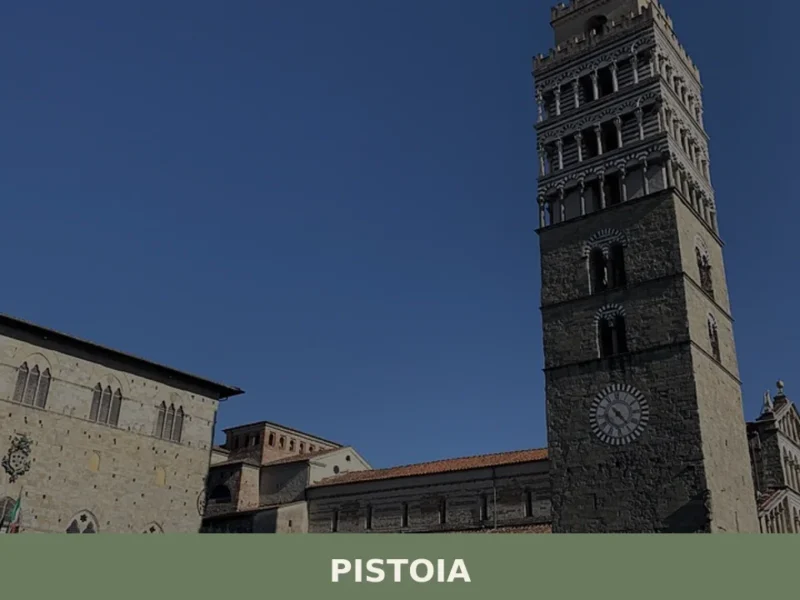
Pistoia
Discover Pistoia, a charming village in Tuscany, Italy. Explore its rich history, stunning architecture, and authentic Italian culture off the beaten path.
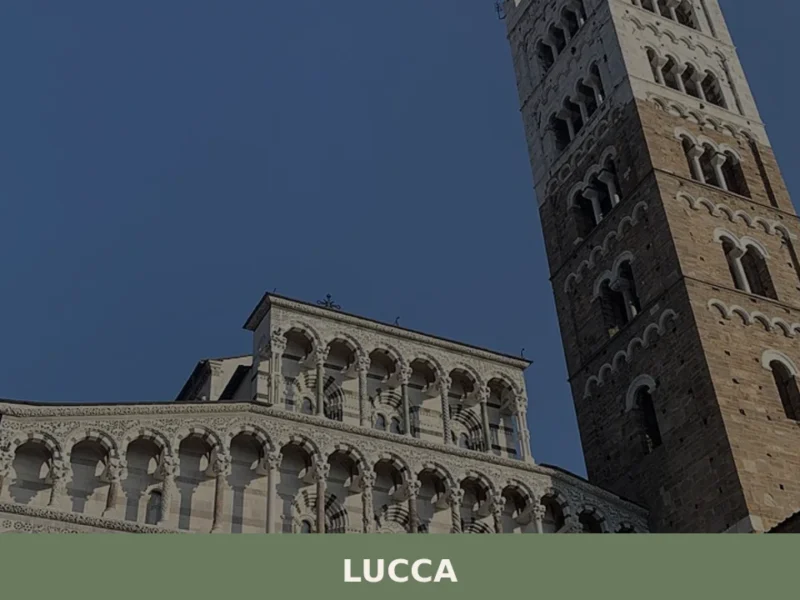
Lucca
Discover Lucca, Tuscany's enchanting walled village in Italy. Explore medieval streets, stunning architecture, and rich culture in this timeless Italian treasure.
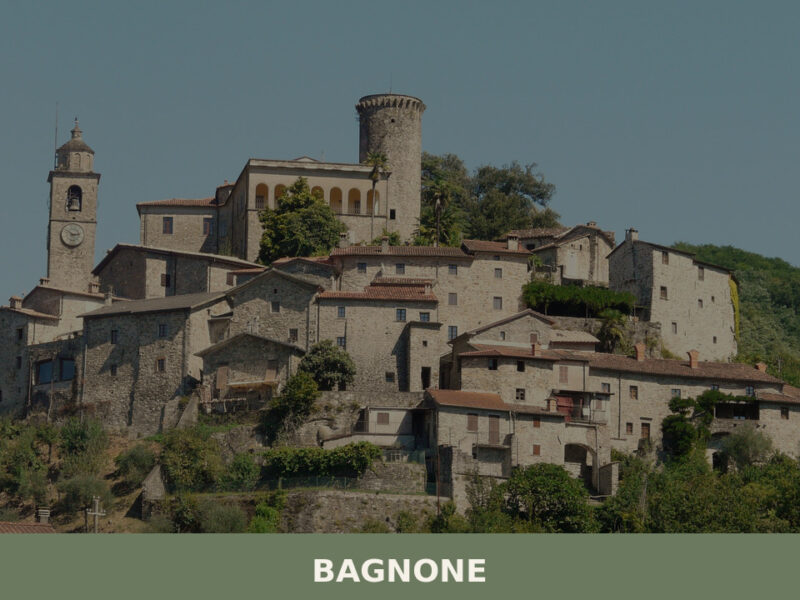
Bagnone
Morning mist lifts off the Bagnone creek and thins against stone walls that have stood since the eleventh century. The sound of water — always water — fills the narrow lanes, running beneath bridges and alongside houses built directly into the rock. With fewer than two thousand residents, this small settlement in the Massa e […]


📝 Incorrect information or updates?
Help us keep the Tresana page accurate and up to date.