

With approximately 4,732 inhabitants, Castell’Arquato, in the province of Piacenza, is a village that attracts visitors with its historical and architectural richness. Among the main attractions, if you’re wondering what to see in Castell’Arquato, the Rocca Viscontea stands out, an imposing fortress that dominates the surrounding landscape. This structure, built between 1341 and 1347, represents a significant example of medieval military architecture, closely linked to the history of the Duchy of Milan.
Its strategic presence on the Arda stream valley made it a focal point for territorial control for centuries.
The History and Origins of the Rocca Viscontea
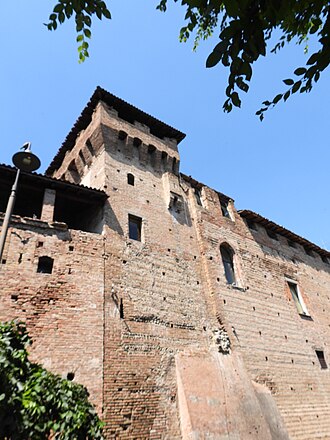
The Rocca Viscontea of Castell’Arquato has its roots in a historical context of great ferment and political changes.
Its construction was commissioned by Luchino Visconti, Lord of Milan, between 1341 and 1347. This precise dating is confirmed by historical documents attesting to the Visconti’s desire to consolidate their control over the Piacenza territories, which were strategic for communication routes and for the expansion of their dominion. The fortress did not emerge from nothing, but probably arose on pre-existing defensive structures, testifying to a millennium-long use of the site for military purposes.
The village of Castell’Arquato, even before the Visconti era, had a complex history, with periods of communal autonomy and subsequent submissions to various lordships. Luchino Visconti’s intervention fit into this framework, putting an end to a period of instability and asserting a centralized and unequivocal power with the construction of the Rocca. The choice of location was not accidental: its elevated position allowed for surveillance of the entire Arda valley, a fundamental artery for trade and military movements, ensuring thorough control over the traffic of goods and people.
Over the centuries, the Rocca has undergone various transformations and seen numerous owners alternate.
After the Visconti period, it passed under the control of the Sforza Dukes, who maintained its strategic function, while making some modifications to adapt it to new defensive requirements.
Subsequently, the fortress was involved in various local and regional conflicts, undergoing sieges and damage, but always managing to preserve its main structure. Its resilience is a clear sign of its structural solidity and its importance as a defensive bulwark. To delve deeper into its military history and the events related to the Visconti, you can consult the entry on Castell’Arquato.
With the passage of time and the evolution of military techniques, the defensive function of the Rocca began to decline. In the 18th and 19th centuries, the fortress gradually lost its strategic importance, being partly abandoned or used for less noble purposes. However, its impact on the landscape and the collective memory of the village never diminished, remaining a tangible symbol of Castell’Arquato’s glorious past.
Restoration campaigns, initiated in the 20th century, allowed for the recovery and enhancement of this heritage, making it accessible to the public and transforming it into a center of culture and tourist attraction.
The Architectural Features of the Fortress
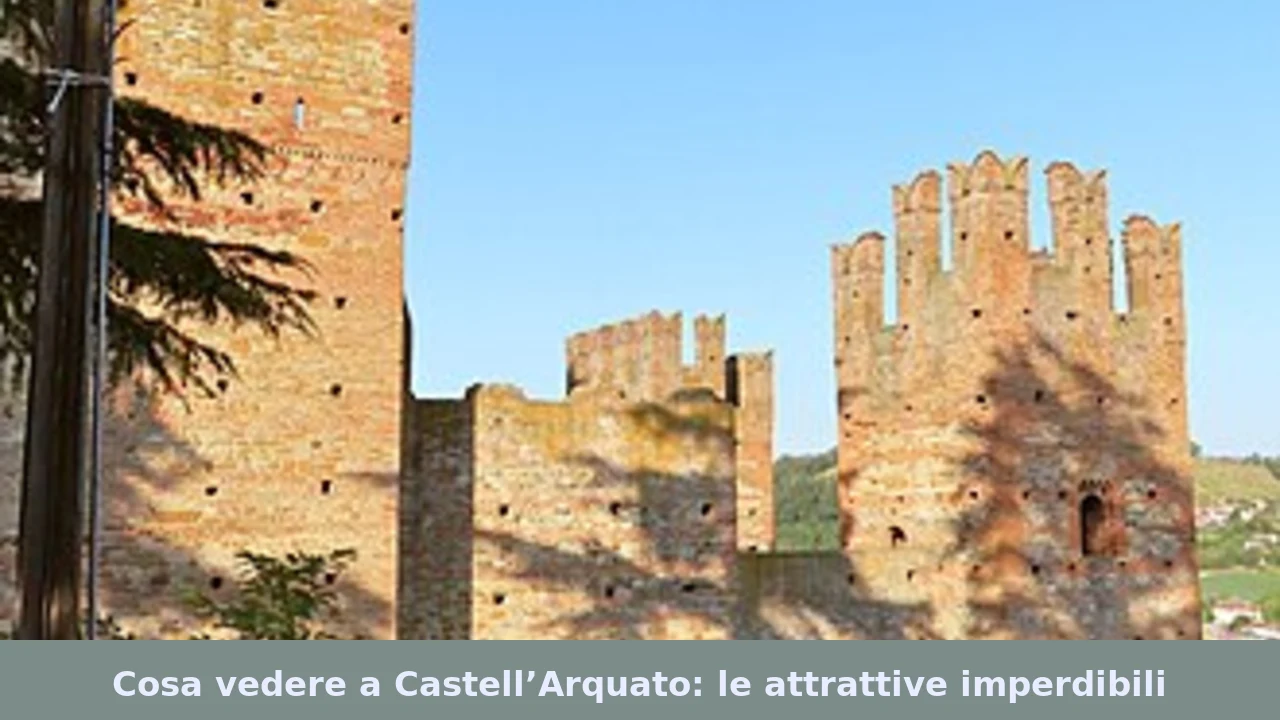
The Visconti Fortress of Castell’Arquato stands out for its typically fourteenth-century military architecture, reflecting the construction standards of the era and the influence of the Milanese lordship. The fortress features an irregular quadrangular plan, with four corner towers that reinforce its defensive structure. These robust and imposing towers were designed to withstand assaults and to provide effective observation and firing points against potential invaders. Each corner of the perimeter is guarded by a tower, ensuring 360-degree defensive coverage.
The heart of the Rocca is its keep, or main tower, which rises in the center of the inner courtyard, dominating the entire construction.
This tower is the highest and most massive part of the fortress, serving as the last bastion in case of siege and likely housing the castellano’s quarters and the most important storerooms. Access to the keep was via a drawbridge, which made its defense even more effective, isolating it from the rest of the structure.
The thick and robust perimeter walls are interspersed with Guelph battlements, characterized by their “W” or “swallowtail” shaped tops, a detail that is not only aesthetic but also functional for the defense of archers.
The main entrance to the Rocca is through an imposing portal, once protected by a drawbridge and a moat, elements now partly disappeared or modified. The portal leads to an inner courtyard, around which the various buildings developed, which once housed barracks, warehouses, kitchens, and other service rooms. The layout of the buildings within the courtyard is functional to the needs of a military garrison, with well-defined spaces for various daily and defensive activities. Traces of internal staircases and patrol walkways can still be observed, which allowed soldiers to move nimbly along the walls.
The construction materials used are mainly local stone, which gives the fortress a sober and robust appearance, in perfect harmony with the surrounding environment.
The choice of stone was not only practical but also reflected the availability of local resources and the desire to create a durable structure. Medieval construction techniques, despite their apparent simplicity, were extremely effective in ensuring the stability and resistance of the walls against attacks.
The Visconti Fortress, with its majesty and defensive features, represents a remarkable example of fourteenth-century military engineering, a legacy that continues to impress visitors.
What to See Inside the Fortress: The Museum and the Views
Visiting the Visconti Fortress means immersing yourself in an experience that goes beyond simply observing ancient walls. Inside the fortress, you’ll find the Museum of Medieval Life, an exhibition journey that illustrates daily life and cultural aspects of the Middle Ages, with particular reference to the local context. The museum offers a series of artifacts, reconstructions, and educational panels that allow for a better understanding of the historical period in which the Fortress was built and inhabited.
You can observe weapons, tools, clothing, and everyday objects, all elements that help recreate the atmosphere of the era.
The museum itinerary unfolds through various rooms, each dedicated to a specific aspect of medieval life. You will find sections dedicated to the art of war, with armor and models of siege engines, but also insights into civil life, craftsmanship, and the traditions of the village. The captions are clear and informative, and multimedia supports are often present to enrich the experience, making it engaging even for younger visitors.
The exhibition is designed to present content in an accessible and interesting way, without overwhelming the visitor with excessive information.
One of the most rewarding aspects of visiting the Fortress is the opportunity to climb to the top of the keep. From here, spectacular panoramic views open up over the Arda valley and the village of Castell’Arquato, which spreads out at the foot of the fortress. This privileged vantage point allows you to appreciate the strategic position of the Fortress and understand the importance of visual control over the surrounding territory. On clear days, your gaze can sweep across the surrounding hills, offering unforgettable views and unique photographic opportunities.
In addition to the museum and the views, the Fortress regularly hosts cultural events, temporary exhibitions, and historical reenactments that bring the fortress to life and make it a vibrant cultural center.
These events offer an additional opportunity to experience the Fortress dynamically, by participating in workshops, shows, or themed guided tours. Before your visit, it is advisable to consult the event calendar to check if there are any special initiatives scheduled.
The museum rooms and external walkways are designed to be explored at leisure, allowing you to savor every detail and perceive the weight of history within the ancient walls.
Organizing Your Visit to the Rocca Viscontea
Planning your visit to the Rocca Viscontea is an essential step to fully enjoy the experience. The fortress is open to the public with hours that may vary depending on the season, so it is always advisable to consult the official website of the municipality of Castell’Arquato or the Rocca itself for the most up-to-date information. Generally, the Rocca is accessible during weekends and public holidays, with extended opening hours in the summer months. We recommend checking the closing days as well, which usually include Mondays or other weekdays out of season.
Entry to the Rocca Viscontea requires a ticket, the cost of which varies based on age and any reductions for groups or families.
Often, combined tickets are available that include access to other attractions in the village, such as the Collegiate Church or the Geological Museum, offering savings and the opportunity to explore Castell’Arquato more deeply. The average duration of a visit to the Rocca, including the Museum of Medieval Life and the ascent to the keep, is about 1.5-2 hours. This will allow you to calmly explore each section without rushing.
You can find detailed information on opening hours and prices on the Castell’Arquato Municipality website.
If you arrive by car, Castell’Arquato has several parking areas, some of which are located a short distance from the historic center and the Rocca. We suggest parking in the indicated areas and then continuing on foot, as the center is largely pedestrianized and the streets leading to the Rocca are cobbled and uphill. Wearing comfortable shoes is practical advice, given the nature of the terrain and the internal stairs of the fortress.
Accessibility for people with reduced mobility might be limited in some areas of the Rocca, especially for the ascent to the keep, due to the steep stairs and narrow spaces, typical of medieval constructions.
- Opening Hours: Always check the official website before your visit; they vary seasonally.
- Tickets: Available at the ticket office, possible reductions or combined tickets.
- Visit Duration: Allow 1.5-2 hours to explore the Rocca and the museum.
- Parking: Use parking lots outside the historic center and continue on foot.
- Attire: Wear comfortable shoes for uphill walks and stairs.
For those seeking a more in-depth visit, guided tours are often available by reservation, allowing you to discover anecdotes and historical details that are not always evident.
Local guides can enrich the experience with stories and curiosities, offering a unique perspective on the history of the Rocca and the village. It is worth considering this option, especially if you are traveling in a group or if you desire a more complete immersion into Castell’Arquato’s medieval past.
The Visconti Fortress: Symbol and Panoramic Viewpoint
The Visconti Fortress is not just a historical monument, but a true symbol for Castell’Arquato, an icon that defines its identity and profile in the landscape. Its majestic presence on the hilltop of the village is a visual beacon that attracts attention from afar, inviting discovery. This fortress, with its robust walls and imposing keep, represents the historical stratification of the place, a landmark that has witnessed and participated in centuries of events, changes, and transformations.
It is the beating heart of Castell’Arquato’s historical memory, a concrete link to the Visconti past and subsequent dominations.
Beyond its historical and symbolic significance, the Fortress offers one of the most evocative panoramic viewpoints in the province of Piacenza.
The climb to the patrol walkways and, in particular, to the top of the keep, offers a 360-degree view embracing the fertile Arda Valley, the gentle surrounding hills, and the entire urban cluster of Castell’Arquato. From this elevated position, one can admire the urban layout of the village, with its streets branching out from the main square and the rooftops forming a mosaic of shapes and colors. It is an experience that allows one to understand not only the strategic importance of the fortress but also the beauty of the territory in which it is situated.
The view from the Fortress is not only a pleasure for the eyes but also an opportunity to reflect on the interaction between human endeavor and the natural environment. The fortress blends harmoniously with the landscape, testifying to an era when constructions were intrinsically linked to the territory and its resources. The green hues of the countryside, the winding course of the stream, and the profiles of distant hills create a natural backdrop of great impact.
Those who climb to the top can feel the wind caressing the towers and imagine the sentinels who once scanned the horizon, protecting the village below.
The Fortress is also an ideal starting point for exploring the rest of Castell’Arquato.
After admiring the panorama, you can descend into the historic center and visit the Collegiate Church of San Pietro, another architectural jewel, or stroll through the village streets discovering characteristic corners and artisan workshops. Its dominant position makes it a visual beacon, a constant orientation during your exploration of the village. It is a place that invites contemplation and discovery, an experience that enriches the journey and leaves a lasting memory.
Nearby Villages to Explore Starting from Castell’Arquato
A visit to the Rocca Viscontea can be an opportunity to extend your exploration to other villages and places of interest in the surroundings of Castell’Arquato. The Piacenza area and its neighboring regions are rich in history, culture, and picturesque landscapes, offering various options for day trips or longer weekends.
Starting from the Rocca, you can easily reach other gems of Italian heritage, expanding your discovery itinerary.
One of the villages you might consider visiting is Travo, located a short distance from Castell’Arquato, along the Trebbia river.
Travo is known for its Anguissola Castle, which stands imposingly on the riverbank, and for its well-preserved historic center. It also offers the chance to take walks along the river or engage in outdoor activities, immersed in a natural setting of great beauty. Its proximity makes it a perfect destination for an afternoon of exploration after visiting the Rocca.
Another place worth attention is Villanova sull’Arda, a municipality located further downstream along the Arda stream. This village, while not having a medieval fortress like Castell’Arquato, is linked to Giuseppe Verdi, the famous composer, who lived and worked in nearby Sant’Agata. Villanova sull’Arda offers an immersion into a riverine and agricultural landscape, with the opportunity to visit Verdian sites and discover the area’s musical tradition.
It’s a destination that offers an interesting contrast to the imposing military architecture of the Rocca Viscontea.
Even if more distant, if you have time, you might consider a visit to Ravenna.
This city, famous for its Byzantine mosaics and UNESCO sites, offers a high-level cultural experience, completely different from that offered by the Piacenza villages. Ravenna represents an opportunity to explore another facet of Italian history and art, from Roman vestiges to the Byzantine period, with a wealth of monuments and museums. Although not a strictly neighboring village, it can be a subsequent stop for those wishing for a broader itinerary in the Emilia-Romagna region.
These villages and cities offer different perspectives and enrich the travel experience, allowing you to discover the variety of Italian cultural and landscape heritage.
Starting from the Rocca Viscontea of Castell’Arquato opens the doors to a territory rich in stories and beauties to explore, each with its own peculiarities and attractions.
Each location offers a different reason to be visited, from medieval charm to musical culture, up to Byzantine art.
FAQ about Rocca Viscontea
What is the historical importance of Rocca Viscontea?
The Rocca Viscontea is historically important because it was built by Luchino Visconti in the 14th century to consolidate Milanese control over the Piacenza territory. It played a crucial role as a military fortress, guarding the strategic Arda valley and bearing witness to centuries of conflicts and dominations.
What can you see inside the Rocca besides the panorama?
Inside the Rocca, in addition to the panoramic views from the keep, you can visit the Museum of Medieval Life. This museum displays artifacts, reconstructions, and educational panels illustrating daily life, weaponry, and customs of the medieval period, offering an immersion into local history.
Are there any specific tips for visiting?
For your visit, it is advisable to wear comfortable shoes due to the climbs and internal stairs.
Always check opening hours and ticket prices on the official website, as they may vary seasonally.
Allow approximately 1.5-2 hours to explore the fortress and museum at a leisurely pace.
To discover all the details about Castell’Arquato, from its origins to its complete tourist offering, we invite you to visit the complete village profile. You will find useful information to best plan your next excursion.