Carapelle sits on the open Tavoliere plain near Foggia, a small agricultural town where daily rhythms and grain-growing traditions reveal an unmediated southern Italy.
Morning light falls flat and wide across the Tavoliere plain, and the air carries the dry scent of turned earth long before you reach the first low rooftops. A tractor idles at a crossroads. An elderly man sets a chair outside a bar on the main corso and waits for his coffee. This is Carapelle, a small agricultural town of 6,817 inhabitants sitting at just 62 metres above sea level in the province of Foggia. If you are wondering what to see in Carapelle (Italia), the answer begins not with monuments but with the rhythms of a community shaped entirely by the land surrounding it.
The origins of Carapelle are bound to the broader history of the Tavoliere delle Puglie, the vast flatland that has drawn settlers, shepherds, and grain farmers since Neolithic times. The name itself is debated among scholars: some trace it to “Carapellum,” a diminutive of the Latin cara pellis — “dear skin” — possibly referencing the importance of animal hides in the local economy. Others link it to the Carapelle torrent, the seasonal watercourse that runs near the settlement and whose name may predate the village itself.
During the medieval period, Carapelle existed as a casale — a small farming hamlet — within the feudal system that divided much of the Capitanata region among Norman and later Swabian lords. The territory changed hands repeatedly through the Angevin and Aragonese dynasties. Under the Kingdom of Naples, the Tavoliere was designated crown land reserved for transhumance — the seasonal migration of sheep between Apulia’s plains and the Abruzzese highlands. Carapelle sat along the margins of these vast grazing routes, and the sheep tracks, known as tratturi, defined its economy for centuries.
The modern settlement took shape primarily in the eighteenth and nineteenth centuries, when agrarian reform broke up the old feudal estates and drew new populations to cultivate the open plains. Carapelle grew as a service centre for surrounding farms, and its social fabric was marked by the struggles of southern Italian braccianti — landless agricultural labourers — whose campaigns for land reform continued well into the twentieth century. That agrarian identity has never fully left the town.
The parish church, dedicated to the Foggian saint canonised in 1986, stands at the centre of town and serves as Carapelle’s principal place of worship. Its restrained façade is typical of the utilitarian church architecture found across the Tavoliere — plain rendered walls, a modest bell tower, and an interior oriented more toward communal devotion than ornamental display. The church anchors the town’s annual religious calendar.
Carapelle’s main square, named after the Italian statesman, functions as the social centre of the village. The corso that extends from it is lined with low residential buildings and small shops, offering an unvarnished window into daily life on the Foggia plain. In the evening hours, the passeggiata fills this strip with conversation — the real performance of any southern Italian town.
The seasonal watercourse that shares the village’s name cuts through the landscape east of the settlement. Walking or cycling the unpaved farm tracks that follow its course offers an immersion into the Tavoliere’s open geography — immense horizons of wheat, tomato fields, and olive groves broken only by solitary farmhouses. This is working landscape, not scenery, and its scale is its drama.
Like many small Italian towns, Carapelle marks its losses from the two World Wars with a sober memorial near the town centre. These civic monuments, often overlooked by visitors, carry the names of young men from the surrounding farms — a reminder that the Tavoliere’s modern history was shaped as much by conflict and emigration as by agriculture.
The ancient sheep tracks that once connected Puglia’s plains to mountain pastures in Molise and Abruzzo passed through this territory. While the tratturi near Carapelle are no longer formally maintained as heritage corridors, traces of these wide grassy pathways remain visible in the field boundaries and road alignments outside town — a living archaeological record of transhumance stretching back over five hundred years.
Carapelle’s table reflects the Tavoliere’s grain-growing identity. Bread made from grano duro — durum wheat — remains a daily staple, baked in large loaves with thick, dark crusts. Handmade pasta shapes such as orecchiette, cavatelli, and troccoli (a ridged spaghetti cut with a special rolling pin) are dressed simply: with turnip tops, slow-cooked tomato sauce, or a scattering of toasted breadcrumbs that locals call pangrattato. Olive oil from the surrounding groves — often produced from the Ogliarola or Coratina cultivars common across Foggia province — is used with the liberality of a region that considers it not a condiment but a food group.
During summer and early autumn, the fields around Carapelle produce tomatoes on a significant scale, much of it destined for the passata and sun-dried tomato industries that define the Capitanata’s food economy. Local restaurants and agriturismi in the area serve dishes built from these raw materials: lampascioni (wild hyacinth bulbs) fried or preserved in oil, fave e cicorie (broad bean purée with chicory), and grilled lamb. Wine from the broader Puglia region — Nero di Troia and Primitivo among them — accompanies most meals.
The Tavoliere plain experiences a distinctly Mediterranean-continental climate: summers are hot and dry, with temperatures regularly exceeding 35°C between June and August, while winters are cool, damp, and occasionally touched by frost. For comfortable exploration, the best windows are mid-April through May and late September through October, when the heat relents and the agricultural landscape is at its most active — spring greens emerging from red earth, or harvests underway in the fields. Carapelle’s patron saint feast and other local celebrations, often marked by processions, food stalls, and evening concerts in the piazza, tend to fall during the warmer months and offer the most concentrated experience of community life.
Visitors should note that Carapelle is a working town, not a tourist destination in the conventional sense. Services are geared toward residents. Restaurants may keep irregular hours, and accommodation options are limited to the surrounding countryside or nearby Foggia. This is precisely its appeal for travellers seeking an unmediated encounter with everyday southern Italy.
Carapelle sits along the SS16 road, roughly 25 kilometres south of Foggia, the provincial capital. By car from the A14 Adriatica motorway, take the Foggia exit and follow the SS16 southward — the drive takes approximately 30 minutes. From Bari, the journey is around 150 kilometres and takes roughly 90 minutes via the A14. The nearest railway station is in Foggia, which is served by Trenitalia’s main Adriatic line connecting Milan, Bologna, and Bari, as well as regional services. From Foggia station, local bus services operated by the provincial transport network reach Carapelle, though schedules can be infrequent. The nearest airport is Foggia’s Gino Lisa Airport, though for a wider range of flights, Bari Karol Wojtyła Airport — approximately 160 kilometres to the southeast — is the more practical choice. A rental car is strongly recommended for exploring the surrounding countryside.
The province of Foggia is home to a constellation of small communities, each shaped by distinct cultural currents despite their geographic proximity. To the north, Casalnuovo Monterotaro sits on higher ground in the sub-Apennine hills, offering a markedly different landscape from the flat Tavoliere. Its elevated position gave it a defensive advantage that Carapelle, on the open plain, never possessed, and this difference in topography produced different architectural traditions — hilltop compactness versus low-slung, dispersed settlement.
Further north still, the small community of Casalvecchio di Puglia preserves a rare Arbëreshë heritage — the cultural legacy of Albanian communities who settled in southern Italy beginning in the fifteenth century. Visiting both Carapelle and Casalvecchio di Puglia within the same trip reveals how the Capitanata has absorbed multiple layers of identity, from Latin grain farmers to Albanian-speaking minorities, within a territory small enough to cross in an afternoon’s drive.
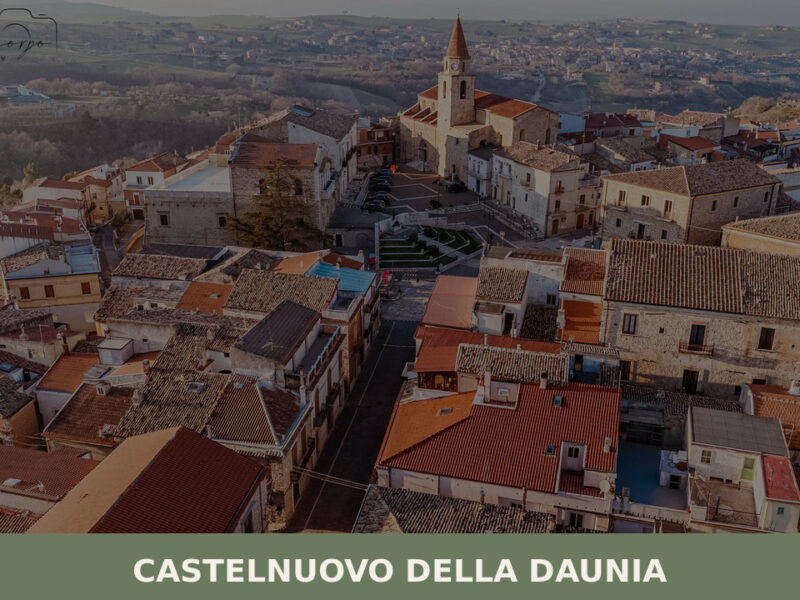
A compact hill village at 543 metres in Puglia's Subappennino Dauno, Castelnuovo della Daunia offers medieval lanes, panoramic views over the Tavoliere, and the quiet rhythms of inland southern Italy.
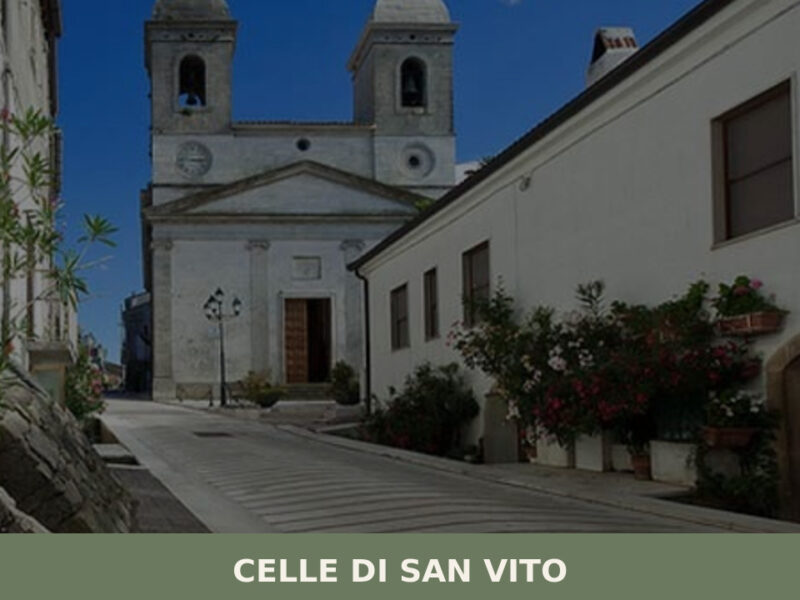
A 148-resident Franco-Provençal enclave at 726 metres in the Daunia sub-Apennines. Discover what to see in Celle di San Vito, from medieval stone lanes to linguistic heritage.
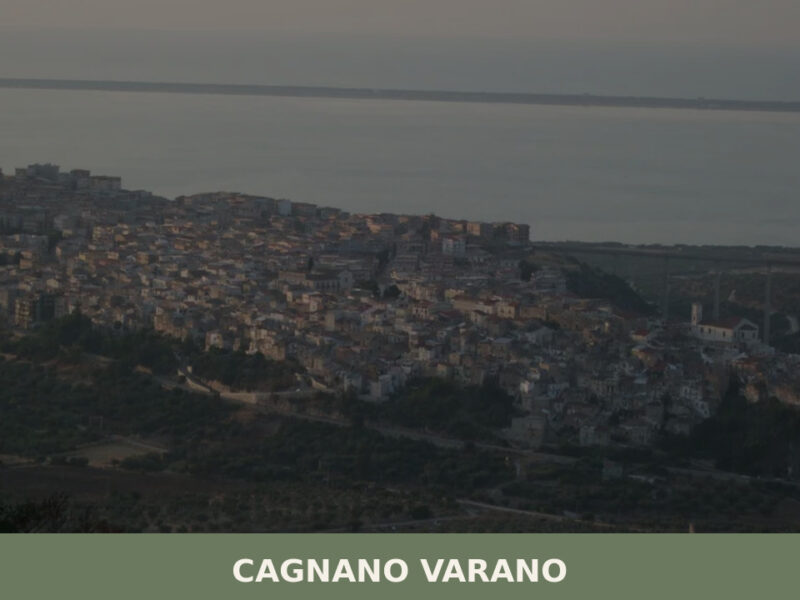
Discover Cagnano Varano, a quiet Gargano village overlooking Italy's largest southern lagoon. Explore ancient caves, lakeside trails, and authentic Puglian flavours.
📝 Incorrect information or updates?
Help us keep the Carapelle (Italia) page accurate and up to date.


