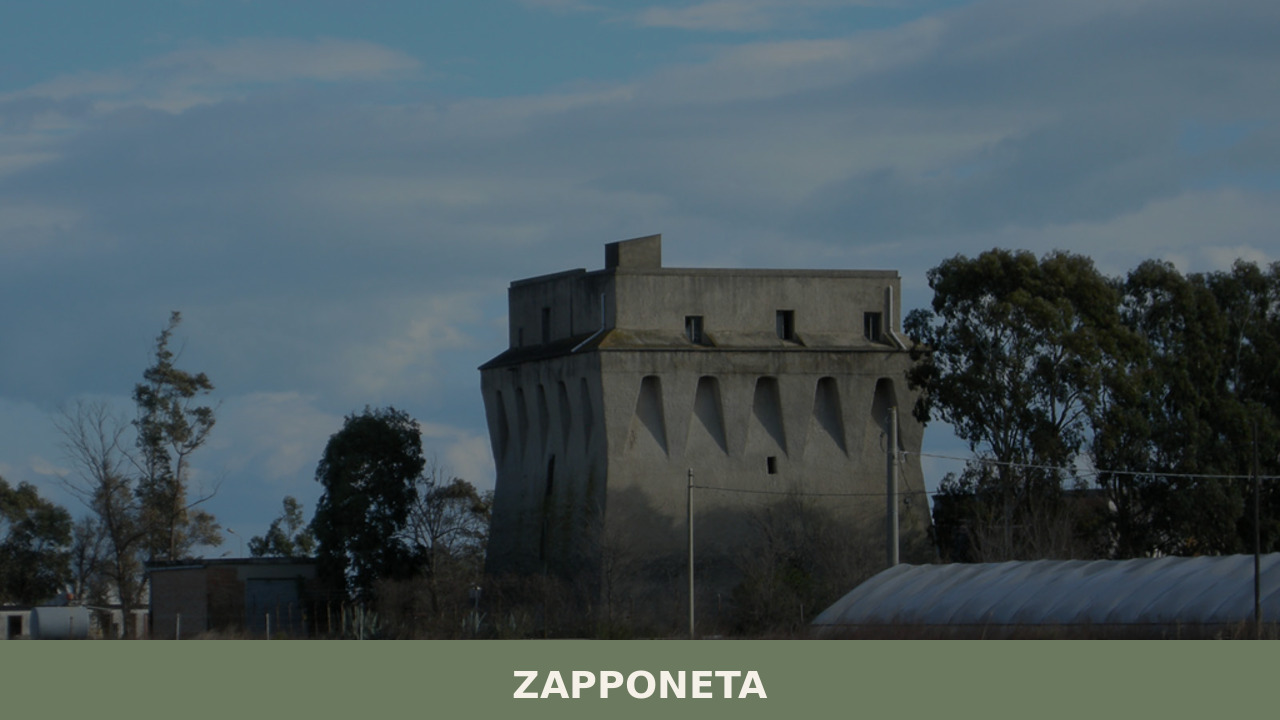
A flat Adriatic village at two metres above sea level, Zapponeta sits where the Tavoliere plain meets the coast. Salt, wind, and wheat define this quiet corner of Foggia province.
Salt air drifts across flat, sun-bleached fields where the Tavoliere plain meets the Adriatic. At two metres above sea level, this is land that barely rises from the water table — a place where sky and earth share the same pale, luminous quality in the hours before noon. Zapponeta, home to just over 3,200 inhabitants in the province of Foggia, is one of Puglia’s youngest and least-visited municipalities. For those wondering what to see in Zapponeta, the answer begins not with monuments but with landscape: a territory shaped by salt, wind, and the slow rhythms of coastal agriculture.
Zapponeta’s origins are tied to the vast salt flats and marshlands that once defined this stretch of the Adriatic coast. The settlement grew around the activities of salt harvesting and sheep-driving along the ancient transhumance routes — the tratturi — that crisscrossed the Tavoliere plain for centuries. Its name likely derives from a local dialectal term, though etymological certainty remains elusive; some scholars connect it to “zappa,” the Italian word for hoe, reflecting the agricultural character of the community from its earliest days.
For much of its history, Zapponeta was not an autonomous municipality but a fraction of the neighbouring town of Trinitapoli. The settlement existed in the administrative shadow of larger centres, its identity defined by the seasonal labour of farming families who worked the flat, alluvial soil between the Ofanto river basin and the coast. It was only in 1963 that Zapponeta gained municipal independence — making it one of the youngest comuni in all of Italy. That late autonomy speaks to the village’s character: a place that has always existed on its own terms, quietly, without the feudal castles or aristocratic patronage that shaped many Puglian towns.
The surrounding territory holds deeper archaeological layers. The Tavoliere plain is one of the most important Neolithic landscapes in Europe, and the broader area around Foggia province has yielded evidence of human settlement stretching back thousands of years. Zapponeta itself, though modest in built heritage, sits within this ancient, continuously worked agricultural terrain — a fact that gives even its simplest structures a sense of accumulated human presence.
The parish church of San Michele Arcangelo stands at the centre of village life, its simple façade typical of twentieth-century religious architecture in the Tavoliere. Inside, the single nave holds modest devotional artworks and serves as the gathering point for Zapponeta’s patron saint festivities each September. The building reflects the village’s youth — functional, unadorned, built for a community that earned its independence within living memory.
Zapponeta’s municipal territory includes a stretch of sandy Adriatic coastline that runs flat and wide toward the horizon. Unlike the rocky coves further south along the Puglian coast, these beaches are low and open, bordered by dune vegetation and shallow waters. In summer, modest lido facilities appear; outside the season, the shore returns to an emptiness that feels almost geographic in scale — just sand, sea, and the sound of wind through marram grass.
Just kilometres from Zapponeta lies one of Europe’s largest salt works, the Saline di Margherita di Savoia. These vast evaporation ponds, operational since Roman times, attract flamingos, avocets, and other wading birds in significant numbers. The salt flats form the ecological and economic context for Zapponeta’s existence, and a visit here explains the landscape’s character more than any single building could.
The agricultural flatlands surrounding Zapponeta constitute an attraction in themselves for anyone interested in Italy beyond the postcard. Olive groves, artichoke fields, and vineyards extend in all directions beneath enormous skies. Walking or cycling the farm roads at dawn reveals the geometry of irrigation channels, the pale dust of tractor paths, and the occasional masseria — a fortified farmhouse — standing alone against the plain, silent and thick-walled.
The low-lying territory around Zapponeta includes pockets of coastal wetland that serve as important habitat for migratory birds along the Adriatic flyway. These marshy zones, while lacking formal visitor infrastructure, reward patient observation. Herons, egrets, and seasonal migrants use the shallow water and reed beds, making this area of quiet ecological significance within Puglia’s broader network of protected coastal environments.
Zapponeta’s kitchen belongs to the Tavoliere tradition — a cuisine built on wheat, olive oil, and vegetables grown in mineral-rich alluvial soil. Bread is central: the region produces dense, golden loaves from locally milled durum wheat, often baked in wood-fired ovens and eaten with raw olive oil and coarse salt — salt, naturally, from the nearby Margherita di Savoia flats. Orecchiette and other handmade pasta shapes appear with cime di rapa (turnip tops) or simple tomato sauces. Artichokes, cardoncelli mushrooms, and lampascioni (wild hyacinth bulbs) are foraged or cultivated nearby and prepared with an economy of seasoning that lets the ingredient speak.
Seafood from the Adriatic — mussels, clams, octopus, and small fish — supplements the land-based diet, reflecting Zapponeta’s position between coast and plain. The province of Foggia is also known for its DOP olive oils and Nero di Troia wines, a robust red grape variety indigenous to northern Puglia. Dining options in Zapponeta are limited to a handful of trattorias and agriturismi; expect hand-written menus, unhurried service, and portions calibrated for people who have spent the morning working outdoors.
Late spring — April through early June — offers the most balanced conditions: warm days without the oppressive heat that settles over the Tavoliere in July and August, when temperatures routinely climb above 35°C and the flat terrain offers no shade or breeze. The coastline becomes active in summer, drawing regional beachgoers, but the village itself remains quiet year-round. September brings the Festa di San Michele Arcangelo, the patron saint celebration, which fills the streets with processions, music, and communal meals — a concentrated window into local identity.
Birdwatchers should time visits to coincide with migratory seasons: autumn (September–November) and spring (March–May), when the wetlands and salt flats host the greatest diversity of species. Winter is mild by northern European standards but can be grey and wind-swept; the Adriatic coast in January has a stark, cinematic quality that suits solitary walks but little else. Regardless of season, Zapponeta is best understood as a base for exploring the broader territory rather than a destination with days of scheduled sightseeing.
Zapponeta is accessible by car via the SS16 Adriatica, the main coastal road linking Bari to Foggia along the Adriatic. From the A14 motorway (Bologna–Taranto), take the Cerignola Est or Trinitapoli exit and follow provincial roads east toward the coast — the drive from the motorway takes roughly 20 minutes. Foggia, the provincial capital, lies approximately 45 kilometres to the northwest. Bari, with its international airport (Karol Wojtyła Airport), is about 100 kilometres to the south, reachable in just over an hour by car.
Rail connections are limited. The nearest stations with regular Trenitalia service are at Trinitapoli and Margherita di Savoia, both a short drive from Zapponeta. From Foggia’s main station — a junction on the Milan–Lecce line — local buses or a rental car complete the journey. For travellers arriving at Bari airport, hiring a car is the most practical option; public transport connections to this part of the Tavoliere require patience and multiple changes. The terrain is flat and road conditions are good, making cycling a viable alternative for those arriving with equipment.
From the sea-level plains of Zapponeta, the landscape transforms dramatically as you move inland and north toward the Gargano promontory. Rignano Garganico, perched high on a limestone ridge overlooking the Tavoliere, offers a startling contrast: where Zapponeta spreads flat and open, Rignano clings to vertical rock, its narrow streets and ancient houses commanding panoramic views across the plain below. The drive between the two — roughly an hour — traces one of the most dramatic topographic shifts in southern Italy, from alluvial farmland to karst mountain in the space of fifty kilometres.
Further into the Gargano massif, Monte Sant’Angelo stands as one of Puglia’s most historically significant settlements, its Sanctuary of San Michele a UNESCO-recognised pilgrimage site since the fifth century. Together, these three villages — coastal Zapponeta, ridge-top Rignano, and sacred Monte Sant’Angelo — describe the full vertical range of Puglia’s northern landscape, from sea level to mountain sanctuary, each shaped by entirely different forces of geography, economy, and faith.
A hill village of 378 residents at 489 metres in the Daunian Subapennines. Volturara Appula offers medieval lanes, panoramic views over the Tavoliere, and the quiet of a place most travellers never find.
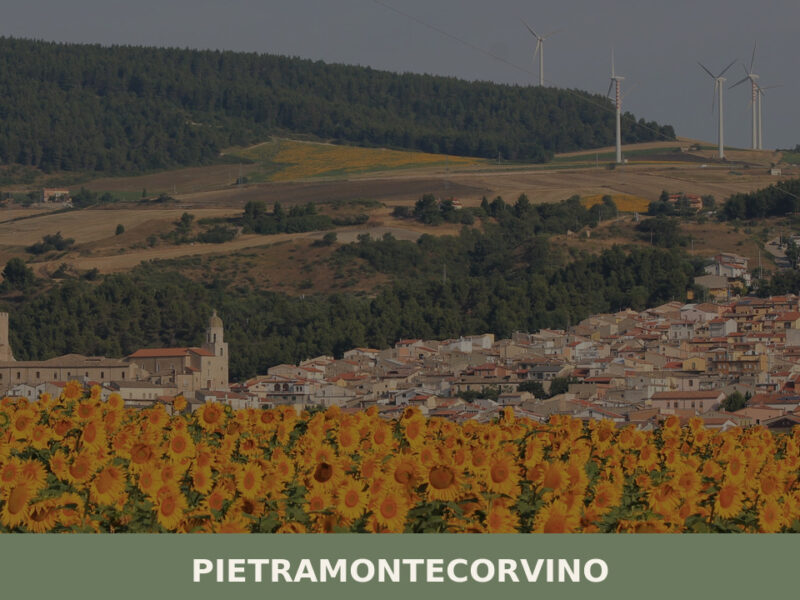
A medieval hill village at 456 metres above the Tavoliere plain, Pietramontecorvino preserves a rock-carved old quarter, Norman tower, and the quiet rhythms of Daunia's agricultural past.
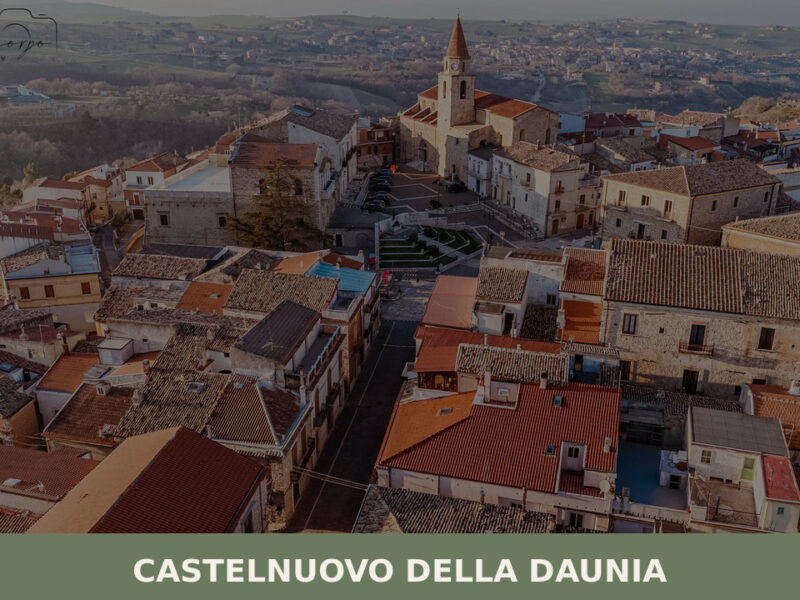
A compact hill village at 543 metres in Puglia's Subappennino Dauno, Castelnuovo della Daunia offers medieval lanes, panoramic views over the Tavoliere, and the quiet rhythms of inland southern Italy.
📝 Incorrect information or updates?
Help us keep the Zapponeta page accurate and up to date.