


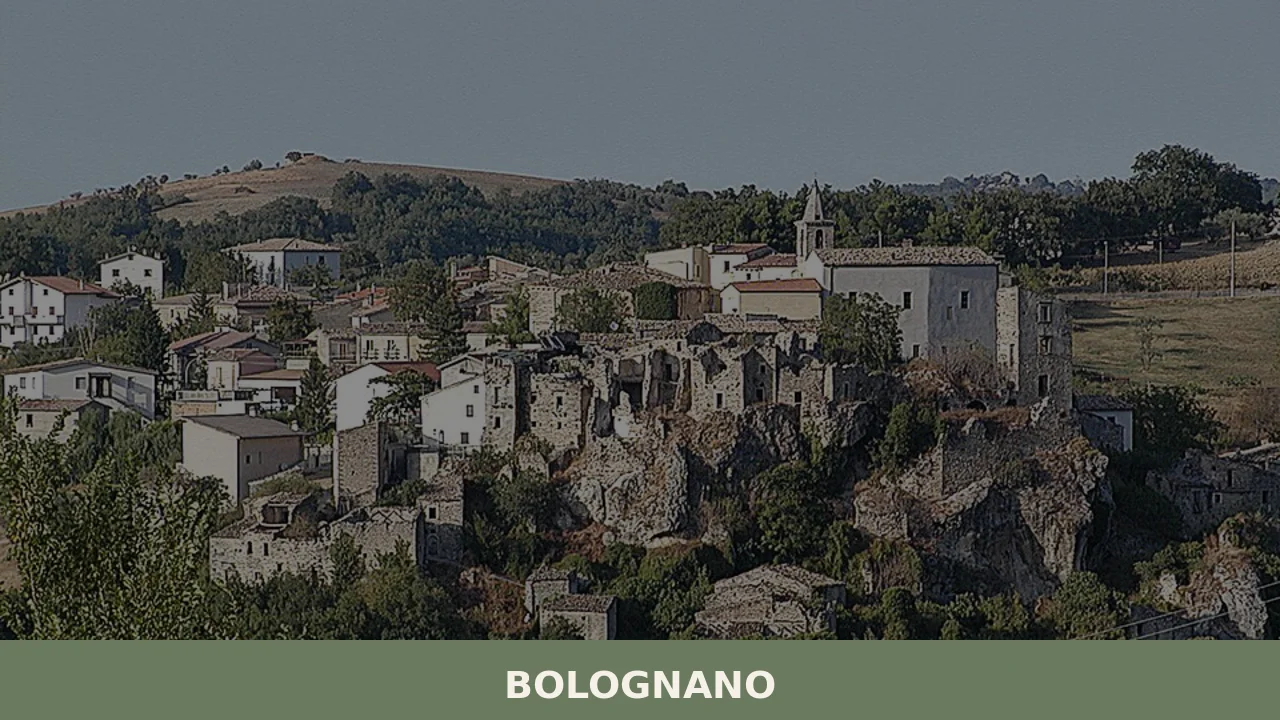
Bolognano
At 276 metres above sea level, along the Orta valley, Bolognano has a current population of 1,002 and occupies a stretch of flatland in the province of Pescara that served, between 1989 and 1992, as the site of an international art experiment conceived by the German artist Joseph Beuys. Asking what to see in Bolognano […]
Discover Bolognano
At 276 metres above sea level, along the Orta valley, Bolognano has a current population of 1,002 and occupies a stretch of flatland in the province of Pescara that served, between 1989 and 1992, as the site of an international art experiment conceived by the German artist Joseph Beuys. Asking what to see in Bolognano means crossing a landscape where geology, contemporary art and medieval religious structures coexist just a few steps from one another, between the gorges carved by the river and the low-rise houses of the old town.
History and origins of Bolognano
The name Bolognano appears in documents from the 11th century onwards, linked to the properties of the Abbey of San Clemente a Casauria, the great Benedictine complex founded in 871 by Emperor Louis II in the nearby Pescara valley. The village depended on the abbey for the management of its farmland and for civil administration, and this relationship shaped its development over several centuries. Its position along the course of the Orta — a tributary of the Pescara — made Bolognano an obligatory passage between the Adriatic coast and the interior areas of the Maiella massif.
During the feudal period, the settlement passed under the control of various noble families, including the D’Aquino and the Caracciolo, following the typical fortunes of the Kingdom of Naples. The parish church dedicated to Sant’Antonio Abate, patron saint of the village, is the most important religious nucleus and is celebrated every 17 January with a procession and the lighting of ritual fires. The local economy was long based on sheep farming and olive cultivation, activities that still define the surrounding landscape today.
From the late 1980s, the presence of the German artist Joseph Beuys — who chose Bolognano as a place for research and experimentation — and the subsequent creation of the Foundation dedicated to him, with the collaboration of the artist Lucrezia De Domizio Durini, brought the name of this village into international cultural circuits, a fact that still sets Bolognano apart from many settlements of a similar size. Detailed information on local history is available on the official website of the Municipality.
What to see in Bolognano: 5 main attractions
1. The San Martino Gorges and the Valle dell’Orta Nature Reserve
The River Orta has carved limestone walls up to two hundred metres high, creating one of the deepest gorges in the central Apennines. The area is part of the Valle dell’Orta Regional Nature Reserve, established in 1989, and is home to otters, peregrine falcons and rare cliff-dwelling vegetation. The trails start directly from the valley floor and follow the watercourse for several kilometres.
2. Church of Sant’Antonio Abate
The main religious building in Bolognano, dedicated to the patron saint celebrated on 17 January. The structure retains a simple façade with a stone portal and a single-nave interior containing several decorative elements dating to the 18th century. The square in front of it is the focal point of the village’s community life.
3. The Foundation and the link to Joseph Beuys
Between 1972 and 1985, the German artist Joseph Beuys frequented Bolognano, planting over seven thousand oaks as part of the Difesa della Natura (Defence of Nature) project. The Foundation created by Lucrezia De Domizio Durini has kept this legacy alive. Several permanent installations and original documents can still be found in the village and consulted at the local exhibition spaces.
4. Grotta dei Piccioni
Located in the rock face overlooking the Orta valley, this cave was used as a place of worship and burial from the Neolithic period onwards. Excavations carried out from the 1950s brought to light ceramics, bone remains and traces of funerary rites dating from the 4th to the 2nd millennium BC. Access is possible via a marked trail along the reserve.
5. The old town and the Palazzo Ducale
The streets of the historic core retain a compact layout with buildings in local stone, carved portals and external staircases. The Palazzo Ducale, dating to the feudal period, stands out for its imposing size and its elevated position above the rest of the settlement. From the upper part of the village, the view opens onto the plain below and the walls of the gorge.
Traditional cuisine and local products
The cuisine of Bolognano reflects the agro-pastoral tradition of the middle Pescara valley. The most common dishes are sagne e fagioli, homemade pasta dressed with lamb ragù, and pallotte cace e ove — cheese and egg fritters, fried and then cooked in tomato sauce. The extra virgin olive oil produced in the area falls under the Aprutino Pescarese PDO, one of the protected designations of origin in the province of Pescara, obtained mainly from the Dritta cultivar.
In the autumn months, the olive harvest sets the rhythm of village life. Montepulciano d’Abruzzo DOC wine accompanies most dishes. In the outlying hamlets and in the centre, a number of trattorias and agriturismos offer menus tied to the seasons, with first courses based on pulses and sheep’s meat. Traditional sweets include bocconotti — small shortcrust pastry cases filled with grape jam or chocolate cream — prepared above all for the patron saint’s feast days.
When to visit Bolognano: the best time
The climate of the middle Pescara valley makes it possible to visit Bolognano in almost any season, but spring — between April and June — offers the best conditions for walking the trails of the Valle dell’Orta Reserve, when the water level in the river is still high and the vegetation is at its fullest. In summer, temperatures can exceed 30 °C, making the gorges a naturally cooler alternative to the surrounding plain.
On 17 January, the feast of Sant’Antonio Abate is celebrated with the blessing of the animals and the lighting of the farchie — large bundles of burning reeds —, a tradition found in various towns across Abruzzo. Autumn coincides with the olive harvest and a calendar of local food festivals linked to the produce of the land. Winter is the quietest period, with few tourists but with the opportunity to observe the gorge landscape stripped of foliage, when the geological structure of the rock walls is fully exposed.
How to get to Bolognano
Bolognano can be reached from the A25 Roma–Pescara motorway, Alanno-Scafa exit, continuing for about 12 kilometres southward along the SP 68. The distance from Pescara is 35 kilometres, which takes approximately 40 minutes. From Rome the journey is roughly two and a half hours for 190 kilometres.
The nearest railway station is Scafa, on the Roma–Sulmona–Pescara line, 10 kilometres from Bolognano. Abruzzo Airport in Pescara is 40 kilometres away. For those coming from the south, the alternative is the A14 Bologna–Taranto motorway, exiting at Pescara Ovest and continuing on the A25 to Alanno-Scafa. The village is also connected to nearby centres by TUA regional bus services, although departures are limited, especially on public holidays.
What to see in Bolognano and surroundings: other villages in Abruzzo
Bolognano’s position, between the Pescara valley and the first foothills of the Maiella, makes it possible to reach other centres of considerable interest in a short time. Heading south, into the Sagittario valley, you come to Bugnara, a village in the province of L’Aquila that preserves the church of Santa Maria della Neve and a clearly legible medieval urban layout, set on a hill overlooking the Sulmona plain. The distance from Bolognano is approximately 50 kilometres through the Peligna valley.
Heading south-east, past the border with the province of Chieti, Borrello offers one of the region’s least known natural phenomena: the Cascate del Verde, with a total drop of over 200 metres, the highest waterfalls in the Apennines. Combining a visit to Bolognano with a stop at Borrello allows you to cross very different landscapes in less than an hour’s drive, from the Orta river plain to the deep gorges of the Sangro. Further information on the region is available on the Italia.it portal.
In Abruzzo More villages to discover
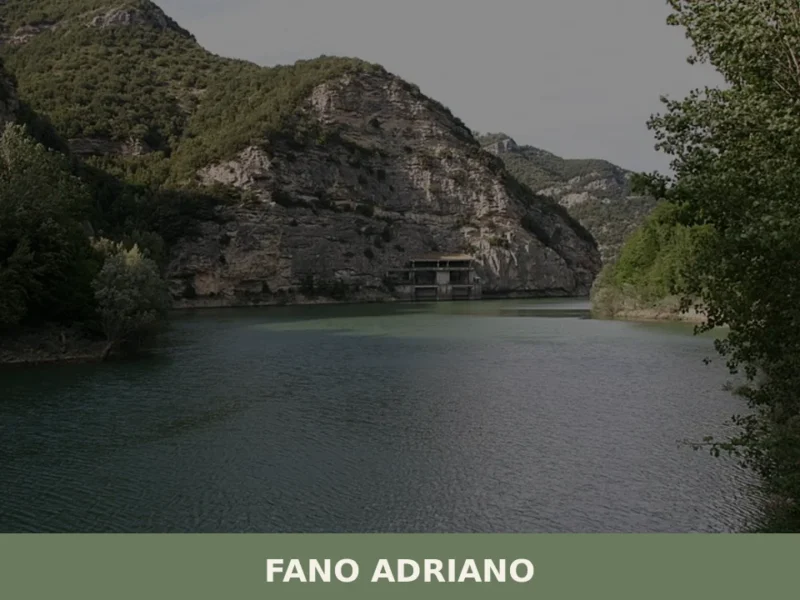
Fano Adriano
Fano Adriano, 750 meters above sea level in the province of Teramo, appears as an alpine settlement in the heart of mountainous Abruzzo, with a current population of 249 inhabitants. Its core, developed along the ridges leading to the Gran Sasso massif, documents centuries of human presence in a geographical context that has influenced its […]
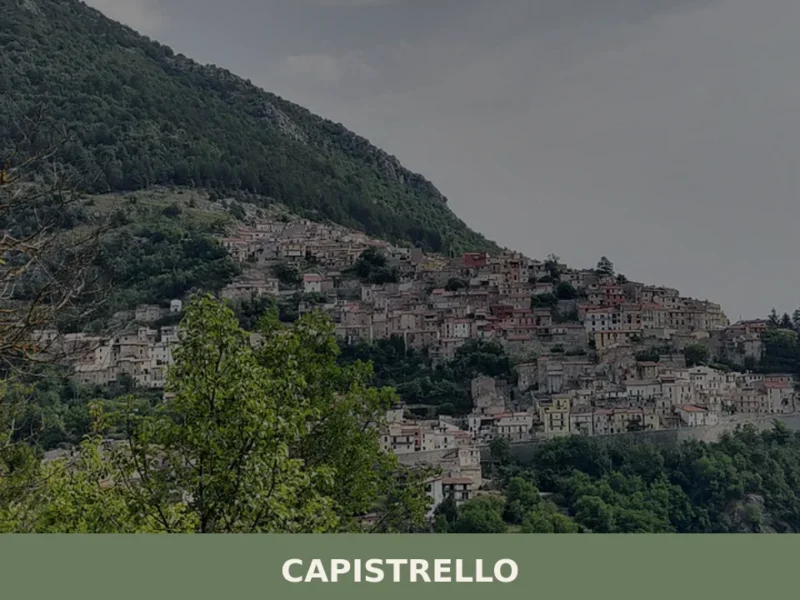
Capistrello
In 1902, a flood of the River Liri devastated the town and forced its inhabitants to rebuild entire neighbourhoods in the upper part of the settlement: that wound redrew the map of Capistrello, a village of 5,309 residents in the Marsica area, standing at 734 metres above sea level in the province of L’Aquila. Anyone […]
Canosa Sannita
At 231 metres above sea level, on the plain that opens between the Maiella massif and the Teatine coast, Canosa Sannita is home to 1,268 inhabitants spread across an agricultural landscape where the cultivation of vines and olive trees marks the rhythm of the seasons. The village’s very name carries a precise indication: a reference […]





📝 Incorrect information or updates?
Help us keep the Bolognano page accurate and up to date.