


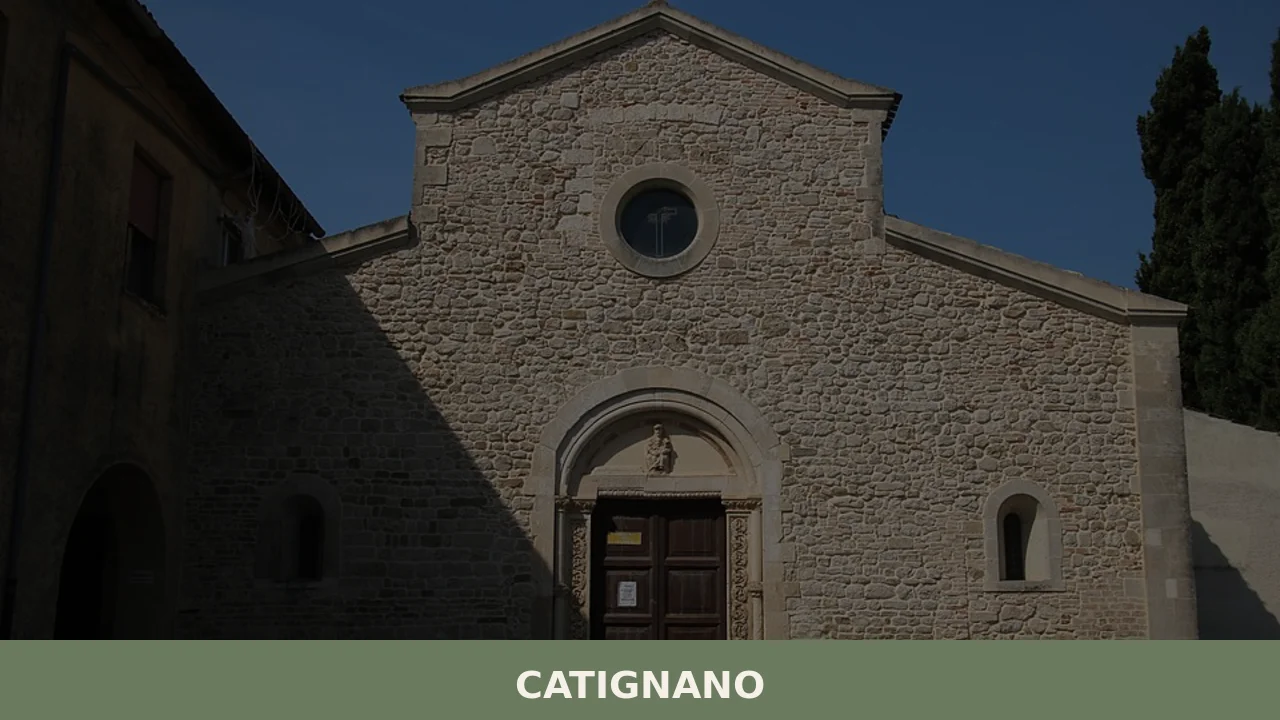
Catignano
Catignano has a current population of 1,227, spread across a hilly territory at 365 metres above sea level in the province of Pescara. The municipality extends along a ridge separating the Nora and Cigno valleys, two watercourses that flow into the Pescara river. Those looking for what to see in Catignano will find a rural […]
Discover Catignano
Catignano has a current population of 1,227, spread across a hilly territory at 365 metres above sea level in the province of Pescara. The municipality extends along a ridge separating the Nora and Cigno valleys, two watercourses that flow into the Pescara river. Those looking for what to see in Catignano will find a rural settlement that has retained its medieval layout, with a compact building fabric and a mother church still at the centre of civic life. The Vera Croce (True Cross), patron of the village, is celebrated every year on 3 May with a procession that winds along the streets of the old town.
History and origins of Catignano
The place name Catignano most likely derives from the Latin gentile name Catinius, indicating a Roman-era agricultural estate — a praedium Catinianum — following a naming pattern common to many settlements in central Italy. The Roman presence in the middle Pescara valley is documented by scattered archaeological finds in the surrounding area, although no systematic excavations have been carried out in Catignano to confirm an exact date of origin.
The first written reference to the inhabited centre dates to the medieval period, when the village fell within the orbit of feudal holdings linked to the diocese of Chieti. Like most of the hilltop settlements along the Abruzzo foothills, Catignano passed through several lordships: Angevin registers from the 13th and 14th centuries record the existence of a small fortified centre that controlled the routes connecting the Adriatic coast with the Apennine interior. The fief later became part of the administrative system of the Kingdom of Naples, following the political fortunes of the region until Italian Unification.
During the 19th and 20th centuries, Catignano shared with neighbouring villages the phenomenon of emigration, which significantly reduced the resident population. The local economy remained tied for a long time to olive and vine cultivation, activities still visible today in the agricultural landscape surrounding the town centre. For further information on the municipality’s administrative history, consult the official website of the Municipality of Catignano.
What to see in Catignano: churches, architecture and landscape
1. Church of the Santa Croce
The main place of worship in the village, dedicated to the Vera Croce (True Cross), patron of Catignano. The current structure features elements attributable to 17th- and 18th-century interventions, with a simple masonry façade and a single-nave interior. Inside, liturgical furnishings and processional statues used during the patron saint’s feast on 3 May are preserved.
2. Historic centre and medieval urban fabric
The old core of Catignano retains a compact layout with local stone houses aligned along narrow streets running parallel to the ridge. The terraced houses, many of which still have carved stone doorways and external staircases, reflect a rural building typology widespread in the Vestina area. The absence of large-scale building interventions has preserved the legibility of the original layout.
3. Fountains and rural wash houses
Several public stone fountains survive across the municipal territory, once essential for water supply and clothes washing. These structures, also found in the outlying hamlets, are a recurring feature of the Abruzzo rural landscape and mark the points of social gathering for farming communities.
4. Olive-growing landscape of the Pescara hills
The hills around Catignano are covered with olive groves producing extra virgin olive oil according to methods long established in local farming tradition. The altitude of 365 metres and the aspect of the slopes create favourable conditions for growing the Dritta variety, widespread in the Vestina area. Terracing and dry-stone walls define the geometry of the fields.
5. Viewpoints over the Majella and Gran Sasso
From the upper part of the village and from the surrounding rural roads, on clear days the profiles of the Majella to the south-west and the Gran Sasso massif to the north-west are clearly visible. The ridgetop position offers a wide visual range that takes in the Pescara valley and the hilly belt extending to the Adriatic coastline.
What to see in Catignano: cuisine and local produce
The table in Catignano reflects the peasant tradition of the Pescara hills. Extra virgin olive oil is the cornerstone product: the province of Pescara falls within the production area of Aprutino Pescarese DOP oil, obtained mainly from Dritta olives harvested by hand or with mechanical aids. Among first courses, the local tradition includes sagne e fagioli, irregularly cut homemade pasta cooked with borlotti beans, garlic, oil and chilli pepper. Arrosticini, skewers of diced sheep meat grilled on a furnacella, remain the most popular dish at communal gatherings.
Local wine production falls within the DOC Abruzzo designation, with Montepulciano d’Abruzzo red and Trebbiano d’Abruzzo white as the main references. In the autumn months, the olive harvest sets the rhythm of the village’s agricultural calendar: local mills process the fruit within a few hours of picking, following production rules that favour cold extraction. Farms in the area sell oil and wine directly, often by appointment.
When to visit Catignano: the best time of year
Catignano’s hill climate brings hot but breezy summers and moderately cold winters, with average winter temperatures that rarely drop below zero for prolonged periods. Spring, between April and June, is the season when the countryside is most legible: the olive groves are in bloom, wheat fields colour the slopes, and daylight lasts well into the evening. Autumn, from October to November, coincides with the olive harvest and the production of new-season oil, a central moment in the local agricultural year.
The feast of the Vera Croce, on 3 May, is the main religious and community event. During the summer, as in many municipalities in the province of Pescara, food festivals and neighbourhood celebrations bring together residents and families who have emigrated. For up-to-date information on events and activities, the Touring Club Italiano includes Catignano in its regional guides to inland Abruzzo.
How to reach Catignano
Catignano is accessible from the A25 Roma-Pescara motorway, exiting at the Alanno-Scafa junction, from where you continue for approximately 15 kilometres south-east along provincial roads. From Pescara, the provincial capital, the distance is around 25 kilometres, covered in about thirty minutes via the main road that climbs the Nora valley.
- By car from Rome: A25 to Alanno-Scafa, then provincial roads to Catignano — approximately 2 hours and 15 minutes (190 km).
- By car from Pescara: SS 151 or inland provincial roads — approximately 30 minutes (25 km).
- By train: the nearest railway station is Scafa, on the Rome-Pescara line, from where you continue by car or local bus.
- By plane: Pescara’s Abruzzo Airport is approximately 30 kilometres away.
Other villages to discover in Abruzzo
Those visiting Catignano who wish to extend their exploration of inland Abruzzo may consider a detour to Fagnano Alto, in the province of L’Aquila. This scattered municipality, made up of several hamlets spread across the eastern slopes of the middle Aterno valley, presents a mountain landscape quite different from the Pescara hills and preserves rural churches with medieval-era frescoes. Comparing the two territories — the cereal and olive-growing hills of Catignano and the pastoral mountains of Fagnano Alto — reveals the geographical variety of Abruzzo across short distances.
In the opposite direction, towards the northern border of the region, Ancarano lies in the Val Vibrata, in the province of Teramo, close to the border with the Marche. The town is known for its agricultural production on the alluvial plain of the Tronto and for a landscape that anticipates the transition into Marche territory. Together with Catignano, these villages form an itinerary that crosses three Abruzzo provinces and three distinct environments: hills, mountains and valley floor.
In Abruzzo More villages to discover
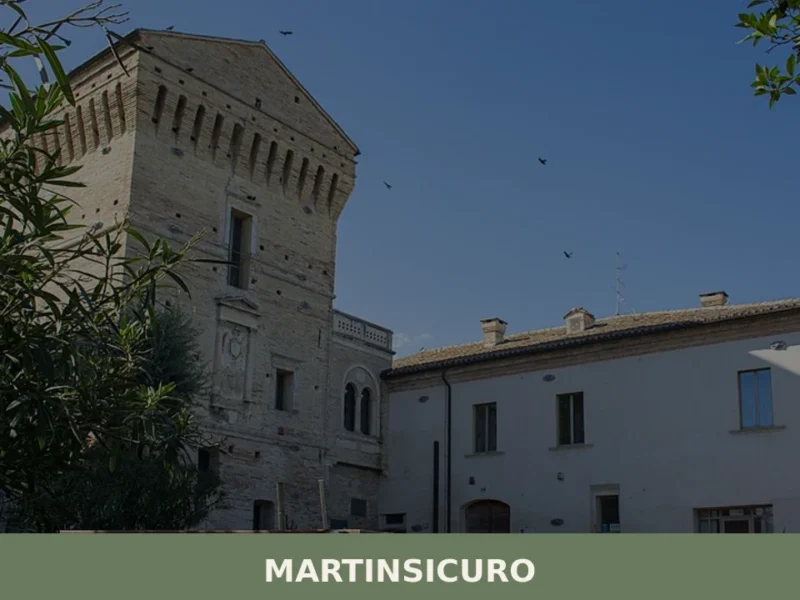
Martinsicuro
Martinsicuro, located 2 meters above sea level in the province of Teramo, has a population of 16,270 inhabitants. Its development is directly linked to the Adriatic coast and the presence of the Tronto river mouth. For those wondering **what to see in Martinsicuro**, the core interest lies in its identity as a seaside town that […]
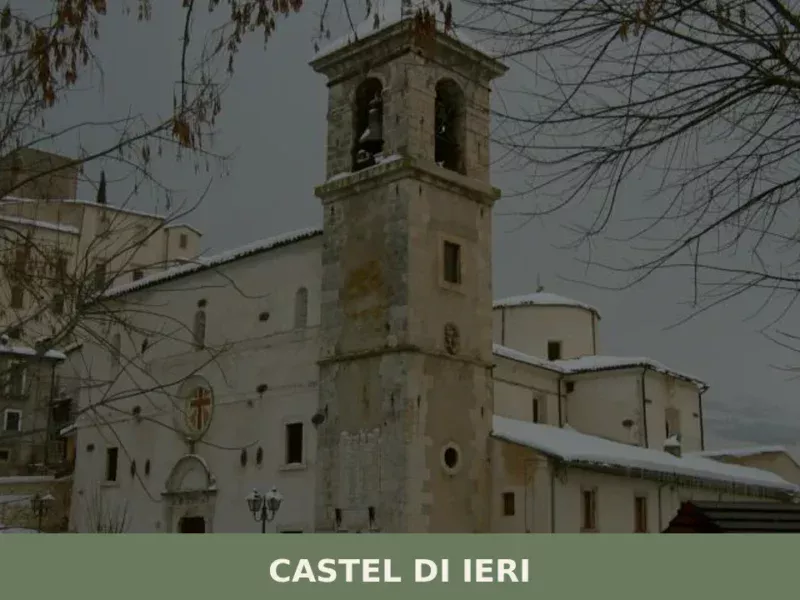
Castel di Ieri
In Castel di Ieri, a village of 289 registered inhabitants at 519 metres above sea level in the Valle Subequana, the most significant feature lies underground: an Italic temple from the 1st century BC, unearthed during the 1980s, which redrew the archaeological map of inland Abruzzo. Anyone looking into what to see in Castel di […]
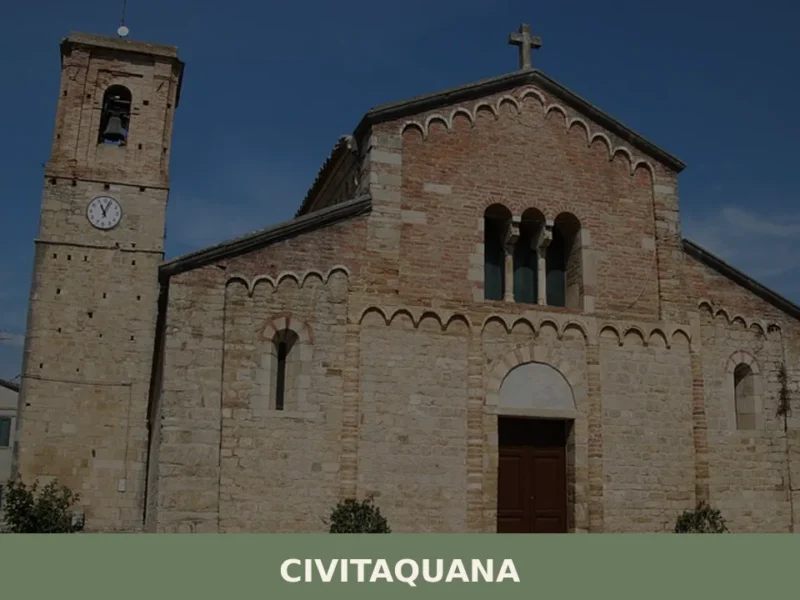
Civitaquana
At 550 metres above sea level, on the eastern slope of the Gran Sasso descending towards the Pescara hills, Civitaquana is home to 1,146 inhabitants spread between the historic centre and the surrounding hamlets. The village’s very name — documented in medieval sources as Civitas Aquanae — reveals an origin linked to the presence of […]




📝 Incorrect information or updates?
Help us keep the Catignano page accurate and up to date.