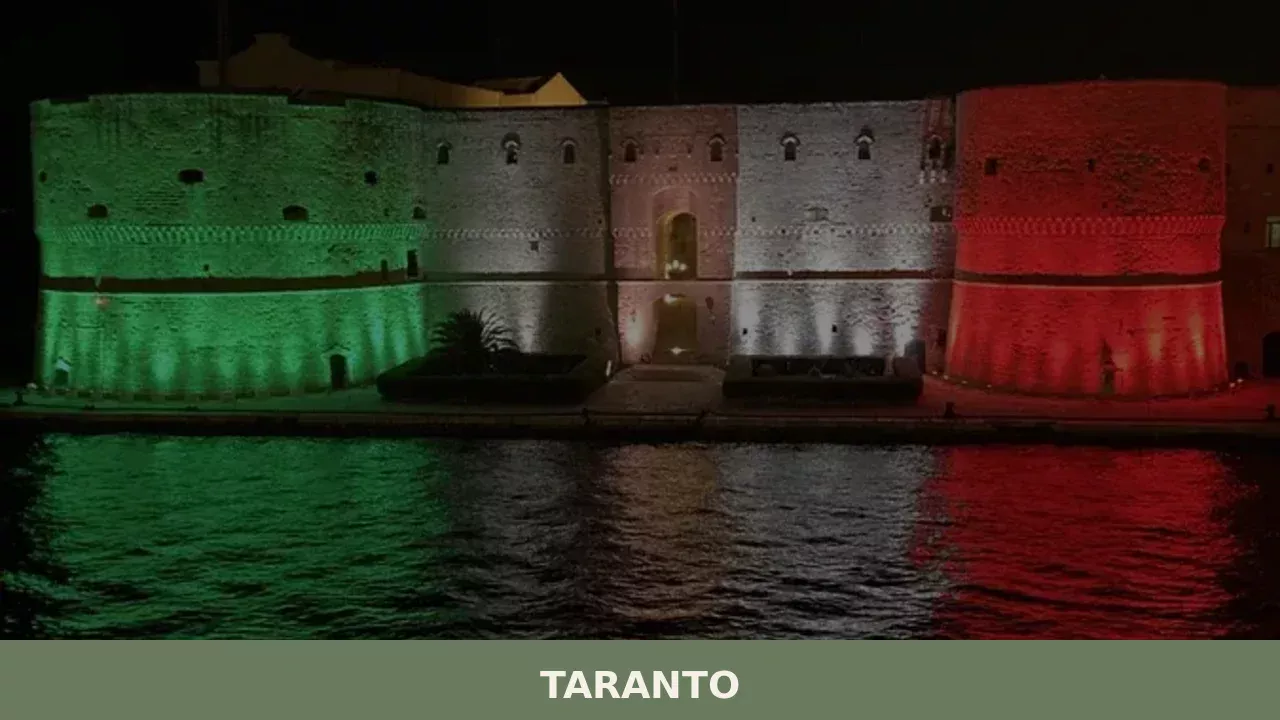
Light bounces off the narrow strait between the old town and the newer quarters, where salt air and industrial sound meet. The city sits on an isthmus barely a few hundred metres wide, flanked on both sides by the sea—a geography that has never been secondary to its identity but central to it.
Taranto is a city of 186,011 people on the Ionian coast of Apulia, sitting at just 15 metres above sea level. Visitors come for the ancient Greek heritage and the working harbour that still defines daily life; what they encounter is neither a museum nor a postcard, but a living place where commerce, tradition and the sea press against one another.
Greek Foundations and Later Centuries
The city’s roots reach back to the Greek colonial world, though the precise details of early settlement lie beyond the scope of verified local records. What is certain is that the harbour—a natural inlet sheltered by islands—has been the constant through centuries of occupation, trade and conflict. Medieval and early modern powers left their mark: walls, churches and the urban pattern still visible today carry traces of those layers.
The patron saint of the city is San Cataldo, a figure woven into local religious life. The devotion to this saint and the cathedral that honours him remain active threads in the city’s spiritual calendar, not archived relics.
The sea is not merely water beyond the shore; it is the engine of the city’s existence.
Urban Geography and the Harbour
Taranto’s layout is inseparable from its maritime position. The narrow isthmus creates two distinct waterfronts: the Mare Piccolo (the inner basin, historically a source of mussels and fish) and the Mare Grande (the open Ionian). This double embrace of water has always made Taranto a working port, not a holiday destination. Cargo ships, fishing boats and ferries share the quays with residents who treat the water as infrastructure as much as scenery.
The old town occupies a compact island reached by crossing bridges from the modern city. Walking its streets reveals a spatial logic built for defence and commerce: narrow lanes, modest palazzi, and the weight of centuries in stone. The newer quarters expand eastward, connected by roads that follow the ancient street plan despite modern sprawl.
The Cathedral and Religious Centre
The cathedral stands as the spiritual anchor of the city, dedicated to San Cataldo. It has endured rebuilding and modification across centuries. The interior holds religious artwork and reflects the devotion of a community that still processes, prays and celebrates feast days with living conviction rather than performed authenticity. This is not a monument preserved for tourism; it is a place of active worship.
The Defensive Islands and Fortifications
Islands within the Mare Piccolo—notably Sant’Antonio and San Paolo—carry traces of fortifications and strategic structures built to control the harbour and defend against raids. These islands remain part of the urban geography, visible from the quays, their historical significance woven into the water landscape. They are not easily visited by casual tourists, yet they shape how residents understand their territory.
Local Food and Seaside Rhythm
The sea provides: fish, mussels from the shallow basins, and seasonal catches that appear on local tables. The agricultural hinterland of Apulia—wheat, olives, vegetables—also feeds the city. Markets and family kitchens preserve knowledge of how to prepare these ingredients, though detailed documentation of specific dishes lies outside this overview. What matters is that eating in Taranto is an act tethered to what the land and water yield, not a curated tourism experience.
The rhythm of the city follows commercial and fishing tides as much as clock time. Early mornings at the fish market, the afternoon pause, evening gatherings on the quays and in the old town squares—these patterns have survived tourism precisely because they are functional, not performed for outsiders.
Visiting Taranto: Access, Season and Local Pace
Most visitors arrive by car or train. The city is well connected by rail to Bari (approximately 100 kilometres north) and to Lecce (roughly 70 kilometres south-east). Road access from the A14 motorway is straightforward. If you arrive by car, expect the usual navigation of a medium-sized city; parking in the old town is restricted, with limited spaces available near the bridges. The new town offers more parking but requires a short walk to the historic centre.
The best time to visit is spring (April–May) or autumn (September–October), when temperatures are moderate and the sea is still warm enough for swimming if you seek the beaches beyond the city. Summer brings heat and crowds; winter is cool and often rainy. The city does not have a pronounced tourist season like coastal resorts, so you will encounter the rhythms of a working place year-round.
| Departure Point | Distance | Travel Time |
|---|---|---|
| Bari | ~100 km | 1.5–2 hours by car or train |
| Lecce | ~70 km | 1–1.5 hours by car |
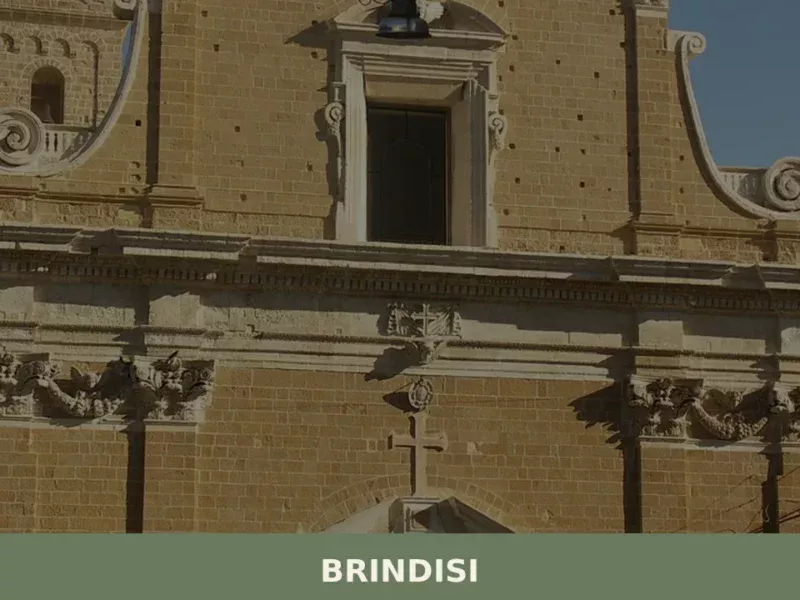
| Brindisi | ~50 km | 45 minutes–1 hour by car |
Plan a visit of at least two days to move beyond first impressions. One day for the old town, the cathedral, and the waterfront; a second day to sit in the rhythm, watch the harbour at work, and understand that this is a lived city, not a museum. Nearby villages in the same province—Carosino, Crispiano, Grottaglie—offer contrasting agricultural and ceramic traditions that round out an understanding of the wider Tarantino region.
For current information about opening hours, guided tours and local events, visit the official city website at www.comune.taranto.it.
 Mountain