
Colledimacine
One hundred and eighty-eight residents in the 2001 census, now down to 158: Colledimacine contracts with the regularity of a slow heartbeat, yet it holds on along the eastern ridge of the Majella massif, at 770 metres above sea level, in the province of Chieti. Anyone wondering what to see in Colledimacine should be prepared […]
Discover Colledimacine
One hundred and eighty-eight residents in the 2001 census, now down to 158: Colledimacine contracts with the regularity of a slow heartbeat, yet it holds on along the eastern ridge of the Majella massif, at 770 metres above sea level, in the province of Chieti. Anyone wondering what to see in Colledimacine should be prepared for a vertical landscape, where cultivated fields quickly give way to limestone rock and where community life revolves around a handful of streets, a church, a town hall and a square that empties before four in the afternoon during winter.
History and origins of Colledimacine
The place name appears in medieval documents in the form Colle de Macine, a probable reference to the grain millstones that exploited the watercourses on the eastern slope of the Majella. The village was part of the feudal holdings linked to the county of Manoppello and passed through the hands of several noble families during the fifteenth and sixteenth centuries, following the same trajectory as many other settlements in Abruzzo Citeriore. Its administrative dependence on the province of Chieti was consolidated with the Napoleonic reforms of the early nineteenth century, when the territory was reorganised into districts and sub-districts.
The patron saint of the village is San Mariano di Évaux, a saint of French origin whose veneration in this part of the Abruzzo Apennines is an unusual case, probably linked to the circulation of cults along transhumance routes and early medieval monastic paths. The patron saint’s feast still represents the main moment of collective gathering for the community, drawing back emigrants and descendants of the village’s original families. During the Second World War, Colledimacine suffered limited damage compared to other centres along the Gustav Line, but the post-war depopulation struck the local agro-pastoral economy hard, triggering the demographic decline that continues to this day.
For further details on the municipality’s administrative history, you can consult the dedicated Wikipedia page.
What to see in Colledimacine: the main attractions
1. Church of San Mariano
The sacred building dedicated to the patron saint retains a single-nave structure with elements attributable to eighteenth- and nineteenth-century interventions. The high altar and several wooden statues are the most notable furnishings. The façade, in local stone, features a simple portal and a bellcote visible from various points around the village.
2. The historic centre and its stone houses
The old core of Colledimacine preserves houses built from Majella limestone, with carved lintels and portals dating to the seventeenth and eighteenth centuries. The buildings press up against one another following a logic that is both defensive and climatic: thick walls to retain heat during the long mountain winters. Some structures still show traces of external stone staircases, a recurring feature in Abruzzo’s rural architecture.
3. The trails towards the Majella
From the municipal territory, hiking trails climb the eastern slope of the Majella massif, now part of the Majella National Park. The routes pass through beech forests and clearings historically used for summer grazing. CAI waymarks cover some of the main itineraries, with elevation gains that can exceed one thousand metres above the village.
4. The fountains and springs
Scattered across the municipal territory, several stone fountains served — and in part still serve — as water supply points for shepherds and farmers. These structures, built from blocks of local limestone, represent a tangible element of the village’s material culture, often overlooked by conventional guides.
5. Viewpoint over the Aventino valley
From the western edge of the settlement, the view opens onto the valley of the Aventino river and the surrounding mountains. On clear days it is possible to make out the profiles of several villages in the province of Chieti, arranged at varying altitudes along the Apennine ridges. There is no equipped platform: the observation point simply coincides with the edge of the road.
Food and local produce
The cuisine of Colledimacine follows the conventions of the agro-pastoral tradition of the Chieti hinterland. Dishes are based on humble ingredients and preparations that require slow cooking: pasta alla chitarra with lamb ragù, pallotte cace e ove (cheese and egg balls fried in tomato sauce), legume soups — chickpeas and lentils grown in the Majella area — and sagne e fagioli. Extra virgin olive oil produced in the lower hill zones of the province of Chieti, often from the Gentile cultivar, accompanies the majority of preparations.
Local dairy production includes pecorino cheeses at various stages of ageing, made from the milk of flocks that graze on the Majella slopes. The municipality does not have restaurants with a wide offering, given the small size of the settlement: it is advisable to check openings and availability by contacting the Municipality of Colledimacine directly, which can provide up-to-date information on agriturismos and active refreshment points in the area.
When to visit Colledimacine: the best period
The altitude of 770 metres means harsh winters, with temperatures regularly dropping below zero between December and February, and frequent snowfalls that can make some secondary roads impassable. The most suitable period to visit the village and the surrounding trails runs from May to October: the long days allow for hikes towards the Majella, and summer temperatures remain moderate compared to the coast, rarely exceeding 28–30 degrees. The feast of San Mariano di Évaux is the main annual event and provides an opportunity to observe the community at its liveliest. In autumn, the beech forests on the eastern slope of the Majella take on an intense colouring that alone justifies the climb up to Colledimacine.
How to reach Colledimacine
By car, the most direct access is from the A25 motorway (Rome–Pescara), exiting at Bussi/Popoli and then continuing south along the provincial road that climbs the Aventino valley. From Pescara the distance is about 80 kilometres, coverable in an hour and a half. From Rome the journey exceeds 200 kilometres, with a travel time of approximately two and a half hours. The nearest railway station with regular connections is Sulmona, about 40 kilometres away: from there it is necessary to continue by private vehicle or scheduled bus, whose timetables — managed by TUA (Trasporto Unico Abruzzese) — are limited and require advance checking. The closest airport is Pescara (Abruzzo Airport), approximately 90 kilometres away.
What to see in Colledimacine and the surrounding area: other villages in Abruzzo
Inland Abruzzo is a territory where settlements are distributed at varying altitudes and distances, each with a distinct character. Visitors to Colledimacine who wish to extend their exploration of the province of Chieti may consider Celenza sul Trigno, a municipality situated in the Trigno valley, further south, where the landscape shifts from mountains to clay hills and where the proximity to Molise has produced a border culture with specific traits in gastronomy and traditions.
For those who prefer to contrast the hinterland with the Abruzzo coastline, Alba Adriatica offers the opposite perspective: a centre on the Teramo coast, developed along the shoreline, where the seaside tourist economy has shaped the urban layout and seasonal rhythm in a radically different way compared to the mountain villages. The distance between Colledimacine and Alba Adriatica — roughly 150 kilometres — also corresponds to a jump in altitude, climate and territorial vocation that illustrates the geographical variety of a region compressed between the Apennines and the Adriatic.
Getting there
Photo Gallery of Colledimacine
Do you have photos of Colledimacine?
Share your photos of the village: the best ones will be added to the official gallery, with your credit.
Send your photosIn Abruzzo More villages to discover
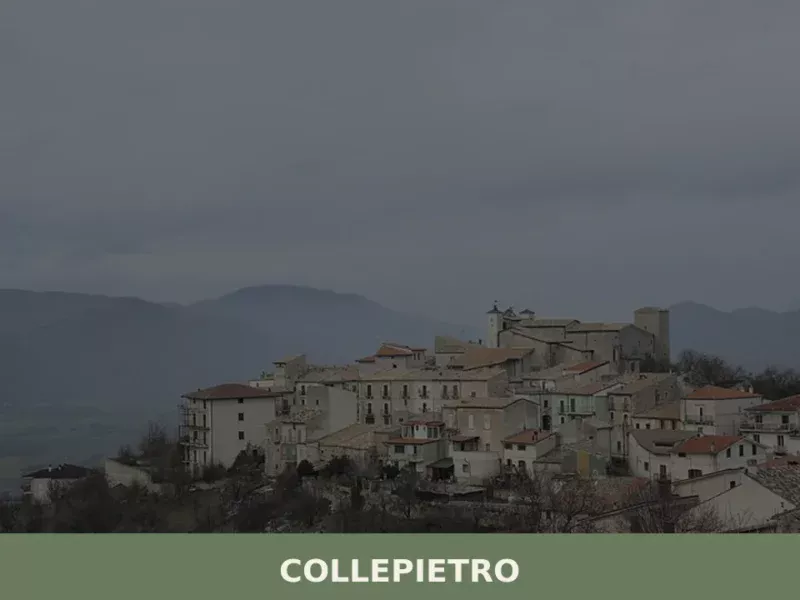
Collepietro
Collepietro has 226 inhabitants and sits at 849 metres above sea level on the eastern slope of the Gran Sasso, in the province of L’Aquila. The municipal territory extends along a ridge overlooking the Piana di Navelli, an area known for saffron cultivation. Those wondering what to see in Collepietro will find a compact settlement […]
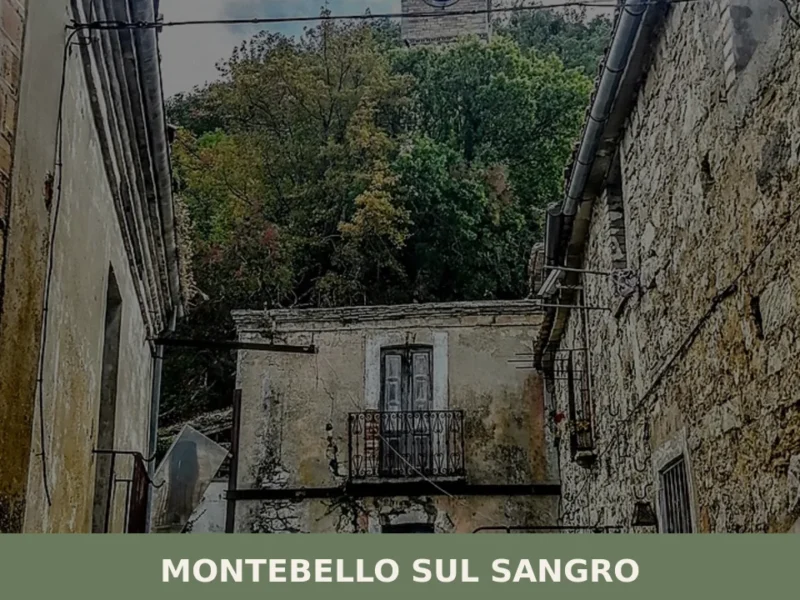
Montebello sul Sangro
what to see in montebello sul sangro? Discover 5 attractions: Church of San Ciriaco and scenic vistas. With 81 inhabitants, explore this mountain village.
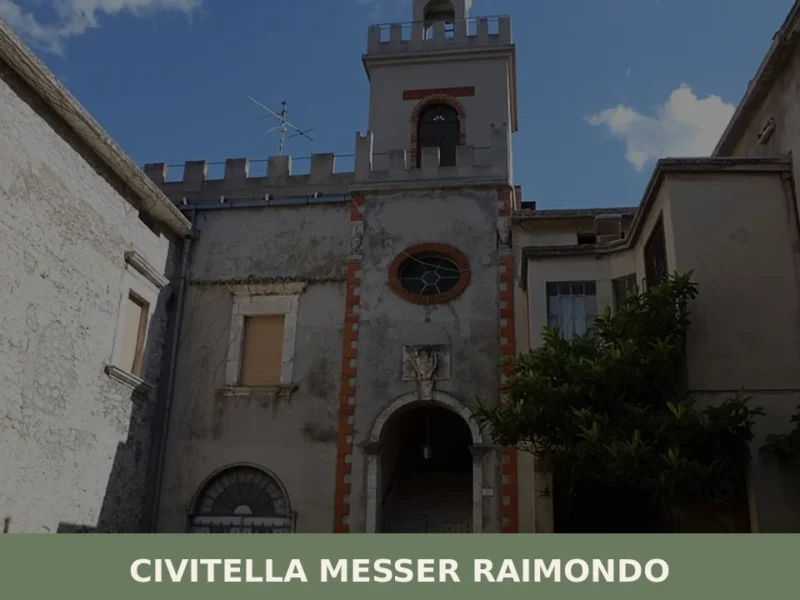
Civitella Messer Raimondo
Civitella Messer Raimondo has 769 inhabitants and sits at 613 metres above sea level, on the eastern slope of the Maiella massif, in the province of Chieti. The village’s name still bears that of a medieval feudal lord — Raimondo — who shaped its political fortunes between the 13th and 14th centuries. Understanding what to […]



📝 Incorrect information or updates?
Help us keep the Colledimacine page accurate and up to date.