


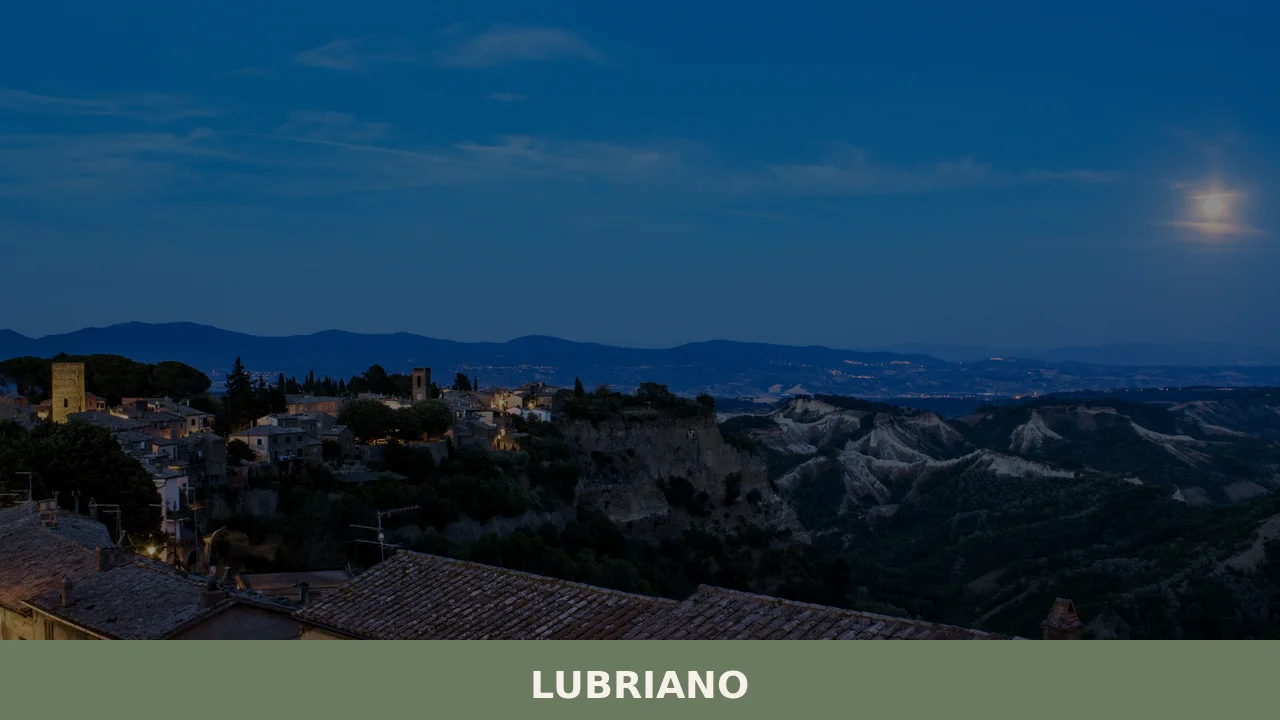
Lubriano
Lubriano has 864 inhabitants and occupies a tuff plateau at 441 metres above sea level, separated from the more famous Civita di Bagnoregio by a calanchi valley nearly two hundred metres deep. The municipal boundary runs along the edge of a gorge that geologists classify as one of the most active in Tuscia for erosion. […]
Discover Lubriano
Lubriano has 864 inhabitants and occupies a tuff plateau at 441 metres above sea level, separated from the more famous Civita di Bagnoregio by a calanchi valley nearly two hundred metres deep. The municipal boundary runs along the edge of a gorge that geologists classify as one of the most active in Tuscia for erosion. Understanding what to see in Lubriano means first of all observing this geological fact: a village built on a platform of volcanic tuff that loses, year after year, fragments of itself into the valley below. The province of Viterbo administers it, but the landscape here belongs more to geology than to bureaucracy.
History and origins of Lubriano
The earliest traces of settlement in the area date back to the Etruscan period: rock-cut chamber tombs carved into the tuff, found along the slopes of the calanchi valley, indicate stable occupation from at least the 6th–5th century BC. The name “Lubriano” likely derives from the Roman gentile name Lubrianus, linked to a landed estate from the imperial age. The continuity of the place name suggests that the site did not experience prolonged periods of abandonment between the Roman era and the early Middle Ages.
In the 12th century, Lubriano appears in documents as a possession of the lords of Bisenzio, a feudal family active in the Lake Bolsena area. It later passed under the control of the Monaldeschi della Cervara, a branch of the powerful Orvietan house that dominated much of southern Tuscia. In 1354, Cardinal Albornoz, engaged in reconquering papal territories, included Lubriano in the operations to subdue the feudal holdings of Lazio. From that point, the village remained under the administration of the Papal States until Italian Unification, with an interlude under the Farnese family in the 16th century, when it was absorbed into the Duchy of Castro.
The destruction of Castro in 1649 by order of Pope Innocent X returned Lubriano to the Apostolic Chamber. From that moment, the village followed the administrative fortunes of the Patrimony of St Peter in Tuscia, with no further significant feudal transfers. The current urban layout — a compact nucleus along a main road with perpendicular side alleys — preserves the 13th-century plan, partly modified by 17th-century interventions visible in the window frames and peperino doorways.
What to see in Lubriano: churches, viewpoints and calanchi
Church of San Giovanni Battista
Dedicated to the patron saint of the village, celebrated on 24 June, this parish church has a single-nave plan with 18th-century modifications to the façade. Inside are a stucco altar and canvases from the Lazio school datable to the 17th and 18th centuries. Its position, at the highest point of the village, makes it a visual landmark from every angle.
Calanchi viewpoint
The main panoramic viewpoint is reached from the village square. From here, the view crosses the Valle dei Calanchi all the way to Civita di Bagnoregio, visible in its entirety along with the pedestrian bridge that connects it to the outside world. The calanchi formation, generated by the erosion of Pliocene clays beneath the tuff layer, changes its profile with each season, taking on grey tones in winter and ochre in summer.
Medieval entrance gate
Entry to the historic centre passes through an opening in the 13th-century walls, partially incorporated into later buildings. The tuff arch, with regular ashlar blocks, marks the transition between the provincial road and the old built fabric. The peperino blocks at the base indicate an earlier foundation, possibly from the 12th century.
Trail through the Valle dei Calanchi
A hiking trail starts from the western slope of the village and descends into the valley along an unpaved route of roughly three kilometres. The elevation change is approximately 200 metres. Along the way, exposed geological stratifications can be observed — blue clays, yellow sands, lithoid tuff — along with vegetation of broom, downy oak and lentisk colonising the less eroded slopes.
Town hall and central square
The municipal seat occupies a building renovated in the 19th century, with a plastered façade and a peperino portal. The square in front, modest in size, functions as the village’s only public space. The patron saint festivities in June and the weekly market are held here. The central fountain, fed by a local spring, bears a date from the late 1800s.
What to see in Lubriano: food and local produce
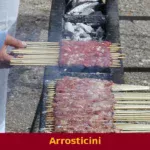
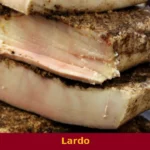
Lubriano’s cuisine follows the repertoire of the Viterbo Tuscia area with certain specificities linked to its hill-country altitude. Pulses — lentils and chickpeas — grow in the surrounding volcanic soils and appear in winter soups, often cooked in terracotta pots with celery, garlic and local extra virgin olive oil. The oil produced in the area belongs to the Tuscia cultivation zone, with Caninese and Frantoio as the prevailing cultivars. The local bread, wood-fired and salt-free in accordance with central Italian tradition, accompanies artisanally produced cured meats — capocollo, guanciale, and sausages aged in tuff cellars.
The potato of the Upper Lazio area finds favourable terrain here: the volcanic soils, well-draining and rich in potassium, yield tubers with firm flesh, used in handmade gnocchi and in frittatas with mentuccia (wild mint). The trattorias in the village — two or three in the historic centre — serve acquacotta, the peasant soup based on wild greens, egg and stale bread, and handmade pasta (lombrichelli or pici) dressed with wild boar ragù or porcini mushrooms gathered in the surrounding oak woods. The local wine is the Est! Est!! Est!!! di Montefiascone DOC, produced just a few kilometres away on the hills around Lake Bolsena.
When to visit Lubriano: the best time
The climate at 441 metres above sea level follows the hill-country pattern of Tuscia: hot but ventilated summers (average July temperatures around 25–27 °C), cold winters with possible overnight frosts between December and February. The most favourable season for observing the calanchi is late spring — May and June — when the dry clays reveal their stratifications with greater clarity and the valley vegetation is at peak bloom. Autumn, between October and November, offers better visibility towards Civita di Bagnoregio thanks to clearer air after the first rains.
The feast of San Giovanni Battista, on 24 June, is the moment of greatest communal liveliness: a procession, bonfires and a collective dinner in the square. In August, a food festival dedicated to local products draws visitors from neighbouring municipalities. For those planning to walk the calanchi trail, it is advisable to avoid the months of heavy rain — November and March — when the clay terrain becomes slippery and unstable.
How to get to Lubriano
Lubriano is reached by car from the A1 motorway: exit at Orvieto, then take the SS71 towards Bolsena and turn onto the SP Teverina. The distance from Orvieto is approximately 20 kilometres, covering a drive of 25–30 minutes. From Viterbo, the provincial capital, the distance is around 35 kilometres along the Cassia bis regional road and then the provincial road to Bagnoregio.
The nearest railway station is Orvieto, on the Rome–Florence line (slow service), connected to the village only by private car or taxi. There are no direct public transport links with a frequency suited to day-trip tourism. The reference airport is Rome Fiumicino, approximately 150 kilometres away (about one hour and forty minutes by car via the A1). Roma Termini station is roughly 130 kilometres away. A free car park is located at the entrance to the village, before the medieval gate.
Other villages to discover in Lazio
The Viterbo Tuscia area concentrates within a few square kilometres a density of villages that share the same volcanic substrate and a common feudal history. To the northwest of Lubriano, towards the Tyrrhenian coast, Arlena di Castro occupies a hilltop position in the territory of the ancient Etruscan city of Castro, destroyed in 1649. The village retains traces of that period and a compact built fabric that warrants a stop during an itinerary through southern Tuscia.
In the opposite direction, towards Lake Bolsena, Gradoli stands out for its 16th-century Palazzo Farnese and the Festa del Purgatorio, one of the best-documented gastronomic events in the province of Viterbo. The two villages, together with Lubriano, form a visiting triangle that covers three different aspects of the territory: the geology of the calanchi, Etruscan-Farnese archaeology, and the lakeside culture of Bolsena. The distance between the three centres does not exceed thirty kilometres, easily covered on provincial roads with light traffic.
In Lazio More villages to discover
Castelnuovo di Farfa
What to see in Castelnuovo di Farfa: 1,032 inhabitants at 358 m in the Sabina. Explore the medieval castle, San Nicola church and PDO cacio fiore. Plan your visit now.
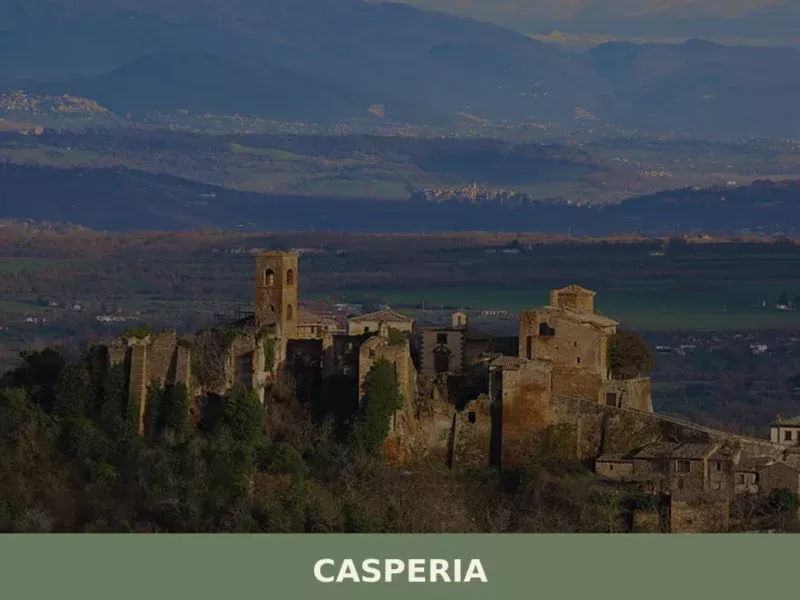
Casperia
What to see in Casperia, a hilltop village at 397 m in Rieti province: medieval centre, 3 PAT-certified products including guanciale. Plan your visit and where to stay.
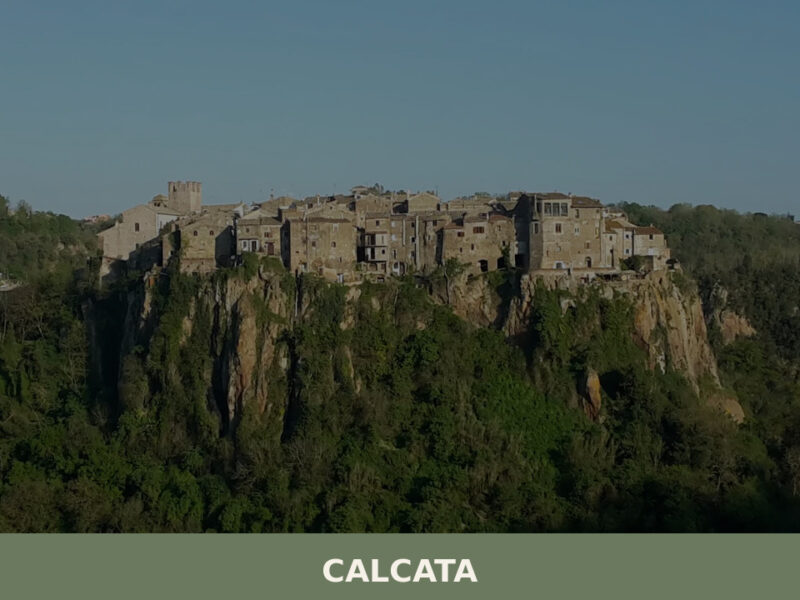
Calcata
In 1935, the Italian government declared Calcata Vecchia a village to be abandoned due to the instability of the tuff cliff on which it stands. Fifty years later, the village was reborn as an artistic center, now offering visitors a unique experience. If you are wondering what to see in Calcata, the village appears as […]




📝 Incorrect information or updates?
Help us keep the Lubriano page accurate and up to date.