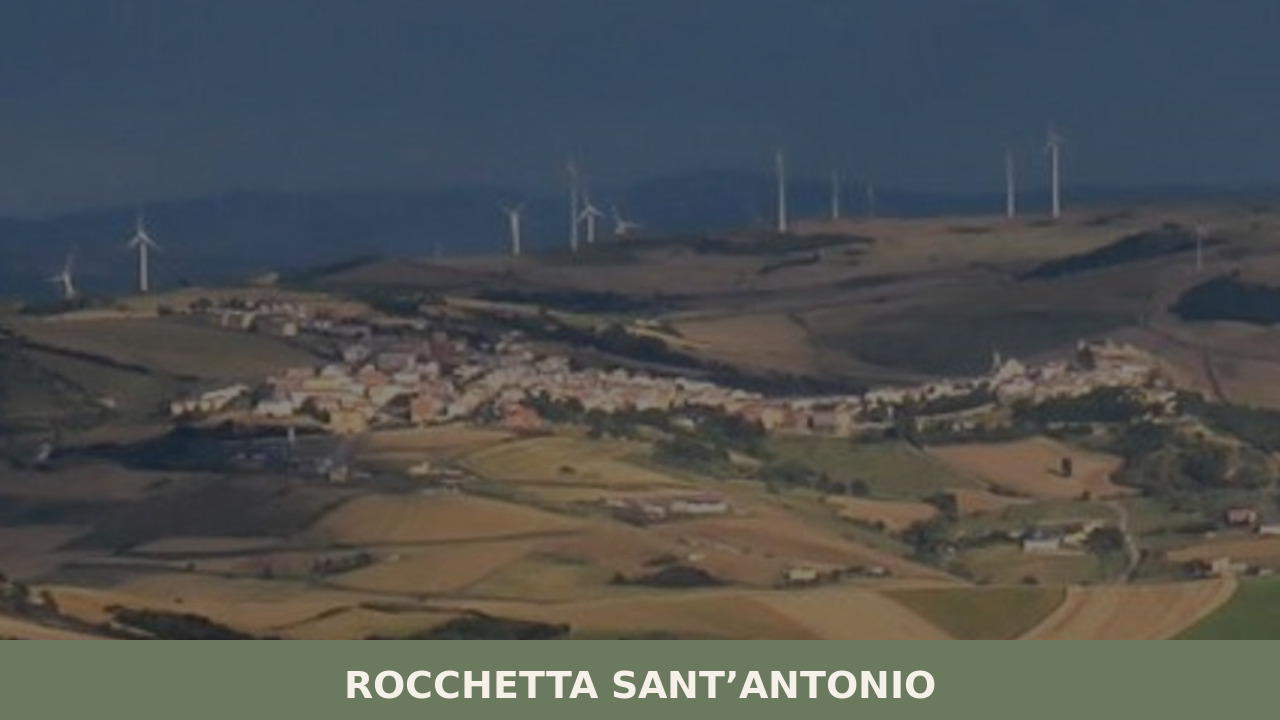
A hilltop village at 633 metres in the Province of Foggia, Rocchetta Sant’Antonio holds a medieval castle, centuries-old churches, and wide views over the Ofanto valley.
Morning fog lifts slowly from the Ofanto valley, and the first thing you hear is the bell tower — a single, deliberate toll that rolls across rooftops still cold from the night. At 633 metres above sea level, the air in Rocchetta Sant’Antonio carries a sharpness unusual for Puglia, more Apennine than Adriatic. With fewer than 1,700 inhabitants, this is a place where footsteps echo on stone and every doorway holds a century. If you’re wondering what to see in Rocchetta Sant’Antonio, begin here, in this silence, and let the village answer at its own pace.
The name itself tells a layered story. “Rocchetta” derives from the diminutive of rocca — a small fortress — pointing to the settlement’s origins as a defensive position along the border between Puglia and Campania. The addition of “Sant’Antonio” came later, honouring Saint Anthony of Padua, whose cult took root here during the medieval period and whose influence shaped the spiritual life of the village for centuries. Documentary evidence places the earliest fortifications in the Norman era, when control of the Ofanto valley and its trade routes was contested by successive waves of Lombard, Byzantine, and Norman lords.
Through the Middle Ages, Rocchetta passed between feudal families who held dominion over much of the Province of Foggia. The D’Aquino family, linked by lineage to Thomas Aquinas, held the fief at various points, lending the village a connection — however tenuous — to one of Europe’s great intellectual traditions. The castle, rebuilt and modified across centuries, served both as aristocratic residence and military outpost, its walls thickening with each change of regime.
By the eighteenth and nineteenth centuries, Rocchetta had become a modest agricultural centre, its economy tied to grain, olive oil, and transhumance — the seasonal movement of livestock along the ancient tratturi paths that cross this part of southern Italy. The arrival of the railway in the late 1800s briefly brought the village closer to the wider world, but the emigration waves of the twentieth century drew its population steadily downward, leaving the compact historic centre with the quiet density it holds today.
Positioned at the highest point of the village, the castle’s surviving walls and towers date primarily to the medieval period, with later modifications visible in the masonry. The structure commands a wide view over the Ofanto valley and the distant ridgeline of the Apennines. Its courtyards are stark, unrestored in places — a more honest encounter with history than many polished heritage sites offer.
The church that gave the village the second half of its name stands in the centre of the old quarter. Its interior holds carved stone work and wooden altarpieces characteristic of rural Puglian churches from the seventeenth and eighteenth centuries. The proportions are modest, the atmosphere contemplative — a working parish church, not a museum piece.
The principal church of Rocchetta Sant’Antonio anchors the main piazza. Inside, painted canvases and sculpted details reflect the devotional art traditions of the Capitanata region. The façade, weathered by Apennine winters, shows the layered interventions of successive centuries — Romanesque bones beneath Baroque skin, a common story in southern Italian ecclesiastical architecture.
Walking the narrow lanes of the old town reveals a pattern of arched passageways, external stone staircases, and small courtyards where daily life still unfolds. The building stone is local — pale, rough-cut, and warm in late afternoon light. Many doorways carry carved dates and family crests, quiet records of a social world that has largely vanished.
From several points along the village’s perimeter, the landscape opens dramatically. The Ofanto River — the longest in southern Italy — traces its course below, flanked by cultivated fields and patches of oak woodland. On clear days, the view extends to the Vulture massif in Basilicata, a reminder that Rocchetta sits at a genuine geographic crossroads.
The cuisine of Rocchetta Sant’Antonio belongs to the inland tradition of the Daunia Apennines — heavier, more pastoral than the coastal cooking most visitors associate with Puglia. Handmade pasta shapes such as orecchiette, cavatelli, and cicatelli are dressed with slow-cooked ragù of lamb or pork, or with wild greens foraged from the surrounding hillsides. Bread is central: large, dense loaves baked from local durum wheat, often rubbed with raw tomato and drizzled with olive oil as pane e pomodoro. Preserved vegetables — dried peppers, sun-dried tomatoes, artichoke hearts in oil — fill pantries through the winter months.
Olive oil from the sub-Apennine hills of the Province of Foggia carries a distinctive peppery finish, a product of altitude and terroir quite different from the milder oils of the Salento. Local producers also make fresh cheeses — ricotta, caciocavallo, and scamorza — that pair with the cured meats typical of mountain villages. For those looking to eat locally, the village’s small trattorias and agriturismi in the surrounding countryside offer home-style cooking rooted in seasonal ingredients, served without ceremony and without reservation systems.
Spring — late April through June — brings wildflowers to the Ofanto valley and temperatures that make walking the village’s steep lanes a pleasure rather than an ordeal. Autumn, particularly October, offers clear skies, golden light on the stone buildings, and the activity of olive harvest in the surrounding groves. Summer can be warm, but the village’s elevation at 633 metres provides relief from the fierce heat that settles over the Tavoliere plain below. Winters are cold by Puglian standards, with occasional snow and biting winds from the Apennines — atmospheric for those who appreciate a village stripped of visitors, but requiring proper layers.
The feast of Sant’Antonio di Padova, traditionally celebrated on 13 June, is the village’s principal religious and social event, drawing residents home from across Italy. Smaller sagre (food festivals) mark the agricultural calendar at various points during summer and early autumn. Visitors should be aware that services in a village of this size are limited: plan fuel stops and food shopping in advance, and confirm opening hours for churches and any municipal sites before arriving.
Rocchetta Sant’Antonio lies in the western reaches of the Province of Foggia, close to the border with both Campania and Basilicata. By car, the village is accessible from the A16 motorway (Napoli–Canosa di Puglia); exit at Lacedonia or Candela and follow provincial roads south through the hills. The drive from Foggia is approximately 80 kilometres and takes around 90 minutes on winding but well-maintained roads. From Naples, the distance is roughly 140 kilometres — under two hours via the A16.
The village has a railway station on the Foggia–Potenza line, served by Trenitalia regional trains, though service is infrequent and journey times are slow. The nearest airports are Bari Karol Wojtyła (approximately 150 km) and Naples Capodichino (approximately 160 km). A rental car is effectively essential for exploring the village and its surroundings with any flexibility.
Rocchetta Sant’Antonio sits within a network of small hill settlements that define the character of the Daunia sub-Apennines. To the northeast, Castelluccio Valmaggiore occupies a similarly elevated position along the ridgeline, offering another perspective on the fortified medieval villages that once guarded the western frontier of Puglia. Its compact centre and panoramic setting reward a half-day visit, easily combined with Rocchetta on a driving itinerary through the region’s quieter interior.
Further east, where the Apennine foothills flatten into the vast Tavoliere plain, the town of Cerignola provides a sharp contrast — larger, busier, and rooted in the grain and wine economy of the lowlands. Together, these settlements trace a gradient from mountain to plain that tells the geographic and cultural story of the Province of Foggia more clearly than any single destination could. Travelling between them, even by car in a single day, reveals how dramatically landscape, architecture, and daily life shift across relatively short distances in this underexplored corner of southern Italy.
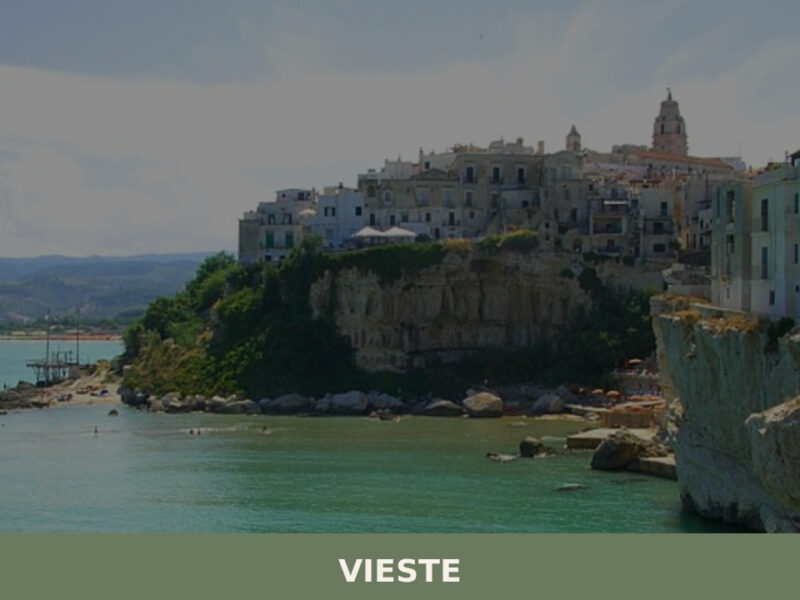
Perched on a narrow rocky peninsula that juts dramatically into the Adriatic Sea, Vieste is the easternmost town of the Gargano promontory and one of Puglia’s most captivating coastal destinations. With its whitewashed old town, sea-carved cliffs, and golden beaches stretching for kilometres, this village of around 13,400 inhabitants in the province of Foggia rewards […]
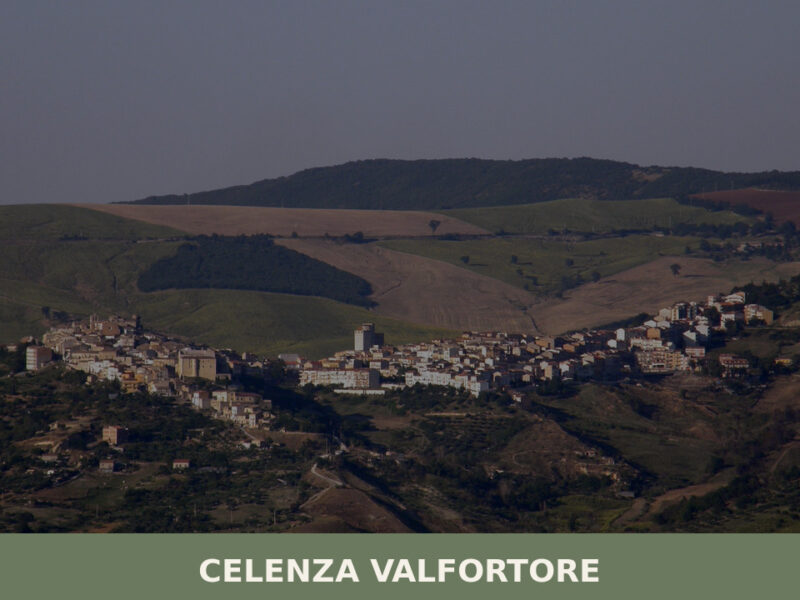
A hill village of 1,363 people above the Fortore valley in Puglia's Daunia highlands. Castle, churches, stone lanes, and a working landscape far from the tourist coast.
A working agricultural village on the Tavoliere plain near Foggia, Stornarella offers wheat-field panoramas, rural chapels, and the elemental cuisine of northern Puglia.
📝 Incorrect information or updates?
Help us keep the Rocchetta Sant’Antonio page accurate and up to date.


