
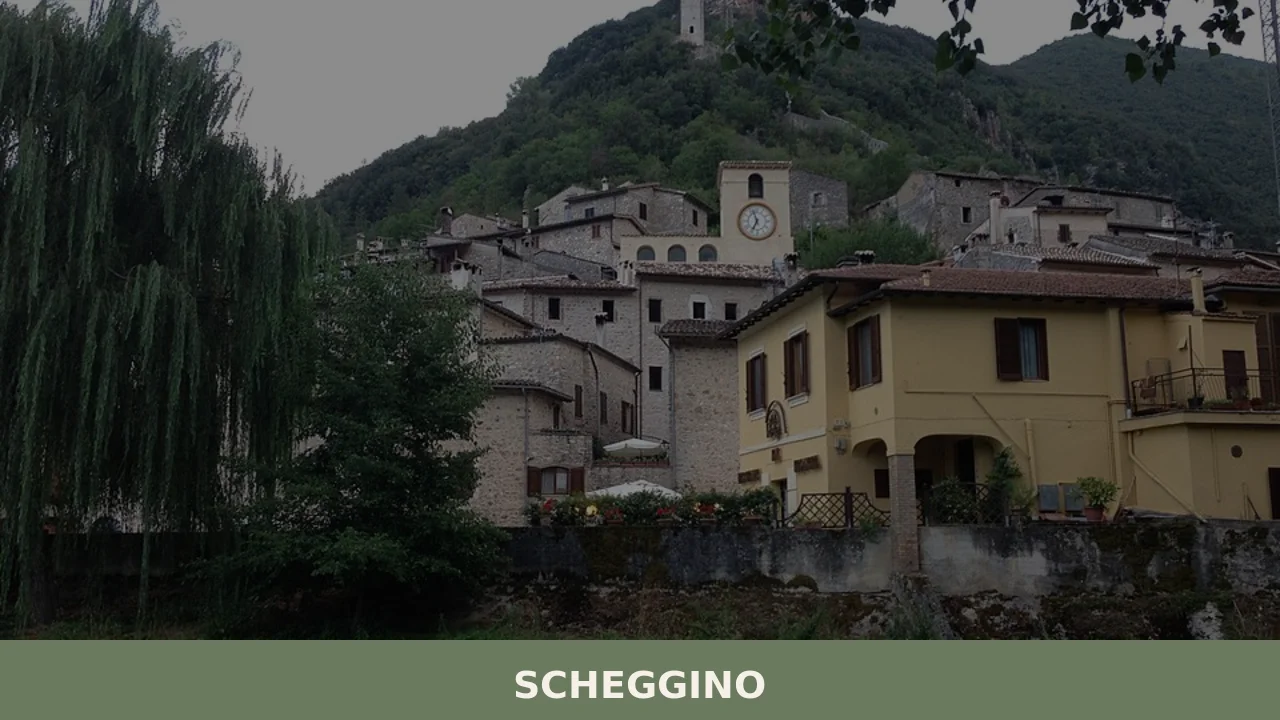
Scheggino
Situated at an altitude of 282 meters above sea level, Scheggino is a compact village in the Umbrian Apennines, home to 446 inhabitants in the province of Perugia. Its development has been shaped by its proximity to the Nera River, a constant presence that influenced both its economy and defensive structures over centuries. Understanding what […]
Discover Scheggino
Situated at an altitude of 282 meters above sea level, Scheggino is a compact village in the Umbrian Apennines, home to 446 inhabitants in the province of Perugia. Its development has been shaped by its proximity to the Nera River, a constant presence that influenced both its economy and defensive structures over centuries. Understanding what to see in Scheggino involves observing its layered history, from medieval fortifications to later civic constructions, all within a well-defined river valley setting.
History of Scheggino
The origins of Scheggino are linked to its strategic position along the Nera River, a corridor that connected different valleys and settlements in Umbria. While specific foundation dates are not extensively documented, archaeological findings in the broader Nera Valley suggest pre-Roman and Roman presence, indicating the area’s long-standing human occupation. The village likely solidified its form during the early medieval period, when smaller communities began to fortify themselves against regional conflicts.
During the Middle Ages, Scheggino functioned as a defensive outpost, often caught between the shifting allegiances and territorial ambitions of powerful Umbrian cities like Spoleto and Norcia. Its fortifications, including a prominent tower, served to control access along the river and protect its agricultural interests. The village’s name itself may derive from a local family or a geographical feature, reflecting its particular identity within the wider Duchy of Spoleto. Over subsequent centuries, as political landscapes stabilized, Scheggino evolved from a purely defensive settlement into a more organized commune, retaining elements of its medieval structure.
What to see in Scheggino: 5 focal points
The Parish Church
The main parish church of Scheggino stands as a central point of the village. Its facade often presents a blend of architectural styles, reflecting various periods of construction and modification. Inside, visitors can observe altarpieces, frescoes, and other sacred art pieces that chronicle local artistic traditions and devotional practices, offering insight into the community’s spiritual life through different eras.
The Medieval Tower (La Rocca)
Dominating a section of the village, the remains of the medieval tower, often referred to as ‘La Rocca,’ serve as a tangible link to Scheggino’s defensive past. This structure, likely built for observation and protection of the river crossing, showcases the robust construction techniques of the period. Its stone walls and strategic placement indicate its former role in controlling the valley.
The Main Piazza and Fountain
The village’s primary open space, the main piazza, functions as a gathering point. Here, a stone fountain, often dating back centuries, provides a focal point. These public fountains were vital for water supply and served as communal hubs. The architecture surrounding the piazza typically consists of well-preserved civic and residential buildings, illustrating the village’s historical urban fabric.
The Nera River Walk
The Nera River, a defining feature of Scheggino, offers pathways along its banks. These routes provide perspectives on the river’s flow and the surrounding natural environment. Observing the water, which has historically powered mills and supported local fishing, helps to understand the village’s deep connection to its immediate landscape and resources. Access points are often found near the village center.
The Civic Building
A prominent civic building, possibly housing the municipal offices, often features architectural details that reflect its historical importance. These structures frequently incorporate elements from different periods, from medieval foundations to Renaissance or later additions. They represent the administrative and social center of the community, often with a facade that commands attention in the village’s layout.
Local food and typical products
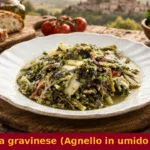
The culinary identity of Scheggino is deeply rooted in the agricultural bounty of the Umbrian region and the specific resources of the Nera Valley. Truffles, both black and white varieties, are a significant local product, often incorporated into pasta dishes, omelets, and sauces. The cool, clear waters of the Nera River also make trout a staple, frequently prepared grilled or pan-fried with local herbs.
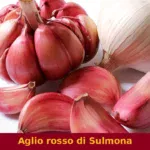
Beyond truffles and fish, the area is known for its robust flavors, including cured meats like prosciutto and salami, often produced using traditional methods. Olive oil, pressed from olives grown on the surrounding hillsides, is another fundamental component of the local diet, used in cooking and as a finishing oil. Legumes, particularly lentils from nearby Castelluccio, and various cheeses from local dairies further enrich the gastronomic offerings. Visitors can find these products in local shops or experience them in the village’s eateries.
Best time to visit Scheggino
The most favorable periods to visit Scheggino are typically spring (April to June) and autumn (September to October). During these months, the climate is generally mild, with comfortable temperatures for walking and exploring the village and its surroundings. The landscape is also particularly vibrant, with spring blooms or autumn foliage providing a distinct visual character.
Summer (July and August) brings warmer temperatures, which can be intense, particularly in the middle of the day, though evenings are often cooler. This period is suitable for those who prefer longer daylight hours and can tolerate heat. Winter (November to March) is quieter and colder, occasionally bringing snow to higher elevations, offering a different, more subdued experience of the valley. Local events or festivals, often tied to religious holidays or agricultural cycles, occur throughout the year, but specific schedules vary.
How to get to Scheggino
Scheggino is accessible primarily by road. From the north or south, the A1 Autostrada del Sole is the main arterial route. Exit at Orte if coming from Rome, then follow signs for Spoleto and subsequently Scheggino. From Florence or the north, one might take the E45 highway towards Perugia, then continue towards Spoleto and the Valnerina.
The nearest major train stations are Spoleto (approximately 20 km away) or Foligno (around 40 km away), both offering connections to regional and intercity lines. From these stations, onward travel to Scheggino typically requires a local bus service or a taxi. The closest airport is Perugia San Francesco d’Assisi Airport (PEG), located approximately 60-70 km from Scheggino, offering domestic and some international flights.
More villages to discover in Umbria
Umbria, often referred to as the “green heart of Italy,” contains numerous villages that reflect its rich history and varied landscape. For those interested in exploring further afield from Scheggino, the region offers diverse experiences. For instance, Monte Santa Maria Tiberina, located closer to the Tuscan border, presents a different historical context, often associated with a powerful feudal family and offering views across the upper Tiber Valley.
Another compelling option is Cerreto di Spoleto, which shares a more direct geographical and historical connection to the Spoleto area and the Valnerina, similar to Scheggino. These villages, each with its unique character and historical narrative, collectively illustrate the regional diversity of Umbria, from its river valleys to its mountainous terrain and agricultural plains. Further information on Umbrian tourism can be found on the official regional tourism website: Umbria Tourism. For general information on Scheggino, consult resources like Wikipedia – Scheggino or the local municipality’s portal (e.g., Comune di Scheggino).
Photo Gallery of Scheggino
Do you have photos of Scheggino?
Share your photos of the village: the best ones will be added to the official gallery, with your credit.
Send your photosIn Umbria More villages to discover
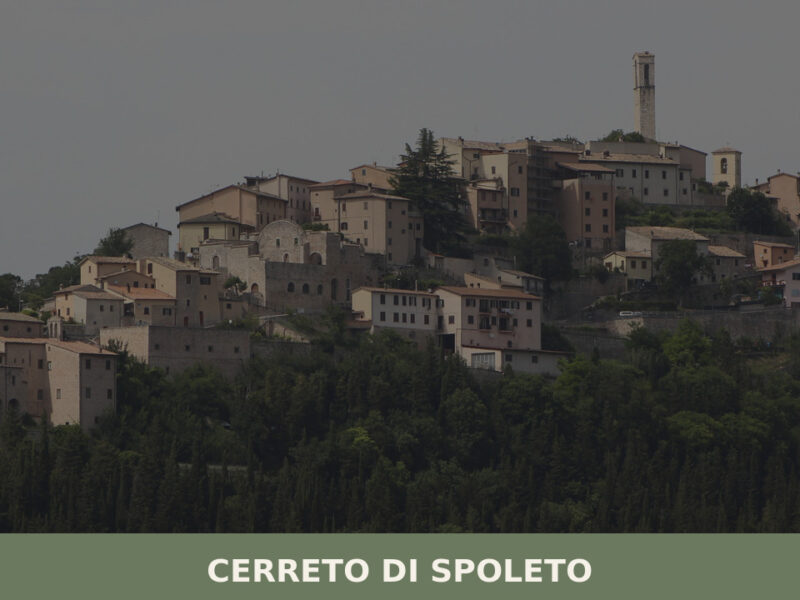
Cerreto di Spoleto
A ridge-top village of 975 inhabitants in the Valnerina, Cerreto di Spoleto holds medieval streets, scattered hamlets, and a centuries-old tradition of itinerant herbalists.
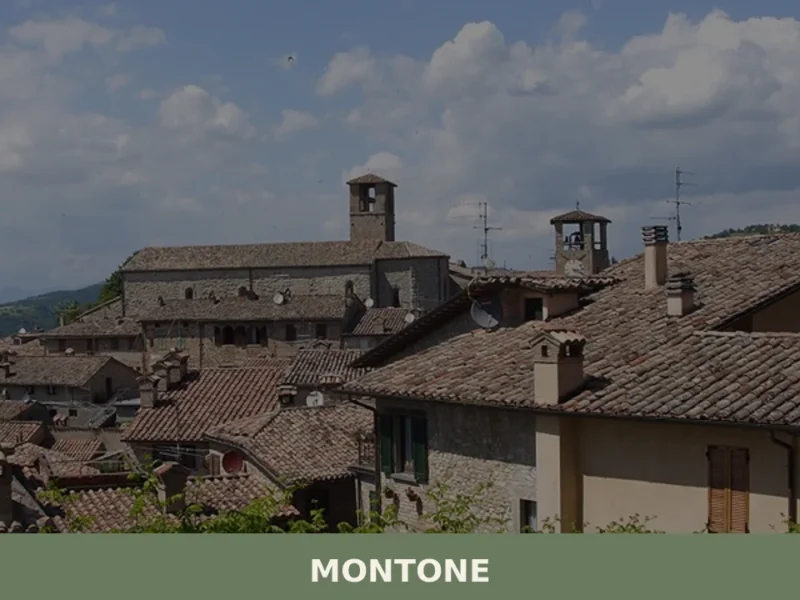
Montone
As the morning sun, still low and soft, begins to trace the contours of the Apennine foothills, a faint chime echoes through the valley. It’s the hourly call from the campanile of Montone, a sound that has marked the passage of time here for centuries. Situated at 482 meters above sea level, this small, walled […]
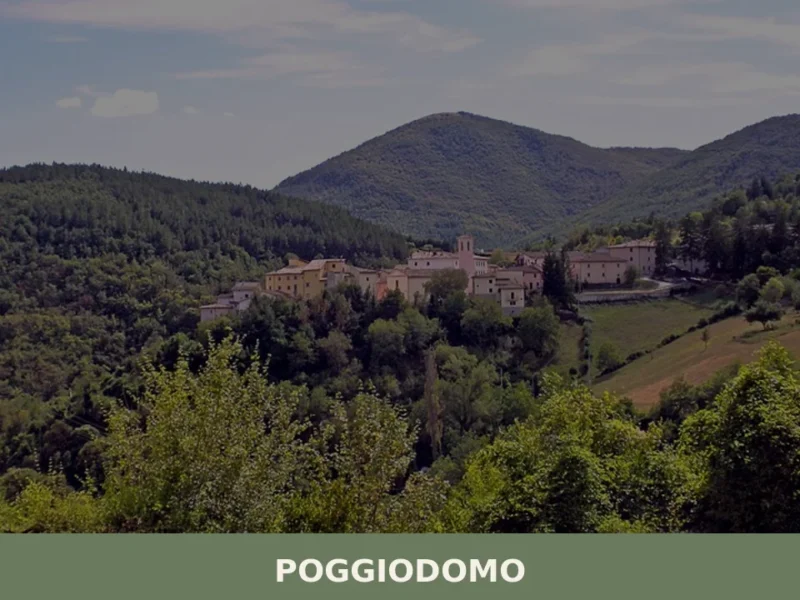
Poggiodomo
Discover Poggiodomo, a serene Umbrian village at 974m a.s.l. Explore its history, attractions, local food, and practical tips in this documentary-style guide to Poggiodomo.



📝 Incorrect information or updates?
Help us keep the Scheggino page accurate and up to date.