


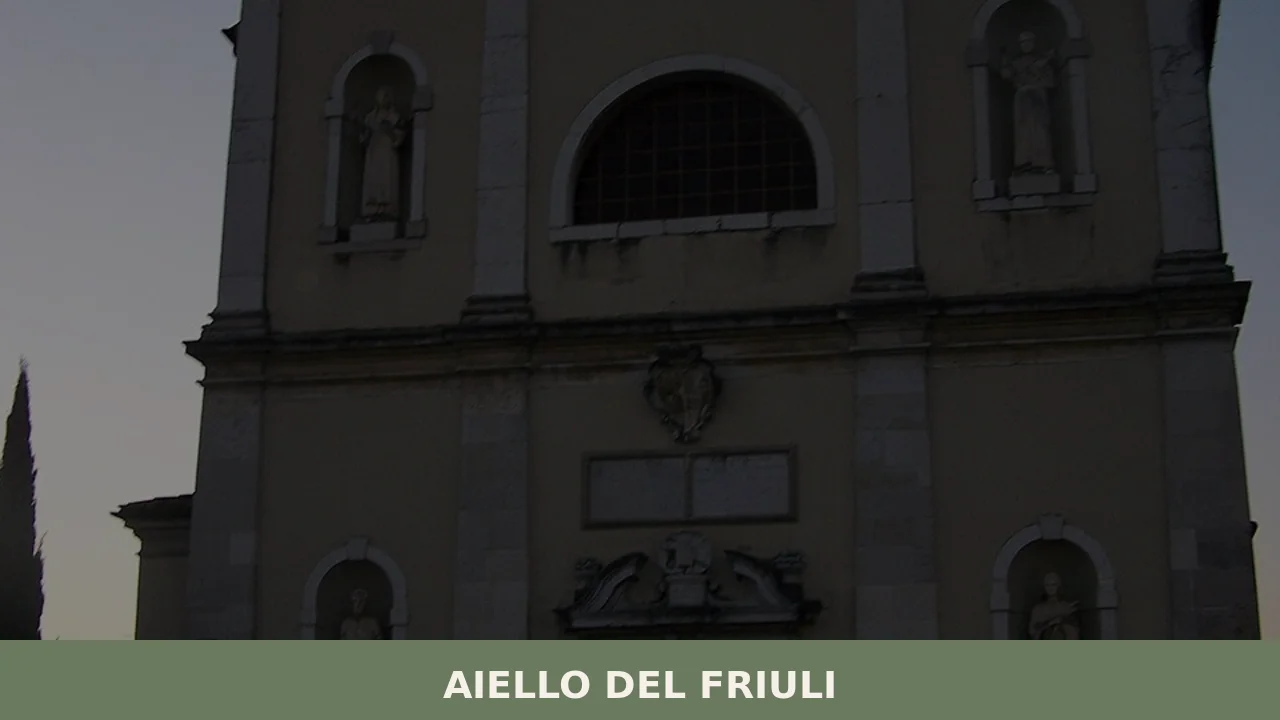
Aiello del Friuli
On the Friulian plain, at 18 metres above sea level, a village of just over two thousand inhabitants holds the highest concentration of sundials per square metre in Italy: more than one hundred solar quadrants scattered across house facades, courtyard walls, and church exteriors. This is not an outdoor exhibition designed for tourists — it […]
Discover Aiello del Friuli
On the Friulian plain, at 18 metres above sea level, a village of just over two thousand inhabitants holds the highest concentration of sundials per square metre in Italy: more than one hundred solar quadrants scattered across house facades, courtyard walls, and church exteriors. This is not an outdoor exhibition designed for tourists — it is the result of a collective passion cultivated over decades by a rural community that turned gnomonics into civic identity. Understanding what to see in Aiello del Friuli means first of all looking up: every street corner carries an engraved marker of passing time, measured through shadows and geometry.
History and origins of Aiello del Friuli
The name “Aiello” most likely derives from the Latin agellus, a diminutive of ager, meaning “small field”. The etymology paints an accurate picture of the village’s origins: an agricultural settlement on the lower Friulian plain, midway between Palmanova and Cervignano del Friuli, established as a farming nucleus during the Roman period along the routes connecting Aquileia — then one of the largest cities in the Empire — with inland centres. Archaeological finds in the area, including pottery fragments and remains of masonry structures, confirm a stable human presence in the territory as early as the first centuries AD. Its position on the alluvial plain of the Isonzo river ensured fertile land and constant irrigation, ideal conditions for an agricultural settlement that over the centuries never lost this fundamental characteristic.
During the medieval period, Aiello del Friuli took on the role of administrative centre for a gastaldia — a territorial district of the Patriarchate of Aquileia. The village had a castle, documented from the 12th century onward, which served as the seat of the patriarchal gastaldo. This administrative function elevated Aiello to the rank of legal and commercial hub for the surrounding farming communities. In 1420, with the fall of the Patriarchate of Aquileia, the territory came under the rule of the Republic of Venice. The Serenissima maintained the existing administrative structure, recognising Aiello’s role as the capital of the gastaldia. The castle, already damaged during the wars between the patriarchs and the Venetians, underwent further modifications and restorations, but its defensive function gradually diminished in favour of residential and bureaucratic use. Only a few elements of the original castle structure survive today, integrated into the built fabric of the historic centre.
Aiello’s modern history is indelibly marked by the conflicts of the 20th century. During the First World War, its proximity to the Isonzo front turned the territory into a military operations zone, bringing evacuations and destruction. The Second World War and the complex post-war period along Italy’s eastern border inflicted further trauma on the local community. Post-war reconstruction transformed the village’s built landscape, but its agricultural vocation remained the economic mainstay. The turning point for the village’s identity came in the 1990s, when a group of gnomonics enthusiasts — gnomonics being the science of sundials — began installing solar quadrants on buildings throughout the village, a project that over three decades led Aiello to hold a documented and catalogued national record, with more than one hundred sundials distributed across the entire municipal territory. The patron saint of the village is Saint Ulrich of Augsburg, celebrated on 4 July with a festival that retains the communal gathering character typical of Friulian patron saint feast days.
What to see in Aiello del Friuli: 5 top attractions
1. The sundial trail
With more than one hundred catalogued solar quadrants, Aiello del Friuli holds the Italian record for the number of sundials relative to its inhabited area. The trail winds its way through the streets of the centre and the surrounding hamlets, taking in the facades of private houses, public buildings, and the perimeter walls of rural courtyards. Each sundial features a different design: there are examples showing Italian hours, astronomical hours, Babylonian hours, canonical hours, and French hours. Some bear mottoes in Latin or Friulian. The association “Il Paese delle Meridiane” (The Village of Sundials) has prepared a detailed map, also available at the town hall, allowing visitors to follow a complete itinerary. The visit takes approximately two hours at a leisurely pace, with stops to observe the technical details of each quadrant and read the explanatory plaques installed alongside the main examples.
2. The Sundial Museum
Housed in a building in the historic centre, the museum collects time-measuring instruments, didactic gnomonics models, and documentation on the development of Aiello’s sundials. The rooms display portable solar clocks, reproduced astrolabes, and panels explaining the geometric principles behind how the quadrants work. The museum is the ideal starting point for a visit to the village: it provides the cultural framework to appreciate the technical complexity of the outdoor sundials. Opening hours vary by season; it is advisable to check availability by contacting the Municipality of Aiello del Friuli or the local association that manages the site.
3. The Church of Sant’Ulderico
The parish church, dedicated to the village’s patron saint, is the main religious building in Aiello. The current structure dates from successive interventions that modified the original layout over the centuries, with documented rebuilding work carried out especially after the damage sustained during the world wars. Inside, it preserves sacred furnishings and paintings from the Friulian school. The exterior facade also features a sundial, blending the sacred and the secular in a way that is consistent with the village’s identity. The church stands on the central square, the topographic and social reference point of community life in Aiello. The patron saint’s feast day on 4 July includes a solemn liturgical celebration followed by civic events in the square outside.
4. The castle remains and the historic centre
Of the medieval castle that once housed the gastaldo of the Patriarchate of Aquileia, traces remain incorporated into the structures of the old village core. A keen eye can pick out sections of stonework, arches, and foundations that reveal the fortified origin of the site. The historic centre preserves the irregular street layout typical of Friulian medieval settlements, with internal courtyards — the so-called cjase — which represent the traditional dwelling unit of rural Friuli. Walking among these structures allows you to read the historical layering of the village, from the patriarchal phase through the Venetian period to the 20th-century rebuilding. Some courtyards are accessible and house particularly elaborate sundials.
5. The peri-urban countryside and the agrarian landscape
Aiello extends across the plain between the Isonzo and Tagliamento rivers, a flat and fertile territory where the agrarian landscape retains recognisable features of historical land reclamation: straight drainage ditches, remnant rows of mulberry trees, and regular plots. The country roads connecting the main village to its hamlets — including Joannis and Crauglio — offer cycling routes on both unpaved and asphalt surfaces, suitable also for those travelling with children. The territory is dotted with farmsteads in stone and brick that bear witness to the area’s long winemaking tradition. From here it is easy to reach the Collio and Colli Orientali del Friuli wine areas, making Aiello a convenient base for wine-focused explorations in the region.
Traditional cuisine and local products
The Aiello table reflects the farming tradition of the lower Friulian plain, with dishes that favour simple ingredients and preparations tied to the seasons. Frico — a crispy cheese fritter made with Montasio DOP, sometimes enriched with potatoes and onion — is the signature dish of Friuli and comes in numerous family variations in Aiello. Montasio DOP, a semi-cooked cheese produced from cow’s milk according to standards that trace back to the cheesemaking tradition of Benedictine monks, is the essential ingredient in this preparation and is used at various stages of ageing, from fresh to extra-mature. Alongside frico, local cuisine offers jota, a thick soup made with beans, sauerkraut, and potatoes, a dish shared with the neighbouring Triestine tradition but which in Friuli takes on a more rustic and less brothy consistency.
Among first courses, cjarsons — stuffed ravioli with a filling that varies from family to family, often based on smoked ricotta, aromatic herbs, raisins, and spices — are one of the most distinctive preparations in the region. The traditional dressing calls for melted butter and grated smoked ricotta, a sweet-savoury combination that surprises those tasting it for the first time. The Aiello area also contributes to the production of Prosciutto di San Daniele DOP, whose production standards require ageing exclusively in the municipality of San Daniele del Friuli but which uses pork legs also sourced from farms on the surrounding plain. In local trattorias, you will often find platters pairing San Daniele with latteria cheeses from the area.
The Aiello territory falls within the production area of Friuli Aquileia DOC, a wine denomination that includes whites such as Friulano, Pinot Grigio, and Sauvignon, and reds such as Refosco dal Peduncolo Rosso and Merlot. Several wineries in the area welcome visitors for tastings by appointment. Village festivals, particularly during the summer months, offer the chance to taste homemade preparations that are otherwise hard to find in commercial restaurants: from gubana, a rolled pastry filled with walnuts, raisins, pine nuts, and grappa, to polenta made from local maize, cooked in a copper cauldron and served with game or mushrooms. The patron saint’s feast of Saint Ulrich on 4 July is traditionally accompanied by food stalls where frico is prepared outdoors on large iron pans.
When to visit Aiello del Friuli: the best time of year
Spring, between April and June, offers the ideal conditions for visiting Aiello: temperatures are mild — averaging between 15 and 25 degrees — and the oblique sunlight of these weeks makes the sundials particularly easy to read, as the shadows are more defined and precise than during the central months of summer. During this period, the surrounding countryside is in full growth, with vineyards and cultivated fields defining the agrarian landscape in deep green tones. The first Sunday of May and the days around it often see the organisation of themed guided tours dedicated to the sundial trail, promoted by the local association. Summer brings longer days and the patron saint’s feast on 4 July, but also temperatures that can exceed 30 degrees and high humidity levels, typical of the Friulian plain.
Autumn, from September to November, is the grape harvest period in the surrounding wine areas and represents a good time to combine a visit to Aiello with a food-and-wine itinerary through the cellars of the Friuli Aquileia DOC zone. The days grow shorter but the weather remains pleasant until mid-October. The Friulian winter is cold and often marked by the bora — the north-easterly wind — and foggy days; however, the village can be visited comfortably even in this season, given the predominantly urban nature of the sundial trail. In winter, the Sundial Museum offers an alternative to the outdoor route, allowing visitors to explore the scientific side of gnomonics in a heated setting. During the Christmas period, the municipality occasionally organises markets and cultural events, which can be checked on the official website.
How to reach Aiello del Friuli
Aiello del Friuli is accessible by car via the A4 Turin–Trieste motorway: the most convenient exit is Palmanova, from which the village is approximately 8 kilometres to the south-east along regional road 352. Those coming from the north, via the A23 Udine–Tarvisio motorway, can exit at Udine Sud and continue towards Palmanova on the SS13 Pontebbana, then turn off towards Aiello. The distance from Udine is approximately 25 kilometres, which takes about half an hour. From Trieste, the journey takes about 45 minutes along the A4. From Gorizia, the distance is approximately 20 kilometres, via provincial roads crossing the Isonzo plain.
The nearest railway station is Cervignano del Friuli-Aquileia, on the Venice–Trieste line, approximately 5 kilometres from the centre of Aiello. From Cervignano, the village can be reached by local buses on the TPL FVG network or by taxi. The reference airport is Trieste Airport at Ronchi dei Legionari, just 15 kilometres away — approximately 15 minutes by car — which makes Aiello particularly accessible for those arriving by air. Venice Marco Polo Airport is approximately 130 kilometres away, reachable in about an hour and a half by motorway. The flat terrain and the network of low-traffic secondary roads make Aiello an ideal destination also for those travelling by bicycle, with the option of including the stop on cycling routes connecting Palmanova, Aquileia, and the Grado lagoon.
Other villages to discover in Friuli Venezia Giulia
Visitors to Aiello del Friuli have the opportunity to build an itinerary that crosses different parts of the region, from the plain to the mountains. To the west, heading upstream towards the Tagliamento, you will find Camino al Tagliamento, a village overlooking the banks of the largest torrential river in Europe. Camino shares with Aiello its position on the plain and its agricultural vocation, but adds a river element with landscapes of gravel beds and riparian woods that contrast with Aiello’s cultivated farmland. Combining the two villages in a single day trip allows you to observe two different expressions of the same Friulian lowland landscape, moving from the gnomonics of Aiello’s sundials to the hydrography of the Tagliamento.
In the opposite direction, heading north towards the mountains of Carnia, Ampezzo offers a radical change of scenery: a mountain settlement in the Tagliamento valley where altitude reshapes the climate, vegetation, and architecture. Here, houses of stone and wood replace the brick courtyards of the lower plain, and the cuisine takes on the smoky, resinous flavours of the Carnic tradition. A trip connecting Aiello to Ampezzo — approximately an hour and a half by car through the foothills and the Val Tagliamento state road — allows you to traverse the full range of Friuli Venezia Giulia’s environments in just a few kilometres, from the Isonzo plain to the pre-Alpine valley floors. It is a route that reveals the geographic complexity of a small but extraordinarily layered region, where every thirty kilometres the dialect, the landscape, and the way polenta is cooked all change.
In Friuli Venezia Giulia More villages to discover
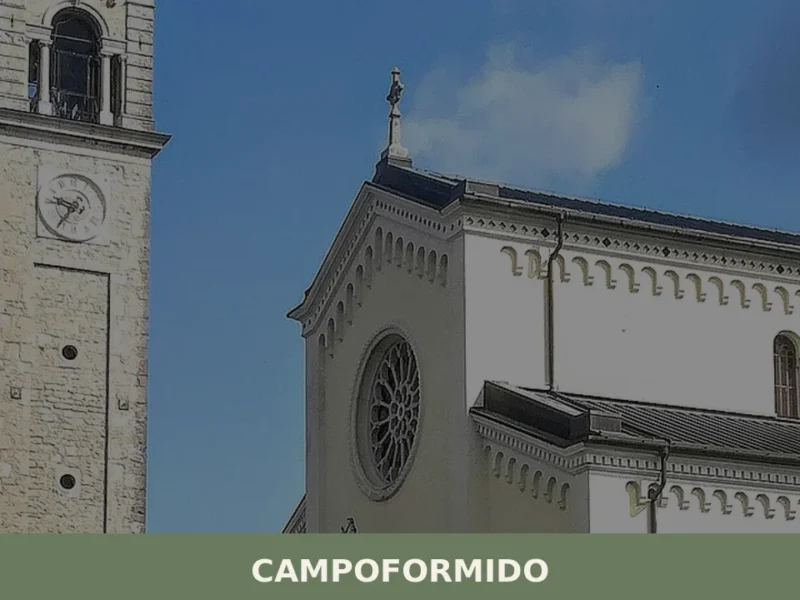
Campoformido
On 17 October 1797, in a country villa on the Friulian plain, plenipotentiaries representing Napoleon Bonaparte and the Austrian Empire signed the treaty that redrew the political map of Europe, erasing the Republic of Venice after more than a millennium of existence. That document bears the name of this place: Campoformido, a municipality of 7,799 […]
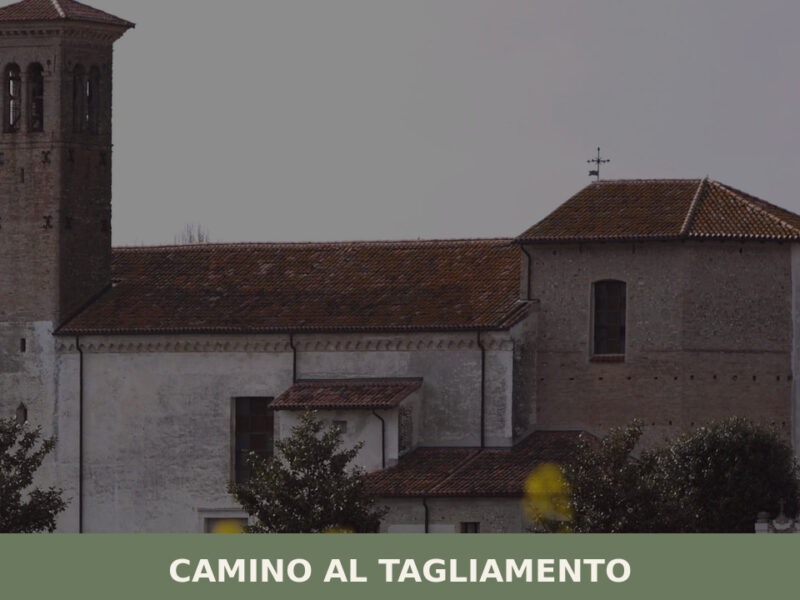
Camino al Tagliamento
A guide to Camino al Tagliamento in Friuli Venezia Giulia — its medieval parish church, the Tagliamento riverbed, rural hamlets, and Friulian food traditions.
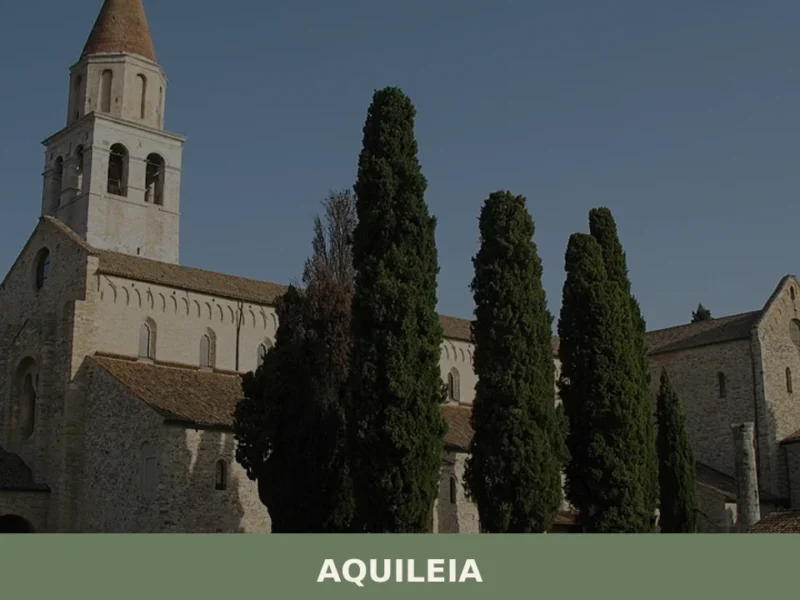
Aquileia
What to see in Aquileia: early Christian basilica, UNESCO mosaics, Roman forum, archaeological museum. Guide with history, cuisine and how to get there.


📝 Incorrect information or updates?
Help us keep the Aiello del Friuli page accurate and up to date.