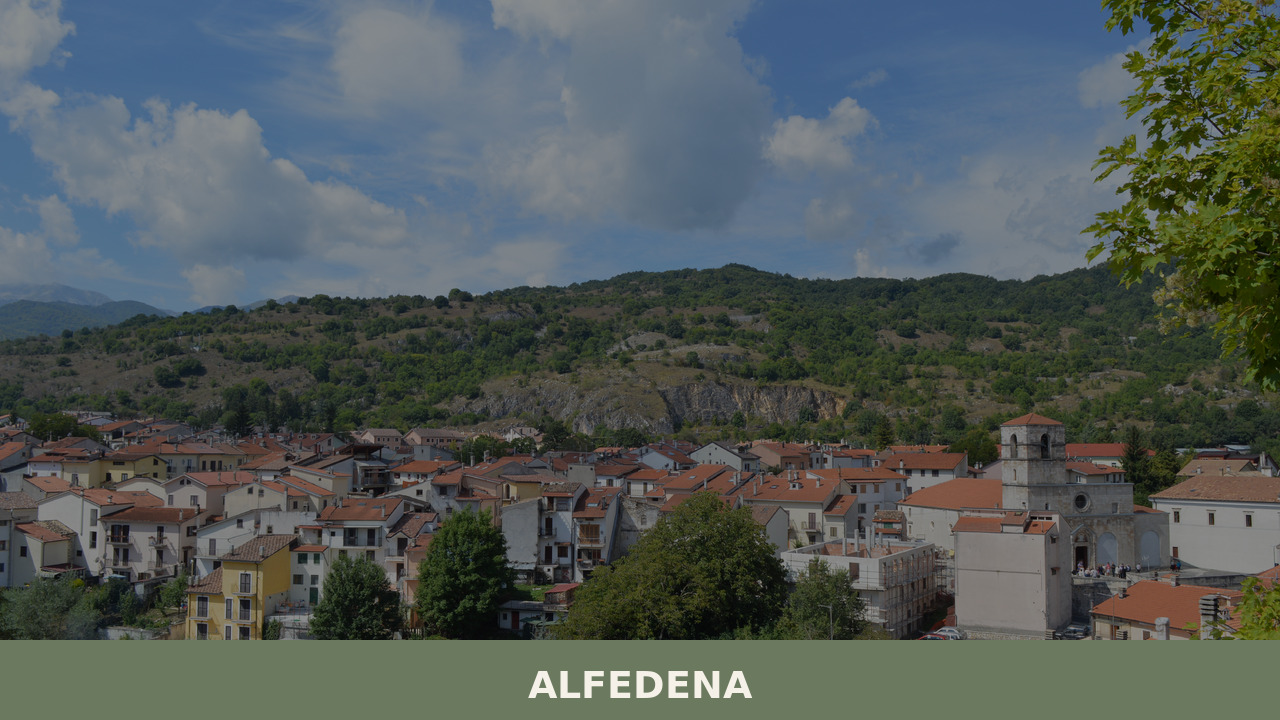
Morning light falls across a line of limestone rooftops, turning them the colour of raw honey. A church bell marks the hour — its sound rolls downhill, across empty streets still cool from the night, and fades into the forested slopes of the upper Sangro valley. Alfedena sits at roughly 914 metres above sea level […]
Morning light falls across a line of limestone rooftops, turning them the colour of raw honey. A church bell marks the hour — its sound rolls downhill, across empty streets still cool from the night, and fades into the forested slopes of the upper Sangro valley. Alfedena sits at roughly 914 metres above sea level in the province of L’Aquila, a village of 791 inhabitants whose daily rhythms have more in common with the surrounding Apennine wilderness than with the coastal towns an hour to the east. Understanding what to see in Alfedena requires slowing down — reading the stonework, following the footpaths, listening to what the valley carries.
The origins of Alfedena reach back to the Italic peoples who inhabited the central Apennines long before Roman expansion. The ancient settlement of Aufidena — a fortified town of the Samnite Caraceni tribe — occupied the ridges above the present village. Archaeological excavations in the late nineteenth and early twentieth centuries uncovered a necropolis containing thousands of tombs, yielding bronze fibulae, iron weapons, and amber ornaments that now reside in museums across Italy, including the National Archaeological Museum of Naples. The name “Alfedena” is a direct descendant of “Aufidena,” worn smooth by centuries of local dialect.
During the medieval period, the settlement shifted downhill and reorganised around a fortified core. A castle, likely constructed between the tenth and eleventh centuries under Lombard or early Norman influence, anchored the village’s defensive layout. Alfedena passed through the hands of various feudal lords, including the Di Sangro family, whose name echoes the river that defines this valley. The village remained tied to pastoral economies — transhumance routes, or tratturi, once moved vast flocks of sheep between Abruzzo’s mountain pastures and the lowland plains of Puglia.
The Second World War left deep marks. Alfedena found itself near the Gustav Line, the German defensive barrier that stretched across the Italian peninsula. The village suffered damage and displacement, a chapter still remembered by its oldest residents. Post-war emigration reduced the population significantly, a pattern shared across the Abruzzo interior, yet the physical fabric of the village — its walls, its churches, its stairways — survived in large measure.
Located on the hillside above the modern village, this burial ground dates to the sixth through third centuries BCE. Excavations revealed over 1,500 tombs arranged in orderly rows, with grave goods indicating a stratified society engaged in trade across the Apennine corridor. The site is open-air and partially signposted, offering a direct encounter with the pre-Roman landscape of the upper Sangro valley.
The remains of Alfedena’s castle occupy the highest point of the old settlement. What survives — sections of curtain wall, a partially standing tower — dates to the Norman-Swabian period. The position provides a commanding view of the valley floor and the surrounding peaks, a reminder that this village was built first for defence, then for habitation. The stonework shows layers of repair spanning several centuries.
The parish church anchors the lower village. Its interior, modest in scale, contains stone columns and altar elements assembled over multiple construction phases. A carved stone portal marks the entrance. Local feast days, particularly the celebrations for the patron saints in late June, fill this space with a density of community life difficult to witness at other times of year.
Alfedena’s old quarter is a tight arrangement of stone houses linked by narrow alleys, external staircases, and covered passageways. Sections of the original borgo walls remain visible, integrated into later domestic construction. Walking through the centre, one notices doorway lintels carved with dates — some reaching back to the seventeenth century — and iron balconies added piecemeal over generations.
Alfedena borders the Parco Nazionale d’Abruzzo, Lazio e Molise, one of Italy’s oldest protected areas, established in 1922. Marked trails depart from the village edges into beech and oak forests where Marsican brown bears, Apennine wolves, and Abruzzo chamois persist in viable populations. The proximity of intact wilderness to a functioning village is the defining feature of this landscape.
The cooking of Alfedena belongs to the mountain pastoral tradition of inland Abruzzo. Lamb and mutton appear roasted with herbs or slow-cooked in stews with potatoes and wild greens. Handmade pasta — particularly sagne, a flat irregular noodle — is dressed with ragù or with a simple sauce of tomatoes and pecorino. Lentils and beans, cultivated on small plots at altitude, feature in soups thickened with stale bread. Pecorino cheese, produced from sheep grazed on national park meadows, has a sharp, grassy intensity that reflects the altitude and flora. Locally cured sausages and cured meats follow recipes that predate refrigeration, relying on salt, pepper, fennel seed, and the cold mountain air for preservation.
Dining options in the village are limited in number but rooted in place. Small trattorie and agriturismi in and around Alfedena serve fixed menus that change with the season — wild mushrooms and chestnuts in autumn, lamb and fresh greens in spring. The wine is typically Montepulciano d’Abruzzo, poured without ceremony. Bread is baked in wood-fired ovens, with a thick crust and dense crumb designed to last several days.
Late spring — May through mid-June — brings wildflowers to the mountain meadows and comfortable daytime temperatures in the range of 18–22°C. The national park trails are passable but not yet crowded, and the beech forests carry their brightest green. Autumn, from late September through October, offers a different palette: golden and copper foliage against dark rock, with mushroom foraging drawing locals into the forests. The village’s patron saint celebrations in late June bring processions, outdoor feasting, and a concentration of community life that is otherwise diffuse.
Winters are cold and can be severe — snowfall is common from December through February, and temperatures regularly drop below freezing. The village quiets considerably, though cross-country skiing and snowshoeing routes exist in the national park. Summer months (July–August) are pleasant at this altitude, rarely exceeding 28°C, though accommodation should be booked in advance as Italian domestic tourism peaks during this period.
Alfedena lies in the southern portion of the province of L’Aquila, along the SS83 road that follows the upper Sangro valley. From Rome, the drive takes approximately two hours via the A25 motorway (Autostrada dei Parchi), exiting at Cocullo or Castel di Sangro and continuing south on regional roads. From Naples, the route via the A1 motorway and then eastward through Venafro and Isernia covers roughly 180 kilometres in about two and a half hours.
The nearest railway station with regular service is Castel di Sangro, approximately 10 kilometres to the northeast, though train frequency is limited and connections from major cities typically require changes. The closest airports are Rome Fiumicino (approximately 185 km) and Rome Ciampino (approximately 170 km); Pescara Airport, on the Adriatic coast, is about 130 km to the northeast. A car is effectively necessary for exploring the village and its surroundings, as local public transport is minimal.
The upper Sangro valley and the broader mountain interior of Abruzzo contain a constellation of small settlements, each shaped by the same forces — pastoral economy, feudal power, seismic activity, and emigration — yet each distinct in character. A short drive northeast of Alfedena, the town of Scanno sits above its namesake lake, known for its elaborate women’s costumes documented by photographers from Cartier-Bresson to Giacomelli, and for a historic centre whose interlocking stone architecture rivals any in the region.
Further into the mountains, the village of Santo Stefano di Sessanio occupies a high plateau beneath the Gran Sasso massif, its Medici-era watchtower visible from a considerable distance. Together, these villages form a network that rewards slow, deliberate travel — the kind where distances are measured less in kilometres than in the quality of attention paid to the landscape between them. The Abruzzo regional tourism board provides updated information on access, events, and accommodation across these territories.
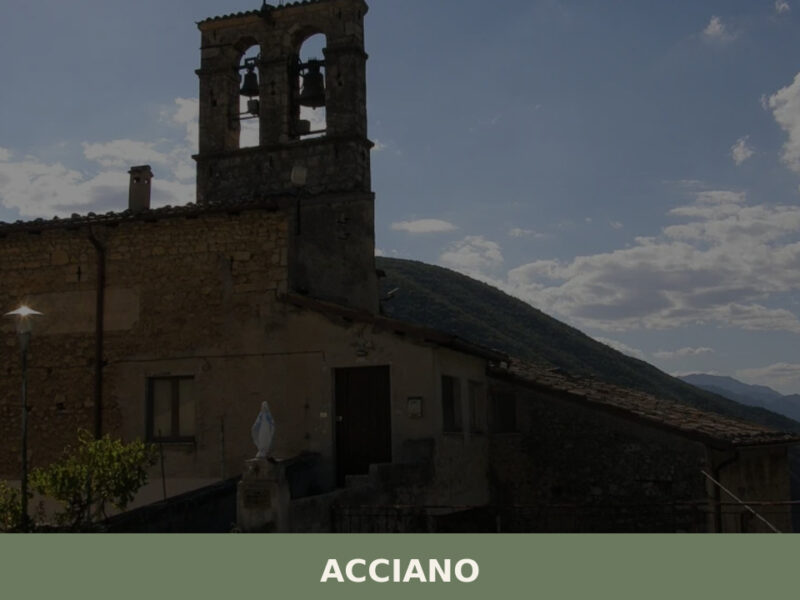
Morning light falls across stone walls the colour of dried wheat, and the only sound is water — a fountain somewhere below the main road, feeding a trough that has served this valley for centuries. Acciano sits in the Aterno Valley south of L’Aquila, a commune of just 339 inhabitants spread across a handful of […]
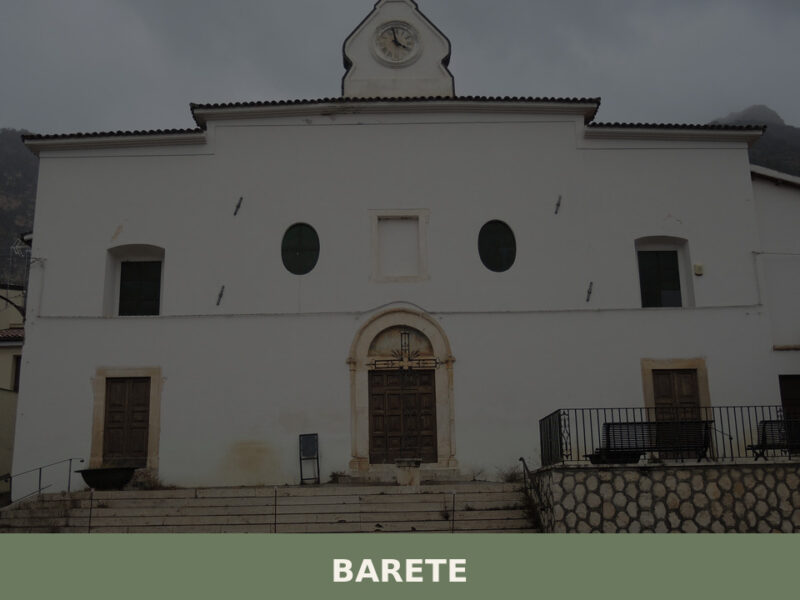
Morning light hits the limestone walls of Barete’s older houses at a low angle, turning them briefly gold before the shadow of the Gran Sasso massif reclaims the narrow lanes. A rooster calls from somewhere behind a garden wall. The air smells of woodsmoke and cold stone. This is a settlement of roughly 695 inhabitants, […]
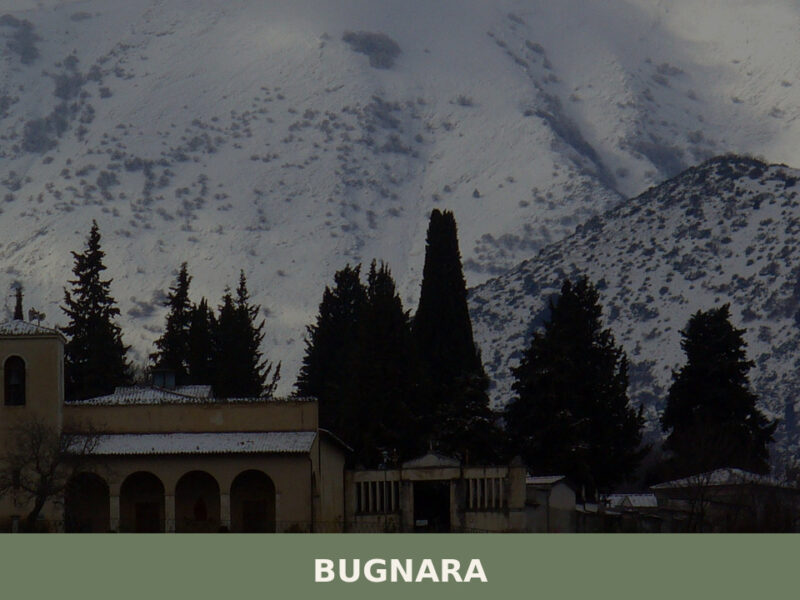
Morning light falls across the Sagittario valley in long, amber strokes, catching the limestone walls of a settlement that has watched over this corridor of central Abruzzo for the better part of a millennium. Bells from a church tower mark the hour, their sound flattening against the surrounding slopes before fading. The streets are narrow, […]
📝 Incorrect information or updates?
Help us keep the Alfedena page accurate and up to date.


