


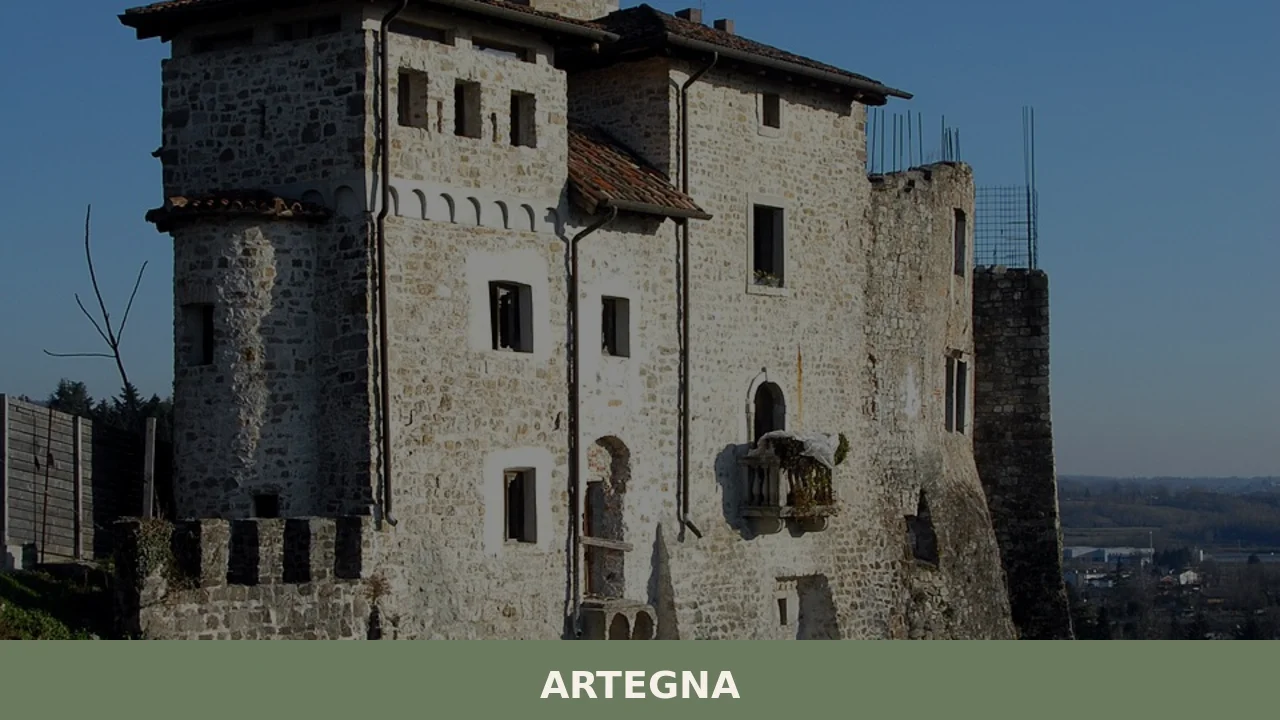
Artegna
In 1976, two violent earthquakes devastated Friuli, and Artegna was among the hardest-hit communities. The reconstruction that followed did not simply raise walls again: it redesigned the very identity of the town, bringing to light archaeological layers buried beneath the rubble of the San Martino hill. Today, anyone wondering what to see in Artegna will […]
Discover Artegna
In 1976, two violent earthquakes devastated Friuli, and Artegna was among the hardest-hit communities. The reconstruction that followed did not simply raise walls again: it redesigned the very identity of the town, bringing to light archaeological layers buried beneath the rubble of the San Martino hill. Today, anyone wondering what to see in Artegna will find a place where every repositioned stone documents a deliberate choice — to preserve or to renew, and often both at once. The village has 2,903 inhabitants, sits at 210 metres above sea level in the Friulian foothills, in the province of Udine, and looks towards the Julian Pre-Alps with a panorama that stretches from the plain to the first valleys. This is not a place that has stood still: it is a place that decided what to keep and what to let go.
History and origins of Artegna
The place name Artegna most likely derives from a pre-Roman root, possibly Celtic, which some scholars link to the term art-, indicating an elevated site or a rocky formation. The first documented record of the name appears in a diploma issued by Emperor Otto II, dated 973 AD, which mentions the castle and the surrounding territory. Before that date, however, the hill on which the upper part of the village stands was already inhabited: excavations carried out after the 1976 earthquake uncovered Bronze Age artefacts, Roman ceramic fragments, and Lombard-era wall structures. The hill’s position — a natural elevation commanding the passage between the Friulian plain and the pre-Alpine valleys — made it a strategic control point for every civilisation that passed through the region. It is no coincidence that the Romans established a garrison there along the route connecting Aquileia to Noricum, via the Tagliamento and Fella valleys.
The medieval period marked Artegna’s political rise. The lords of Artegna, feudal vassals tied to the Patriarchate of Aquileia, built and expanded the hilltop fortress between the 12th and 13th centuries, turning it into one of the most significant defensive structures in the foothills. The castle endured sieges and destruction during the wars between the Patriarchate and the Republic of Venice. In 1420, with the definitive fall of the Patriarchate, Artegna came under Venetian rule and the castle gradually lost its military function. It was during this phase that the village developed at the foot of the hill, along the roads connecting Gemona to Osoppo and Buia. The church of San Martino, on the summit, remained the religious focal point of the community, while new civic and religious buildings rose in the lower part. The patron saint of the village is San Rocco, celebrated on 16 August, a sign of a devotion probably linked to the plague epidemics that struck Friuli during the 15th and 16th centuries.
The 19th century brought the transformations of the industrial era to Artegna: the construction of the Pontebbana railway, inaugurated in 1879, connected the area to the railway network of the Austro-Hungarian Empire and later the Kingdom of Italy. During the First World War, proximity to the front made Artegna a rear-area zone and a transit point for troops. But it is the earthquake of 6 May 1976 — and the aftershock of 15 September of the same year — that represents the sharpest turning point in the village’s modern history. The destruction was extensive: the church of San Martino partially collapsed, and numerous houses were levelled. The reconstruction, carried out using methods that today we would call preventive archaeology, made it possible for the first time to document the entire settlement sequence of the hill, from the Protohistoric period to the 20th century. The village that emerged is the one visible today: a place rebuilt with intelligence, where contemporary interventions coexist with remains from different eras without any scenic pretence.
What to see in Artegna: 5 essential attractions
1. The San Martino Hill and the castle complex
The hill is Artegna’s original nucleus, and visiting it is the essential starting point for understanding the village. The complex includes the remains of the medieval castle, restored and consolidated after the earthquake, and the church of San Martino, rebuilt while retaining its original plan. The archaeological trail set up along the southern slope documents the various settlement phases with educational panels and exposed wall sections. From the summit, at roughly 280 metres, the view opens across the Friulian plain as far as Udine and, on clear days, all the way to the lagoon. Access is free, and the path that climbs from the centre can be walked in under fifteen minutes.
2. Church of Santa Maria Nascente
Located in the centre of the village, the parish church of Santa Maria Nascente was built in the 18th century and reconstructed after earthquake damage. The interior preserves a polychrome marble high altar and several restored 18th-century paintings. The sober, linear façade reflects the Neoclassical taste widespread in late-18th-century Friuli. It is the main religious building in the village and hosts the celebrations dedicated to San Rocco on 16 August. The square in front, reorganised during the reconstruction, is now the community’s gathering point and the venue for the main public events.
3. The Civic Archaeological Museum
Housed in municipal premises, the museum collects materials recovered during excavations on the San Martino hill and in other areas of the municipal territory. The collections include Protohistoric ceramics, Roman coins, Lombard fibulae, and medieval architectural fragments. The exhibition follows a chronological order that makes it possible to reconstruct the sequence of human presence in Artegna from the Bronze Age to the Middle Ages. The museum provides a rare level of documentation for a settlement of this size: the quality of the Lombard artefacts, in particular, has attracted the attention of scholars from the University of Udine. For opening hours and access details, it is advisable to consult the official website of the Municipality of Artegna.
4. Torre di Porta Sottana
The only surviving medieval gate, the Torre di Porta Sottana marks the southern boundary of the ancient route that climbed to the hill. The structure, built from blocks of local limestone, dates to the 13th–14th century and retains its pointed arch passageway. The tower was partially damaged in 1976 and subsequently restored with conservation-focused interventions. Its position, along the road that led from the valley floor to the fortified summit, makes its original function clear: filtering and controlling access to the castle. It is visible and can be photographed from the outside at any time, integrated into the urban fabric without fencing.
5. The Rio Artegna nature trail
For those looking for a different dimension to their visit, the trail running alongside the Rio Artegna offers a flat route of approximately three kilometres, suitable for families as well. The path passes through bands of riparian vegetation — willows, alders, hornbeams — and reaches wetland areas where grey herons and kingfishers can be spotted. The route connects to the wider foothill trail network and can be extended towards Gemona del Friuli or towards Buia. No special equipment is needed: lightweight hiking shoes and a water bottle are sufficient. The itinerary is particularly recommended in spring and autumn, when the low afternoon light brings out the colours of the riparian vegetation.
Local cuisine and regional products
The food of Artegna reflects the cuisine of the Friulian foothills, a tradition that blends Alpine and lowland influences with robust, unadorned results. The dish that defines the territory is frico, prepared in its crispy version — aged Montasio cheese, cut into thin slices and slowly cooked in a pan until it forms a golden wafer — or in its soft version, enriched with potatoes and onion. Montasio DOP, produced in numerous dairies in the area, is the key ingredient: young for the soft frico, aged at least twelve months for the crispy one. Alongside frico, polenta made from local maize flour accompanies cured meats, game, and cheeses, and appears at almost every traditional meal.
Among the recognised products, Prosciutto di San Daniele DOP — whose production area lies just a few kilometres away — regularly appears on Artegna’s tables, together with Montasio DOP cheese in its various stages of ageing. Local tradition also includes cjarsons, ravioli filled with herbs, smoked ricotta, raisins, and spices, dressed with melted butter and grated smoked ricotta: a dish that varies from family to family and valley to valley, with dozens of documented variants. Muset, a Friulian cotechino served with brovada — turnips fermented in grape pomace and then slow-cooked — is the quintessential winter dish. Also worth noting is the wine production of the area, with white wines such as Friulano and Ribolla Gialla, grown on the surrounding hills.
There is no shortage of opportunities to taste these products. The patron saint’s feast of San Rocco, on 16 August, traditionally features food stalls serving frico and grilled meats. During autumn, local festivals dedicated to polenta and mushrooms enliven the village and neighbouring towns. For those seeking a more structured experience, the trattorias of the foothills — often family-run, with menus that change according to the season — serve dishes prepared with short-supply-chain ingredients. This is not haute cuisine, but a coherent food tradition where every ingredient has a precise reason and an identifiable origin.
When to visit Artegna: the best time
The climate of the Friulian foothills is subcontinental, with cold winters and warm summers tempered by pre-Alpine breezes. Spring, from April to June, is the most suitable period for those planning to explore what to see in Artegna while combining cultural visits and walks: temperatures are mild, the vegetation along the Rio Artegna is in full bloom, and the days grow progressively longer. Summer brings the peak of festive activity with the celebration of San Rocco on 16 August, but also days that can exceed 30 degrees, making the central hours less suited to excursions. July and August, however, offer long, cool evenings, ideal for exploring the hill after five o’clock.
Autumn — from September to November — is the season of the finest colours across the foothills: the woods surrounding the hill turn shades of ochre and red, and the food festivals provide an opportunity to taste the territory’s products. October, in particular, combines pleasant temperatures, low visitor numbers, and a light that enhances the volumes of the stone architecture. Winter is the least visited season, but those arriving between December and February will find a quiet village, with the chance to visit the museum without queues and to enjoy, on clear days after snowfall, views of the snow-covered Pre-Alps that few people know. It is advisable to check the opening hours of the museum and the San Martino complex on the Wikipedia page for Artegna or on the municipal website before setting out, especially during the winter months.
How to get to Artegna
Artegna can be reached by car from the A23 Palmanova-Tarvisio motorway, exiting at the Gemona-Osoppo toll station, from which the village is approximately five kilometres west along regional road 463. From Udine, the journey of roughly 25 kilometres takes about thirty minutes. From Trieste, following the A4 and then the A23, the 130-kilometre trip takes approximately ninety minutes. From Venice, the distance is around 170 kilometres, covered in just under two hours via the A4 and the A23.
The nearest railway station is Gemona del Friuli, served by the Udine-Tarvisio line with frequent regional trains: the journey from Udine takes about 25 minutes. From Gemona, Artegna can be reached by local bus or taxi in a few minutes. The reference airport is Trieste Airport at Ronchi dei Legionari, approximately 90 kilometres away and connected to the motorway network via the A4 and A23. For those arriving from abroad — Austria or Slovenia — the natural entry point is the Tarvisio border crossing, from which Artegna is about 75 kilometres south along the A23.
Other villages to discover in Friuli Venezia Giulia
Visitors to Artegna who wish to deepen their knowledge of the foothills and Friulian valleys can put together an itinerary that takes in villages with parallel histories but distinct characters. To the south-east, Attimis offers a different case of a village linked to a castle system: the two castles — upper and lower — document the feudal dynamics of medieval Friuli with rare clarity, and the small local museum holds artefacts that complement those displayed in Artegna. The distance between the two centres is about thirty kilometres, covered in forty minutes along hilly roads that pass through a still-active agricultural landscape of vineyards, permanent meadows, and small dairies.
In the opposite direction, heading up towards Carnia, Ampezzo represents the gateway to the true Friulian mountains. Here the altitude rises, the landscape changes — beech and spruce forests replace the hornbeams of the foothills — and the food tradition becomes more Alpine, with a greater emphasis on dairy products and game. Combining Artegna, Attimis, and Ampezzo into a three- or four-day route means crossing, in a short distance, three distinct geographical and cultural environments, from the hills to the mountains, with the seismic history and reconstruction of Friuli as a connecting thread — a history that has left visible marks and still-relevant lessons in each of these places. It is an itinerary that requires little logistical planning and gives back a great deal in terms of understanding the territory.
In Friuli Venezia Giulia More villages to discover
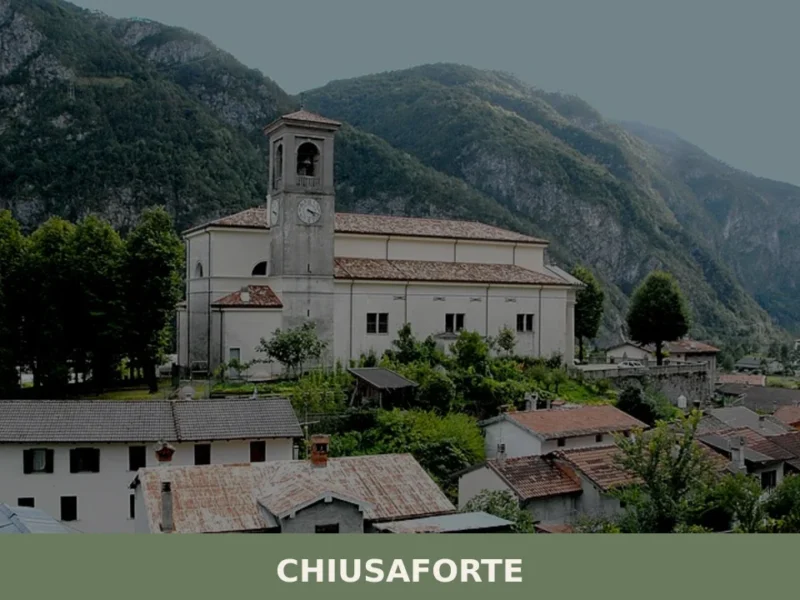
Chiusaforte
Anyone travelling along the A23 motorway towards the Austrian border will notice, quite suddenly, the Fella valley narrowing between sheer rock walls. Right at that point stands Chiusaforte, a settlement of 684 inhabitants at 391 metres above sea level, whose name — from “chiusa forte,” meaning “strong barrier” — declares without ambiguity the military and […]
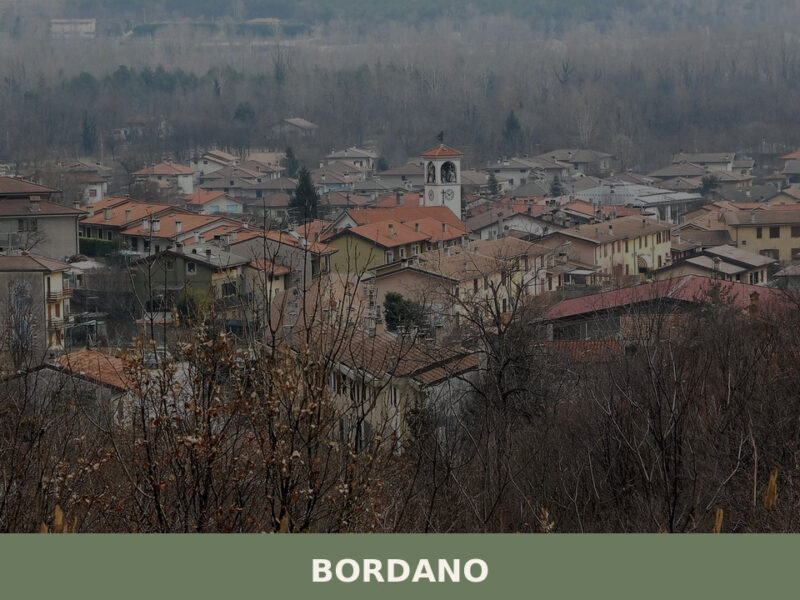
Bordano
Bordano, the Village of Butterflies in Friuli Venezia Giulia, pairs over 100 painted murals with genuine alpine biodiversity. A guide to its trails, lake, food, and art.
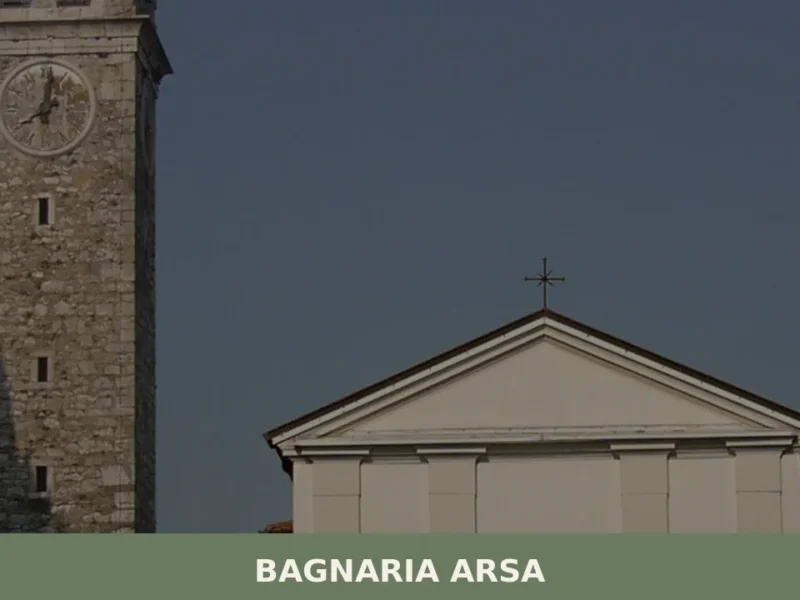
Bagnaria Arsa
In 1420, when the Venetian Republic extended its dominion over Friuli, the territory of Bagnaria Arsa came firmly into the Venetian orbit: the Republic’s cadastral records document a rural settlement structured around two distinct centres — Bagnaria and Sevegliano — separated by fields planted with cereals and crossed by drainage channels. Today, anyone wondering what […]


📝 Incorrect information or updates?
Help us keep the Artegna page accurate and up to date.