


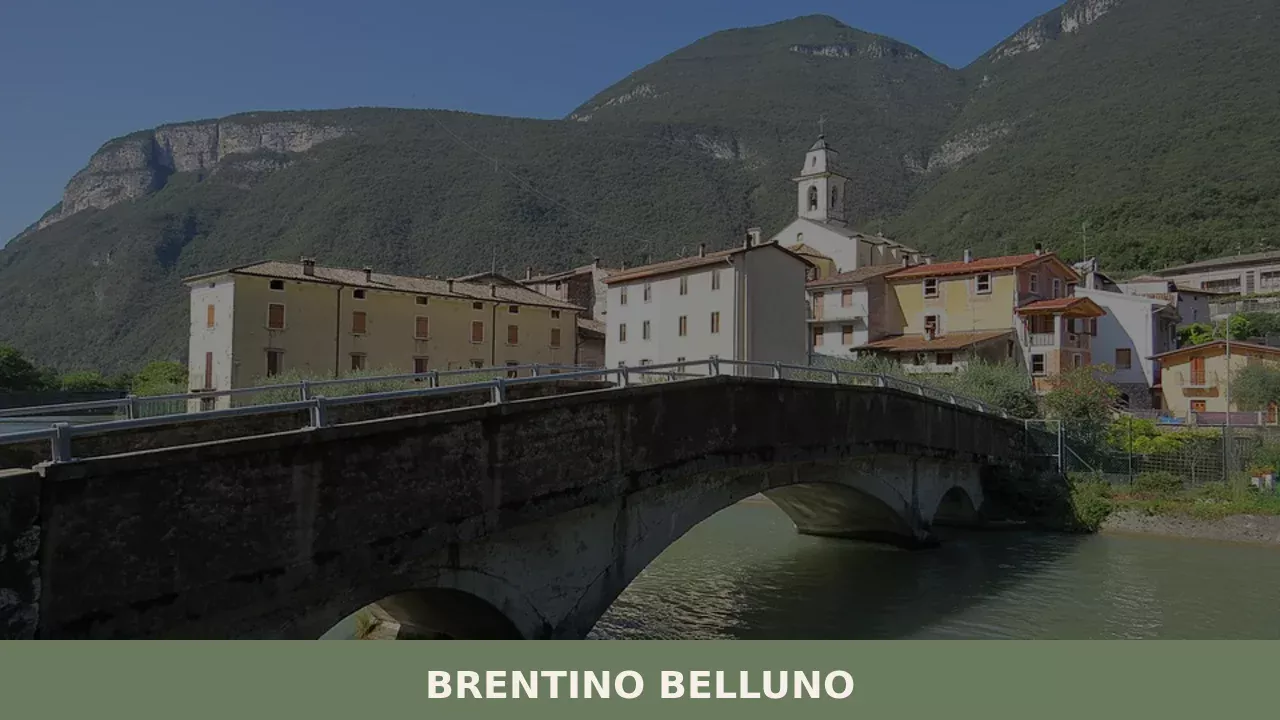
Brentino Belluno
At 137 metres above sea level, where the Adige Valley narrows between Monte Baldo and the Lessini Mountains, Brentino Belluno is a municipality of 1,363 inhabitants created in 1929 through the administrative merger of two distinct settlements: Brentino, on the left bank of the Adige, and Belluno Veronese, clinging to the eastern slope of Monte […]
Discover Brentino Belluno
At 137 metres above sea level, where the Adige Valley narrows between Monte Baldo and the Lessini Mountains, Brentino Belluno is a municipality of 1,363 inhabitants created in 1929 through the administrative merger of two distinct settlements: Brentino, on the left bank of the Adige, and Belluno Veronese, clinging to the eastern slope of Monte Baldo. Understanding what to see in Brentino Belluno means crossing a territory where geology has dictated the shape of human settlements and where the boundary between plain and mountain dissolves within a few hundred metres.
History and origins of Brentino Belluno
The place name “Brentino” most likely derives from the pre-Latin term brent-, referring to steep terrain or a ravine — a description consistent with the morphology of the valley floor carved by the Adige. “Belluno Veronese” shares its etymology with the city of Belluno: the Celtic root bel-dunum, meaning “fortified height”, documents the presence of a pre-Roman hilltop settlement. Archaeological finds recovered in the area confirm human activity in this territory as early as the protohistoric period, along the north-south route that connected the Po Plain to the Alpine passes.
In the Middle Ages, control of the Adige Valley was a strategic issue of the highest importance. The Della Scala family, lords of Verona between the 13th and 14th centuries, consolidated their dominion over the valley by strengthening the defensive structures along the river. With the transition to the Republic of Venice in 1405, the territory came under the Serenissima’s orbit, which administered it until the republic’s fall in 1797. The two communities of Brentino and Belluno Veronese maintained separate identities for centuries, with distinct parishes, patron saints and festivals: Saint John the Baptist for Belluno and Saint James the Greater for Rivalta.
The unification into a single municipality, decreed in 1929 during the Fascist-era administrative reorganisation, merged communities that shared the valley floor but had different parish and communal histories. This dual identity is still perceptible today in the fragmented urban layout, with hamlets distributed both along the river axis and on the first buttresses of Monte Baldo.
What to see in Brentino Belluno: 5 main attractions
1. Sanctuary of Madonna della Corona
Built at 774 metres above sea level, set into the rock face of Monte Baldo overlooking the Adige Valley, the Sanctuary of Madonna della Corona can be reached from the territory of Brentino Belluno via a footpath comprising 1,540 steps carved into the rock. The place of worship, documented since the 15th century, was expanded several times before undergoing a 20th-century restoration. Its position makes it one of the most remarkable sanctuaries in the Alpine arc.
2. Parish Church of San Giovanni Battista in Belluno Veronese
Dedicated to the patron saint of the hamlet, this church preserves an architectural layout resulting from successive interventions between the 16th and 18th centuries. The interior houses polychrome marble altars and paintings from the Veronese school. The sober, vertical façade looks out over the historic centre of Belluno Veronese, where the houses follow the gradient of the slope.
3. The Pilgrims’ Path (route from Brentino to the Sanctuary)
The footpath climbing from Brentino to Madonna della Corona passes through woods of hop hornbeam and downy oak, with sections cut directly into the limestone rock. The elevation gain is approximately 600 metres. Along the route, numbered votive chapels mark the stations of the Via Crucis, with bronze panels installed during the 20th century.
4. Fort Wohlgemuth (Rivoli Veronese – neighbouring area)
In the immediate vicinity of the municipal boundary, the system of 19th-century fortifications built by the Austro-Hungarian Empire to control the Chiusa di Ceraino documents the military importance of this stretch of the Adige Valley. The Chiusa — the narrowest point of the valley, just 70 metres wide — lies within the territory of Brentino Belluno and for centuries determined the village’s function as an obligatory passage.
5. The Chiusa di Ceraino and the rock walls of the Adige
Where limestone walls squeeze the course of the Adige into a narrow gorge, the Chiusa di Ceraino marks the geological boundary between the Veronese plain and the Alpine valley. The site has both naturalistic significance — the cliffs host rupestral flora and raptors — and historical importance, having served as a military barrier since Roman times. The SS12 state road and the Brenner railway run through it side by side.
Food and local products
The territory of Brentino Belluno sits in the transition zone between the Veronese lowland cuisine and the mountain cooking of the Baldo area. Extra virgin olive oil carrying the Garda DOP designation, produced in the nearby eastern Lake Garda area, appears on local tables as an everyday condiment. The slopes of Monte Baldo, with their temperate microclimate, allow olive cultivation up to relatively high altitudes. Monte Veronese DOP, a semi-cooked cheese produced in the Lessini Mountains and the Baldo area, comes in two variants: whole milk (fresh, soft) and d’allevo (aged, more intense). In the trattorias of the area you will find bigoli — long, thick pasta typical of the Veneto — served with duck ragù or with sardines, and pearà, a dense Veronese sauce made from stale bread, broth and beef marrow, the traditional accompaniment to bollito misto.
Among the products from the Baldo slopes, the black truffle of Monte Baldo, gathered in the broadleaf woods, and Bardolino DOC, a red wine produced in the eastern Lake Garda area just a few kilometres away, are worth noting. Chestnuts from the Lessini, collected in autumn in the woods above the Adige Valley, are used in the preparation of desserts and soups. Soppressa veronese, a cured sausage made from coarsely ground and aged pork, is found in many mountain dairies and butcher shops in the area. The 25th of July, the feast of Saint James the Greater in Rivalta, is the main community gathering, with market stalls and dishes prepared according to local recipes.
When to visit Brentino Belluno: the best time
Spring, from mid-April to June, offers the best conditions for walking the path to Madonna della Corona: moderate temperatures, long days, and wildflowers blooming on the slopes of Monte Baldo. Autumn — October and November — brings the colours of the broadleaf woodland and the black truffle season. Summer in the valley floor is hot and humid, with temperatures frequently exceeding 30°C; those visiting in July or August can take advantage of higher-altitude hikes to find cooler air.
Winter is mild compared to other Alpine valleys, thanks to the shelter provided by the rock walls of the Chiusa and the residual thermal influence of Lake Garda, about ten kilometres away as the crow flies. The patron saint’s feast on 25 July falls in the height of summer and offers a concrete opportunity to observe the communal life of the hamlets.
How to reach Brentino Belluno
Brentino Belluno lies along the SS12 state road (Abetone and Brenner), approximately 25 kilometres north of Verona. The nearest motorway exit is Affi, on the A22 Brenner motorway, about 10 kilometres away. The Brenner railway passes through the valley, but the most practical train station is Domegliara-Sant’Ambrogio di Valpolicella, roughly fifteen kilometres to the south, connected to Verona Porta Nuova in about 20 minutes.
Verona-Villafranca’s Valerio Catullo Airport is approximately 35 kilometres away. From Venice, the drive takes about one hour and forty minutes along the A4 and then the A22. From Trento, to the north, you descend the Adige Valley in roughly 45 minutes. The location on the Brenner route makes the municipality easily accessible from Munich and Innsbruck as well.
Other villages to discover in Veneto
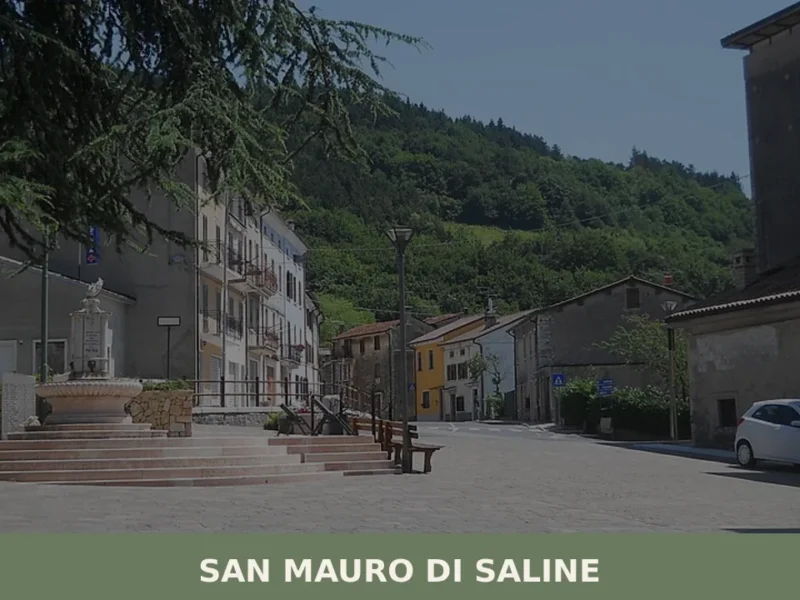
Those exploring eastern Veneto in search of less-travelled territories can head up through the province of Verona towards the Lessini Mountains, where San Mauro di Saline preserves the memory of an economy linked to salt extraction and high-altitude herding. The village, small and set apart, offers a different vantage point on the province of Verona, far from the Adige Valley and its role as a transit corridor.
At the opposite end of the region, among the Belluno Dolomites, Cortina d’Ampezzo represents an entirely different settlement model: high mountains, an established tourism economy, Alpine architecture of Ladin origin. The contrast between Brentino Belluno — a valley-floor municipality, squeezed between river and rock — and Cortina — an open, international Dolomite basin — illustrates the extreme diversity of Veneto’s landscape, where in just a few hours of driving you pass from the Veronese plain to the 1,224 metres of the Ampezzo basin.
Getting there
Piazza Zeffirino Gelmetti, 37020 Brentino Belluno (VR)
Nearby Villages near Brentino Belluno
In Veneto More villages to discover
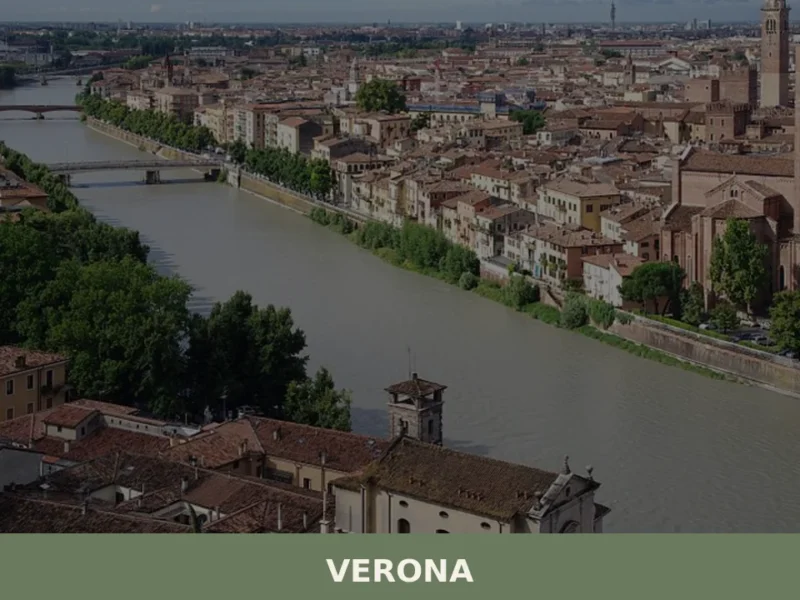
Verona
What to see in Verona, a UNESCO city of 255,000 people. Explore the Roman Arena, Juliet's House, San Zeno Basilica and local dishes like bollito and pearà. Plan your visit now.
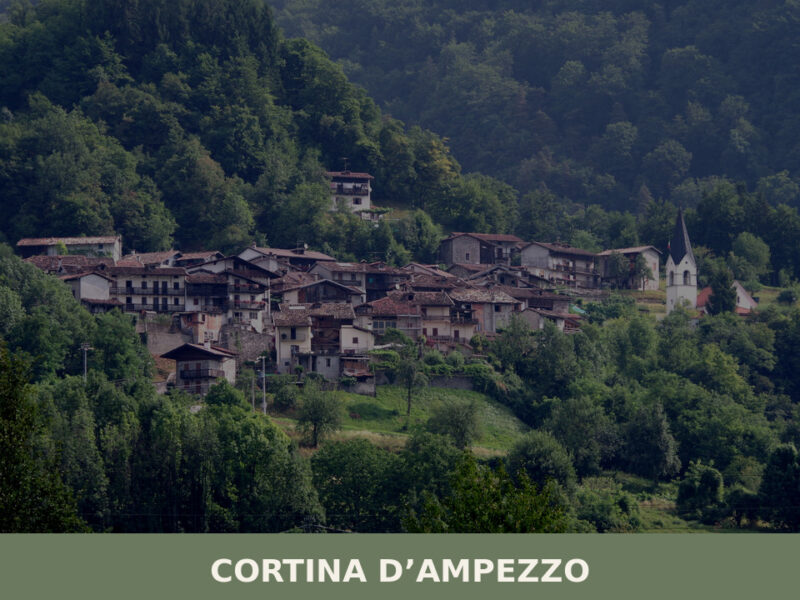
Cortina d’Ampezzo
A complete guide to what to see in Cortina d'Ampezzo — from Dolomite peaks and WWI tunnels to Ladin cuisine and centuries-old communal traditions.
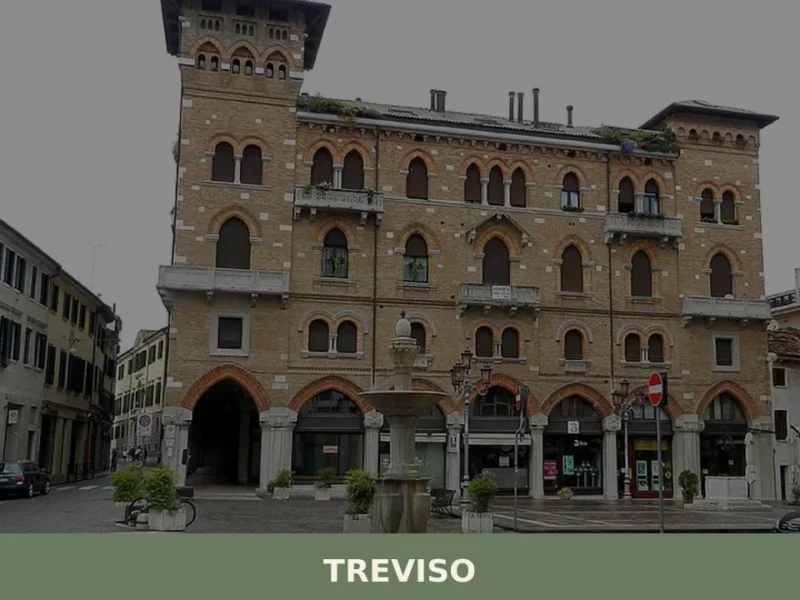
Treviso
What to see in Treviso: 84,000 inhabitants, Venetian walls from 1509, frescoed churches and Radicchio Rosso IGP. Plan your visit with our complete guide.
📝 Incorrect information or updates?
Help us keep the Brentino Belluno page accurate and up to date.