


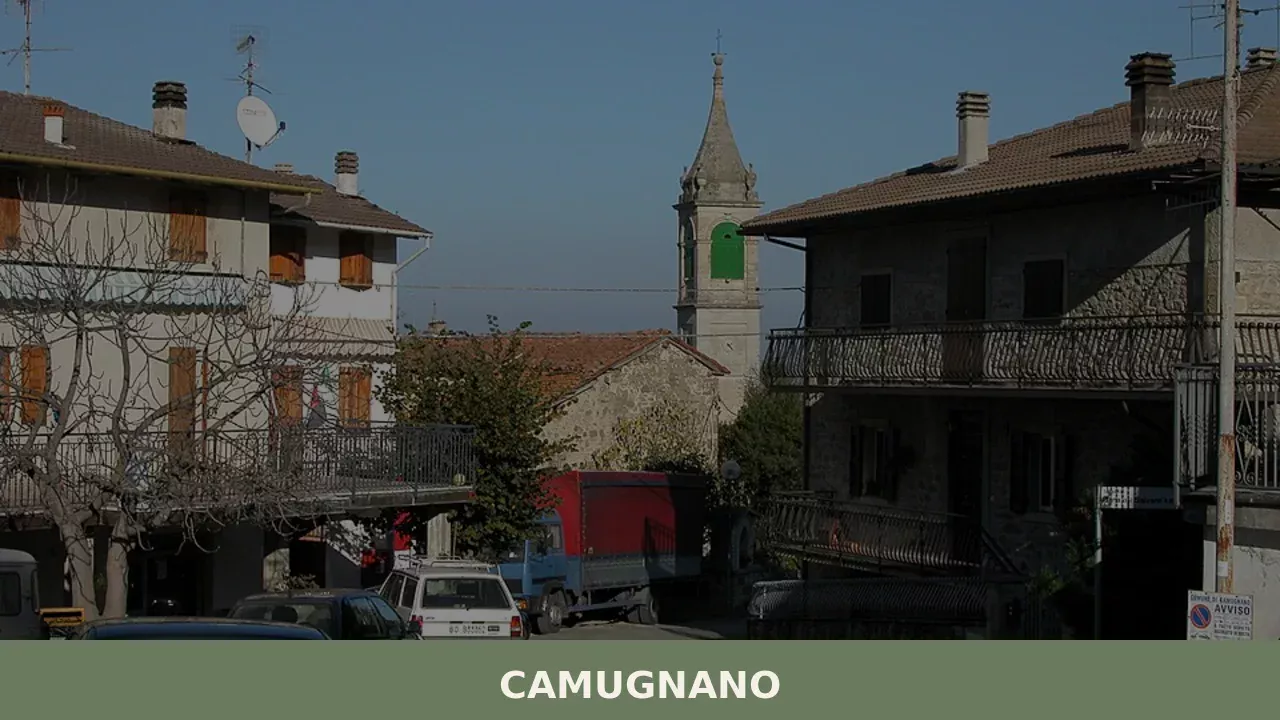
Camugnano
In 1911, when the construction of the Suviana Dam transformed the course of the Limentra torrent, Camugnano changed its appearance forever. The water submerged farmland and footpaths, creating an artificial reservoir that now defines the landscape of the upper Bolognese Apennines at an altitude of 692 metres. This municipality of 1,948 inhabitants, spread across scattered […]
Discover Camugnano
In 1911, when the construction of the Suviana Dam transformed the course of the Limentra torrent, Camugnano changed its appearance forever. The water submerged farmland and footpaths, creating an artificial reservoir that now defines the landscape of the upper Bolognese Apennines at an altitude of 692 metres. This municipality of 1,948 inhabitants, spread across scattered hamlets along ridges and valleys, retains a settlement pattern that reflects centuries of agropastoral economy. Asking yourself what to see in Camugnano means preparing to explore a territory where twentieth-century hydroelectric engineering coexists with Romanesque parish churches and high-altitude beech forests.
History and origins of Camugnano
The etymology of the place name Camugnano has been the subject of several hypotheses.
The most widely accepted traces it back to the Latin gentile name Camunius or Camunnius, indicating an ancient agricultural estate from the Roman era — the praedium Camunnianum — belonging to a landowner of that gens. This type of toponymic formation, common in central and northern Italy, suggests that the area was already inhabited and cultivated during the late Republican or Imperial period, well before medieval documents recorded its existence. Other less supported hypotheses have attempted a connection with the Camunni, a pre-Roman people from the Val Camonica, but the geographical distance makes this derivation unlikely.
The earliest documentary evidence of the territory dates to the early Middle Ages, when the area fell under the jurisdiction of the Diocese of Bologna and rural parish churches served as the main centres of social life. During the twelfth and thirteenth centuries, the territory was caught up in disputes between the feudal families of the Bolognese Apennines and the free Commune of Bologna, which gradually extended its control over the mountain valleys.
The presence of fortifications and watchtowers, traces of which remain in several hamlets, attests to the strategic role of these ridges along the communication routes between the Po Plain and Tuscany. In 1377, documents from the State Archive of Bologna record the territory as part of the Bolognese contado, subject to the city’s statutes.
The demographic evolution of Camugnano reflects patterns common to many municipalities in the Emilian Apennines. Between the late nineteenth century and the early decades of the twentieth, the population exceeded five thousand, sustained by an economy based on livestock farming, chestnut cultivation and timber cutting. The construction of the Suviana (completed in 1932) and Brasimone dams provided temporary employment for hundreds of workers but did not halt emigration towards Bologna and the industrial cities of the North.
The 2021 census recorded a population of 1,948 residents, a figure that places Camugnano among the least densely populated municipalities in the Metropolitan City of Bologna. Today the village is experiencing a slow phase of rediscovery, linked to environmental tourism and the promotion of its artificial lakes.
What to see in Camugnano: 5 top attractions
1. Lake Suviana
Lake Suviana, formed by damming the Limentra di Treppio torrent with a 92-metre-high concrete dam, is the main landscape feature of the territory. Completed in 1932 for hydroelectric power generation, the reservoir covers approximately 97 hectares and reaches a maximum depth of 47 metres. Its shores, largely covered by oak and chestnut woods, are equipped with bathing areas during the summer season, particularly near the locality of Barceda. The lake falls within the Suviana and Brasimone Lakes Regional Park, established in 1995, which protects an ecosystem where kingfishers and great crested grebes nest. For anyone exploring what to see in Camugnano starting from nature, this is the main point of reference.
2. Lake Brasimone
Located a few kilometres from Suviana, Lake Brasimone is a second, smaller and more contained artificial reservoir, created in the 1910s to feed a hydroelectric power plant. Its surface area of approximately 54 hectares and calm waters make it suitable for sport fishing — trout, chub and perch are present — and canoeing. On the eastern shore stands the ENEA Brasimone Research Centre, a scientific facility active since 1963 in the fields of nuclear physics and energy technologies. The coexistence of an advanced research centre and a mountain lake environment gives Brasimone a distinctive character, different from typical Apennine lakes.
3. Sanctuary of the Blessed Virgin of La Serra
On the ridge separating the Limentra valley from the Brasimone valley, at approximately 800 metres above sea level, stands the Sanctuary of the Blessed Virgin of La Serra. The current building dates to the seventeenth century, but Marian devotion at this site is documented from at least the fifteenth century. The church preserves an image of the Madonna considered miraculous, which draws pilgrimages especially in September, on the occasion of the feast of the Nativity of Mary. The elevated position offers an extensive vantage point over the valley below, with visibility reaching the buttresses of Corno alle Scale on clear days. The architectural structure is simple, with a single nave and a façade in local sandstone.
4. Parish Church of San Giovanni Battista in Bargi
The hamlet of Bargi, one of the most populated in the municipality, houses the Parish Church of San Giovanni Battista, a religious building of Romanesque layout documented since the twelfth century. The parish church served as the baptismal centre for the scattered communities of the upper Limentra valley and maintained this function until the modern era. The interior, with a single nave and semicircular apse, preserves architectural elements in sandstone and a baptismal font that local historians date to the fourteenth century. The position of Bargi, on a promontory overlooking Lake Suviana, makes a visit to the parish church an opportunity to observe the relationship between the ancient settlement and the artificial reservoir that reshaped its boundaries.
5. Charcoal Burners’ Trail in the Regional Park
Within the Suviana and Brasimone Lakes Regional Park, the Charcoal Burners’ Trail follows the routes used until the mid-twentieth century by woodsmen who produced charcoal in the carbonaie (charcoal kilns) of the Apennines. The path, approximately 6 kilometres long with moderate elevation gain, passes through mature beech forests and abandoned chestnut orchards, with information panels documenting traditional carbonisation techniques. Along the route you encounter the piazzole — circular clearings of packed earth where the woodpiles were assembled — still recognisable in the undergrowth.
It is an itinerary suitable for hikers of all levels, walkable in about two and a half hours, which documents a forest-based economy that has now disappeared.
What to eat in Camugnano: local cuisine and regional products
The cuisine of the Camugnano area belongs to the Bolognese Apennine tradition, a cuisine born from the need to turn the mountain’s limited resources into substantial dishes. Chestnuts, mushrooms, pork and minor cereals formed the basis of everyday eating for centuries, while soft wheat and eggs were reserved for holidays and more elaborate preparations. The altitude and harsh climate encouraged preservation methods such as salting, drying and smoking, which still define the gastronomic profile of the area today.
Among the most representative dishes are crescentine — also known as tigelle in commercial terminology — small discs of leavened dough traditionally cooked between terracotta plates heated in the fireplace, to be filled with pounded lard, garlic and rosemary. Chestnut polenta, made with flour obtained by drying chestnuts in metati (two-storey structures where chestnuts were smoked on grates), was the staple food during winter months, eaten on its own or accompanied by milk and ricotta. Tagliatelle and lasagne, in their mountain version, use a ragù in which pork prevails over beef, reflecting the widespread pig farming in the rural hamlets.
The Bolognese Apennine territory is known for the gathering of porcini mushrooms (Boletus edulis), which find ideal conditions in the beech forests between 600 and 1,200 metres during the period from September to November.
The Apennine marrone chestnut, which was once exported in dried form to the cities of the plain, is still produced in the historic chestnut groves of Camugnano’s hamlets, although on a smaller scale than in the past. Chestnut honey, dark with a persistent bitter flavour, is produced by local beekeepers who take advantage of the late chestnut blossom between June and July. There are no products with dedicated DOP, IGP or PAT certification specific to this municipal territory, although many of these foods fall within the broader gastronomic traditions of the Bolognese province documented on the official municipal website.
The Wild Boar Festival and the Chestnut Festival, organised between October and November in the municipality’s hamlets, are the main occasions to taste local cooking in a communal setting. At these events you will find dishes such as ricotta and chestnut tortelloni, polenta with wild boar ragù and necci (chestnut flour crêpes). Forest products — dried mushrooms, honey, chestnut flour — are available at seasonal farmers’ markets held in the main village and in the hamlet of Bargi during the autumn months.
On the beverage side, the Camugnano territory has no significant wine production of its own, lying beyond the altitudinal limit of Emilian viticulture.
However, wines from the Colli Bolognesi, a DOC denomination covering the hillside production of the province, are found on local tables. Pignoletto, a sparkling white made from the grape variety of the same name, is the most common pairing with crescentine and cured meat starters. For game dishes and ragù, the Barbera dei Colli Bolognesi, a full-bodied and tannic red, is preferred.
When to visit Camugnano: the best time of year
The busiest season in Camugnano runs from June to September, when the lakes of Suviana and Brasimone become destinations for swimming, fishing and hiking. July and August bring daytime temperatures of around 25–28°C, considerably cooler than the Bolognese plain, making the area a destination for those seeking summer relief from the heat. The patronal feast of San Martino di Tours, celebrated on 11 November, coincides with the autumn festivals dedicated to forest products and is an occasion to experience the social life of the hamlets.
The foliage period, between the second half of October and early November, turns the beech forests of the Regional Park into a succession of reds, oranges and yellows that are particularly vivid along the trails surrounding the lakes.
Winter, from December to March, brings frequent snowfall above 700 metres and reduces access to some of the more isolated hamlets. It is, however, the quietest period for those who wish to walk the trails with snowshoes or simply observe the snow-covered landscape without any crowds. Spring, from April to May, is ideal for hiking: mild temperatures, meadow wildflowers and high lake levels after snowmelt create optimal conditions. For photographers, October and April mornings offer the best lighting conditions over the reservoirs, with low mists dissolving in the early hours.
How to reach Camugnano
From Bologna, Camugnano is approximately 70 kilometres away, reachable in about one hour and twenty minutes. The most direct route follows the A1 motorway to the Sasso Marconi exit, then continues along the provincial road SP325 — the Porrettana — towards Porretta Terme, turning west at the height of Riola onto the SP62. From Florence the distance is around 110 kilometres across the Apennine pass, with a travel time of approximately two hours. From Modena, Camugnano can be reached in about one hour and a half, taking the A1 to Bologna and then following the same Apennine route.
The nearest railway station is Riola di Vergato, on the Bologna–Porretta Terme line operated by Trenitalia, approximately 20 kilometres from the municipal centre.
From Riola you will need your own transport or the TPER bus service, which connects the valley’s hamlets with limited frequencies, especially on public holidays — it is advisable to check timetables on the municipal website. The nearest airport is Bologna’s Guglielmo Marconi, approximately 75 kilometres away. Those arriving by car will find free parking both in the main village and at the equipped areas by the lakes.
Other villages to discover in Emilia-Romagna
Visitors to Camugnano who wish to explore the Emilian Apennines further can head to Cerignale, a small municipality in the province of Piacenza with fewer than one hundred residents, located in the Trebbia valley approximately 140 kilometres to the northwest.
Cerignale shares with Camugnano the condition of a mountain municipality with extremely low population density, but stands out for its connection to the river environment of the Trebbia, which Ernest Hemingway considered the most beautiful river in Italy. The journey between the two villages, feasible in approximately two and a half hours along Apennine roads, offers a complete crossing of the Emilian ridge, from the artificial lakes of the Bolognese area to the limestone gorges of the Piacenza district.
In the opposite direction, towards the plain, Imola provides an urban complement to a mountain visit. Approximately 90 kilometres from Camugnano — reachable in one hour and forty minutes via Bologna — Imola offers the Rocca Sforzesca, the motor racing circuit named after Enzo and Dino Ferrari, and a historic centre with a Roman layout still legible in the street grid.
The combination of Camugnano’s high mountain setting and Imola’s lowland cityscape allows you to build an itinerary that crosses all the environments of the Bolognese province, from wooded ridges to the lands of ceramics and motorsport, illustrating the diverse economies and cultures that coexist within a relatively short radius.
In Emilia-Romagna More villages to discover
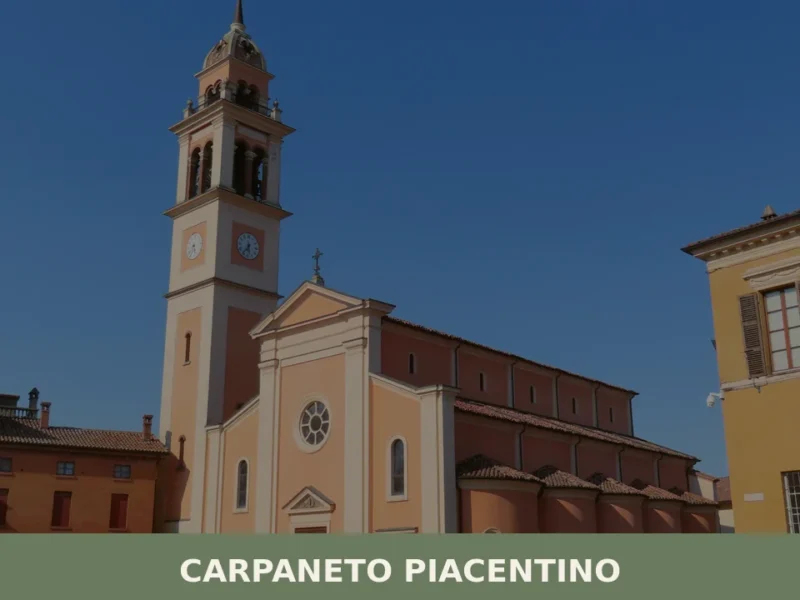
Carpaneto Piacentino
What to see in Carpaneto Piacentino: 7,598 residents, 114 m altitude, Saints Fermo & Rustico festival on 9 Aug, DOP cured meats. Plan your visit now.
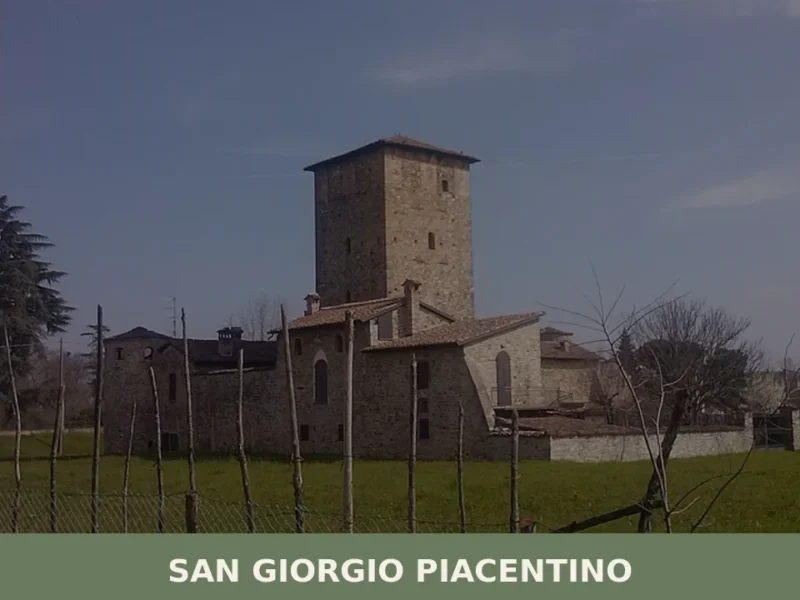
San Giorgio Piacentino
What to see in San Giorgio Piacentino: 5,533 residents at 103 m altitude, Renaissance villas, PDO cured meats, and the 23 April patron feast. Plan your visit now.
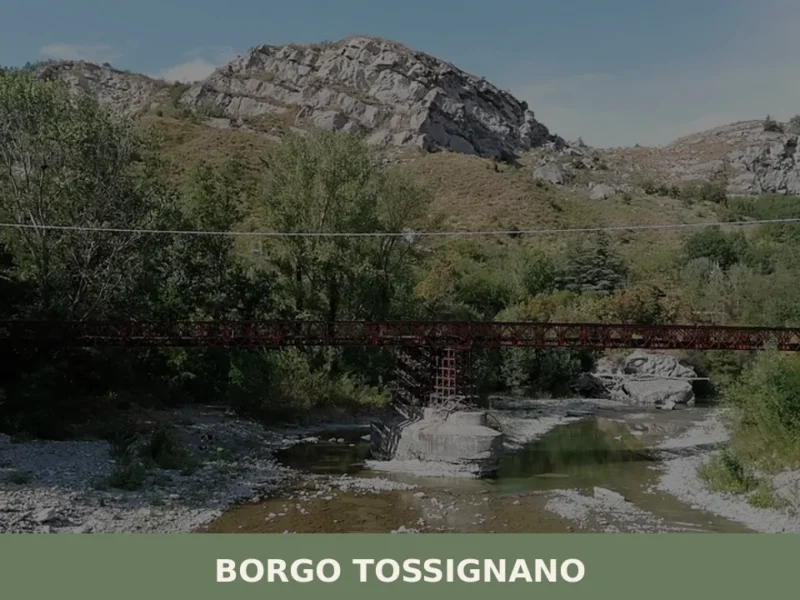
Borgo Tossignano
IN THIS ARTICLEWhat to see in Borgo Tossignano: a complete guide to the village in the Santerno ValleyHistory and origins of Borgo TossignanoWhat to see in Borgo Tossignano: 5 essential attractions3. The ruins of the Castle of Tossignano5. The badlands of the Santerno ValleyWhat to eat in Borgo Tossignano: local cuisine and regional productsWhen to […]




📝 Incorrect information or updates?
Help us keep the Camugnano page accurate and up to date.