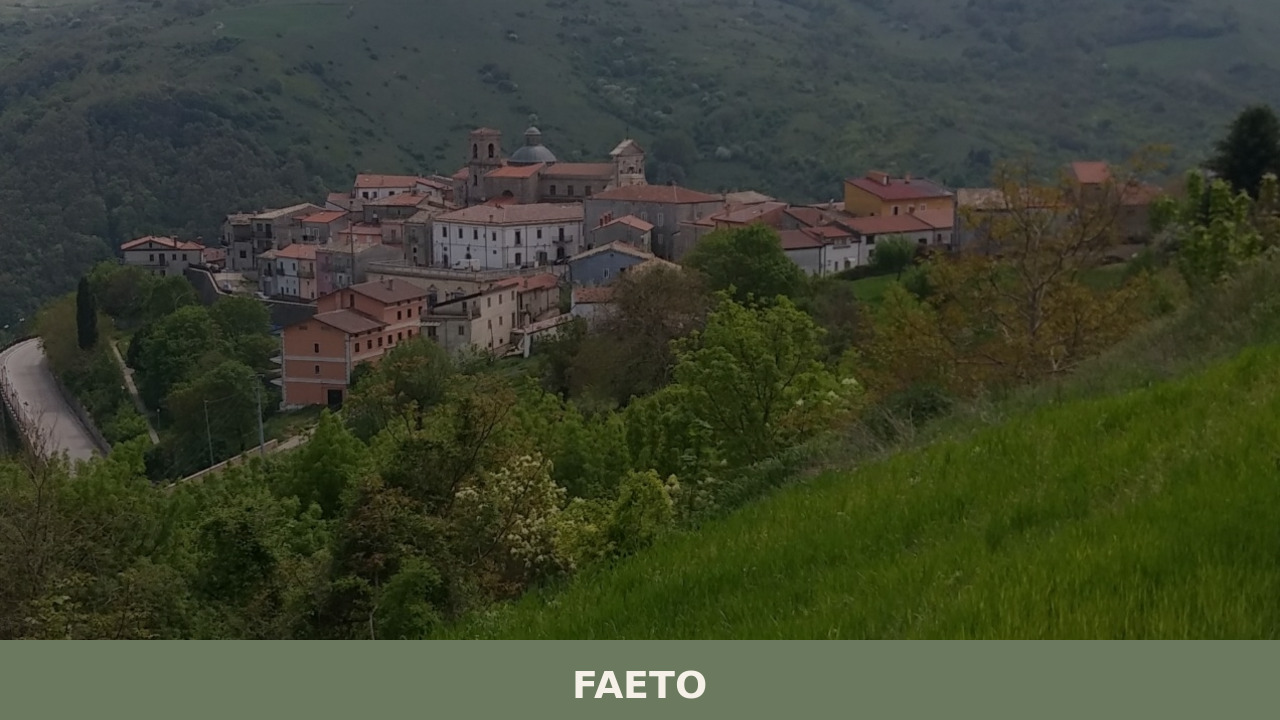
A Franco-Provençal-speaking village of 616 inhabitants high in the Daunia mountains. Discover what to see in Faeto: ancient dialect, beech forests, and Puglia’s highest peak.
Morning mist lifts slowly off the Daunia sub-Apennines, and at 820 metres above sea level, a church bell counts seven. The air carries woodsmoke and the faint sweetness of cured pork. Voices along the main street slip between Italian and something older — a Franco-Provençal dialect that has survived here for nearly eight centuries. With only 616 inhabitants, Faeto is one of the smallest and highest comuni in the province of Foggia, a place where language itself is a living monument. If you are wondering what to see in Faeto, the answer begins with listening.
Faeto’s origins are tied to the movements of Angevin soldiers and settlers from Provence in the thirteenth century. When Charles I of Anjou consolidated power across southern Italy after the Battle of Benevento in 1266, he stationed garrisons and encouraged colonists to settle in strategic highland areas of the Daunia mountains. Faeto and its neighbour Celle di San Vito became home to these Franco-Provençal-speaking communities, whose descendants still use a form of the language — known locally as faetano — in daily conversation. It is one of the last surviving Franco-Provençal linguistic islands in Italy, formally recognised and protected under Italian law since 1999.
Through the medieval and early modern periods, Faeto remained a small feudal settlement, passing through the hands of various noble families who controlled the surrounding lands. Its elevated position on the ridge between the Celone and Fortore valleys gave it defensive value but also ensured its relative isolation. Earthquakes, particularly the devastating Irpinia tremors that have periodically shaken this section of the Apennines, shaped and reshaped its built environment over the centuries. What remains today is a compact nucleus of stone houses, narrow stepped alleys, and a handful of churches that anchor the village to specific centuries of construction and reconstruction.
The name “Faeto” is widely believed to derive from the Latin fagetum, meaning beech forest — a reference that still holds. Dense beech woods blanket the surrounding slopes, their canopy shifting from pale green in spring to deep bronze in October. The landscape has always defined this place as much as its people have: a mountain village surviving on timber, livestock, and a fierce attachment to its own distinct culture.
Walking the narrow lanes of Faeto’s centro storico, you will notice bilingual street signs — Italian paired with the local Franco-Provençal. The stone facades, arched doorways, and external staircases typical of Daunia mountain architecture create a townscape that has changed little in basic form over centuries. It is a place best understood on foot, without hurry, reading the walls as much as the signs.
The parish church, dedicated to the Holy Saviour, stands as the spiritual centre of the village. Its interior holds modest but carefully maintained altarpieces and devotional statues that reflect the community’s long Catholic tradition. The bell tower, visible from several kilometres along the approaching road, serves as the most recognisable silhouette of Faeto’s skyline against the surrounding ridgeline.
Surrounding the village, the Bosco di Faeto is one of the most significant beech forests in the Daunia sub-Apennines. Marked trails wind through it, and in autumn the canopy turns a spectrum of copper and amber that draws hikers and photographers from across Puglia. The forest floor is dense with ferns and fungi, and the silence at altitude is broken mainly by woodpeckers and the wind through high branches.
At 1,151 metres, Monte Cornacchia is the highest peak in Puglia, and it rises just north of Faeto. From its summit, the panorama extends east toward the Tavoliere plain and, on clear days, as far as the Gargano promontory. The hike from the village takes roughly two hours and passes through open meadow and scrubland above the treeline.
Each summer, Faeto hosts a festival celebrating its linguistic heritage, with performances, readings, and music in the local dialect. Scholars, linguists, and members of other Franco-Provençal communities — including from the Aosta Valley and parts of France — attend. It is an unusual gathering: part academic conference, part village feast, and entirely rooted in the specifics of this place.
Faeto’s altitude and climate shape a cuisine distinct from the lowland cooking of Puglia’s coastal towns. The village is known for its cured pork products, particularly a local prosciutto and sausages prepared according to methods passed through generations. The cold mountain winters provide natural conditions for ageing meats slowly. Sheep’s milk cheeses, foraged mushrooms from the beech woods, and hearty legume-based soups are staples. The bread, baked in wood-fired ovens, tends to be dense and long-lasting — the practical bread of a mountain community that once measured supplies against snowbound weeks.
Dining in Faeto means eating in one of the village’s small trattorias or agriturismi rather than any formal restaurant. Meals arrive simply presented: handmade orecchiette or cavatelli dressed with ragù of pork, platters of local salumi, roasted lamb. In autumn, porcini mushrooms appear across menus. Wine comes from lower elevations — the Daunia hills produce creditable reds from Nero di Troia and Montepulciano grapes — but up here, the focus is on the food, and on the particular satisfaction of eating well in a place where the ingredients walked, grew, or were gathered within a few kilometres of the table.
Summer is the most accessible season, with warm days tempered by Faeto’s elevation — temperatures that rarely exceed 28°C when the Tavoliere plain below bakes at 40°C. The Franco-Provençal festival, typically held in August, provides the strongest cultural reason to visit during this period. Spring brings wildflowers to the mountain meadows and the beech forest unfurling fresh leaves; it is the quietest time to walk the trails around Monte Cornacchia. Autumn, from late September through November, transforms the surrounding woods into a display of turning foliage and offers the best foraging conditions for mushrooms and chestnuts.
Winter is cold, with snowfall that can isolate the village for short periods. Roads are maintained but can require chains. For those who do not mind the chill, winter Faeto offers something increasingly rare: genuine silence, a mountain village going about its life without concession to outsiders, woodsmoke rising from chimneys into grey sky. Pack warm layers in every season — even summer evenings at 820 metres carry a bite.
Faeto lies in the western mountains of the province of Foggia, approximately 50 kilometres southwest of the provincial capital. By car from Foggia, take the SS90 road toward Campobasso; the drive takes around one hour, climbing steadily through the Daunia foothills. From Naples, the distance is roughly 160 kilometres via the A16 motorway toward Candela, then north on provincial roads — allow approximately two hours. From Bari, expect a drive of around two and a half hours (190 km) heading northwest.
The nearest railway station with regular service is Foggia, which connects to Rome, Naples, Bari, and other major Italian cities via Trenitalia high-speed and regional lines. From Foggia station, reaching Faeto requires a car — either rental or a limited local bus service that serves the mountain villages. The nearest airports are Bari Karol Wojtyła (approximately 200 km) and Naples Capodichino (approximately 170 km). There is no direct public transport from either airport; car hire is the practical option for visiting this part of inland Puglia.
Faeto belongs to a constellation of small communities across the Daunia mountains and the wider province of Foggia that reward the traveller willing to leave the coast. To the northeast, closer to the Fortore river valley, the village of Carlantino sits in a landscape of rolling hills and lake shores — the Occhito reservoir, the largest artificial lake in southern Italy, lies just below it. Carlantino shares Faeto’s quiet, unhurried character but occupies lower, warmer terrain with a different agricultural rhythm centred on olive groves and wheat fields.
For a complete contrast, consider the Gargano coast. The fishing village of Mattinata, set against white limestone cliffs dropping into the Adriatic, is roughly 120 kilometres east of Faeto — a journey from mountain beech forest to Mediterranean maquis in under two hours. Together, these villages trace the full range of Puglia’s geography: the high interior, the river valleys, and the dramatic seaboard. Visiting them in sequence gives a portrait of a region far more varied than its reputation for flat plains and olive trees might suggest.
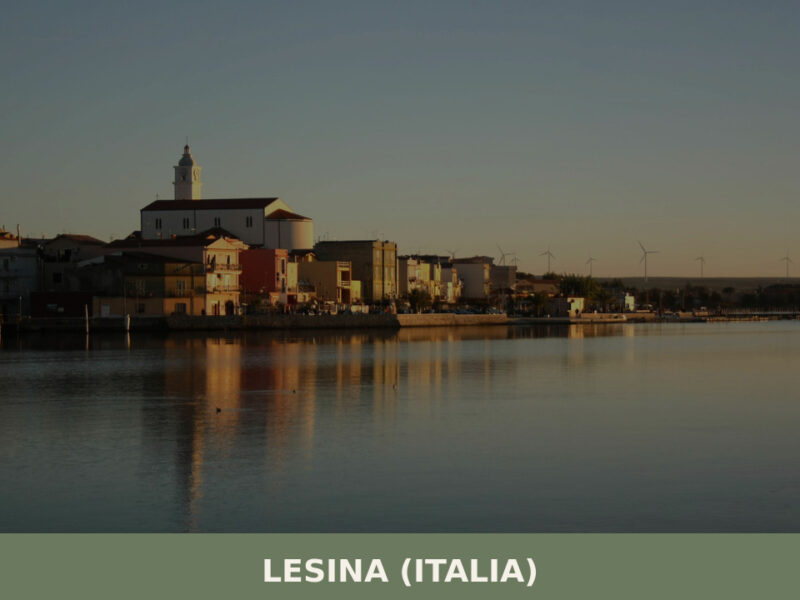
Lesina sits between Italy's second-largest coastal lagoon and the Adriatic Sea. A guide to its lagoon ecology, eel fishing traditions, and quiet historic centre.
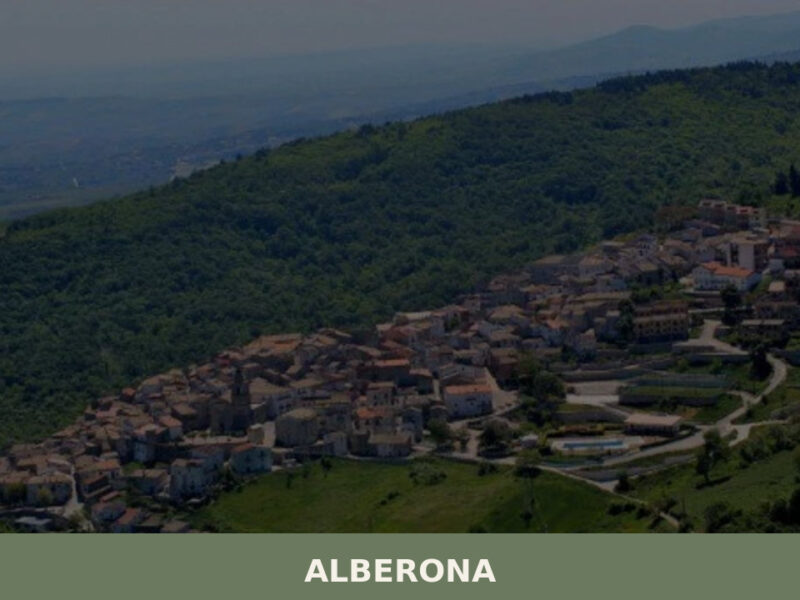
Explore Alberona, a hidden gem in Puglia's Apennines. Discover its attractions, rich history, and delightful local cuisine.
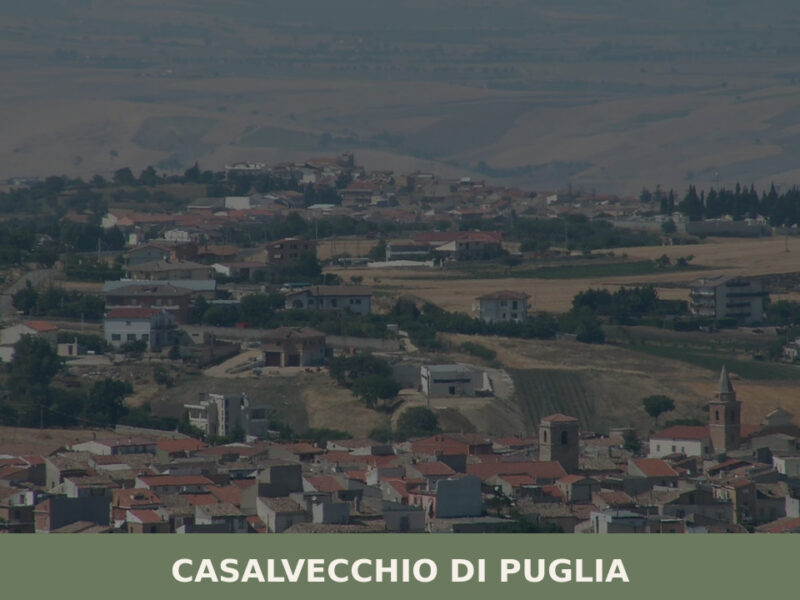
An Arbëreshë village of 1,689 inhabitants perched at 465 metres in the Daunia hills. A guide to its historic centre, rural paths, and slow-paced southern Italian life.
📝 Incorrect information or updates?
Help us keep the Faeto page accurate and up to date.