


Fresagrandinaria
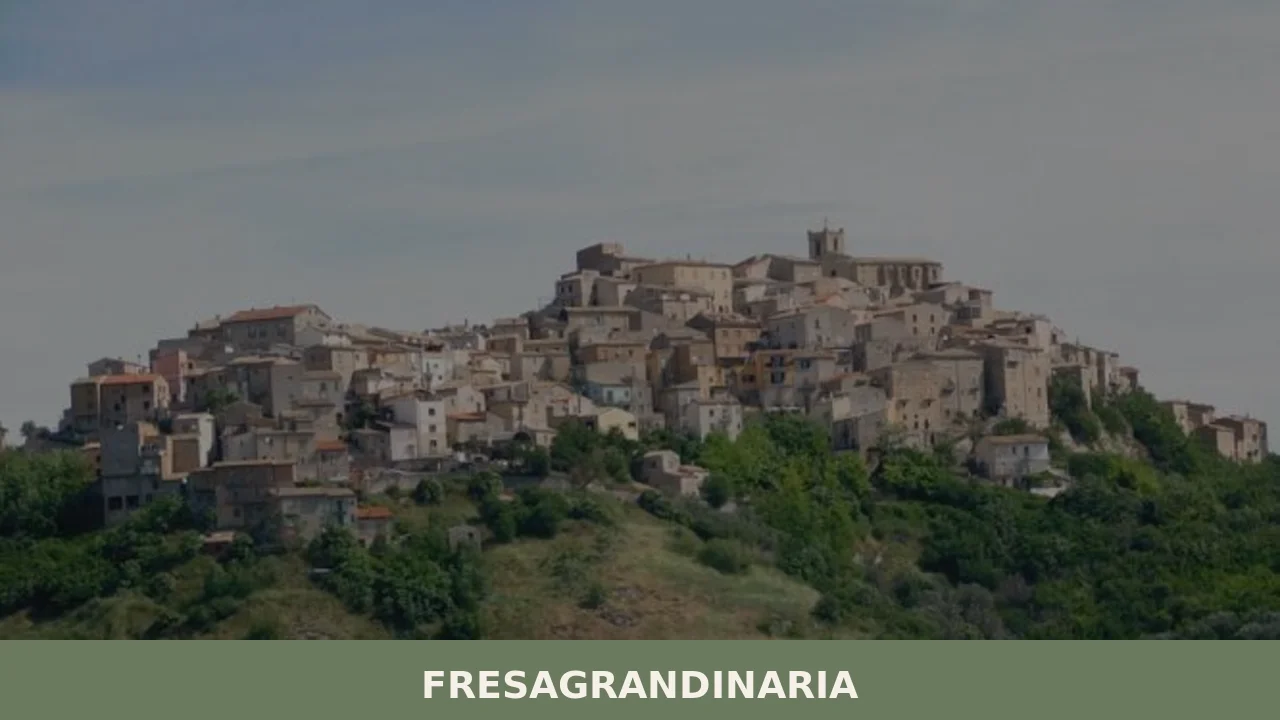
Nine hundred and twenty-three inhabitants, a hilltop ridge at 391 metres above sea level, and a double name that joins two distinct medieval communities: Fresa and Grandinaria, merged into a single settlement at least since the fifteenth century. Anyone arriving from the Treste valley floor immediately notices the compact outline of houses built in local […]
Discover Fresagrandinaria
Nine hundred and twenty-three inhabitants, a hilltop ridge at 391 metres above sea level, and a double name that joins two distinct medieval communities: Fresa and Grandinaria, merged into a single settlement at least since the fifteenth century. Anyone arriving from the Treste valley floor immediately notices the compact outline of houses built in local stone, pressed tightly against one another as if to withstand the tramontana wind that rises from the Adriatic Sea, just over twenty kilometres away as the crow flies. Understanding what to see in Fresagrandinaria means crossing this narrow, vertical urban core, where every stairway leads to a different level of the village, and every level reveals a precise fragment of the agrarian and feudal history of the mid-Vastese area.
History and origins of Fresagrandinaria
The etymology of the name carries the trace of its dual founding. The term “Fresa” is thought to derive, according to some interpretations, from the Latin fresa or fracta, indicating cleared or deforested land — a common practice in the hilly areas of Abruzzo during the early Middle Ages, when Benedictine monks and rural communities reclaimed new land for cultivation. “Grandinaria,” on the other hand, most likely refers to a climatic or toponymic feature: hypotheses range from a reference to the frequent hailstorms that strike these exposed hills to a connection with an ancient landowner or a Lombard estate name. The place name already appears in documentary sources from the Norman period, when the territory fell within the feudal holdings linked to the County of the Marsi and later to the feudal system of the Kingdom of Naples. The first written attestation of the unified name dates to the Angevin registers of the thirteenth and fourteenth centuries, in which the hamlet was recorded as a single fiscal entity.
During the Middle Ages, Fresagrandinaria followed the fortunes of the Vastese fiefdoms, passing under the control of various noble families who succeeded one another in governing the territory. The D’Avalos, Marquises of Vasto, long exercised their influence over this portion of Abruzzo Citeriore, and the village fell within the administrative and military orbit of the broader feudal structure centred on Vasto. The hilltop position of the settlement was no accident: the ridge allowed visual control over the valley of the Treste torrent and the communication routes between the Adriatic coast and the inland areas. This was not a fortified village in the classical sense — no traces of imposing defensive walls remain — but the very layout of the settlement, with houses built back-to-back and narrow lanes that served as defensive corridors, performed a protective function. The main church, dedicated to Saint Nicholas of Bari, formed the focal point of community life, and its placement at the highest point of the old core signalled its centrality in both religious and civic terms.
From the sixteenth century onward, the history of Fresagrandinaria intertwined with that of the rural economy of the mid-Adriatic: olive growing, cereal farming, and sheep herding along the routes of the minor transhumance. The village never experienced significant population growth, but maintained a stable population of smallholders and peasants tied to the large estates. The earthquake of 1456, which devastated vast areas of central and southern Italy, also struck this zone, and subsequent tremors in the seventeenth and eighteenth centuries helped reshape the building fabric of the village. The nineteenth century brought the Unification of Italy and, with it, the phenomenon of post-unification brigandage, which affected the Vastese countryside as well. In the twentieth century, emigration progressively emptied the village: from roughly two thousand inhabitants at the start of the century, the population has fallen to today’s 923 — a figure that nonetheless places Fresagrandinaria among those Vastese settlements that have resisted depopulation better than other villages at the same altitude.
What to see in Fresagrandinaria: 5 key attractions
1. Church of San Nicola di Bari
The parish church dominates the upper part of the historic centre and is the main religious building in the village. The current structure, the result of successive renovations layered over the original medieval core, features a simple stone façade with a portal of dressed stone blocks. The interior, with a single nave, retains lateral altars in stucco and several wooden statues of local craftsmanship, including one of Saint Nicholas. The square bell tower, visible from various points in the valley, still serves today as a visual landmark for those travelling along the valley-floor roads. The church is generally open during daytime hours, especially around the times of religious services.
2. Historic centre and the network of alleyways
The old core of Fresagrandinaria preserves a medieval urban layout that can be read in the network of narrow lanes, stone staircases, and covered passageways connecting the different levels of the ridge. The houses, built from local limestone with brick inserts, in many cases feature dated portals and small votive shrines at street corners. Walking along Via Roma and its side lanes, one encounters connecting arches between buildings, underpasses, and small open areas that once served as communal spaces. A full walk takes about forty minutes and offers, from the highest points, a wide view that on clear days reaches as far as the Adriatic coastline and, inland, to the foothills of the Maiella massif.
3. Sanctuary of the Madonna Grande
Dedicated to the patron saint of the village, the Madonna Grande, this place of worship is the centre of local devotion and the focal point of the patronal feast celebrated on the Wednesday after Pentecost. The building stands in a slightly off-centre position relative to the inhabited core, following a convention common in Abruzzo’s villages where Marian sanctuaries were placed along the access roads to a settlement or at sites of ancient rest and prayer. The building houses an image of the Virgin venerated by the community, and during the patronal feast it is carried in procession through the village streets in a cortège involving the entire resident population.
4. Panoramic viewpoint over the Treste valley
From the southern side of the historic centre, at a small open area accessible on foot, a natural vantage point opens up over the valley of the Treste torrent and the surrounding hill landscape. From here one can observe the geological structure of the territory: the Pliocene clays that form the badlands of the area, the fields of wheat and sunflower alternating with olive groves, and in the distance the outline of the coast between Vasto and San Salvo. This viewpoint is particularly rewarding in the afternoon hours, when the raking light accentuates the ridges and furrows of the badlands. Access is free and requires no special equipment.
5. Badlands landscape and rural paths
The hilly area around Fresagrandinaria is marked by badland formations — deep erosions in the clay that create a lunar landscape of crests and small valleys — typical of the Adriatic side of the Abruzzo Apennines. A number of rural paths, still used by residents to reach their plots of farmland, allow visitors to cross these formations and observe wild vegetation adapted to the clay soils: broom, tamarisk, and wild aromatic herbs. There are no officially marked trails, but the Municipality of Fresagrandinaria can provide information on practicable routes. Light trekking footwear is recommended, and caution is advised on the clay terrain after rainfall.
Traditional cuisine and local products
The table in Fresagrandinaria reflects the peasant tradition of the Vastese area — a cuisine built on a few ingredients prepared with method and patience. The most representative dish of the zone is ventricina vastese, a cured meat made from pork cut by hand at knife-point, seasoned with dried and ground sweet and hot pepper, then stuffed into the pig’s bladder or stomach and aged for at least three to four months. The Vastese ventricina is recognised as a Traditional Agri-Food Product (PAT) by the Abruzzo Region, and its production area encompasses precisely the hillside municipalities of the Province of Chieti, Fresagrandinaria included. Another fundamental element is Colline Teatine DOP extra virgin olive oil, produced from the olive groves surrounding the village: the predominant varieties are Gentile di Chieti and Leccino, and the resulting oil has a medium fruity flavour with notes of green almond.
Among first courses, sagne a pezzate — irregular strips of fresh pasta made with water and flour, cooked with beans and dressed with a sauté of garlic, olive oil, and chilli pepper — are a preparation found throughout the Vastese hill belt. Maccheroni alla chitarra, cut using the characteristic frame strung with steel wires, are served with mutton ragù or with small fried meatballs. In the winter months, cif e ciaf is prepared — a dish of offal and cheaper pork cuts pan-fried with peppers. Local bread, traditionally baked in the wood-fired ovens of rural houses, accompanies every meal and is also used for pallotte cace e ove, fritters of stale bread, eggs, and pecorino cheese, fried and then stewed in tomato sauce.
Montepulciano d’Abruzzo DOC, the most widespread red wine in the region, is the natural companion to this robust cuisine: the vineyards of the Chieti hill zone produce grapes of good concentration, and some local wineries still vinify in small quantities for family consumption or direct sale. For desserts, during festive periods calgionetti (or caggionetti) are prepared — fried half-moon pastries filled with grape jam, boiled chickpeas, chocolate, and almonds. The feast of the Madonna Grande, in the spring period, is the main occasion to taste the village’s home-made preparations in a convivial setting that brings together local families and visitors.
When to visit Fresagrandinaria: the best time
The patronal feast of the Madonna Grande, which falls on the Wednesday after Pentecost — generally between late May and early June — is the moment of greatest vitality in the village. On this occasion, the procession crosses the historic centre, houses open their doors to guests, and laden tables bring the village’s gastronomic identity to life. Late spring is also the period when the hill landscape displays its greatest range of colour: the wheat fields are still green, poppies dot the roadsides, and the olive trees show fresh growth. Temperatures, between 18 and 25 degrees, make it possible to walk the rural paths without the discomfort of summer heat.
Summer, from July to mid-September, brings hot days with peaks that can exceed 30 degrees, but the hilltop position at nearly 400 metres ensures cooler evenings compared to the coast. This is the time when many emigrants return to the village, and the evenings come alive with gatherings and small events. Autumn, from October to November, coincides with the olive harvest and winemaking: those who visit Fresagrandinaria during this period can observe the agricultural work underway and buy new-season oil directly from producers. Winter is the quietest time, with possible snowfalls between January and February that blanket the ridge and make the access roads less easy to navigate. For those who wish to focus their visit on the built heritage and the cuisine, the months of May, June, September, and October offer the most favourable conditions.
How to reach Fresagrandinaria
Fresagrandinaria is reached by car from the A14 Bologna–Taranto motorway, exiting at the Vasto Sud–Montenero di Bisaccia toll station. From there, follow the provincial road inland for about 20 kilometres, following signs for Fresagrandinaria along a hilly route that climbs gradually from the coastal plain. From Chieti, the provincial capital, the distance is approximately 90 kilometres, drivable in an hour and a half along the SS 652 Fondovalle Sangro and then the inland provincial roads. From Pescara, Abruzzo Airport is about 100 kilometres away, reachable in an hour and forty minutes by taking the A14 motorway southbound and then the local road network.
The nearest railway station is Vasto–San Salvo, on the Adriatic line, about 25 kilometres from the village. From this station there are no direct public transport connections running at regular intervals to Fresagrandinaria: having one’s own or a rented car is advisable. Alternatively, bus services operated by TUA (Trasporto Unico Abruzzese) connect Vasto with some inland centres, but services are limited and mainly tied to school timetables. From Rome, the total distance is approximately 280 kilometres, drivable in three hours via the A25 motorway to Pescara and then the A14 southbound.
Other villages to discover in Abruzzo
Anyone visiting Fresagrandinaria who wishes to deepen their knowledge of inland Abruzzo might consider an itinerary taking in two villages of very different but complementary character. Ateleta, in the L’Aquila hinterland, sits at over one thousand metres on the Cinquemiglia plateau, on the edge of the Abruzzo National Park. Compared to Fresagrandinaria, which belongs to the clay-rich, undulating landscape of the Teatine hills, Ateleta is part of a mountainous and pastoral Abruzzo, linked to the great transhumance and highland pastures. The contrast between the two settings — the Adriatic hillside and the Apennine plateau — effectively conveys the geographical variety of a region that shifts from sea to mountain within a few dozen kilometres.
Villa Celiera, in the Province of Pescara, offers a further variation: situated on the slopes of the Gran Sasso massif, on the Pescara side of the Gran Sasso and Monti della Laga National Park, it represents an Abruzzo of stone and woodland, with a compact historic centre and a territory rich in beech forests and springs. A trip linking Fresagrandinaria, Villa Celiera, and Ateleta allows one to pass in sequence through three altitudinal bands and three distinct territorial identities: the cereal-growing and olive-producing hills of the Vastese, the mid-mountain piedmont zone of the Gran Sasso, and the pastoral plateau of the central Apennines. Each village, with its own economy, architecture, and cuisine, represents a different expression of the relationship between human communities and landscape in Abruzzo, and together they form an itinerary of understanding that extends well beyond any single tourist destination. To explore further the geography and history of the Abruzzo territory, the resources of the Touring Club Italiano are a useful reference, offering up-to-date entries on the region’s municipalities and routes.
In Abruzzo More villages to discover
Fano Adriano
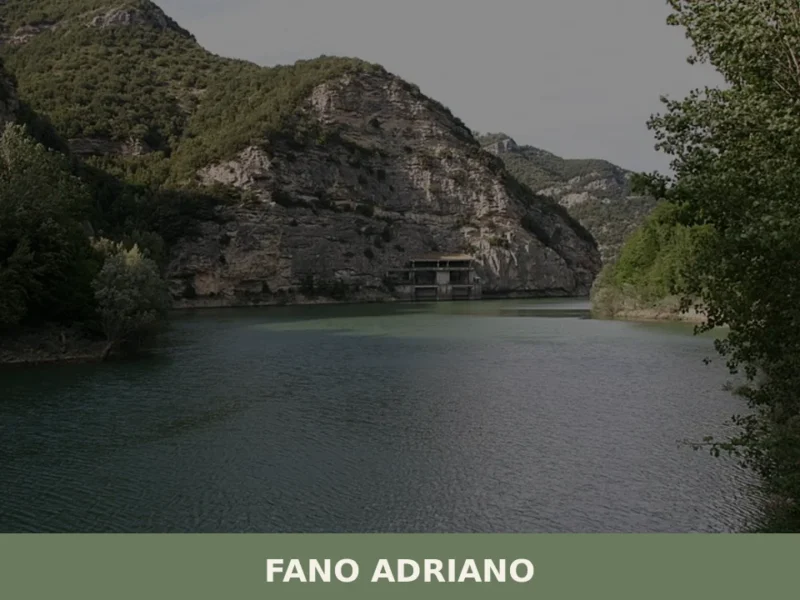
Fano Adriano, 750 meters above sea level in the province of Teramo, appears as an alpine settlement in the heart of mountainous Abruzzo, with a current population of 249 inhabitants. Its core, developed along the ridges leading to the Gran Sasso massif, documents centuries of human presence in a geographical context that has influenced its […]
Frisa
At 237 metres above sea level, on the plain that connects the Chieti hills to the Adriatic coast, Frisa has a current population of 1,620 and a territory dominated by olive groves and arable land. The municipality, in the province of Chieti, retains in its urban layout the marks of an almost total reconstruction following […]
Civitella Messer Raimondo
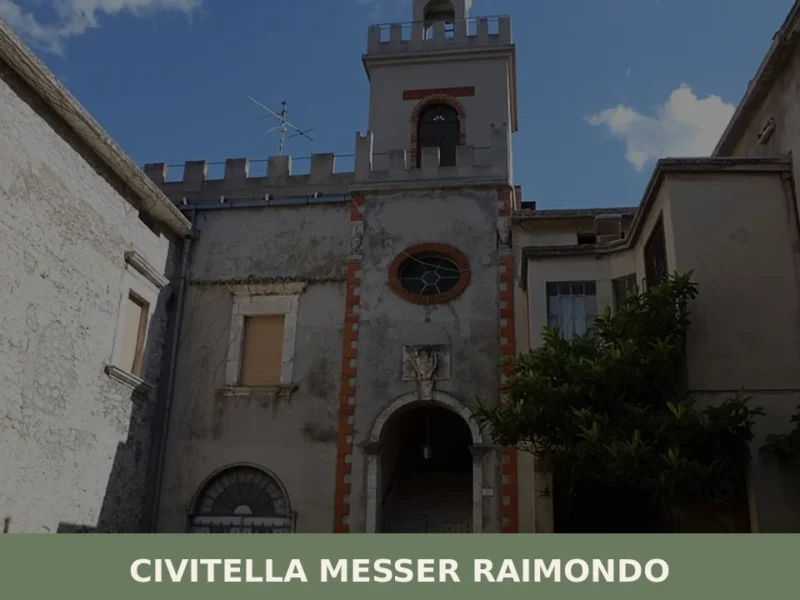
Civitella Messer Raimondo has 769 inhabitants and sits at 613 metres above sea level, on the eastern slope of the Maiella massif, in the province of Chieti. The village’s name still bears that of a medieval feudal lord — Raimondo — who shaped its political fortunes between the 13th and 14th centuries. Understanding what to […]
📝 Incorrect information or updates?
Help us keep the Fresagrandinaria page accurate and up to date.