


Frisa
At 237 metres above sea level, on the plain that connects the Chieti hills to the Adriatic coast, Frisa has a current population of 1,620 and a territory dominated by olive groves and arable land. The municipality, in the province of Chieti, retains in its urban layout the marks of an almost total reconstruction following […]
Discover Frisa
At 237 metres above sea level, on the plain that connects the Chieti hills to the Adriatic coast, Frisa has a current population of 1,620 and a territory dominated by olive groves and arable land. The municipality, in the province of Chieti, retains in its urban layout the marks of an almost total reconstruction following the damage suffered during the Second World War. Asking what to see in Frisa means moving between what survived the destruction and what the community has patiently rebuilt, in an agricultural landscape that remains the true defining element of the place.
History and origins of Frisa
The place name “Frisa” appears in medieval documents from the 12th century onwards, linked to the affairs of Norman fiefs in the Chieti county. The most widely accepted hypothesis traces the name to the Latin root frisium, connected to textile processing, or to a Lombard derivation indicating a rural border area. The village followed the fortunes of the various feudal transfers that affected the Chieti territory: from the Normans to the Swabians, from the Angevins to the Aragonese, until its incorporation into the Kingdom of Naples.
During the late Middle Ages, Frisa belonged to several local noble families and was part of the Diocese of Lanciano. Its flat position, unlike that of many Abruzzo settlements built on defensive hilltops, made it a predominantly agricultural centre, tied to olive and wheat cultivation. This same character as an open village made it vulnerable during the Second World War: in 1943–1944, Frisa found itself on the Gustav Line and suffered heavy bombardment by Allied forces. Much of the historic centre was razed to the ground. The reconstruction, carried out in the following decades, redesigned the layout of the town, preserving the original configuration only in part. For more on the municipality’s history, see the Wikipedia page dedicated to Frisa.
The patron saint is Saint Pantaleon, a physician and martyr venerated in several communities across southern Italy. The cult of this saint, spread along the Adriatic coasts through trade routes with the East, points to a historical connection between Frisa and the religious and mercantile dynamics of the central Adriatic.
What to see in Frisa: 5 main attractions
1. Church of San Pantaleone
The church dedicated to the patron saint was rebuilt after the wartime destruction and preserves inside it elements of statuary and liturgical furnishings recovered from the rubble. The façade, simple and linear, reflects the style of post-war reconstruction in Abruzzo. It serves as the religious and civic focal point of the town, at the centre of the summer patron saint festival.
2. War memorial and remembrance of the conflict
Frisa dedicates a commemorative area to the civilians and soldiers who died during the fighting on the Gustav Line. Plaques and memorial stones scattered across the municipal territory document specific episodes from 1943–1944. It is an essential stop for understanding how deeply the Second World War marked this part of Abruzzo, both physically and demographically.
3. The olive grove landscape
The plain of Frisa is covered by extensive olive plantations, many of which produce extra virgin olive oil in the tradition of the province of Chieti, one of the most productive in Italy. Walking or driving along the rural roads through the olive groves, especially in autumn during the harvest, conveys the economic and landscape significance of this territory better than any monument could.
4. The reconstructed historic centre
The built-up area retains a compact layout with buildings from the 1950s and 1960s, interspersed with a few fragments of walls predating the conflict. The brick houses, sober doorways and small squares reflect the architecture of post-war reconstruction in southern Italy. Walking through the centre means reading the traces of a community that had to reinvent its own spaces.
5. Rural territory and walking and cycling routes
The unpaved roads and cart tracks connecting Frisa to the surrounding countryside offer routes suited to walks and bicycle rides. The flat terrain — a rarity in Abruzzo — allows for accessible outings even for families and less experienced walkers. From here, the view extends towards the Maiella massif to the west and towards the sea to the east, when visibility allows.
Food and local produce
The table in Frisa follows the repertoire of traditional Chieti peasant cooking. The most common dishes in local homes and trattorias include pasta alla chitarra dressed with lamb or tomato sauce, pallotte cace e ove — cheese and egg balls, fried and then cooked in sauce — and wild greens sautéed with garlic and chilli pepper. Extra virgin olive oil is the common thread running through every preparation: the province of Chieti is the largest olive-producing area in Abruzzo and among the most important nationally.
Among local products worth noting are the Montepulciano d’Abruzzo DOC wine, widespread across the surrounding hill country, and artisan-made pecorino cheeses. During patron saint celebrations and summer food festivals, you can find stalls selling arrosticini and traditional sweets such as ferratelle (thin wafers cooked in an iron press). For up-to-date information on events and local producers, the official website of the Municipality of Frisa periodically publishes notices and calendars.
When to visit Frisa: the best time
Frisa’s climate is typical of the lower Adriatic hill belt: hot, dry summers and winters that are mild compared to the mountainous interior. The months between May and June offer pleasant temperatures and countryside in full bloom, with wheat fields still green and the olive groves in flower. September and October are recommended for those who want to witness the grape harvest and, between late October and November, the olive harvest — the moment when the territory expresses its productive role most visibly.
The feast of Saint Pantaleon, celebrated on 27 July, is the main event of the year: a procession, solemn Mass and popular festivities with music and food involve the entire community. It is the occasion when Frisa is also repopulated by emigrated residents who return for the celebration. In summer, food festivals and cultural events organised by the local pro loco association and the municipal administration also take place from time to time.
How to reach Frisa
Frisa can be reached by car from the A14 Bologna–Taranto motorway, taking the Lanciano or Val di Sangro exit and then continuing along provincial roads for approximately 10–15 kilometres. From Pescara the distance is about 40 kilometres (45 minutes), and from Chieti about 35 kilometres. The nearest railway station is Lanciano, connected to the Sangritana line and to the Trenitalia network via the San Vito Lanciano stop on the Adriatic line. Abruzzo Airport in Pescara is approximately 45 kilometres away. There are no frequent public transport services to Frisa: a car remains the most practical option. For those arriving from the south, the alternative is the Vasto motorway exit, heading back up along the coast and into the interior. The Touring Club Italiano includes Frisa in its itineraries covering coastal and hill-country Abruzzo.
What to see in Frisa and in nearby villages in Abruzzo
Those visiting Frisa can build a broader itinerary crossing Abruzzo from east to west, from the coastal plain to the mountain gorges. Heading towards the interior of the L’Aquila province, Anversa degli Abruzzi offers a radically different setting: a village built above the Sagittario Gorges, with a vertical architecture of stone houses clinging to the rock. The contrast with Frisa’s agricultural plain is stark and instructive — two opposite ways of inhabiting the same regional territory.
Moving northwards, in the province of Teramo, Ancarano is another small centre with a strong agricultural vocation, particularly in viticulture and olive growing. Together with Frisa, it speaks of that flat and hilly Abruzzo less well known than its mountain settlements, but equally important for understanding the region’s rural economy and demographic history.
In Abruzzo More villages to discover
Furci
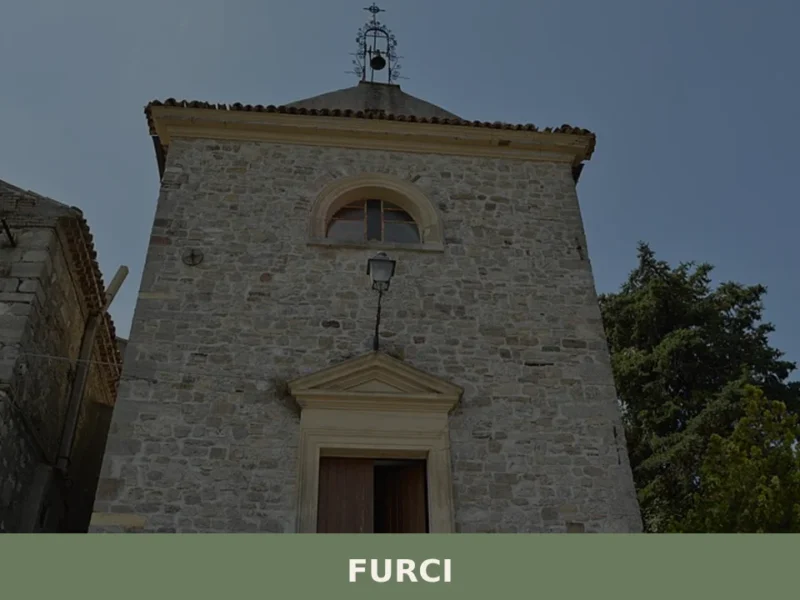
Furci has 806 inhabitants and sits at 550 metres above sea level, along the hill ridge that separates the Sinello valley from the Treste stream valley, in the southern part of the province of Chieti. Anyone looking into what to see in Furci will find a compact urban centre, organised around the main church and […]
Civitaquana
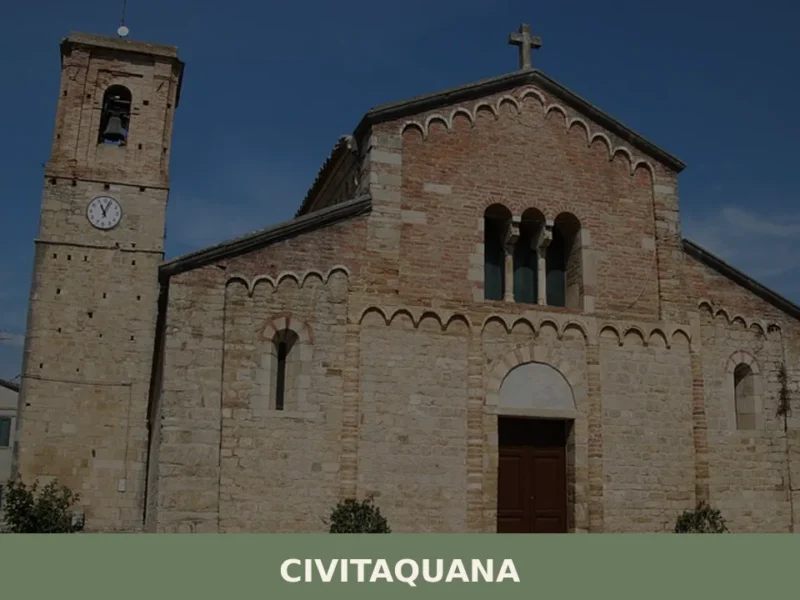
At 550 metres above sea level, on the eastern slope of the Gran Sasso descending towards the Pescara hills, Civitaquana is home to 1,146 inhabitants spread between the historic centre and the surrounding hamlets. The village’s very name — documented in medieval sources as Civitas Aquanae — reveals an origin linked to the presence of […]
Carapelle Calvisio
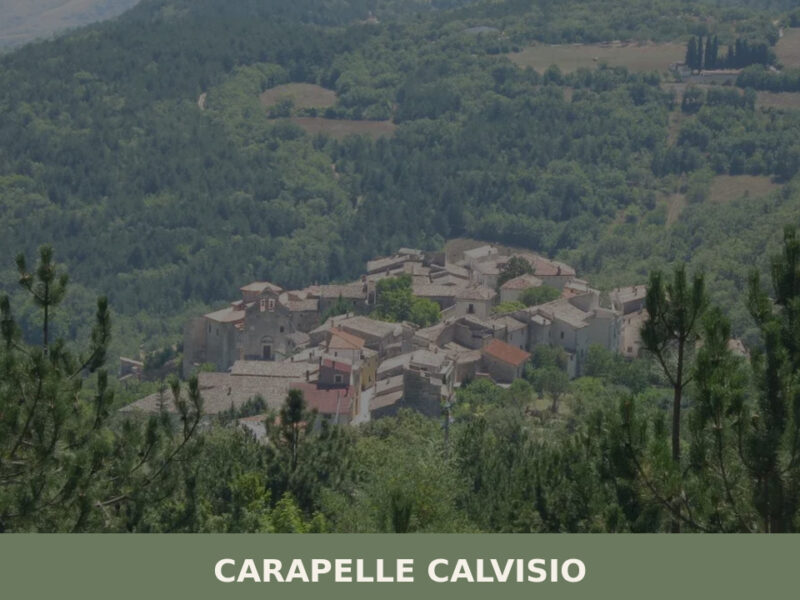
In the quietest hour of dawn, Carapelle Calvisio comes alive with the soft rustle of the breeze through olive groves and the distant toll of church bells. This tiny village of 78 inhabitants, resting at 910 meters above sea level, seems untouched by time. Wandering through its cobblestone streets reveals the simple beauty embedded in […]
📝 Incorrect information or updates?
Help us keep the Frisa page accurate and up to date.