


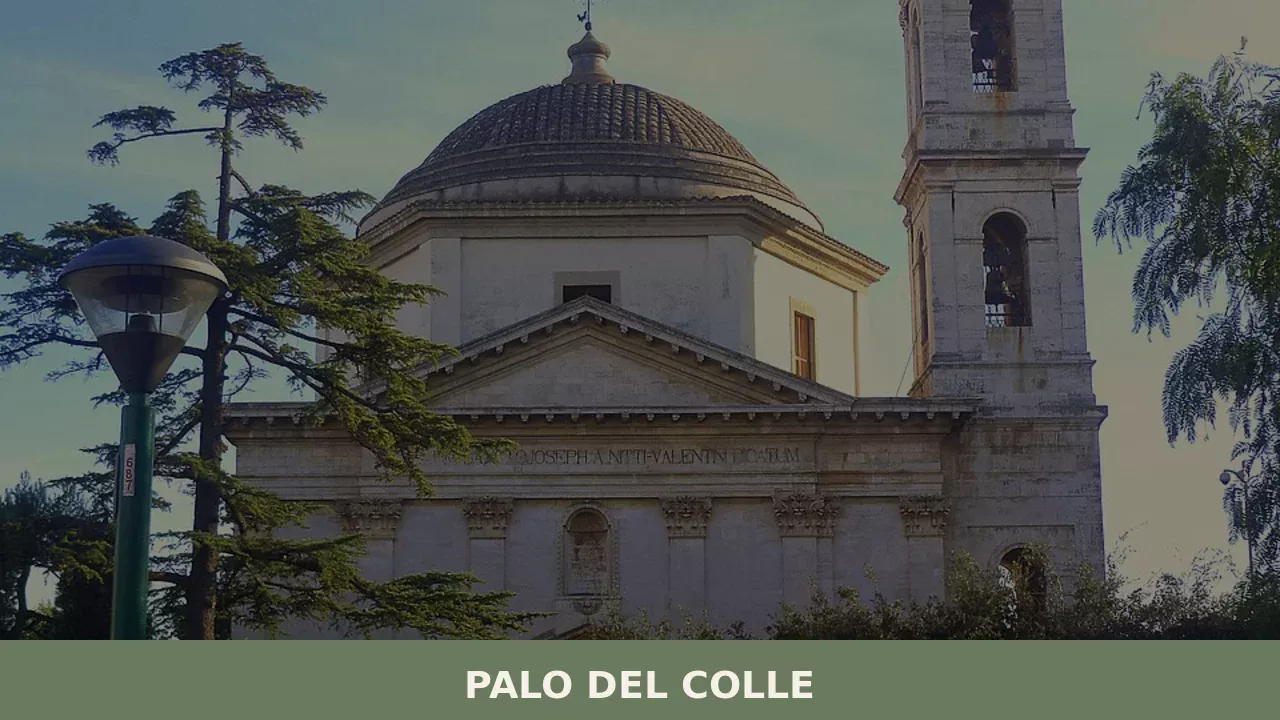
Palo del Colle
What to see in Palo del Colle: town at 177 m near Bari. Explore the Norman castle, cathedral, and Acquasale PAT. Plan your visit with our full guide.
Discover Palo del Colle
The 1753 catasto onciario recorded just over four thousand souls in Palo del Colle, nearly all of them tied to the cultivation of olives and almonds across a stretch of red earth that still marks the landscape west of Bari. That Bourbon tax document described a settlement already organised around a cathedral, a castle, and a network of enclosed courtyards — the same elements that define a visit today. Asking what to see in Palo del Colle means following an urban map that preserves the proportions of its Norman layout, at 177 metres above sea level, with roughly 20,500 inhabitants spread between the old centre and the twentieth-century expansions along the road to Bitonto.
History and origins of Palo del Colle
The place name appears in medieval documents as Palum, from the Latin palus meaning “stake” or “palisade,” a likely reference to a wooden defensive structure erected on a hilltop — the “colle” (hill) that completes the name.
A second, less widely accepted hypothesis traces the etymology to palus in the sense of “marsh,” linked to the presence of stagnant waters in the surrounding plain. The earliest certain record dates to 1040, when the settlement is mentioned in a Norman document as a fortified hamlet under the county of Conversano. The transition from Lombard to Norman rule reshaped the town’s layout, which gained its own feudal lord and a limestone defensive wall.
Between the twelfth and fifteenth centuries Palo del Colle was a fief contested among several noble families. In 1220 Frederick II of Swabia passed through the territory during his movements between Foggia and Bari, and the local castle underwent renovations following the Swabian defensive model. In 1463 the fief passed to the Della Marra family, who held it until the seventeenth century — a period when the town experienced a phase of building expansion documented by the opening of new streets beyond the original walls. In 1799 Palo del Colle was the scene of one of the episodes of the Parthenopean Republic, with clashes between Cardinal Ruffo’s Sanfedist troops and the local Jacobins.
The nineteenth century brought decisive transformations. With the abolition of feudalism in 1806 under Napoleonic rule, state-owned lands were redistributed, accelerating the spread of small peasant holdings devoted to olive growing.
The population grew from roughly 6,000 inhabitants in 1861 — the year of Italian Unification — to over 15,000 by the early twentieth century. Among notable citizens of Palo del Colle, Giuseppe De Nittis is linked to the territory by some local sources, although his birth in Barletta is well documented. More firmly established is the town’s musical tradition, which in the nineteenth century produced several musicians active in Apulian theatres. The twentieth century saw emigration towards the industrial triangle of the North and towards the Americas, a phenomenon that reduced the resident population until it stabilised at the current figure of around 20,575 inhabitants recorded by ISTAT.
What to see in Palo del Colle: 5 top attractions
1. Cathedral of Santa Maria La Porta
The Cathedral of Santa Maria La Porta stands in the upper part of the old town, along the main axis that runs through the settlement from north to south. The present building dates in its load-bearing structure to the twelfth century, with a local limestone façade reworked in the Baroque period, where a central rose window surmounts the entrance portal. The three-aisled interior preserves a cycle of seventeenth-century canvases and a high altar in polychrome marble. The church is dedicated to the Madonna della Porta, one of the two patron saints of Palo del Colle, whose feast falls on the third Sunday of September. The bell tower, visible from various points across the surrounding plain, serves as the main vertical landmark of the town’s skyline.
2. Norman-Swabian castle
The Castle of Palo del Colle occupies a commanding position over the urban fabric, on the summit of the hill that gives the town its name. The original layout is Norman, datable to the eleventh century, but the most significant modifications belong to the Swabian and Angevin periods, with the addition of cylindrical towers and the reinforcement of the curtain wall. In subsequent centuries the building was transformed into a noble residence by the Della Marra family, who altered the interior volumes by adding large windows and loggias. Today the castle, partly in private ownership, is the subject of restoration work. The quadrangular plan and the remains of the corner towers are still legible from the external path along Via Castello.
3. Sanctuary of the Santissimo Crocifisso di Auricarro
A few kilometres from the main town, in the hamlet of Auricarro, stands the sanctuary dedicated to the Santissimo Crocifisso, the other patron saint of the Palo del Colle territory. The sacred building houses a wooden crucifix considered miraculous by popular tradition, the object of veneration documented since at least the seventeenth century.
The feast of 3 May draws worshippers from neighbouring municipalities every year and includes a procession through the streets of the hamlet. The church has a plain façade with a bellcote, while the interior displays ex-votos spanning more than three centuries. The bond between Palo del Colle and Auricarro represents one of the distinctive features of the local devotional system, with two separate patron saints for the town and the hamlet.
4. Church of San Giuseppe and the old town
The Church of San Giuseppe faces one of the most intimate small squares in the old centre, at a point where streets converge to create an irregular opening. The building, dating to the seventeenth century, has a gabled façade with stucco decoration and a single-nave interior with side altars in local stone. Around the church lies the densest section of the old town, defined by enclosed courtyards — locally called “claustri” — accessible through depressed arches. These courtyards, originally shared spaces among several peasant families, retain wells, external stone staircases, and walkways. Walking through them means reading the social structure of the pre-industrial town, where private life and communal life overlapped within a few square metres.
5. Palazzo della Città and Piazza Santa Croce
Piazza Santa Croce is the hub of civic life in Palo del Colle, the place where the weekly market and the main public events are held. Overlooking it is the Palazzo della Città, the town hall, whose neoclassical façade was redesigned in the nineteenth century. The building incorporates older elements, visible in the ground-floor masonry. On the opposite side of the square, the Church of Santa Croce — from which the space takes its name — retains a carved stone portal and an interior renovated in the eighteenth century. The square functions as a hinge between the old town and the modern expansion, and it is the natural starting point for anyone wishing to explore what to see in Palo del Colle on a walking route of about one hour.
What to eat in Palo del Colle: local cuisine and traditional products
The cooking of Palo del Colle belongs to the cereal-and-olive tradition of central Puglia, a territory where durum wheat and extra-virgin olive oil form the basis of almost every preparation. The proximity to the Murgia plateau and the Adriatic coast has produced a cuisine that alternates land-based dishes — pulses, wild greens, sheep meat — with influences from coastal cities such as Bari and Molfetta. Bread, baked in wood-fired ovens until the mid-twentieth century in nearly every courtyard of the old town, remains the element around which local food identity revolves.
The scattered farmsteads across the territory produced wheat, almonds, and olives, and from these three ingredients the most deeply rooted recipes derive.
Among the traditional dishes of Palo del Colle, Acquasale (PAT) holds a central place: it is a peasant soup made with stale bread soaked in hot salted water, dressed with fresh tomatoes, raw onion, oregano, and olive oil, sometimes finished with an egg. It is a summer dish, born to salvage hardened bread and to feed labourers during their hours of work in the fields. Oven-baked lamb with potatoes in the Lecce style, also known as Auniceddhru allu furnu (PAT), is the preparation for spring celebrations: young lamb arranged on a bed of thinly sliced potatoes, cherry tomatoes, onions, and grated pecorino, all slow-baked until golden. Lamb alla gravinese (PAT), a lamb stew with vegetables and cheese, appears on tables during the colder months.
The register of products certified as Prodotto Agroalimentare Tradizionale (PAT) by the Puglia Region includes several specialities found in the Palo del Colle area and its neighbouring municipalities. Africani (PAT) are small confections made from almond paste, cocoa, and sugar, with a dark, crunchy surface and a soft centre, widespread across the province of Bari.
Wild asparagus (PAT), gathered between March and April in the countryside and along dry-stone walls, is eaten in frittatas or boiled with oil and lemon. Asparagus preserved in oil (PAT) is the stored version, prepared for winter following a method that involves boiling in vinegar and immersing in local extra-virgin oil. Amaro del Gargano (PAT) and Anisetta (PAT) round off meals as traditional Apulian digestifs.
The gastronomic calendar of Palo del Colle is particularly lively in September, coinciding with the patron saint’s feast on the third Sunday of the month, when stalls of local products line the streets of the centre. During the summer, food festivals dedicated to countryside produce — orecchiette, broad beans, turnip tops — take place in the hamlets and rural districts. The weekly market in Piazza Santa Croce is the place to buy olive oil, almonds, and stretched-curd cheeses directly from local producers. For sweets, the pastry shops along the main corso offer Africani and other almond-based confections all year round.
The area falls within the production zone of Terra di Bari DOP extra-virgin olive oil, obtained predominantly from Coratina and Cima di Bitonto cultivars, with a bitter and peppery organoleptic profile.
On the wine front, the territory is included in the Gioia del Colle DOC designation, which covers reds based on Primitivo — an indigenous Apulian grape — and whites with Verdeca and Bianco d’Alessano varieties. Several wineries on the plain between Palo del Colle and Toritto offer tastings by appointment, making it possible to combine a visit to the town with a structured food-and-wine itinerary.
When to visit Palo del Colle: the best time of year
Spring — from mid-April to June — is the most suitable season to visit Palo del Colle. Temperatures range between 15 and 25 degrees, the countryside is in bloom, and on 3 May the feast of the Santissimo Crocifisso di Auricarro is celebrated with a procession and stalls in the hamlet. 20 June marks another date linked to the patronal calendar. Summer can be hot, with peaks of 35–38 degrees between July and August, but evenings come alive with open-air events in the courtyards of the old town.
The third Sunday of September is the date of the patron saint’s feast of Santa Maria La Porta, the moment when the town sees its highest concentration of visitors, with festive lights, brass-band concerts, and fireworks.
Autumn, between October and November, coincides with the olive harvest and offers the chance to visit working olive mills across the territory. It is a quiet period, well suited to those who prefer to explore without crowds. Winter is mild compared to the rest of the inland South — temperatures rarely drop below 5 degrees — and the Christmas season brings live nativity scenes and small markets in the squares. For those seeking the right combination of good weather, events, and availability, the first two weeks of May and the second half of September represent the ideal compromise between accessibility and intensity of the experience.
How to get to Palo del Colle
Palo del Colle lies roughly 18 kilometres south-west of Bari. By car, from the A14 Bologna–Taranto motorway take the Bitonto exit and continue on the SP231 southward for about 8 km. From central Bari, follow the SS96 towards Altamura, turning off onto the provincial road for Palo del Colle after approximately 15 minutes of driving. From Taranto the distance is 85 km, reachable in about one hour and fifteen minutes via the SS100 and A14.
Palo del Colle railway station is served by the Ferrovie Appulo Lucane (FAL) line, which connects Bari to Altamura and Matera with frequent services during the day — the journey from Bari takes about 25 minutes.
Bari-Karol Wojtyła Airport is 25 km away and can be reached in 30 minutes by car. From the airport, a shuttle service runs to Bari’s central station, from where FAL trains depart. For those arriving from the south, Brindisi Airport is 130 km away, connected via the A14. The municipal website provides updates on available parking and restricted traffic zones in the old town.
Other villages to discover in Puglia
Just 12 kilometres south of Palo del Colle, Toritto is the reference point for the Toritto almond, a prized variety grown on the hills that slope down towards the Murgia. The town retains a compact old centre with rock-hewn churches in the surroundings and an annual festival dedicated to the almond. Combining the two visits — Palo del Colle in the morning, Toritto in the afternoon — requires less than half an hour of travel and allows you to cross an agricultural landscape where olive groves and almond orchards alternate without interruption. It is a coherent route for anyone wishing to document the transition from the Bari coastal plain to the Murgia plateau.
For a broader itinerary, Torremaggiore, in the province of Foggia, offers a significant contrast: a Tavoliere plain village linked to Frederick II and the ducal castle of the De Sangro family, with an old town marked by late-Gothic and Renaissance architecture from the Capitanata area.
The distance from Palo del Colle is about 150 km — two hours by car via the A14 — but the diversity of landscape and history justifies the transfer for those with several days to spare. Combining the two villages means comparing the hilly Puglia of the Bari hinterland with the flat Puglia of the Daunia, two distinct faces of the same region, documented by different farming traditions, dialects, and architecture. To explore the regional context further, the page dedicated to Puglia on the Touring Club Italiano website offers an up-to-date overview of available itineraries.
In Apulia More villages to discover
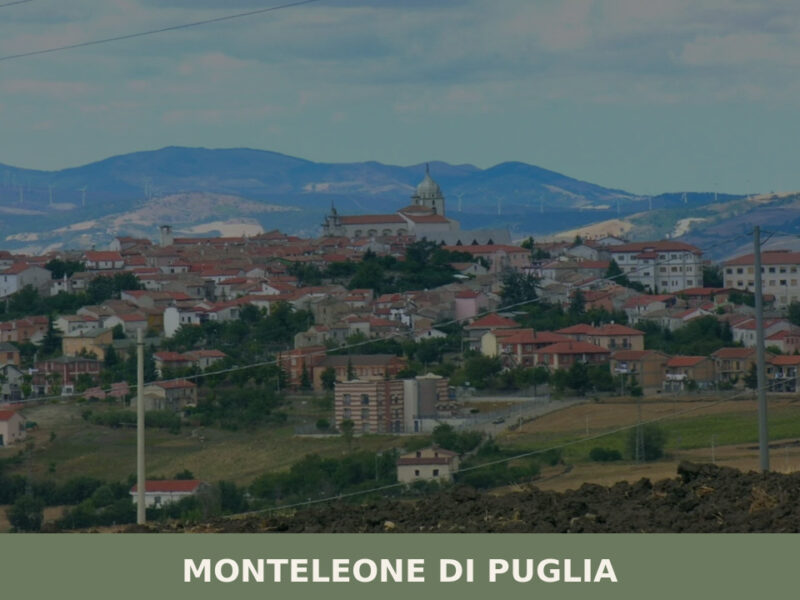
Monteleone di Puglia
At 842 metres above sea level in the Daunian Sub-Apennines, Monteleone di Puglia is a wind-swept hilltop village of 925 inhabitants with deep medieval roots and wide-open horizons.
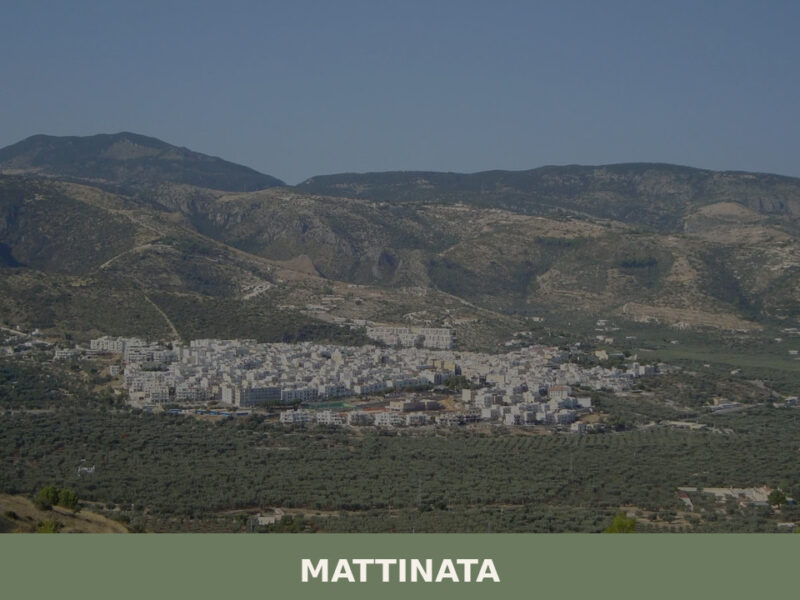
Mattinata
Perched on the sun-drenched slopes of the Gargano promontory, Mattinata is a dazzling white jewel overlooking the Adriatic Sea. With just 5,976 inhabitants and sitting at 75 metres above sea level in the province of Foggia, this coastal village captivates visitors with its pristine bays, ancient olive groves, and a way of life shaped by […]
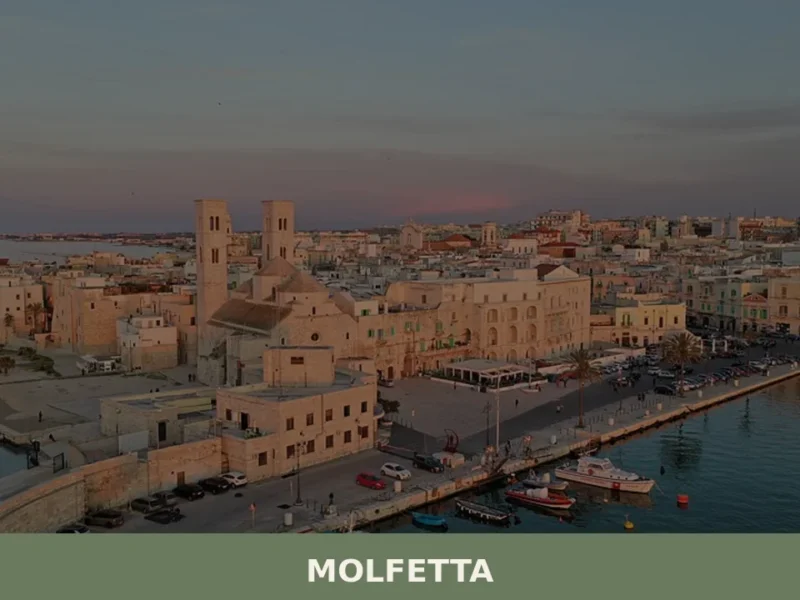
Molfetta
What to see in Molfetta: Adriatic port town at 15m elevation with 57,329 residents. Explore the Cathedral of San Corrado and Pulo sinkhole. Plan your visit now.
📝 Incorrect information or updates?
Help us keep the Palo del Colle page accurate and up to date.