


Ragusa
What to see in Ragusa, a UNESCO city at 520m with 70,000 residents: explore Ibla, San Giorgio, Giardino Ibleo and Cotognata PAT. Plan your visit now.
Discover Ragusa
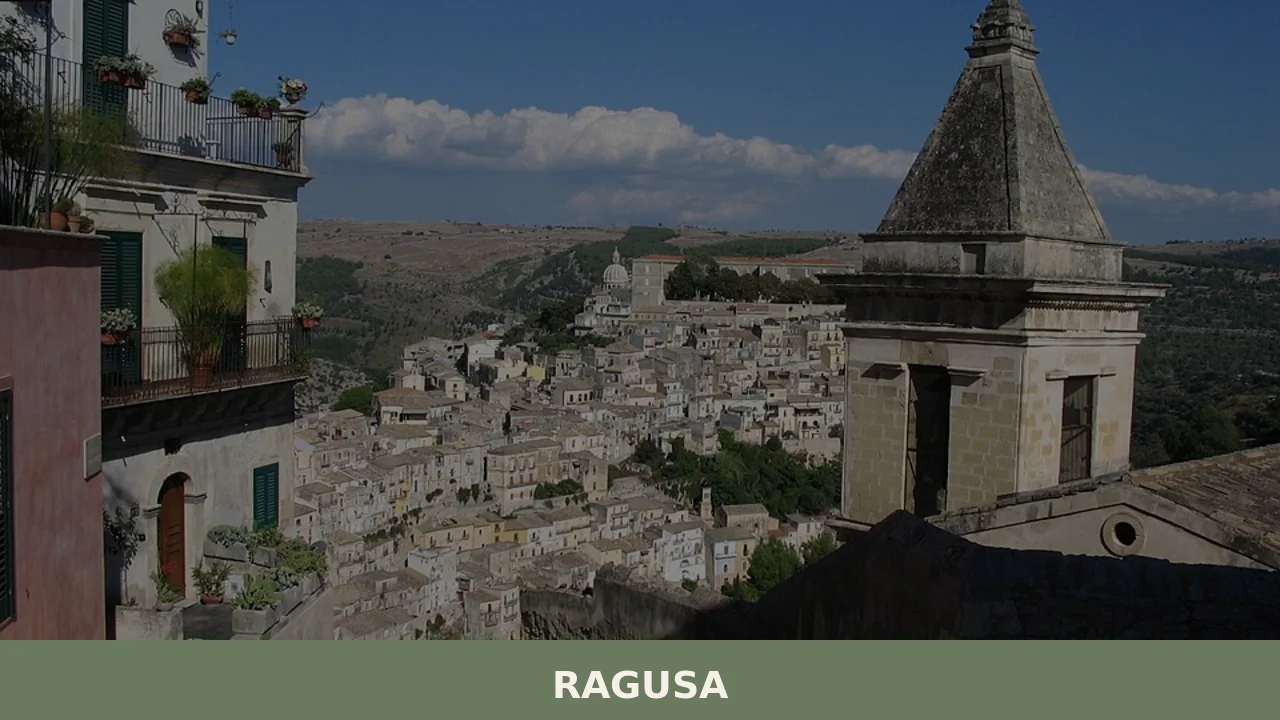
At 520 metres above sea level, with a population of nearly 70,000, Ragusa is the capital of its namesake Sicilian province and one of the most significant urban centres in the Val di Noto.
Anyone wondering what to see in Ragusa will find themselves confronted with a dual city: Ragusa Superiore, built after the 1693 earthquake, and Ragusa Ibla, the ancient historic core rebuilt on the same hillside ridge.
Together, the two sections form an architectural heritage recognised by UNESCO in 2002, as part of the Late Baroque Towns of the Val di Noto.
The position on the Hyblaean plateau, the complexity of the urban layout, and the concentration of churches and aristocratic palaces make Ragusa one of the most layered cities in southern Sicily.
History and Origins of Ragusa
The name Ragusa appears in medieval sources as Ragusia or Ragusium, but the roots of the settlement go back far earlier.
The Hyblaean site was already inhabited in prehistoric times by the Sicani people, who later came into contact with Greek colonisation — a process that led to the founding of Hybla Heraia, identified with the present-day area of Ragusa Ibla.
Rock-cut necropolis remains scattered across the area document a continuity of settlement that predates Roman arrival by centuries.
The Romans incorporated the territory into their provincial system of Sicily around 241 BC, following the First Punic War. The elevated, easily defensible position of the Hyblaean ridge helped the urban centre survive successive waves of domination.
With the Arab conquest of Sicily, which began in 827 AD, the territory of Ragusa underwent a period of profound agricultural and demographic transformation. The Arabs introduced new crops and irrigation techniques that left a lasting mark on the rural Hyblaean landscape.
Norman rule, consolidated by Roger I during the eleventh century, reorganised the feudal structure: Ragusa became the seat of a county — the County of Ragusa — assigned in 1091 to a Norman family and later passed, during the fourteenth century, to the Chiaramonte, one of the most powerful dynasties in medieval Sicily.
In 1296, the city received a municipal charter governing civic life and local trade.
The earthquake of 11 January 1693 was the event that physically and socially reshaped Ragusa.
The seismic event, estimated at around degree XI on the Mercalli scale, destroyed most buildings and killed thousands of inhabitants throughout the Val di Noto. The response was a sweeping reconstruction: part of the population chose to rebuild the ancient core, giving rise to what is now Ragusa Ibla, while another group established Ragusa Superiore on an adjacent plateau.
The two communities remained effectively separate for centuries, until the administrative merger of 1926, when the Fascist regime unified them into a single municipality and created the new province of Ragusa.
The Baroque heritage born from that reconstruction is today the primary reason visitors from across Europe ask what to see in Ragusa.
What to See in Ragusa: Main Attractions
Ragusa Ibla and Piazza del Duomo
The focal point of the ancient district is Piazza del Duomo, a dramatically proportioned urban space dominated by the façade of the Cathedral of San Giorgio. Designed by architect Rosario Gagliardi and completed in 1775, the church features a tower façade with three superimposed orders of columns and an elliptical crown that makes it an absolute reference point of Sicilian Baroque. The square is lined with aristocratic palaces bearing carved stone balconies, and the stepped approach in front amplifies the theatrical effect of the whole ensemble.
Visitors to Ragusa Ibla will find this square the natural starting point for exploring the district.
Cathedral of San Giovanni Battista
In the upper part of the city, Ragusa Superiore is home to the Cathedral of San Giovanni Battista, dedicated to the patron saint of Ragusa, whose feast day falls on 29 August.
The current structure also dates from the post-1693 reconstruction and features a Neoclassical façade completed in the nineteenth century, with a three-nave interior rich in stucco work and works of art.
The bell tower, standing apart from the façade, is one of the most recognisable architectural elements of the upper historic centre. The cathedral is the main place of worship for the local community and the focal point of the patronal celebrations.
Giardino Ibleo
To the east of Ragusa Ibla, the Giardino Ibleo is a nineteenth-century public park occupying the far tip of the limestone ridge. The garden incorporates the remains of three churches: San Giacomo, San Domenico, and the Cappuccini church, the last of which is still in use.
The terrace viewpoints overlooking the surrounding valleys provide a broad view across the Hyblaean landscape, taking in canyons, olive groves, and the badlands of the Irminio river.
The park is a reference point for local residents and a recommended route for anyone seeking to understand the topographical structure of the ancient city.
Hyblaean Archaeological Museum
The Hyblaean Archaeological Museum, located in the centre of Ragusa Superiore, houses materials from excavations carried out across the provincial territory, spanning prehistory through to the medieval period.
The collections document the presence of Sicani necropolises, finds from the Greek colony of Kamarina — founded in 598 BC on the Ragusa coast — and Roman and Hellenistic materials from the Hyblaean plain. The museum is one of the most comprehensive cultural institutions in the Val di Noto and makes for a useful stop for anyone wanting to understand the historical foundations of what they see at street level.
Admission is managed through Sicily’s regional cultural heritage system.
Church of Santa Maria delle Scale
Positioned halfway between the two urban centres, along the stairway connecting Ragusa Ibla to Ragusa Superiore, the Church of Santa Maria delle Scale retains Gothic and Renaissance elements that survived the 1693 earthquake, later integrated into the subsequent Baroque reconstruction. The fifteenth-century Gothic portal and several interior bas-reliefs bear witness to the historical layering of the site.
The church takes its name from the monumental staircase descending towards Ibla, which is one of the most frequently walked routes among visitors. Making this descent on foot is well worth it for the visual relationship it reveals between the two historic centres.
Traditional Food and Products of Ragusa
Ragusano gastronomy has its roots in the farming and pastoral culture of the Hyblaean plateau, shaped over centuries by successive waves of influence and by an abundance of local raw ingredients.
The area has long been associated with cattle farming of the Modicana breed and dairy production, with the cultivation of olives and vines, and with the use of wild aromatic herbs that grow on the limestone uplands.
Arab influences — visible in the use of honey, almonds, and citrus in confectionery — are layered over a consolidated Mediterranean base, creating a food culture that is distinctive and deeply connected to its landscape.
Ragusa shares many of these elements with other villages in south-eastern Sicily, such as Contessa Entellina, where pastoral cooking traditions and dairy production remain central to local identity.
Among the most representative dishes of the Ragusano table, coniglio alla stimpirata is a sweet-and-sour rabbit preparation made with onions, vinegar, olives, and capers, reflecting the Arab-Norman influence on local cooking.
Falsomagro is a rolled beef joint stuffed with hard-boiled eggs, salame, and cheese, cooked in tomato sauce and considered a celebratory dish.
Pasta con le sarde, though widespread across Sicily, takes on variants in Ragusa linked to the availability of local wild Hyblaean fennel. Scaccia ragusana is a folded pasta dough filled — in the classic version — with tomato and cheese, or alternatively with ricotta and sausage, baked in the oven and eaten both hot and cold. These dishes are found in traditional restaurants throughout the historic centres of both parts of the city.
In terms of certified products, the Ragusa territory includes two preparations recognised as Traditional Agri-food Products (PAT) by the Ministry of Agriculture.
Cotognata (PAT) — municipality: Ragusa — is a solid preserve made by cooking quince pulp with sugar, traditionally poured into terracotta moulds and left to dry until it reaches a firm, sliceable consistency.
Natural sea salt (PAT) — municipality: Ragusa — is obtained from the salt pans along the provincial coastline, where natural evaporation produces sodium chloride crystals with mineralogical characteristics tied to the specific composition of the local waters.
Both products are available at local markets and from artisan producers in the area.
The best time to engage directly with Ragusa’s food traditions is spring, when neighbourhood markets fill with fresh produce, and the autumn olive harvest season, between October and November. The city periodically hosts events promoting the Ragusano DOP, the hard cheese made from Modicana cow’s milk that is the best-known product of the Hyblaean dairy tradition, although its designation covers a wider provincial area. Those looking to buy local products can head to the specialist shops in Ragusa Ibla and the markets held during the main civil and religious festivities.
Festivals, Events and Traditions of Ragusa
The most important event in the civic and religious calendar is the feast of San Giovanni Battista, patron saint of Ragusa, celebrated on 29 August.
The celebrations centre on a solemn procession through the streets of the town centre, carrying the statue of the saint and accompanied by brass bands and the participation of confraternities. The evening traditionally concludes with fireworks lighting up the Hyblaean skyline.
Devotion to San Giovanni Battista runs deep in the city’s history, dating back to the medieval period when the upper district’s cathedral was consecrated in his name, and the feast day remains a major point of community gathering for the nearly 70,000 residents of the municipality.
Alongside the patronal feast, Ragusa takes part in Holy Week celebrations, which carry particular significance in the Sicilian context: the Good Friday processions, with statues of the Mysteries carried on the shoulders of the faithful through the streets of Ragusa Ibla, draw visitors from across the region.
Throughout the year, initiatives promoting the Baroque heritage are organised within the events calendar run by local cultural institutions and the association managing the Val di Noto UNESCO site.
Cinema has contributed significantly to the city’s international profile over recent decades: the locations of Ragusa Ibla provided the backdrop for the television series Inspector Montalbano, bringing the image of the city to audiences in dozens of countries.
When to Visit Ragusa and How to Get There
The ideal period to explore Ragusa is spring, between April and June, when temperatures are mild — around 18–22 degrees — and the long days allow you to visit both the historic centre and the surrounding valleys without the intense heat of the Sicilian summer.
September and October offer a solid alternative: the heat eases, accommodation is less crowded, and the grape harvest and olive-picking season adds further interest to the rural landscape.
Summer, with temperatures that frequently exceed 35 degrees inland, still draws visitors thanks to the proximity of the Ragusa coast and the beaches at Marina di Ragusa. Those looking for what to see in Ragusa away from the busier periods will find March and November particularly well-suited.
For those arriving by car, the main access route is the A18 motorway (Catania–Siracusa) with the exit at Rosolini, or the SS115 from Siracusa or Gela, which crosses the Hyblaean plateau.
From Catania the distance is approximately 110 km, covered in around one hour and thirty minutes.
Ragusa railway station is served by the Siracusa–Gela line operated by Trenitalia, with connections to Siracusa (approximately 1 hour 40 minutes) and to Catania via Modica. The nearest airport is Catania Fontanarossa, around 115 km away, connected to Ragusa by regional bus services and car hire.
Comiso Airport, just 15 km from Ragusa, offers domestic flights and some seasonal European routes, making it the most direct gateway to the city. Travellers coming from western Sicily may consider an intermediate stop at Poggioreale, a village in the province of Trapani that lies along the island’s inland routes.
Where to Stay in Ragusa
Ragusa offers a varied range of accommodation, concentrated mainly in its two historic districts.
Ragusa Ibla is home to several boutique hotels and historic residences converted from eighteenth-century aristocratic palaces, with rooms retaining frescoed ceilings and Hyblaean stone floors.
Ragusa Superiore offers a broader selection of mid-range hotels and bed and breakfasts in the modern centre.
The surrounding countryside features agriturismi connected to olive oil and dairy production, particularly suited to those who want to combine their stay with an exploration of the rural territory.
The Municipality of Ragusa publishes updates on accredited accommodation through its official website.
Those planning a wider itinerary through the Val di Noto may want to consider nearby villages such as Cefalà Diana and Campofiorito, which offer points of historical and landscape interest in the Sicilian interior, reachable as day trips from Ragusa and useful for anyone wishing to broaden their knowledge of the island beyond the more frequented routes.
In Sicily More villages to discover
Campofiorito
Campofiorito sits at 660 metres above sea level in the province of Palermo, a small agricultural commune of 1,321 inhabitants whose name translates literally as “field of flowers.” Founded as a feudal settlement in the early eighteenth century, the village occupies a limestone ridge in the upper Belìce valley, surrounded by wheat fields and grazing […]
Enna
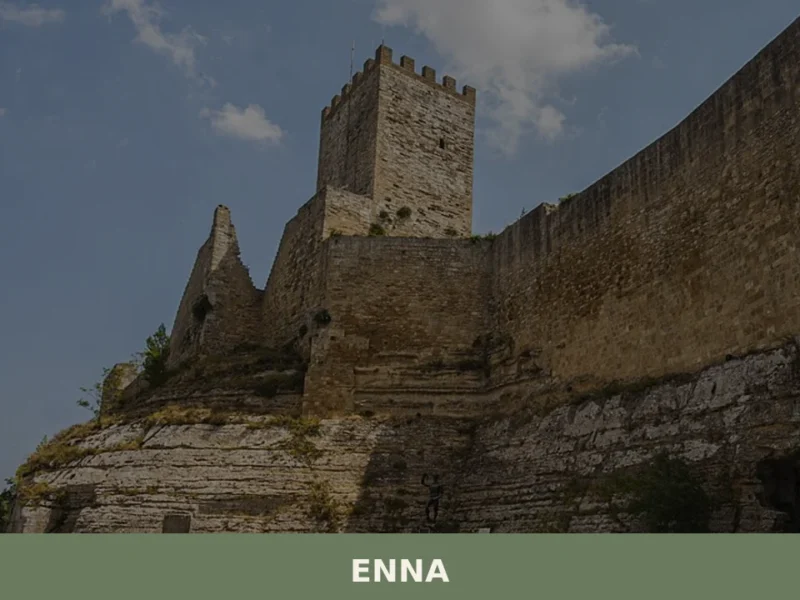
Discover Enna, a breathtaking village perched in the heart of Sicily, Italy. Explore its rich history, stunning landscapes, and timeless charm.
Palermo
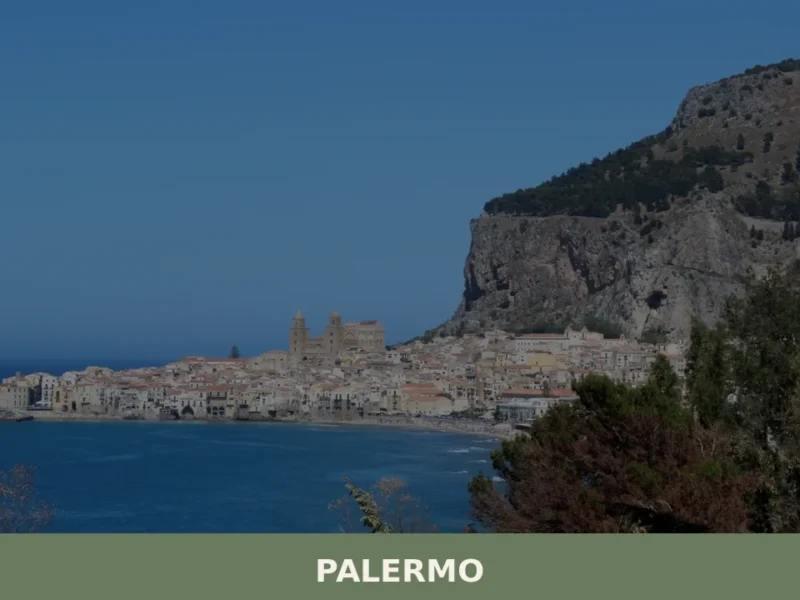
What to see in Palermo: from the Palatine Chapel mosaics to Ballaru00f2 Market. Home to 654,987 people and 2 PAT-certified products. Plan your visit with this complete guide.
📝 Incorrect information or updates?
Help us keep the Ragusa page accurate and up to date.