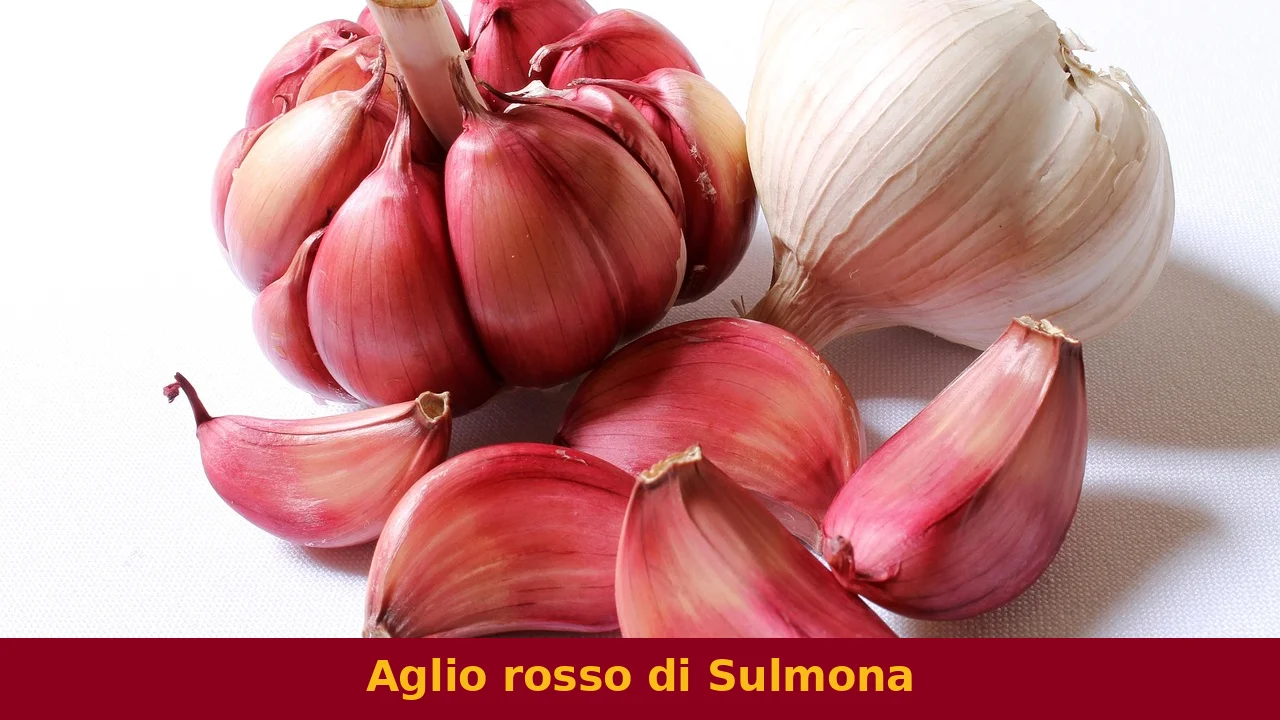
Aglio rosso di Sulmona is an indigenous variety of garlic, botanically classified within the Liliaceae family. Its cultivation is concentrated primarily in the territory of the Peligna Valley, with its epicenter in the city of Sulmona, in the province of L’Aquila, in central Abruzzo. This specific type of garlic is distinguished by its peculiar characteristics,…
Aglio rosso di Sulmona is an indigenous variety of garlic, botanically classified within the Liliaceae family. Its cultivation is concentrated primarily in the territory of the Peligna Valley, with its epicenter in the city of Sulmona, in the province of L’Aquila, in central Abruzzo. This specific type of garlic is distinguished by its peculiar characteristics, resulting from natural selection and agricultural practices established over time in a specific pedoclimatic environment. It is a Traditional Italian Agri-food Product (P.A.T.), a recognition that underlines its profound link with the territory and its production customs, establishing it as a genuine aglio rosso di Sulmona traditional Italian product.
Its identity is well-defined by the bulbs which feature outer tunics of a characteristic wine-red color, a shade that visually distinguishes it from other varieties. Beyond its appearance, Aglio rosso di Sulmona is appreciated for its aromatic intensity and its organoleptic properties that make it a versatile and sought-after ingredient in cuisine. Its presence is significant for the local agricultural economy and for the preservation of the agricultural biodiversity of the Abruzzo region.
The cultivation of Aglio rosso di Sulmona has its roots in a centuries-old history, testifying to an agricultural practice that has been handed down from generation to generation in the mountainous area of Abruzzo. Its presence in these valleys is not coincidental, but the result of adaptation and natural selection that have allowed this variety to prosper in a specific environment. The agricultural communities of the Peligna Valley have developed specific cultivation techniques, refining methods over time to obtain a superior quality product.
The knowledge related to its production is not only technical but also cultural, integrated into the food traditions and daily habits of the inhabitants. The continuity of this cultivation for centuries highlights its resilience and its importance in the regional agri-food landscape, solidifying its status as an aglio rosso di Sulmona traditional Italian product. Its history is therefore intrinsically linked to the agricultural and social history of the Peligna Valley, a narrative of interaction between humans and the environment.
The preferred territory for the cultivation of Aglio rosso di Sulmona is the Peligna Valley, an intermontane basin located in the province of L’Aquila, in Abruzzo. This area, characterized by a particular microclimate and fertile soils, offers the ideal conditions for the development of this specific variety. The concentration of production in this valley is not by chance, but the result of an optimal interaction between climatic factors, soil composition, and local agronomic knowledge.
The municipalities that traditionally participate in the cultivation of this garlic are numerous and extend primarily within the province of L’Aquila, including Anversa degli Abruzzi, Bugnara, Corfinio, Introdacqua, Pacentro, Pettorano sul Gizio, Pratola Peligna, Prezza, Raiano, Sulmona, Roccacasale, and Vittorito. To these is added the municipality of Popoli, located in the nearby province of Pescara, which also falls within the historic production area. This geographical delimitation highlights the territorial specificity that gives Aglio rosso di Sulmona its unique characteristics and reinforces its identity as an aglio rosso di Sulmona traditional Italian product.
The production of Aglio rosso di Sulmona follows a cultivation cycle that begins with sowing, generally carried out between the months of November and December. This timing is crucial to allow the bulbils to root and develop adequately before the arrival of the warm season. The cultivation of this garlic is distinguished by certain specific practices that ensure its quality and storage capacity.
One of the most characteristic aspects of its production is the manual removal of the flower stalks, which are the stems that bear the flower. This operation, performed with care and precision, is fundamental as it allows the plant to channel all its energy towards the development of the underground bulb, favoring its growth and the achievement of optimal dimensions. The flower stalks, with a delicate flavor, are not discarded but can be consumed fresh, representing an additional gastronomic product derived from the same plant.
Another distinguishing factor is the product’s remarkable storage capacity, which can last up to a year if kept in a dry and ventilated environment. This longevity is a valuable characteristic that has favored its spread and appreciation over time, making it available for a long period after harvesting. The cultivation techniques, refined over centuries, aim to preserve these intrinsic qualities, solidifying the identity of aglio rosso di Sulmona traditional Italian product.
Aglio rosso di Sulmona is distinguished by a series of organoleptic and physical characteristics that make it recognizable and appreciated. The bulb head is compact and tightly packed, typically composed of 8-10 larger outer cloves, which can vary between 55 and 70 millimeters in diameter. Inside, an additional 3-4 smaller cloves may be found. The outer tunics of the cloves display the characteristic wine-red color, a deep shade that is its most evident distinguishing mark.
The aroma of this variety is particularly intense and pungent, a quality that derives from the high concentration of allicin and essential oils present in the bulbs. Allicin, in particular, is the sulfur compound responsible not only for the typical garlic fragrance but also for many of its traditionally recognized beneficial properties. This aromatic intensity makes it an ingredient capable of imparting depth and character to numerous dishes.
In addition to its aromatic profile, various properties are attributed to Aglio rosso di Sulmona. It is known to promote an antiseptic action, particularly in the respiratory tract and gastrointestinal system. Traditionally, it is also associated with the ability to contribute to lowering arterial blood pressure, acting on both minimum and maximum values. Like other garlic varieties, it also possesses natural antibiotic properties, effective against plant pathogens, demonstrating its robustness and usefulness not only in cooking but also in agriculture.
The versatility of Aglio rosso di Sulmona makes it a widely used ingredient in traditional and contemporary cuisine, capable of enriching a wide range of preparations thanks to its intense and persistent aroma. Its aromatic robustness makes it particularly suitable for dishes requiring a strong flavor and distinct character.
Its uses in cooking are varied:
First Courses: It is a fundamental element for sautéed bases and aromatic foundations for sauces, such as those based on tomato, or for flavoring pasta with vegetables, legumes, and seafood. Its intensity pairs well with strong flavors, creating a deep taste balance.
Main Courses: Perfect for flavoring meat roasts, stews, and braises. Its aroma penetrates the meats, imparting a rich and enveloping taste. A classic example is roast chicken, where the red garlic helps create a golden and flavorful crust.
Sauces and Condiments: It is the main ingredient for traditional sauces like Agliata, a condiment made from crushed garlic, often accompanied by vinegar or bread. It is also an essential component of Piedmontese Bagna Càuda and can be used to prepare pestos, such as Pesto alla Genovese, to which it imparts a more distinct and aromatic note.
Soups and Broths: Its presence in legume soups, vegetable broths, or stocks confers depth and an aromatic touch that warms the palate.
Side Dishes and Salads: Although its flavor is strong, it can be used with moderation to give character to mixed salads or sautéed vegetables. Its flower stalks, with a more delicate taste, are also excellent consumed fresh in summer salads.
Appetizers and Savory Dishes: A key ingredient for croquettes, meatballs, and stuffings, where its aroma blends with other flavors. It is essential for preparing bruschetta, rubbed on toasted bread and seasoned with extra virgin olive oil and tomato, enhancing the simplicity of the ingredients.
Its ability to be preserved for a long time allows it to be available for much of the year, making it a constant ally for cuisine seeking genuine and distinctive flavors, confirming its role as an aglio rosso di Sulmona traditional Italian product.
Aglio rosso di Sulmona has obtained recognition as a Traditional Italian Agri-food Product (P.A.T.), an important certification that attests to its historicity and indissoluble link with the territory and local production practices. This status is conferred by the Ministry of Agricultural, Food and Forestry Policies and identifies those products whose methods of processing, preservation, and aging are established over time, according to customs handed down for at least 25 years.
The PAT recognition for Aglio rosso di Sulmona, specific to the Abruzzo region, is not only a guarantee of authenticity and tradition but also plays a fundamental role in the safeguarding of agricultural biodiversity and in the enhancement of the regional gastronomic heritage. It contributes to protecting traditional agricultural practices and promoting knowledge of products that are a direct expression of the cultural and environmental identity of an area. This recognition further emphasizes the importance of aglio rosso di Sulmona as a traditional Italian product, contributing to its protection and dissemination.
Aglio rosso di Sulmona, as a Traditional Italian Agri-food Product linked to a specific geographical area, is found primarily through distribution channels that promote local and niche products. To ensure the purchase of the genuine product, it is advisable to contact producers in the Peligna Valley directly or specialized retail outlets that collaborate with local farms.
It can be found in farmers’ markets and fairs dedicated to typical Abruzzese products, especially during the months following the harvest, which generally takes place between June and July, but thanks to its excellent storage capacity, it is available for much of the year. Some quality food shops, delicatessens, and specialty food stores, both physical and online, may also include Aglio rosso di Sulmona in their assortment, paying attention to verify its origin and PAT certification. Purchasing directly from producers or qualified retailers is the best way to support the local economy and ensure the authenticity of this aglio rosso di Sulmona traditional Italian product.
📷 Photo: Gadini · Pixabay License · All credits →
In the skilled hands of Abruzzese artisans, the quince transforms into a gastronomic treasure that encapsulates the genuine...
Among the gentle hills that slope towards the Adriatic, in an Abruzzo less mountainous but equally rich in...
In the wild and generous heart of Abruzzo, where transhumance has shaped landscapes and traditions, a cheese emerges...
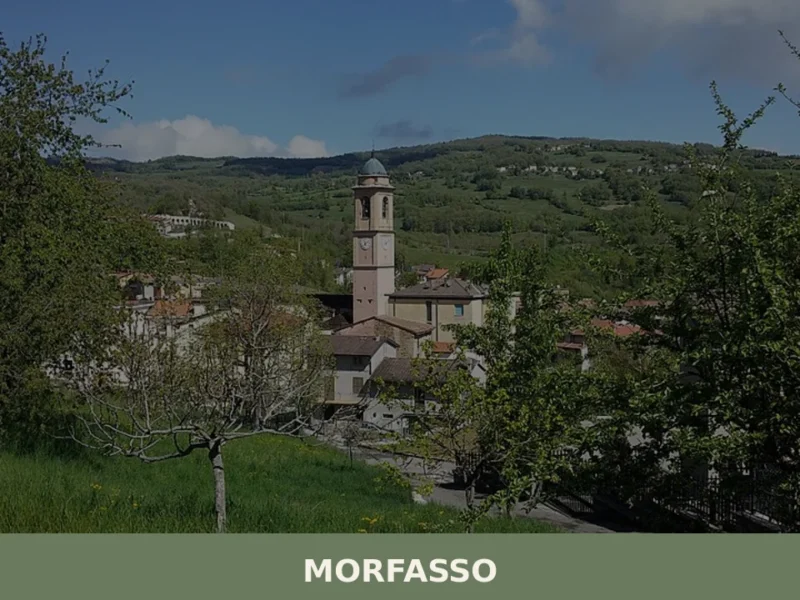
Morning mist settles into the valley below like poured milk, and from 631 metres above sea level, the stone houses of Morfasso emerge into sharp Apennine light. A church bell marks seven o’clock to an audience of 884 residents spread across a constellation of hamlets. This is Morfasso, a municipality in the province of Piacenza […]
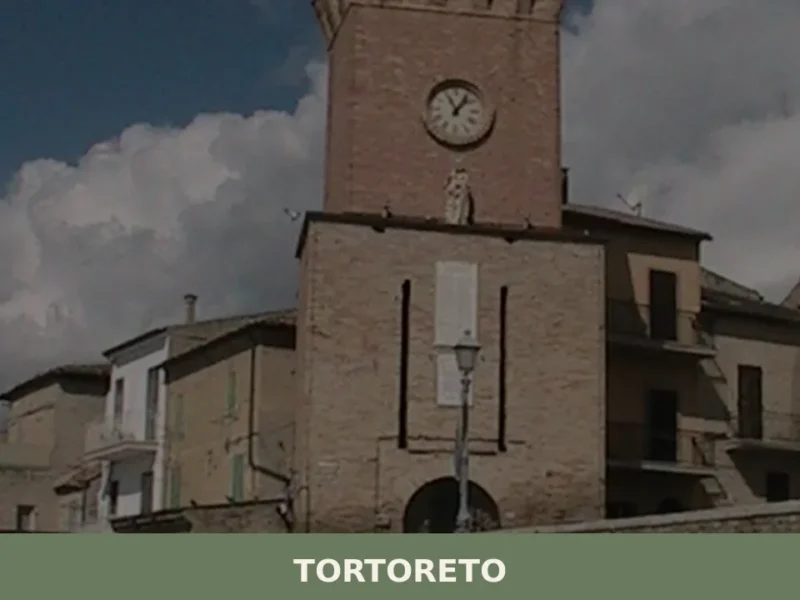
The village of Tortoreto, located in the province of Teramo, stands at 227 meters above sea level, maintaining an observation position over the Adriatic coast. Its historical foundation is attested in Roman times with the name of Castrum Salini, a settlement that indicated its proximity to salt pans and its function of territorial control. Today, […]
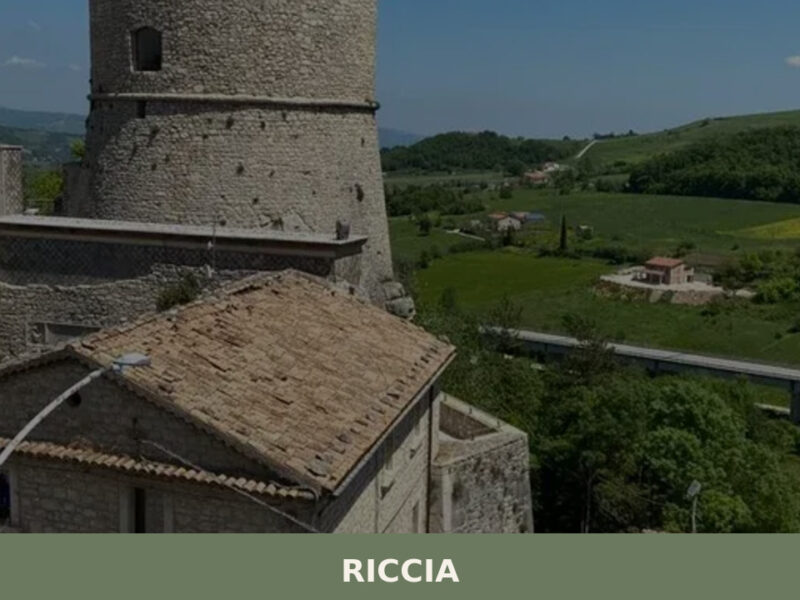
A hilltop village of 4,814 inhabitants in the province of Campobasso, Riccia reveals medieval streets, a Norman castle, and one of Molise's most celebrated food festivals.
📝 Incorrect information or updates?
Help us keep the Aglio rosso di Sulmona page accurate and up to date.


