An intense, almost pungent aroma is released as soon as the knife sinks into its rind. Guanciale, an iconic cured meat of the Lazio tradition, reveals an unmistakable texture when cut: pinkish muscle streaks interlaced with pure white fat, firm yet yielding. Its firmer consistency compared to pancetta, and its decisive flavor, the result of…
An intense, almost pungent aroma is released as soon as the knife sinks into its rind. Guanciale, an iconic cured meat of the Lazio tradition, reveals an unmistakable texture when cut: pinkish muscle streaks interlaced with pure white fat, firm yet yielding. Its firmer consistency compared to pancetta, and its decisive flavor, the result of expert aging, make it an irreplaceable ingredient, capable of elevating simple dishes to true gastronomic experiences, evoking the straightforward and genuine flavors of the Roman countryside.
Guanciale is a prized cured meat, obtained from the pig’s jowl, a specific cut known for its particular composition. It distinctly differs from other pork products like lardo, obtained from the back, and pancetta, which comes from the belly. Its peculiarity lies in the perfect fusion of lean muscle veins and a noble fat component, which differs in consistency and aromatic profile from that of other cuts. This fat, in fact, is denser and firmer, and during cooking, it melts, releasing a more characteristic and enveloping flavor. The preparation process gives guanciale a firmer consistency than pancetta, making it ideal for precise cuts and cooking that enhances its melt-in-your-mouth quality and flavor. The name “guanciale” derives precisely from its anatomical origin, the pig’s cheek (guancia), indicating its uniqueness and specificity in the panorama of Italian traditional food products.
The history of guanciale is rooted in the rural tradition of Lazio and, more generally, Central Italy, where pig farming and meat processing were fundamental practices for subsistence and food preservation. Since ancient times, the pig has been a valuable resource, of which nothing was wasted, and its slaughtering, known as “norcineria,” was a seasonal ritual that allowed the transformation of meat into long-lasting products. Guanciale, in particular, arose from the need to valorize every part of the animal, transforming an apparently less noble cut into a highly prized cured meat. Its spread is closely linked to humble and rural cuisine, where the availability of ingredients was limited, and culinary creativity was based on the enhancement of simple and genuine flavors. The earliest written and oral testimonies, though fragmented, indicate that the preparation of cured meats like guanciale was already established in Roman times, as evidenced by some artifacts and texts describing salting and aging techniques. Over the centuries, the recipe refined, passed down through generations, keeping intact the fundamental principles of salting, flavoring, and aging, which today make it a symbol of Lazio gastronomy.
The production area of guanciale is historically linked to the Lazio region, with a particular concentration in the inland and mountainous areas, where pig farming found ideal conditions. The provinces of Rieti, Frosinone, and Viterbo, along with part of the province of Rome, represent the core of this production. Here, the hilly and mountainous environment, characterized by a climate that favors proper aging, allowed for the development of an excellent pork butchery tradition.
The presence of woods and pastures, once essential for feeding pigs, and the fresh, dry air descending from the mountains, contribute to creating a perfect microclimate for the slow and gradual maturation of the cured meat. It is in these contexts, often away from large urban centers, that artisanal techniques are preserved. Borghi like Accumoli, in the province of Rieti, or Latera, in the Viterbo area, represent examples of places where the guanciale tradition is still vibrant and deeply felt, integrated into the local social and economic fabric. This strong bond with the territory is not only geographical but is also reflected in the gastronomic culture, where guanciale is the undisputed protagonist of many local recipes.
The production of guanciale is a process that requires care, expertise, and respect for natural timings. Everything begins with the selection of the meat cut, which must come from the pig’s jowl, carefully trimmed to obtain its characteristic shape, often triangular or tear-drop.
Once the cut is prepared, the salting process begins. The meat is vigorously massaged with a mixture of salt, ground black pepper and, depending on local traditions, other natural spices and aromas, such as garlic, rosemary, or chili pepper. This phase is crucial for dehydrating the meat and initiating the preservation and flavoring process.
After salting, the guanciale is left to rest for a variable period, which can last from a few days to a couple of weeks, in cool and controlled environments. During this rest, the meat absorbs the aromas and releases excess moisture.
Subsequently, the cured meat is hung and moved to aging. This phase is the longest and most delicate, and can last from a minimum of 60-90 days up to several months, depending on the size of the piece and the desired result. Aging takes place in well-ventilated rooms, with controlled temperatures and humidity, where the guanciale acquires its firm consistency and its unmistakable flavor. In some traditions, such as that of the “Sambuca vecchia della Ciociaria,” guanciale can be preserved and aged “between two braids of garlic,” a method that contributes to imparting further aromatic nuances and protecting the product. It is during this slow process that the fat consolidates and the lean veins become richer in flavor, transforming a simple cut of meat into a masterpiece of pork butchery.
Guanciale stands out for a complex and satisfying sensory profile, making it immediately recognizable.
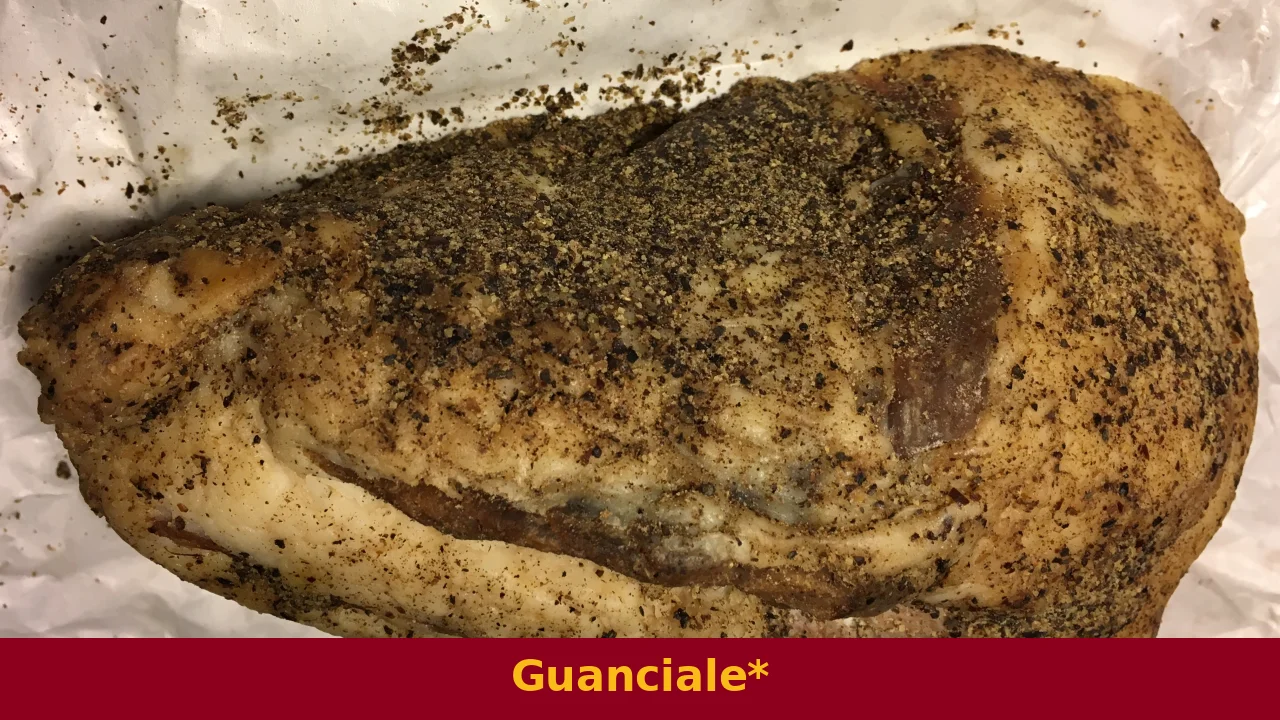
Visually, it presents a generally triangular or tear-drop shape, with an outer surface coated with a mixture of ground black pepper, which can vary in intensity. When cut, it reveals an unmistakable cross-section: the fat, pure white, is traversed by pinkish muscle veins, well-defined and firm. This alternation of colors and consistencies is a distinctive feature.
To the nose, the aroma is intense and persistent, with spicy notes of pepper, sweet undertones, and an aromatic base typical of aged pork. The aroma may vary slightly based on the spices used during salting, but its essence is always that of a rich and profound cured meat.
On the palate, the flavor is decisive, savory yet balanced, with an intrinsic sweetness from the fat that blends perfectly with the spicy note of pepper. The consistency is firm, but not rubbery; the fat melts delicately in the mouth, releasing an explosion of flavor that envelops the palate. The lean veins offer a pleasant chewiness, completing the sensory experience. It is precisely this combination of consistencies and flavors that makes guanciale such a sought-after and appreciated ingredient, capable of imparting character and depth to every dish.
Guanciale is a pillar of Lazio and Roman cuisine, an irreplaceable ingredient that elevates simple dishes to true gastronomic masterpieces. Its fame is inextricably linked to three iconic recipes: carbonara, amatriciana, and gricia.
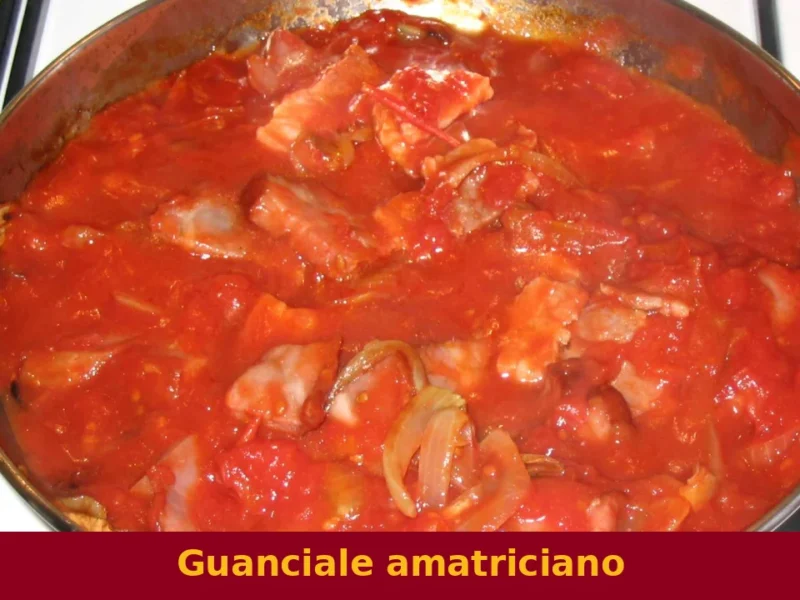
For carbonara, guanciale is cut into strips or cubes and rendered in a pan until crisp, releasing its valuable fat, which will then form the base for the egg and pecorino cream. In Amatriciana pasta, guanciale is fried until golden, then deglazed with white wine and combined with tomato and pecorino, creating an enveloping and flavorful sauce. Gricia, considered the ancestor of Amatriciana, features it prominently with pecorino and black pepper, without the addition of tomato, maximizing its flavor.
Beyond these celebrated dishes, guanciale finds use in many other preparations. It is excellent for enriching meat sauces, legume or vegetable soups, to which it imparts a smoky and savory touch. It can be used to prepare delectable bruschetta, sliced thinly and lightly heated, or as an ingredient in stuffings for meats or vegetables. Even on a simple charcuterie board, thinly sliced guanciale stands out for its decisive taste and unique consistency, pairing well with aged cheeses and good homemade bread. Its versatility and the intensity of its flavor make it a valuable ally in the kitchen, capable of transforming an ordinary dish into an extraordinary experience.
Guanciale stands out as a unique product in the Italian gastronomic landscape for several reasons, which go beyond its simple definition. Its uniqueness lies primarily in the selected cut of meat: the pig’s jowl. This specific cut presents a composition of fat and muscle unparalleled in other parts of the animal, imparting a distinctive consistency and flavor. The guanciale fat is firmer and denser than that of pancetta or lardo, and during cooking, it melts differently, releasing more intense aromas and an unmistakable melt-in-your-mouth quality.
Another element of uniqueness is its traditional preparation. The salting, flavoring with black pepper (and sometimes garlic or other spices), and slow aging, often influenced by the microclimate of Lazio’s inland areas, contribute to creating a complex and profound aromatic profile. It is not merely an ingredient, but a true foundation of historic dishes like carbonara and Amatriciana, where its role is not simply to add flavor, but to define the very identity of the recipe. Guanciale, in fact, cannot be substituted with pancetta or other cured meats without profoundly altering the character of the dish. This specificity, combined with its history and strong bond with Lazio culinary culture, makes it a cured meat of character, an excellence that deserves to be known and appreciated in all its genuineness. For further details, you can consult detailed information on its composition.
Guanciale, as a traditional Italian agri-food product, has obtained the recognition of PAT (Traditional Agri-food Product). This mark, granted by the Ministry of Agricultural, Food and Forestry Policies, certifies that guanciale is a product whose processing, preservation, and aging methods are consolidated over time, homogeneous, and practiced nationally for at least 25 years.
PAT recognition is not a geographical origin certification like PDO or PGI, but an attestation of traditional status. It means that guanciale is included in an official list of products representing Italy’s gastronomic heritage, linked to specific geographical areas and handed-down production methods. The specific category “Sambuca vecchia della Ciociaria” indicates a traditional variant of guanciale linked to a precise area of Ciociaria, in Lazio, further emphasizing the specificity and depth of local traditions. This recognition values not only the product itself, but also the work and knowledge of artisans and breeders who, for generations, perpetuate its production, ensuring the preservation of a genuine flavor and a piece of culinary history.
To savor true guanciale, there is nothing better than immersing oneself in the core of Lazio, its region of origin. You can find it in the local markets of Rome, such as Campo de’ Fiori or Testaccio, where norcini stalls offer selections of artisanal cured meats. Many butchers and specialized delis throughout the region offer excellent quality guanciale, often sourced from small local producers.
A genuine experience is to visit the production areas, such as the rural areas of the province of Rieti or Viterbo. Here, farm stays and agricultural businesses often offer tastings and direct sales. In the surroundings of Accumoli or Latera, for example, it is possible to find producers who still follow traditional methods, guaranteeing a product of the highest quality and an unmistakable flavor.
Many food and wine festivals, especially in autumn and winter, are dedicated to pork products and offer the perfect opportunity to taste and buy guanciale directly from producers, discovering the different nuances and aging levels. A trip to discover traditional products from LAZIO would not be complete without a taste of this iconic cured meat, which encompasses the essence of local cuisine and the genuineness of a territory rich in flavors.
📷 Photo: Sir James · CC BY 4.0 · All credits →

What to see in Aosta: Roman city at 583 m in the Aosta Valley. Arch of Augustus, Roman theatre, Fontina PDO and Fiera di Sant'Orso. Plan your visit now.
Valle Agricola, a municipality of 960 inhabitants in the province of Caserta, rises to 691 meters above sea level, representing a mountain settlement within the Matese Massif. Its geographical position, between peaks and valleys, has for centuries determined the social and economic dynamics of the place, oriented towards livestock farming and subsistence agriculture. For those […]
Morning light hits the limestone walls of Ferrazzano at an angle that turns every alley into a corridor of pale gold. At 872 metres above sea level, the air carries a sharpness that the lower towns of Molise never know — a clarity that makes the distant Adriatic coast visible on days when the haze […]
📝 Incorrect information or updates?
Help us keep the Guanciale page accurate and up to date.