


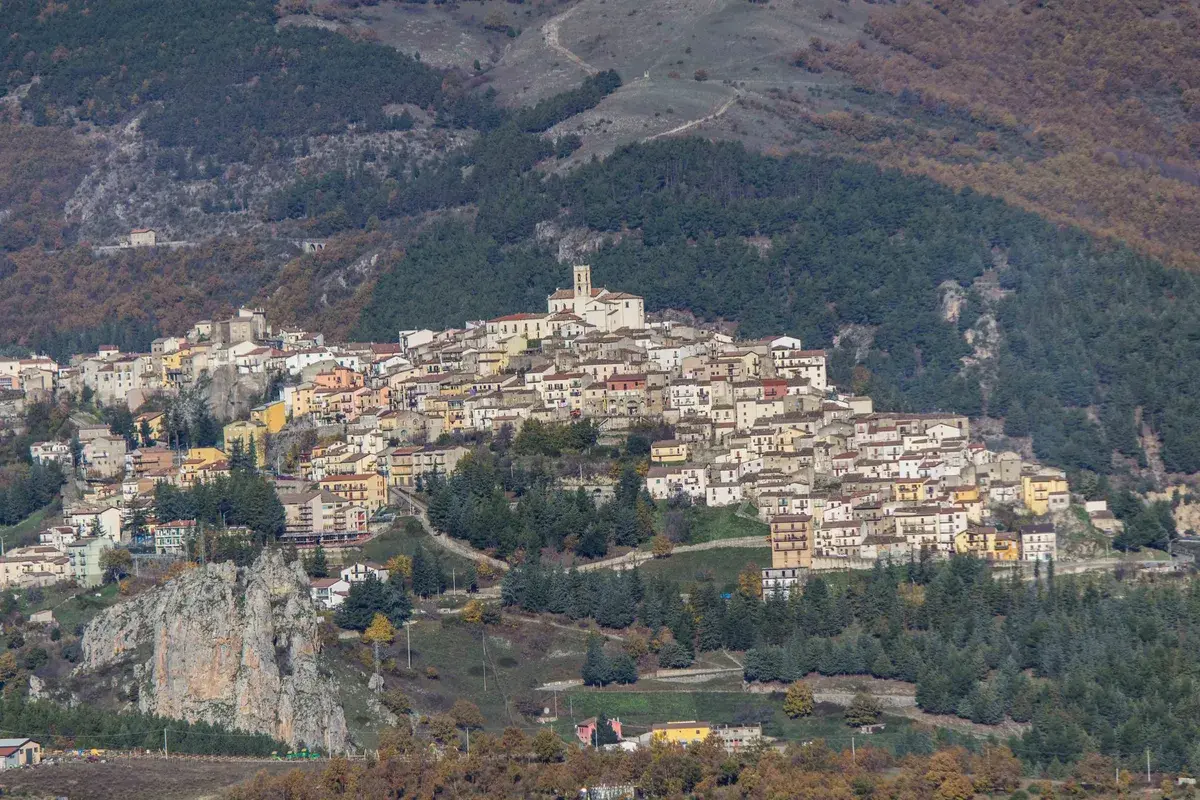
Abriola
A highland village of 1,306 inhabitants in Basilicata’s Lucanian Apennines. Discover what to see in Abriola — from its medieval lanes to the woodland sanctuary of Monteforte.
Discover Abriola
Morning mist lifts slowly off the Lucanian Apennines, revealing a compact cluster of stone rooftops at 957 metres above sea level. The air carries woodsmoke and the distant sound of a church bell marking the hour. Abriola, a village of just over 1,300 inhabitants in the province of Potenza, unfolds gradually — one narrow lane at a time, one weathered doorway after another. Knowing what to see in Abriola means reading the layers of a settlement that has survived centuries of earthquakes, emigration, and silence, yet still holds its ground on this ridgeline.
History of Abriola
The origins of Abriola are debated among scholars. Some trace the name to the Latin word aprilis, suggesting a connection to spring or to land cleared for cultivation. Others point to a possible link with the Lombard personal name “Abrio.” What is certain is that the settlement’s strategic position — on a high spur overlooking wooded valleys — made it a natural defensive site during the medieval period, when southern Italy was contested by Normans, Lombards, and the Byzantine Empire.
By the 11th and 12th centuries, Abriola functioned as a feudal holding, passing through a succession of noble families. The village’s fortunes were shaped by the broader political currents of the Kingdom of Naples and later the Kingdom of the Two Sicilies. Earthquakes — a recurring feature of life in Basilicata — periodically damaged the built fabric, requiring reconstruction that layered new masonry over old foundations.
In the modern era, Abriola experienced the same haemorrhage of population that emptied much of inland southern Italy during the 20th century. Thousands left for the Americas and northern Europe. The village today, with its 1,306 residents, carries the marks of that departure: shuttered houses, an ageing population, but also a quiet tenacity among those who remain, maintaining traditions and restoring family homes.
What to see in Abriola: 5 must-visit attractions
1. Sanctuary of Madonna di Monteforte
Set on a wooded hill outside the village centre, this sanctuary has been a site of devotion for centuries. The building’s simple facade belies an interior enriched by votive offerings left by generations of pilgrims. The surrounding forest of oaks and chestnuts provides a setting that feels detached from time — a place where the religious and the natural converge without ornament.
2. Chiesa Madre (Mother Church)
The parish church stands at the core of the village, its bell tower visible from the approach roads. Inside, stone columns and a series of side altars reflect centuries of incremental additions. Wooden statues of local saints and modest 17th- and 18th-century artworks line the nave, offering evidence of the community’s persistent devotional life through periods of poverty and upheaval.
3. The historic centre and medieval street plan
Abriola’s old quarter rewards careful walking. The streets follow a medieval logic — steep, narrow, designed for defence and drainage rather than comfort. Doorways framed in local stone, external staircases leading to upper-floor entrances, and small courtyards where neighbours once shared bread ovens compose a vernacular architecture that no museum could replicate.
4. Fontana Vecchia (Old Fountain)
Public fountains once served as the social infrastructure of southern Italian hill towns. Abriola’s Fontana Vecchia, built in stone, remains a landmark in the village — a gathering point whose worn basin testifies to centuries of daily use. It functions as a quiet monument to communal life before piped water reached individual homes.
5. Forest trails of the Lucanian Apennines
The woodland surrounding Abriola — predominantly beech, oak, and chestnut at this altitude — offers walking routes that move through dense canopy and open ridgeline. These paths connect to the broader trail networks of the Appennino Lucano–Val d’Agri–Lagonegrese National Park, giving access to landscapes that shift dramatically with elevation and season.
Local food and typical products
The cooking of Abriola belongs to the highland pastoral tradition of Basilicata: substantial, built around a limited but well-understood set of ingredients. Handmade pasta — particularly strascinati and cavatelli — is dressed with slow-cooked ragù of pork or lamb, or more simply with crushed dried peppers (the peperone crusco, a defining ingredient of Lucanian cuisine). Cured meats, especially lucanica sausage seasoned with fennel seed and mild chilli, are prepared during the winter slaughter. Bread, baked in wood-fired ovens from local grain, remains central to the table.
Foraged foods supplement the pantry: wild mushrooms — particularly porcini — appear in autumn, and wild greens are gathered in spring. Sheep’s milk cheeses, including pecorino aged in natural cellars, accompany meals or serve as a course on their own. Dining options in Abriola are limited to a small number of family-run establishments and agriturismi in the surrounding countryside, where menus change with the season and the portion sizes recall a time when farm labour demanded serious calories.
Best time to visit Abriola
At nearly 1,000 metres elevation, Abriola experiences a mountain climate: winters are cold and sometimes snowy, summers are warm during the day but cool sharply after dark. The most comfortable period for visiting runs from late May through October. Autumn, when the surrounding forests shift through copper and gold and the mushroom harvest is underway, may be the most rewarding season for walking and eating well.
The village’s principal religious festival centres on the Madonna di Monteforte, which draws the community — including returning emigrants — to the hilltop sanctuary. Local feast days often involve processions through the narrow streets, outdoor cooking, and music that blends sacred and folk traditions. Visitors who time their arrival to coincide with these events will see Abriola at its most animated, the population temporarily doubled by relatives returning from distant cities.
How to get to Abriola
Abriola lies approximately 30 kilometres south of Potenza, the regional capital. By car, take the E847 (Raccordo Autostradale Potenza–Sicignano) and follow signs toward Laurenzana and Abriola along the SP 16 or connecting provincial roads. The route climbs steadily through forested terrain, with the final approach offering wide views of the valley below.
- From Naples: approximately 180 km via the A3 motorway and then the E847 toward Potenza — roughly 2.5 hours driving.
- From Bari: approximately 170 km via the A14 and E847 — about 2.5 hours.
- By train: the nearest station is Potenza Centrale, from where onward travel requires a car or infrequent local bus services.
- Nearest airports: Naples Capodichino (NAP) or Bari Karol Wojtyła (BRI), both roughly equidistant at around 170–180 km.
A rental car is effectively essential. Public transport connections to villages of this size in inland Basilicata remain limited, and timetables may not align with visitor schedules.
More villages to discover in Basilicata
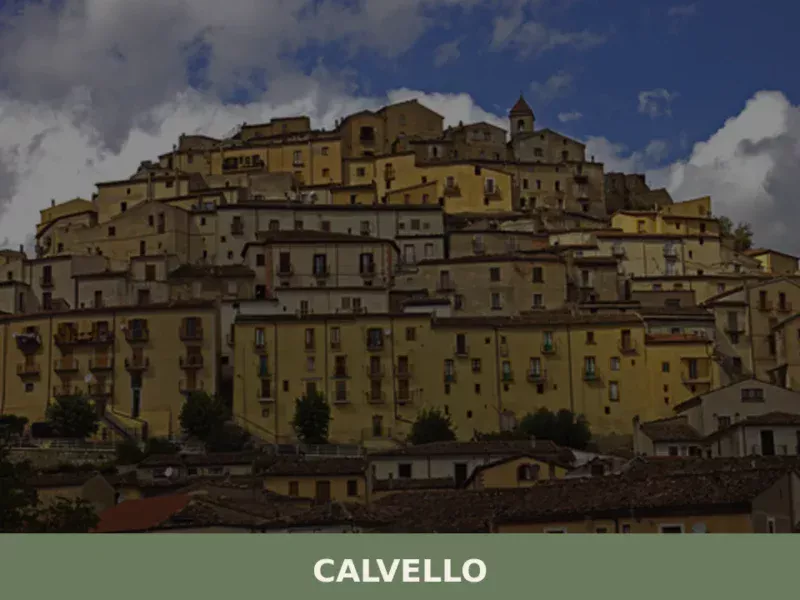
Abriola belongs to a constellation of small mountain communities scattered across the Lucanian Apennines, each with its own character and particular silence. To the south, Calvello occupies a similar ridgeline position and preserves a notable historic centre with churches dating to the medieval period. Its proximity to the national park makes it a natural complement to any visit to this part of the region.
Further along the provincial road network, Laurenzana offers another perspective on highland Basilicata — a village crowned by the remains of a Norman-era castle, surrounded by the same forests of beech and chestnut that define the landscape around Abriola. Together, these settlements form an itinerary through territory that remains largely unvisited by international travellers, which is precisely what gives it its value.
Nearby Villages near Abriola
In Basilicata More villages to discover
Campomaggiore
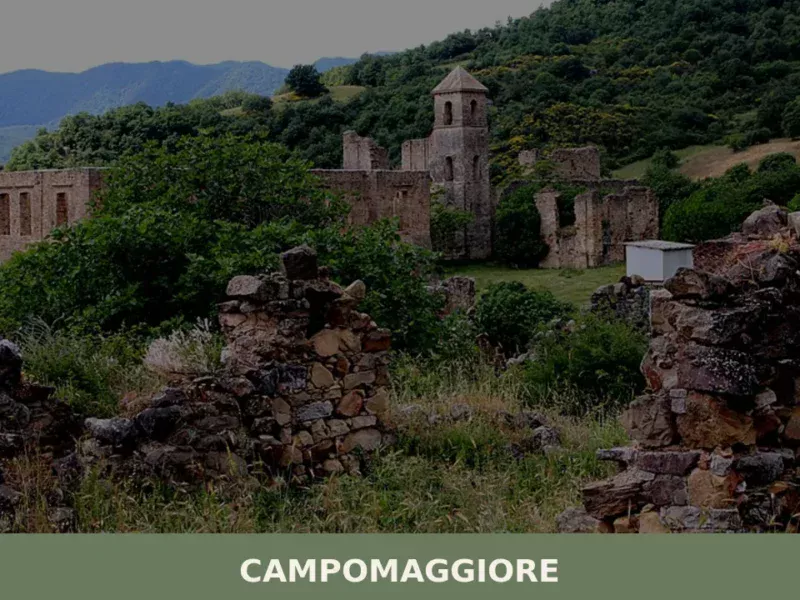
As the morning mist reluctantly peels back from the Lucanian Apennines, a faint scent of wild herbs drifts through the narrow lanes of **Campomaggiore**. At 795 meters above sea level, this small community, home to 832 inhabitants, begins its day with a quiet rhythm. Sunlight catches the weathered stone of an ancient wall, illuminating moss […]
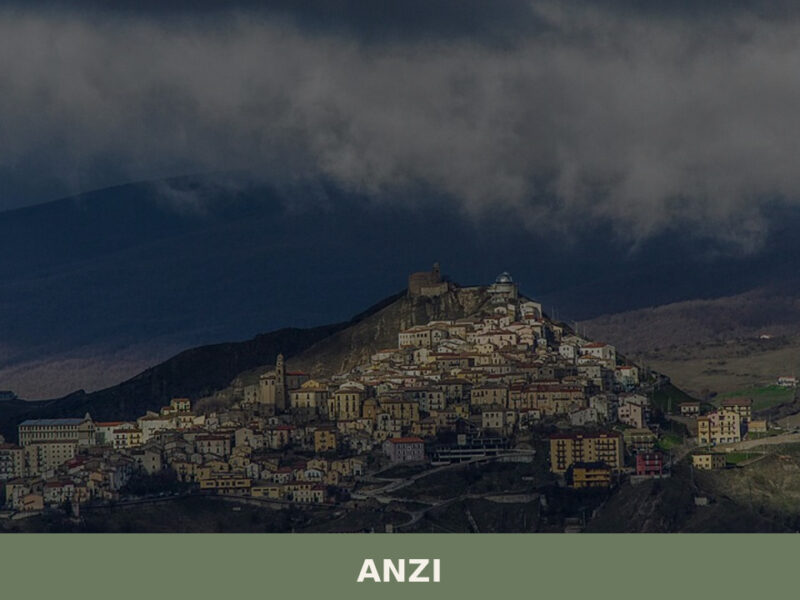
Anzi
Anzi sits at 1,008 metres above sea level in the province of Potenza, making it one of the highest settlements in Basilicata. Home to 1,745 inhabitants, this small Lucanian village occupies a rocky spur along the upper valley of the Camastra river, surrounded by dense forests of oak and chestnut. For anyone researching what to […]
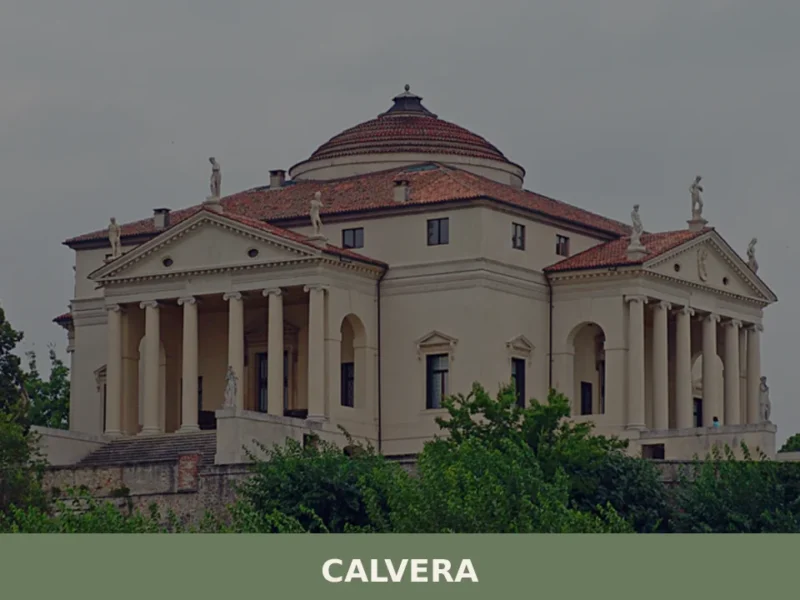
Calvera
The sharp clang of a church bell echoes across the valley, cutting through the crisp morning air as the first rays of sun ignite the ochre rooftops. Cobblestone paths, still cool from the night, wind past ancient stone houses, their windows often adorned with pots of geraniums. This is the quiet awakening of Calvera Basilicata, […]






📝 Incorrect information or updates?
Help us keep the Abriola page accurate and up to date.