


Avetrana
 Plains
What to see in Avetrana, Italy: explore a 13th-century castle, the Chiesa Madre and Palazzo Imperiali. Population 6,277. Discover festivals, food and how to get there.
Discover Avetrana
A 13th-century tower rises above the flat terrain of the Salento interior, its stone mass visible from the surrounding countryside well before the houses of the village come into view. At 62 m (203 ft) above sea level, Avetrana sits in the province of Taranto, in the southeastern stretch of Puglia, where the land between the Ionian coast and the Murgia plateau flattens into olive groves and dry-stone walls.
The comune registers 6,277 inhabitants and carries a Salentino dialect name — L’Aitràna — that predates the current Italian spelling by several centuries.
For visitors planning a trip to this part of southern Italy, knowing what to see in Avetrana means focusing on three documented historic monuments within the village centre and understanding the calendar of patron saint festivals that structures the local year.
Visitors to Avetrana find a compact settlement where the castle, the Chiesa Madre and Palazzo Imperiali stand within walking distance of one another, making it feasible to cover the main sights in a single morning. The village also serves as a practical base for exploring the broader Taranto province, including day trips toward the Ionian coastline lying roughly 20 km (12.4 mi) to the west.
History of Avetrana
The toponym Avetrana derives from the Salentino dialect form L’Aitràna, a name whose roots reach back into the medieval period of Norman and Byzantine settlement that shaped much of the Salento peninsula. The territory of present-day Avetrana was part of the broader feudal reorganisation that followed Norman consolidation of southern Italy in the 11th and 12th centuries, a process that left its most visible mark in the construction of defensive towers and fortified residences across the region.
The castle, dated to the 13th century, is the most direct physical record of that period still standing in the village today.
From the late medieval period onward, Avetrana passed through the hands of successive feudal lords, a pattern common across the Salento and the wider Terra d’Otranto administrative area that encompassed much of present-day Puglia’s southern provinces.
The 17th century brought a wave of aristocratic building activity, documented in Avetrana by the construction of Palazzo Imperiali, whose name preserves the memory of the noble family that commissioned it. The Chiesa Madre, which underwent construction and modification across three consecutive centuries — the 15th, 16th and 17th — reflects the gradual accumulation of resources and changing architectural preferences that characterised ecclesiastical patronage in small Salentino communities during the Counter-Reformation era.
Towns such as Lecce, the regional centre of baroque architecture roughly 45 km (28 mi) to the southeast, exerted considerable stylistic influence on building campaigns throughout the surrounding territory during this period.
In the 21st century, Avetrana became internationally known for reasons unconnected to its architecture. The 2010 murder of Sarah Scazzi, a teenager from the village, attracted sustained national and international media coverage and resulted in lengthy judicial proceedings that kept the name of Avetrana in news reports for more than a decade. The case altered how the village was perceived externally, though the built fabric of the historic centre remained unchanged.
Today the comune operates under the standard administrative framework of the province of Taranto, with a resident population that has remained relatively stable in the range of six thousand inhabitants.
What to see in Avetrana, Puglia: top attractions
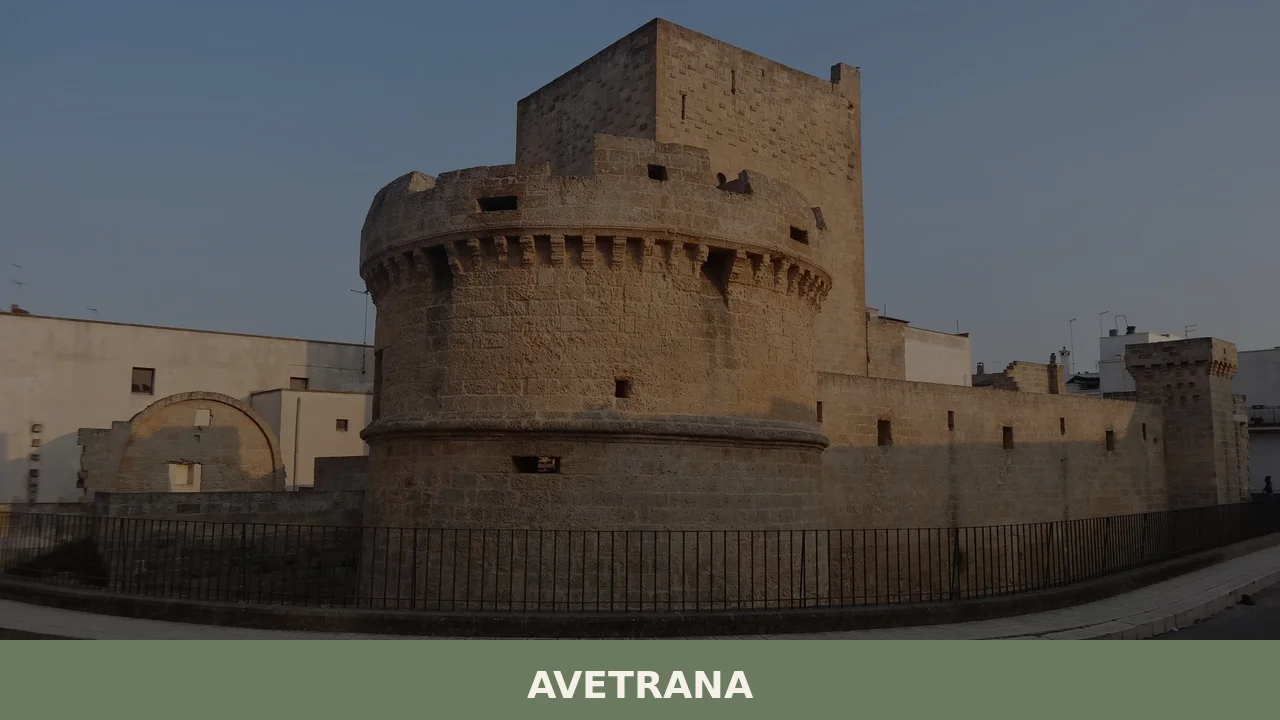
The Castle, known as the Torrione (13th century)
The tower that gives this structure its alternative name — Torrione, meaning large tower — dominates the profile of Avetrana from every approach road.
Built in the 13th century, it represents the oldest documented construction in the village and was originally part of a defensive system typical of Norman and Angevin fortification programmes across the Salento. The masonry is composed of the local limestone common to this part of Puglia, cut in regular courses that have weathered to a pale ochre. Standing at the base of the tower, visitors can trace the different phases of construction in the varying coursework visible on the exterior walls.
The structure is most easily accessed from the historic centre, and the surrounding area is best explored on foot in the cooler hours of the morning, particularly between May and September when midday temperatures regularly exceed 30°C (86°F).
The Chiesa Madre
Construction of the parish church began in the 15th century and continued through the 16th and into the 17th century, a span of roughly two hundred years that produced a building with layered architectural references. The façade and interior carry elements from late Gothic, Renaissance and early baroque phases, each corresponding to a documented period of building or renovation activity.
Inside, the nave proportions reflect the 15th-century foundation, while decorative details on the side altars and portal carvings belong to the later phases. The church functions as the seat of the two patron saints of Avetrana — San Biagio and Sant’Antonio di Padova — and is the focal point of the April and June festivals that draw the largest gatherings of the year.
Visiting outside festival periods allows for a quieter inspection of the interior.
Palazzo Imperiali
The 17th-century palace bears the name of the aristocratic family whose patronage produced it, placing it within the broader context of noble residential architecture that spread through Puglia’s interior towns during the Baroque period. The building’s exterior presents the characteristic features of provincial Salentino baroque: a rusticated ground floor, rectangular window surrounds with carved details, and a portal whose proportions signal the rank of the original owners.
Unlike the more elaborate palaces found in , Palazzo Imperiali reflects the more measured scale of a feudal residence in a small agricultural comune. The palace stands in the historic centre and can be viewed from the exterior at any time; access to the interior depends on current municipal arrangements and is worth confirming before a visit by checking the official Avetrana municipality website.
The Historic Centre
The fabric of the old town surrounding the three main monuments consists of low stone houses built in the local limestone, arranged along narrow lanes that follow the irregular medieval street plan.
The scale is modest: the entire historic nucleus can be walked across in under fifteen minutes, which makes it accessible for visitors who are not planning an extended stay.
Several of the older residential streets retain their original paving in irregular stone slabs, and the spatial sequence between the tower, the church and the palace is short enough to allow all three to be visited without returning to a car.
The best light for photography of the pale stone façades falls in the early morning and the hour before sunset, when the low angle of the sun picks out the texture of the cut limestone.
The Surrounding Agricultural Landscape
The territory around Avetrana is flat to gently undulating, with an altitude consistently close to 62 m (203 ft) across the communal area, and the land is dominated by olive cultivation interspersed with dry-stone walls known in Salentino dialect as paréti. The agricultural character of this landscape has remained largely unchanged for several centuries, and the geometry of the field divisions visible from the approach roads reflects historic land-use patterns.
The distance from the Ionian coast — approximately 20 km (12.4 mi) to the west — means that a morning in Avetrana can be combined with an afternoon at one of the beaches between Manduria and Porto Cesareo, making the village a functional stop on a coastal tour of the Taranto province. The area around Alberobello, known for its trulli dry-stone dwellings, lies approximately 70 km (43.5 mi) to the north and can be reached in under ninety minutes by car, making a combined itinerary across different parts of Puglia entirely practical.
Local food and typical products of Avetrana
The food culture of the Avetrana area belongs to the broader Salentino culinary tradition, which developed over centuries in a territory where wheat, legumes, olive oil and wild vegetables formed the agricultural base.
The inland position of the village, away from the fishing ports of the Ionian coast, meant that the local diet historically centred on dry pasta, bread and preserved vegetables rather than fresh fish, though the proximity to the coast — roughly 20 km (12.4 mi) — meant that dried and salted seafood did enter the diet. The influence of successive cultural presences in the Salento, including Byzantine, Norman and Spanish periods, left traces in the use of spices and in specific combinations of ingredients that distinguish Salentino cooking from the cuisine of northern Puglia.
Among the dishes that characterise the local table, ciceri e tria stands out as one of the most documented preparations of the Salento: a combination of chickpeas simmered with aromatics and served with pasta of which a portion is fried separately in olive oil until crisp, creating a contrast of textures within a single bowl.
Fave e cicoria, a purée of dried broad beans finished with olive oil and paired with boiled wild chicory, appears on tables throughout the province and represents the kind of two-ingredient dish that demands quality in both components.
Bread baked in wood-fired ovens, made with locally grown durum wheat semolina, forms the base of several preparations, including puccia, a round flatbread traditionally filled with cured meats, local olives and preserved vegetables. The olive oil produced in the territory around Avetrana, from centuries-old olive trees of the Ogliarola Salentina and Cellina di Nardò varieties, is used at every stage of cooking and as a finishing condiment.
No certified designation of origin products (DOP or IGP) specific to the comune of Avetrana are documented in the available sources. The broader Taranto province is covered by the Terra d’Otranto DOP olive oil designation, which includes production from olive groves in the Salento area, but specific municipal attribution for Avetrana is not confirmed in the available data.
Visitors interested in purchasing local olive oil can find it at agricultural producers in the surrounding countryside, particularly during and after the autumn harvest season, which in this latitude runs from October through December.
The period between late spring and early summer, coinciding with the patron saint festivals in late April and mid-June, is when local food traditions are most publicly visible.
Market stalls selling cartellate — thin pastry ribbons fried and dressed with cooked grape must or honey — and other traditional sweets appear around the festival dates, alongside stalls offering local cheeses and cured meats. Purchasing directly from producers at these seasonal gatherings is the most direct way to access what the territory actually produces.
Festivals, events and traditions of Avetrana
Avetrana observes two patron saint festivals that anchor the local calendar. The feast of San Biagio falls on 28 and 29 April, and the feast of Sant’Antonio di Padova, co-patron of the village, is celebrated on 12 and 13 June.
Both festivals follow the structure typical of Salentino religious observance: a solemn Mass in the Chiesa Madre, a procession through the streets of the historic centre carrying the statue of the saint, and an outdoor programme that extends into the evening with music and communal gathering in the main square.
The April dates place the San Biagio festival in the most favourable period of the year climatically, with mild temperatures and long daylight hours that allow outdoor events to run without the heat constraints of July and August.
The June festival for Sant’Antonio di Padova carries additional significance because it coincides with the period immediately after the wheat harvest in the surrounding countryside, a timing that historically connected the religious calendar to the agricultural cycle.
Fireworks displays on the evening of the main feast day are a documented feature of both festivals, as they are across the Salento more broadly.
These two festivals represent the most consistent annual events in Avetrana and are the periods when the village attracts visitors from surrounding comuni as well as members of the diaspora returning from other Italian cities. For international visitors, attending either festival provides direct observation of the religious and social practices that have structured community life in the Salento for several centuries.
When to visit Avetrana, Italy and how to get there
The best time to visit this part of Puglia falls between late April and June, and again in September and early October. Late April aligns with the San Biagio festival and offers temperatures in the range of 18–24°C (64–75°F), comfortable for walking the historic centre and the surrounding countryside.
July and August bring intense heat — regularly above 35°C (95°F) at this latitude — and higher tourist pressure along the Ionian coast, which can affect accommodation availability and road traffic on the provincial routes.
September offers a practical alternative: the harvest season begins, temperatures moderate, and the Salento coast remains swimmable without the peak-season congestion. Winter visits are feasible for those focused on the monuments, as the mild Mediterranean climate keeps temperatures above 10°C (50°F) for most of December and January, but some local businesses operate reduced hours outside the main season.
Avetrana sits approximately 45 km (28 mi) southeast of Taranto and roughly 45 km (28 mi) northwest of Lecce, placing it midway between the two main urban centres of the province. By car, the most direct approach from Taranto follows the SS7ter state road through Manduria, a route of approximately 50 minutes. From Lecce, the SP359 provincial road connects the two via Nardò in a similar travel time.
For those arriving from further afield, Brindisi Airport is the nearest international gateway, located approximately 55 km (34 mi) from Avetrana; car hire at the airport provides the most direct onward connection, as public transport links between the airport and the village are indirect.
Train services on the Trenitalia network reach Taranto and Lecce from major Italian cities including Rome (approximately 4 hours on the fast service to Taranto) and from these hubs onward travel by regional train or bus reaches the Avetrana area, though a hire car or taxi remains the most practical option for the final leg. International visitors should note that English is not widely spoken in smaller shops and service providers in this part of Puglia, and carrying cash in euros is advisable as card payment is not universally accepted in rural establishments.
Visitors combining Avetrana with nearby villages will find that Casamassima, located in the Bari metropolitan area to the north, makes for a contrasting stop that illustrates the different architectural and social character of northern Puglia compared to the Salento.
Those interested in exploring the broader Salentino hinterland can also include Martignano, a small comune in the Lecce province that preserves the Griko language, a Greek-derived dialect spoken by a minority community in the southeastern tip of Italy — a linguistic trace of Byzantine settlement that parallels the long pre-Norman history of the entire Salento region to which Avetrana belongs.
Frequently asked questions about Avetrana
What is the best time to visit Avetrana?
The most rewarding time to visit Avetrana is spring (April–June) or early autumn (September–October), when temperatures are comfortable for walking the compact historic centre. Late April (28–29) brings the feast of San Biagio, and mid-June (12–13) the feast of Sant'Antonio di Padova, co-patron of the village — both are the largest local gatherings of the year and offer an authentic glimpse of Salentino tradition. Summer visits are possible but midday heat regularly exceeds 30°C (86°F), so plan monument visits for early morning.
What are the historical origins of Avetrana?
Avetrana's roots lie in the Norman and Byzantine settlement of the Salento peninsula. The territory was reorganised under Norman feudal rule in the 11th–12th centuries, and the 13th-century castle (Torrione) is the oldest surviving evidence of that period. The village name derives from the Salentino dialect form L'Aitràna. Subsequent feudal lords shaped the town through the late medieval period, while the 17th century brought aristocratic building activity documented by Palazzo Imperiali. The Chiesa Madre reflects three centuries of ecclesiastical construction from the 15th to the 17th century.
What to see in Avetrana? Main monuments and landmarks
Three monuments form the historic core, all within a fifteen-minute walk of each other. The Torrione (13th century) is the oldest structure, a Norman-era defensive tower in local pale-ochre limestone. The Chiesa Madre spans the 15th–17th centuries with late Gothic, Renaissance and early Baroque layers inside. Palazzo Imperiali (17th century) is a provincial Baroque noble residence with carved portal and rusticated ground floor — exterior viewing is free at any time; interior access depends on current municipal arrangements, best confirmed via the official Avetrana municipality website.
Where to take the best photos in Avetrana?
The Torrione (castle tower) photographs best from the approach roads to the village, where its mass rises above the flat olive-grove landscape. Within the historic centre, the pale limestone façades of the Chiesa Madre and Palazzo Imperiali are at their most photogenic in early morning light or in the hour before sunset, when low-angled sun picks out the texture of the cut stone. The surrounding agricultural countryside — flat terrain crossed by dry-stone walls (paréti) and centuries-old olive groves — offers wide open views typical of the Salento interior.
Are there museums, churches or historic buildings to visit in Avetrana?
The main historic buildings are the Torrione castle (13th century), the Chiesa Madre (15th–17th century) and Palazzo Imperiali (17th century), all situated in the compact historic centre. The Chiesa Madre is the seat of the village's two patron saints and functions as an active parish church, making it accessible during religious services and, generally, outside peak midday hours. For the most up-to-date opening information on Palazzo Imperiali and the castle, check directly with the Avetrana municipality or the local pro loco before your visit.
What can you do in Avetrana? Activities and experiences
Avetrana works well as a morning stop on a wider Salento itinerary. Walk the historic centre (under fifteen minutes across), visit the Torrione, Chiesa Madre and Palazzo Imperiali, then combine with an afternoon on the Ionian coast roughly 20 km (12.4 mi) to the west — beaches between Manduria and Porto Cesareo are within easy reach. Alberobello's trulli are approximately 70 km (43.5 mi) north, feasible as a half-day extension by car. Attending the patron saint festivals in late April or mid-June adds a layer of authentic local experience.
Who is Avetrana suitable for? Families, couples, hikers, solo travelers?
Avetrana suits culturally curious travellers who appreciate small-scale, unhurried historic centres rather than busy tourist circuits. The compact layout with flat terrain makes it accessible for families with young children and older visitors. Couples on a slow-travel Salento itinerary will find it a genuine alternative to more visited towns. It is less suited to hikers seeking marked trails or to visitors looking for a full day's programme, but functions very well as one stop in a broader exploration of the Taranto province and the Ionian coastline.
What to eat in Avetrana? Local products and specialties
The local table belongs to the Salentino culinary tradition. Two landmark dishes to look for are ciceri e tria — chickpeas with pasta, part of which is fried crisp in olive oil — and fave e cicoria, a purée of dried broad beans with boiled wild chicory, dressed with local olive oil. Olive cultivation dominates the territory around Avetrana, and Salento olive oil is a cornerstone ingredient across all courses. The inland position of the village historically favoured dry pasta, bread and preserved vegetables over fresh fish, though the nearby Ionian coast means seafood is also present in local restaurants.
Getting there
Via Vittorio Emanuele, 74020 Avetrana (TA)
Nearby Villages near Avetrana
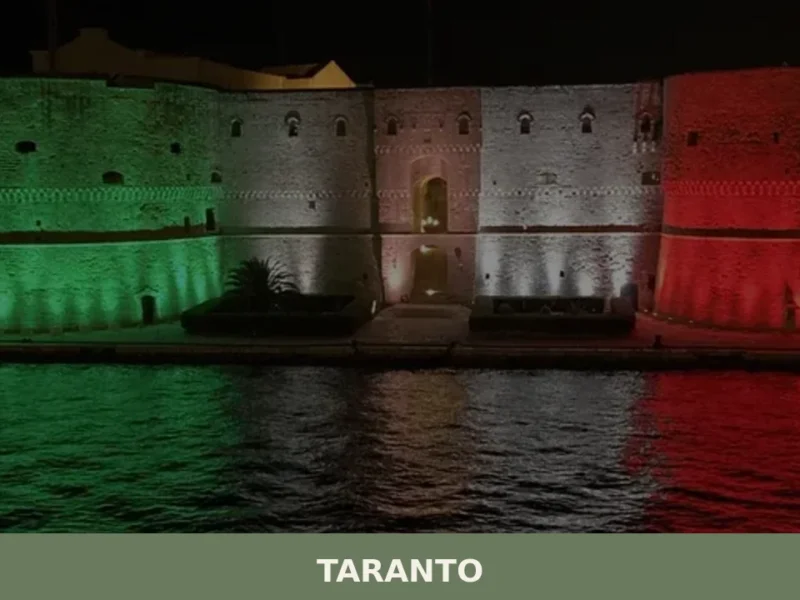
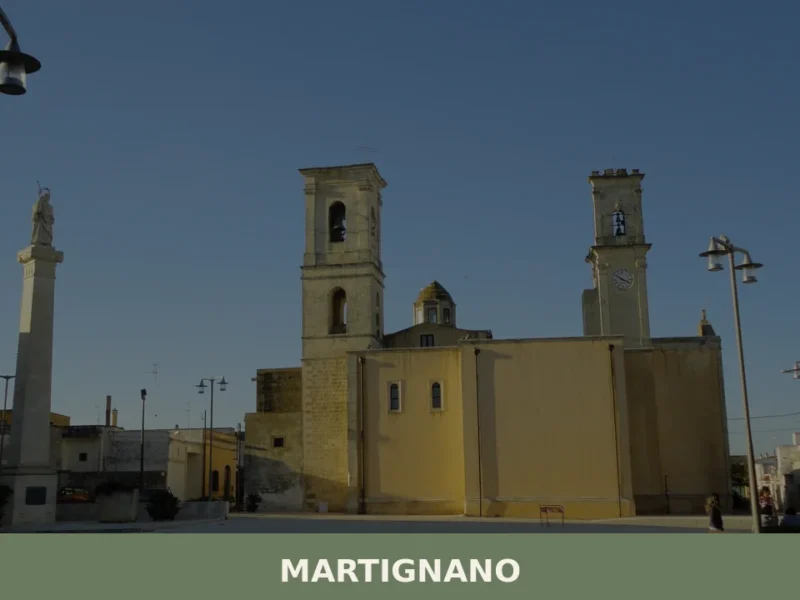
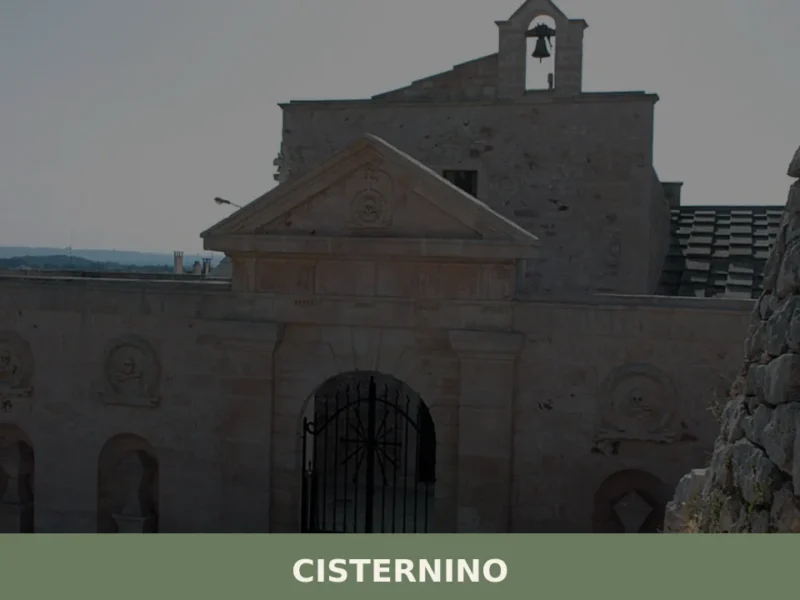
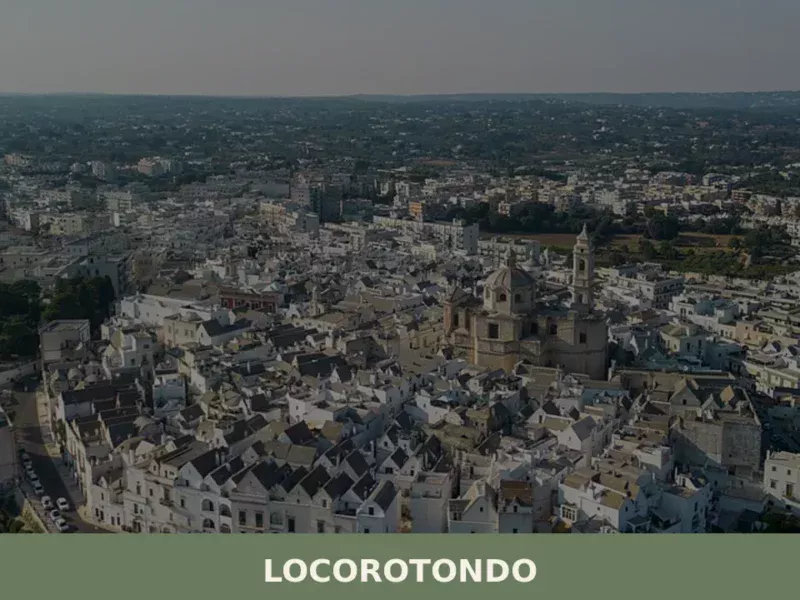
In Apulia More villages to discover
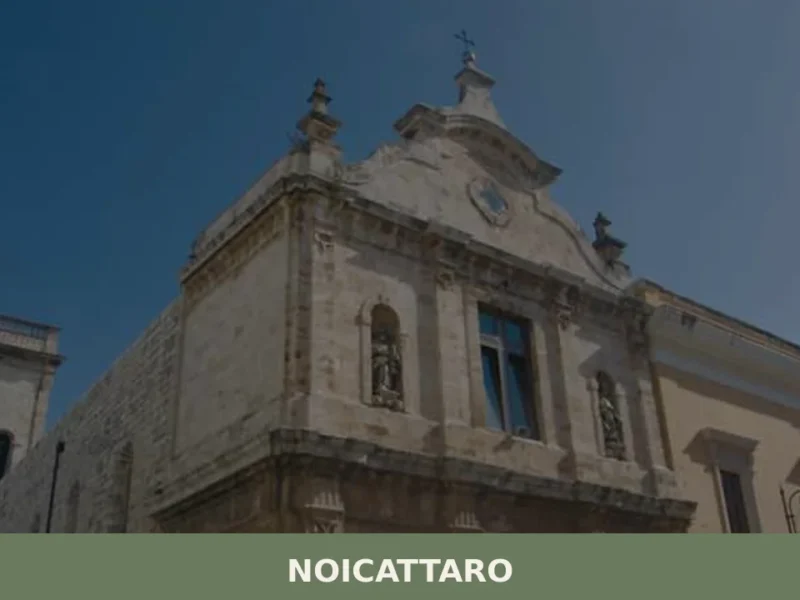
Noicattaro
Plains
What to see in Noicattaro: town at 100m in the province of Bari. Medieval crypt, concentric old town, masserie and PAT cuisine. Plan your visit now.
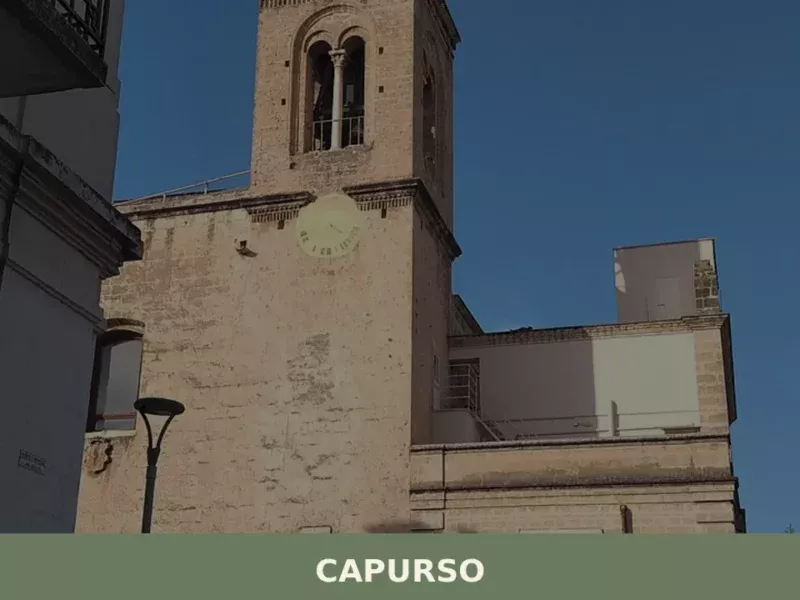
Capurso
Plains
Every last Sunday of August, the streets of Capurso light up with illuminations reaching twenty metres in height, and the sheer weight of the crowd forces traffic to be diverted onto the provincial road to Cellamare. This is the climax of the feast of the Madonna del Pozzo, a devotional event that since 1705 has […]
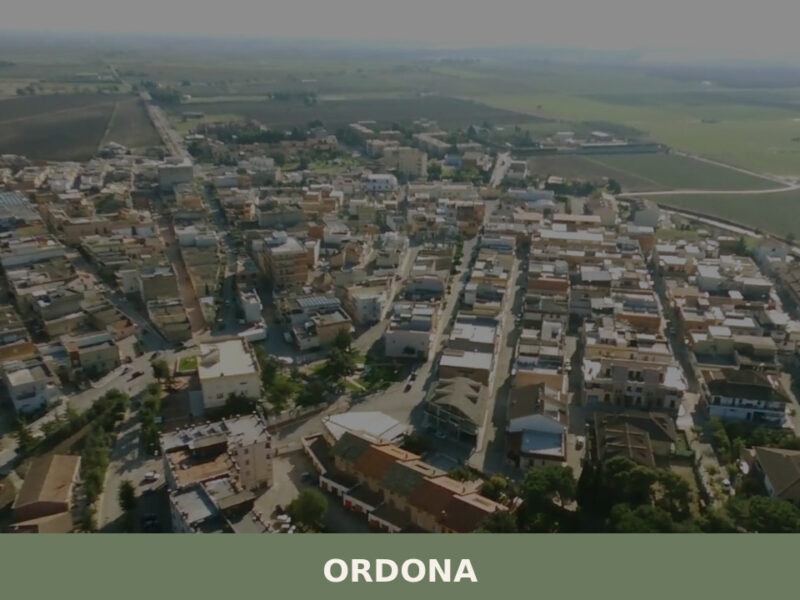
Ordona
Plains
Ordona sits on the Tavoliere plain near Foggia, above the ancient Daunian-Roman city of Herdonia. A guide to its archaeology, food, and surroundings.
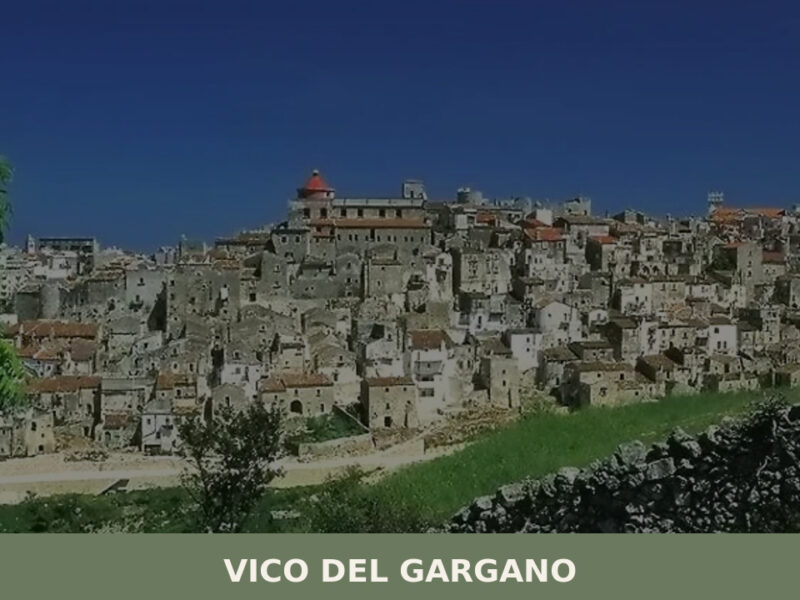
Vico del Gargano
 Sea
Sea
A hilltop village at 445 metres on the Gargano promontory, Vico del Gargano rewards slow exploration — medieval alleys, underground olive presses, and ancient forest at its edge.
Giovinazzo
Sea
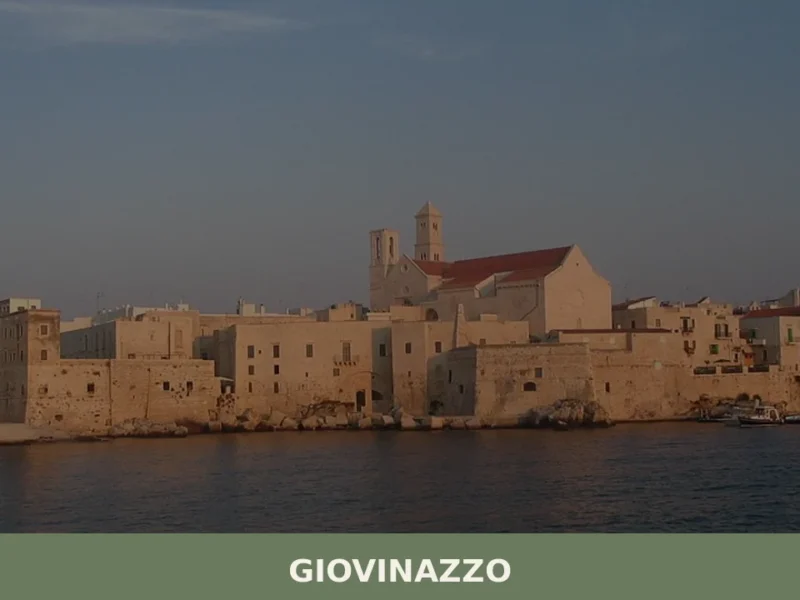
The walls of Giovinazzo’s old port form an irregular semicircle jutting out into the Adriatic Sea, visible from the SS16 state road that runs along the Bari coastline. This small city of 19,366 inhabitants, sitting at just 7 metres above sea level, retains a compact medieval historic centre, still partly surrounded by the original city […]
Cerignola
Plains
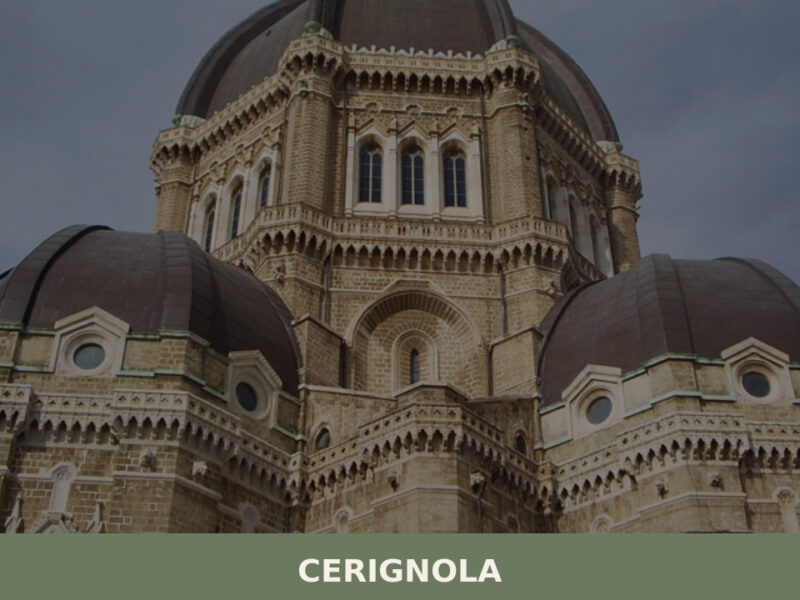
A complete guide to Cerignola in Puglia's Tavoliere plain — its medieval quarter, cathedral, Teutonic tower, renowned olives, and the deep agricultural heritage of the province of Foggia.
Ceglie Messapica
Sea
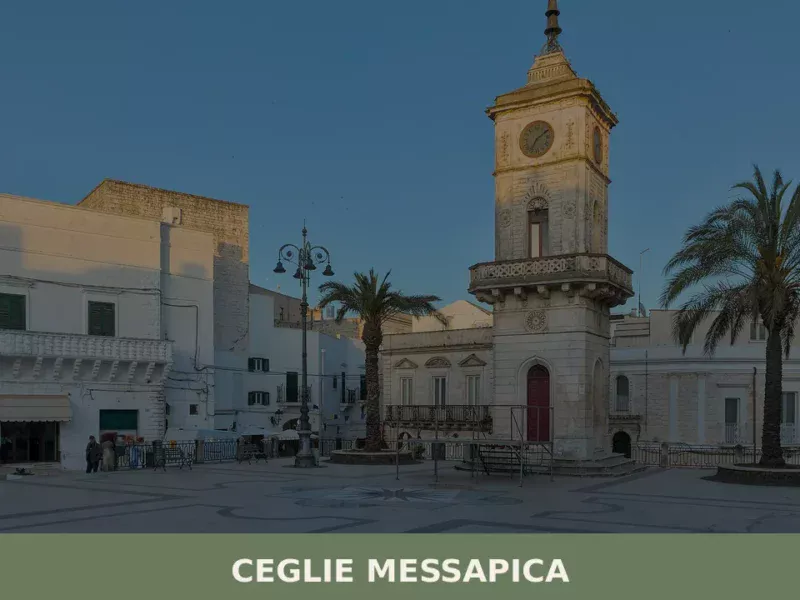
Discover what to see in Ceglie Messapica: the Ducal Castle, medieval chianche streets, ancient olive groves, karst caves and Puglia's finest local food.
Andria
Plains
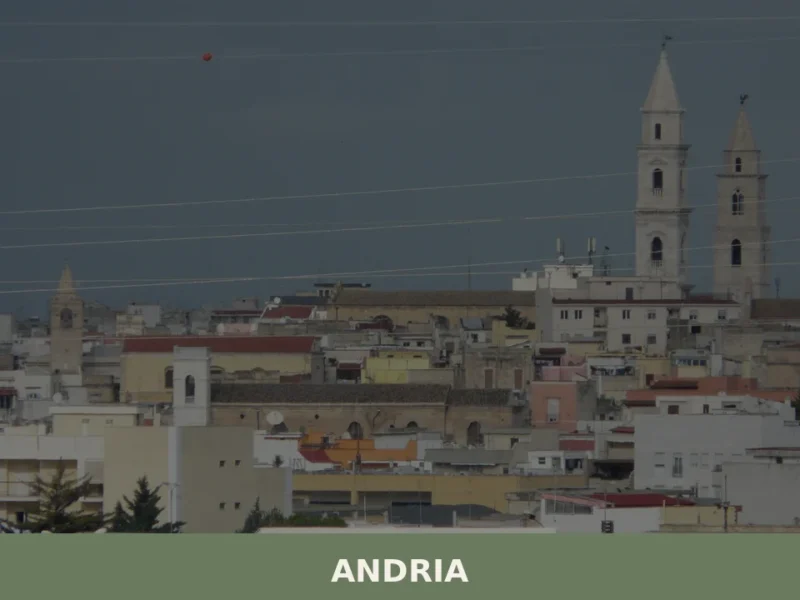
What to see in Andria, Puglia, Italy: explore Castel del Monte UNESCO site, the Cathedral crypt, and local products. Population 97,146. Discover the complete guide.
Manfredonia
Sea
A port city founded by King Manfred on the Gargano coast, Manfredonia holds a medieval castle, pre-Roman carved stele, and one of Puglia's oldest carnivals.
Cellino San Marco
Plains
Scopri Cosa vedere a Cellino San Marco: un borgo agricolo ricco di storia e tradizioni in Puglia. Pianifica la tua visita e assapora l'autenticità del Salento.



🏡 Know Avetrana better than we do?
If you’re a local or have been there, your knowledge matters: add what’s missing or fix a detail on this page.