


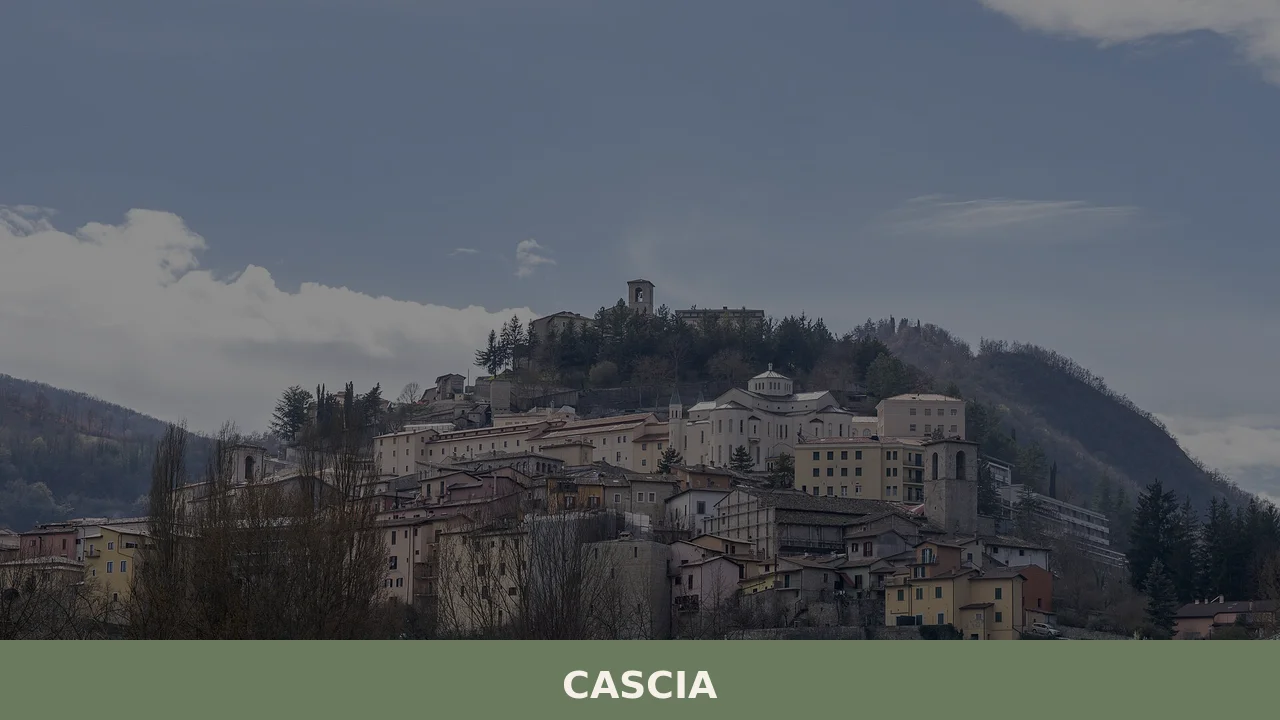
Cascia
 Mountain
What to see in Cascia, Umbria, Italy: explore the Basilica of Santa Rita, medieval churches, and local truffles at 653 m altitude. Discover the full travel guide.
Discover Cascia
Cascia stands in the upper Valnerina, in a part of Umbria that moves at a different pace from the region’s better-known lowland towns. The road climbs, settlements become more scattered, and the landscape grows more austere. Religious life and mountain life coexist here in a way that feels structural rather than decorative. Anyone arriving in Cascia finds a village deeply marked by Saint Rita, yet not reducible to her story alone: it is also a compact historic settlement, a gateway to an Apennine territory of woods, valleys and small hamlets, and a place whose everyday identity still lives alongside the flow of pilgrims.
Why Cascia feels different
At 653 metres above sea level, Cascia occupies a position that genuinely shapes the way the village is experienced. This is not a place to cross quickly on the way somewhere else. Altitude, distance from major urban centres and the geography of the Valnerina all encourage a slower relationship with the territory. That influence can be felt in the urban fabric, in the stone of the historic centre, in the presence of religious spaces and in the very idea of what it means to visit the village.
Many visitors come to Cascia for Saint Rita, and naturally so. But reducing the village to a single pilgrimage destination would flatten its identity. Cascia is a territorial node where devotion, historical memory and Apennine landscape meet. It is one of those places where the most useful question is not only “what is there to see?” but also “what kind of place is this?” and “how does it belong to the wider territory around it?” In that sense, comparing Cascia with other settlements of the Valnerina such as Cerreto di Spoleto or Preci helps clarify what makes it distinct.
History and identity of the village
Cascia developed as a hill settlement in eastern Umbria, along a belt of communication between the Umbrian world and the Apennine territories that look toward Lazio and the Marche. Its history passes through the Middle Ages, through the defensive logic of ridge villages, through papal administration and through the repeated rebuilding made necessary by the earthquakes that shaped much of central Italy’s mountain belt.
In Cascia’s case, however, urban and civic history were profoundly reinterpreted through the figure of Rita Lotti, born in nearby Roccaporena in the late 14th century and permanently linked to the Augustinian monastery of Cascia. Her canonisation in 1900 changed the scale of the village’s fame: from a mountain settlement in inland Umbria to a place known far beyond the region, with an identity that is immediately legible even to first-time visitors.
That transformation did not erase the character of the place. If anything, it made Cascia more layered. Alongside the spaces of devotion remain the medieval fabric, the traces of reconstruction, the relationships with surrounding hamlets and the wider Valnerina context. For that reason Cascia works especially well as a pillar page for the village itself: the spiritual dimension matters, but it does not exhaust the story of the place.
What to know about Cascia
On a village page, places of interest should not live as an exhaustive checklist but as keys to understanding the place. In Cascia, the essential reference points are the Sanctuary of Saint Rita, the monastery complex, the basilica and other religious sites in the old centre, the relationship with Roccaporena and the mountain landscape of the Valnerina that frames the whole municipality.
The historic centre
The historic core of Cascia is best read as an Umbrian mountain village, with stone buildings, compact routes and a continuous relationship between elevation, slope and built form. It is not monumental in the classic sense. Its interest lies in the continuity of the settlement pattern, the atmosphere of the lanes and the way religious life is woven into a fabric that still feels recognisably like a living village.
The sanctuary and the Rita complex
The Sanctuary of Saint Rita is the best-known and most visited place in Cascia. For many travellers it is the reason for the journey, but in a strong editorial structure it should also become the gateway to a dedicated article. Architecture, the history of the sanctuary, devotional practice, major celebrations and practical visiting information all deserve their own in-depth page. Here, on the village page, the sanctuary makes most sense as one of the elements that define contemporary Cascia. For updated information on the Rita sites and major celebrations, the most reliable reference is the official Saint Rita of Cascia website.
Monastery, basilica and devotional spaces
The monastery, basilica, churches and memory sites connected with Saint Rita create a very precise internal geography. They should not all be told with the same depth on a hub page. Here they serve as orientation points, while the more detailed historical, artistic and devotional material works better in dedicated articles linked from the main village page.
Roccaporena and the wider territory
To understand Cascia properly, it helps to widen the view to Roccaporena and the surrounding municipal territory. Roccaporena is not only a site associated with the saint. It is one of the places that makes the relationship between village, landscape and spirituality fully visible. Here too the editorial distinction matters: the Cascia page should introduce the bond, while a dedicated article can properly explain the individual sites and the meaning of the visit.
Cascia and Saint Rita
Saint Rita is not a secondary theme: she is the great narrative axis of Cascia. But precisely because of that, she needs to be handled well. If the entire village page collapses into the saint’s story, Cascia disappears as a place and remains only as the container of a cult. If, instead, Saint Rita is integrated into the broader identity of the village, the page becomes stronger and clearer.
The connection between Cascia and Rita can be read on many levels: historical, devotional, urban, economic and even landscape-based. The flow of pilgrims changed the village, shaped services, increased the visibility of the territory and gave Cascia an immediate recognisability. At the same time, the village is not reducible to that identity alone. It remains an Apennine settlement in Umbria, with its own scale, its own daily life and its own territorial continuity.
For Villages Italy, this means the Cascia page should hold together two layers. The first is the presentation of the village as a place: position, history, atmosphere, landscape, seasonality and its links to the Valnerina. The second is the network of deeper articles: Saint Rita, the sanctuary, the monastery, Roccaporena, museums and religious sites. In this way the village page stays clear and does not try to do every job on its own, while also connecting naturally with nearby places such as Monteleone di Spoleto.
Food and rhythm of the Valnerina
Cascia belongs culturally and gastronomically to the Valnerina. That means mountain food, forest products, pastoral traditions and a table that changes significantly with the seasons. Truffles, cured meats from inland Umbria, hearty dishes and the social life of local trattorie all tell the story of a territory where cuisine has never really been separate from geography.
Here too it is better not to turn the village page into a full catalogue. It is enough to give the context: Cascia is a place where the spiritual dimension coexists with a strong material culture shaped by woodland, livestock, local recipes and recognisable seasons. Readers who want a deeper look at local products or the food culture of the area can move into dedicated content linked from the main page.
When to go and how to reach Cascia
The best-known time to visit Cascia is around the celebrations of Saint Rita, especially near 22 May, when the village changes scale and fills with pilgrims. It is the most intense period for anyone seeking the devotional dimension, but not necessarily the best moment for readers who want to understand the village calmly. Spring and autumn often offer the clearest balance: less pressure, cleaner light, a more legible Apennine landscape and a slower rhythm.
Reaching Cascia takes intention, and that is part of the experience. This is not a place people drift into by accident. You arrive through the road system of the Valnerina, with travel times that make the visit more deliberate and often turn it into one stop within a broader inland Umbria itinerary. That too is worth valuing, because it distinguishes Cascia from villages that are easier and quicker to consume.
For practical logistics, updated information on roads, access, celebrations and local services should always be checked through the relevant institutional and religious channels, especially during periods of heavy visitor flow. For the devotional side of the visit, the official Saint Rita of Cascia website remains the most useful reference point.
Cascia at a glance
Cascia works best when it is understood at once as a village, a spiritual destination and a piece of inland Apennine Umbria. Saint Rita explains its fame, but the place has a wider identity: historic fabric, the Valnerina landscape, the relationship with Roccaporena, the seasonality of the territory and a local life that continues beyond pilgrimage. As a pillar page, its role is not to say everything, but to orient the reader well and open the way to the right deeper articles.
Frequently asked questions about Cascia
What is the best time to visit Cascia?
Late May is the ideal time to visit Cascia, coinciding with the feast of Santa Rita da Cascia on 22 May — one of the most attended pilgrimages in central Italy, drawing devotees from across Europe to the Basilica and Sanctuary. Summer (June–August) offers pleasant mountain temperatures at 653 m, ideal for outdoor exploration. Autumn brings truffle season and vivid foliage across the Apennine slopes. Winter is cold with heavy snowfall; roads can be challenging but the town is atmospheric and uncrowded. Avoid arriving on 22 May without accommodation booked well in advance.
What are the historical origins of Cascia?
The earliest evidence of settlement dates to the 2nd century BC, with rock-cut hypogeal tombs on the left bank of the river Corno. The scholar Theodor Mommsen attributed the territory to the ancient municipality of Norcia. Cascia appears in medieval chronicles of Farfa Abbey and Sassovivo Abbey, and during the Guelph–Ghibelline conflicts aligned with Pope Alexander IV. It grew into an independent republic governing over forty surrounding castles before submitting to the Trinci of Foligno in 1213 and later to the Papal States in 1260. Pope Clement VIII granted it the formal title of city on 6 March 1596.
What to see in Cascia? Main monuments and landmarks
The Basilica and Sanctuary of Santa Rita da Cascia (built 1937–1947) is the primary attraction, housing the saint's body in a crystal urn and works by Giacomo Manzù. The Church of San Francesco (founded 1247) preserves Romanesque elements, a decorated rose window, and altarpieces attributed to Pomarancio and Guido Reni. The Collegiate Church of Santa Maria (12th century, rebuilt 1532) contains works by Nicola da Siena and Niccolò Frangipane. The Church of Sant'Antonio Abate features 14th-century frescoes attributed to Domenico di Giacomo da Leonessa. The nearby hamlet of Roccaporena, birthplace of Saint Rita, is a short drive away.
What are the main natural or scenic attractions of Cascia?
Cascia sits at 653 m in a mountain basin enclosed by the southeastern Umbrian Apennines, with the river Corno cutting through steep limestone terrain below the town. The wider municipal territory encompasses nearly forty named localities across a rugged highland landscape. The area around Cascia falls within the broader Sibillini mountain system, offering walking and trekking opportunities. The locality of Roccaporena, a few kilometres from town, includes a prominent rocky outcrop associated with Saint Rita and scenic valley views that attract visitors beyond the purely religious itinerary.
Where to take the best photos in Cascia?
The elevated position of the Basilica of Santa Rita, occupying the highest point of the inhabited centre, offers views over the medieval rooftops and the enclosed mountain basin below. The steep staircase streets climbing Monte Corvo provide characteristic shots of the historic urban fabric. The hamlet of Roccaporena, a short drive from Cascia, combines a dramatic rocky landscape with the chapel built on Saint Rita's birthplace, making it one of the most photographed spots in the entire municipality. The river Corno valley below the town is best seen from the upper parts of the old centre.
Are there museums, churches or historic buildings to visit in Cascia?
Cascia has five documented religious monuments open to visitors. The Basilica and Sanctuary of Santa Rita is the centrepiece, with the Chapel of Saint Rita, the Chapel of Consolation (containing the body of Blessed Simone Fidati), and works by Giacomo Manzù and Eros Pellini. The Church of San Francesco, the Collegiate Church of Santa Maria, and the Church of Sant'Antonio Abate with its fresco cycles by two distinct 14th-century artists complete the main circuit. The Sanctuary of Santa Maria della Neve at Castel Santa Maria, attributed to a Bramante design (1571), requires a car to reach. Check the official municipality website for current opening hours.
What can you do in Cascia? Activities and experiences
Cascia offers a religious pilgrimage itinerary centred on the Basilica of Santa Rita and the birthplace of the saint at Roccaporena, manageable as a half-day circuit by car. The mountain setting at 653 m provides walking in the Apennine landscape surrounding the town. The feast of Santa Rita on 22 May draws large crowds and is itself an immersive cultural event. The local food economy — historically based on truffles, mountain cheese, and cured pork — makes agriturismo and local market visits a practical addition to any stay. The town is also a useful base for excursions to Norcia (21 km) and Spoleto (48 km).
Who is Cascia suitable for? Families, couples, hikers, solo travelers?
Cascia suits pilgrims and religiously motivated travellers above all, given the international significance of the Sanctuary of Santa Rita. History and art enthusiasts will find a concentrated circuit of medieval and early modern religious buildings with documented artworks. The mountain terrain and Apennine surroundings appeal to hikers and nature lovers seeking an alternative to Umbria's busier lowland towns. Couples and slow travellers drawn to authentic, uncrowded hill towns will appreciate the atmosphere. The steep staircase streets and relative lack of flat walking make it less straightforward for visitors with limited mobility or very young children.
What to eat in Cascia? Local products and specialties
The food culture of the Cascia area is rooted in mountain agriculture documented since the late 19th century: truffle harvesting (both black and white truffles are found in the Valnerina zone), mountain cheese production, and cured pork products. The area falls within the broader Norcia food tradition — Norcia is just 21 km away and lends its name to the Italian word for pork butcher (norcino). Lentils from the Castelluccio plateau, a Valnerina staple with IGP status, are found on local menus. Emmer wheat (farro), grown in the Umbrian Apennines, is another documented regional product used in soups and pasta.
Nearby Villages near Cascia
In Umbria More villages to discover
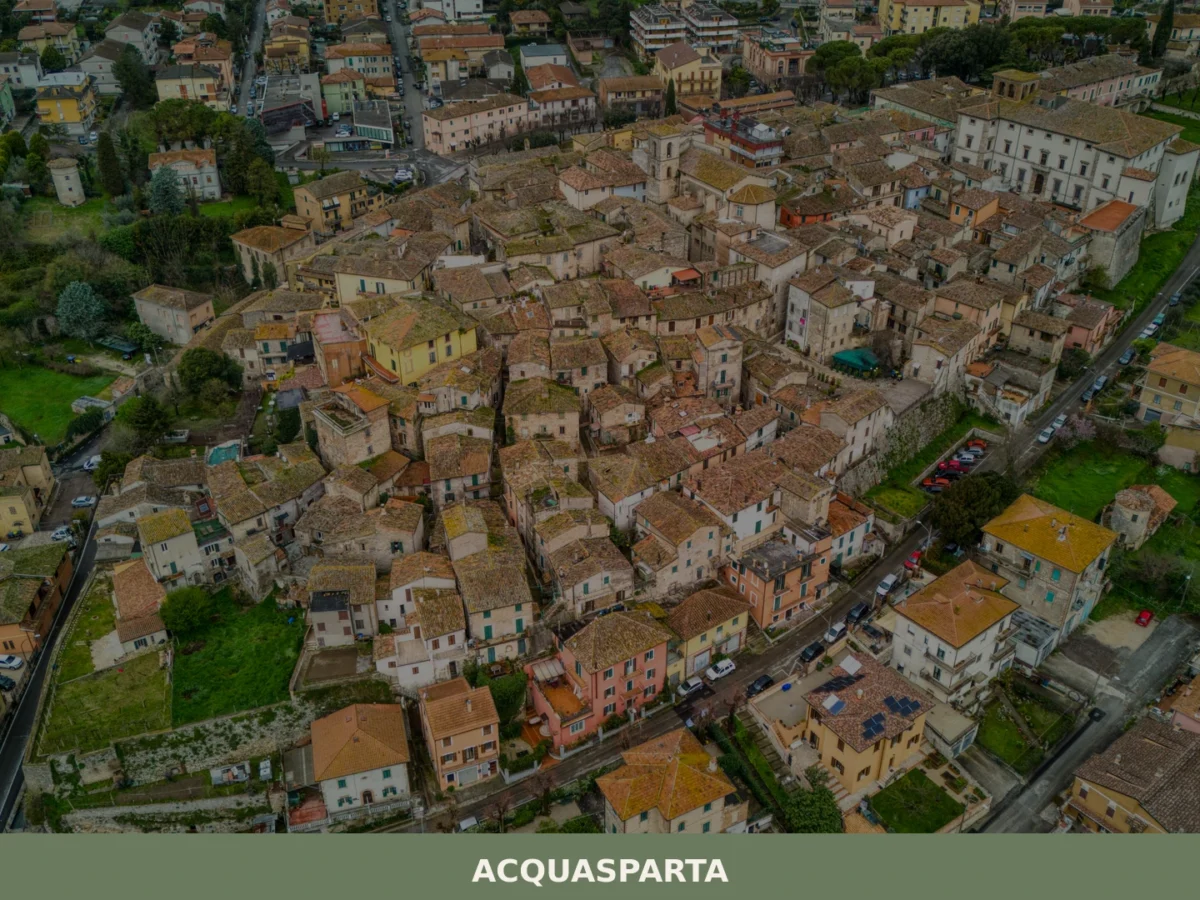
Acquasparta
 Hills
Hills
Discover what to see in Acquasparta, Umbria: Renaissance palaces, the Cesi legacy, mineral springs, Martani Hills trails, and local food. A complete travel guide.
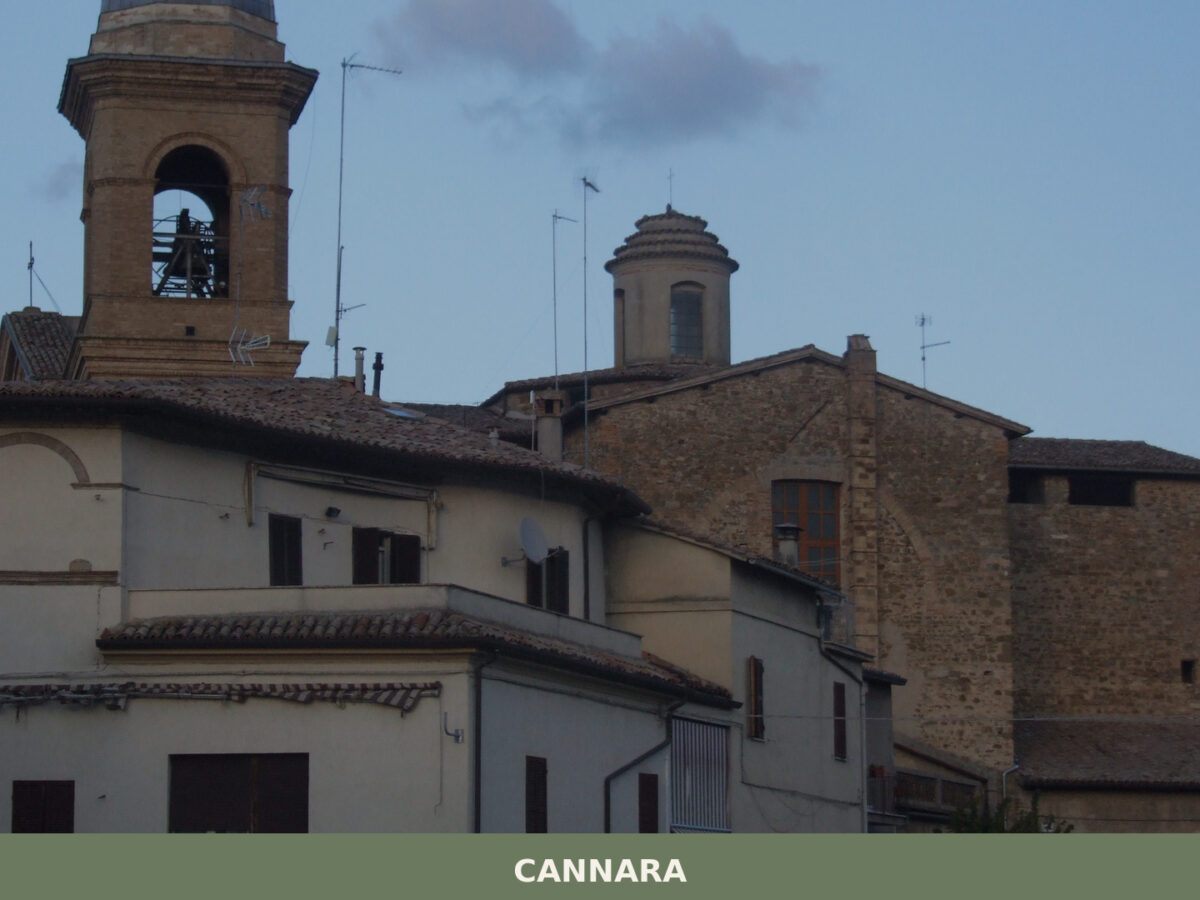
Cannara
 Plains
What to see in Cannara, Umbria, Italy: Roman ruins, medieval churches, and the Festa della Cipolla. Population 4,341. Discover top attractions and how to get there.
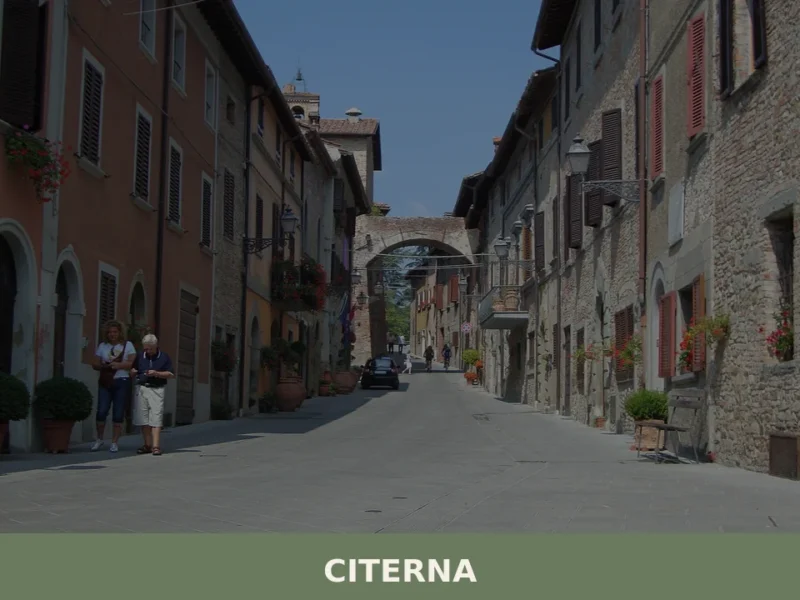
Citerna
Hills
What to see in Citerna, Umbria, Italy: explore 5 top attractions, a Donatello terracotta, and the medieval walls at 480 m. Discover the full travel guide.

Orvieto
Hills
Orvieto stands on a dramatic tufa mesa above the Paglia Valley, home to a great Gothic cathedral and over 3,000 years of layered history. A essential destination in southern Umbria.
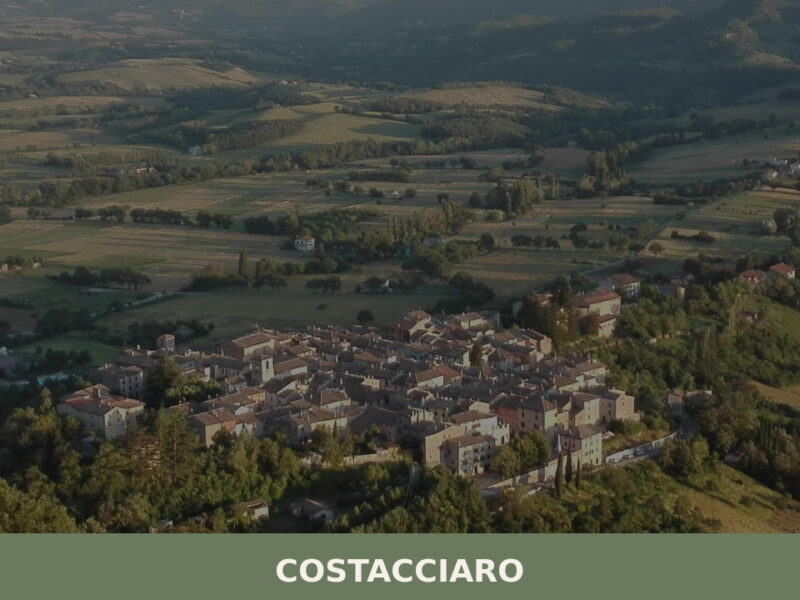
Costacciaro
Hills
Morning light reaches Costacciaro slowly, filtered through the mass of Monte Cucco before it spills across stone facades and narrow lanes still damp from overnight mountain air. At 1,280 inhabitants, this is a village measured not in monuments but in texture — the grain of limestone walls, the sound of water channelled from karst springs, […]
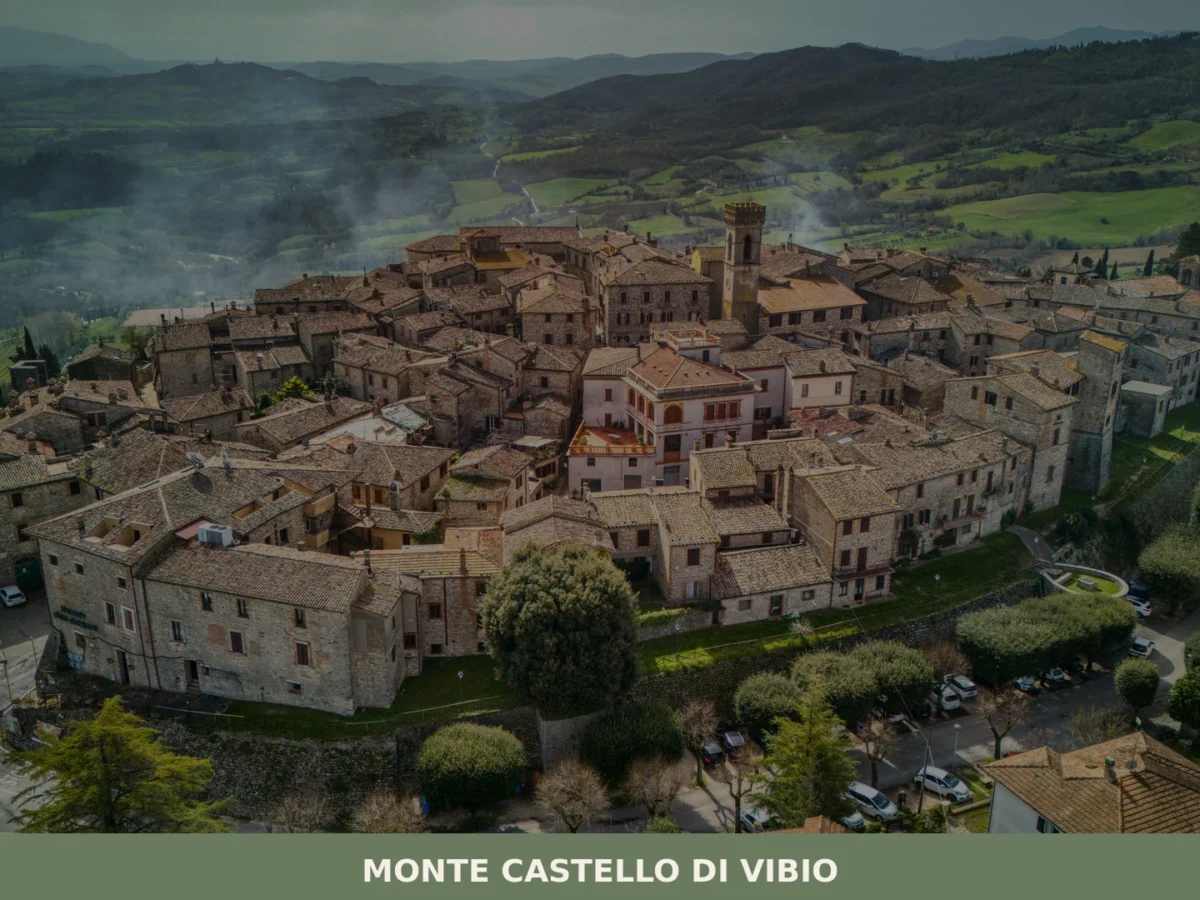
Monte Castello di Vibio
Hills
Monte Castello di Vibio holds the world's smallest theatre and an intact medieval centre above the Tiber valley. A complete guide to its history, attractions, and local food.
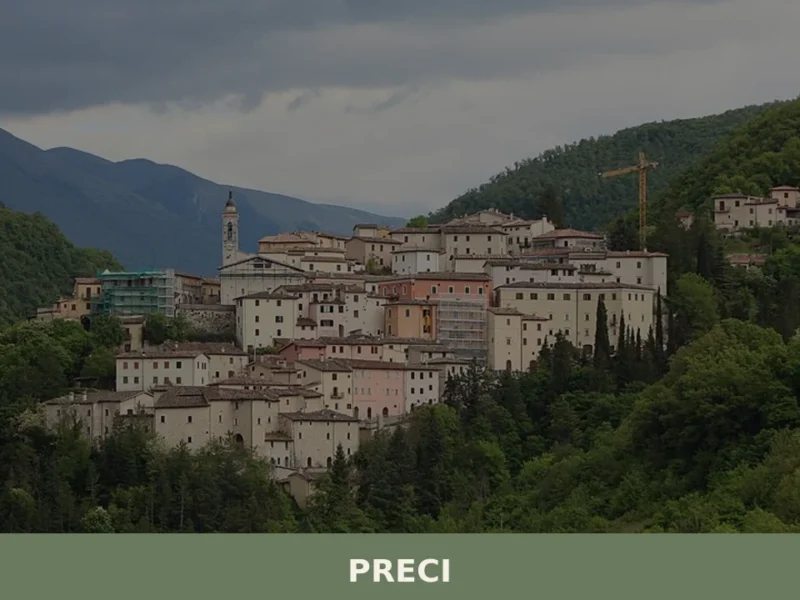
Preci
Hills
With a recorded population of 681 inhabitants, Preci stands at an elevation of 596 metres above sea level in the heart of Umbria, a region often referred to as Italy’s ‘green heart’. This small village, historically shaped by its monastic tradition and a renowned surgical school (see English Wikipedia), offers a distinct window into a […]
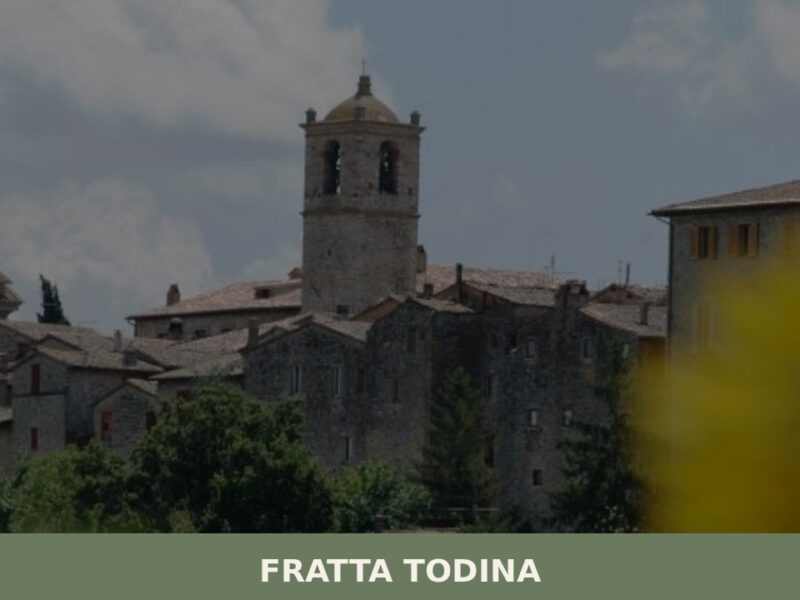
Fratta Todina
Hills
Morning light falls across a line of stone façades, turning the tufa walls the colour of raw honey. A church bell marks the hour from somewhere above the rooftops, its sound carrying across the Tiber valley below. Fratta Todina sits on a low hill in the province of Perugia, home to just 1,817 residents — […]
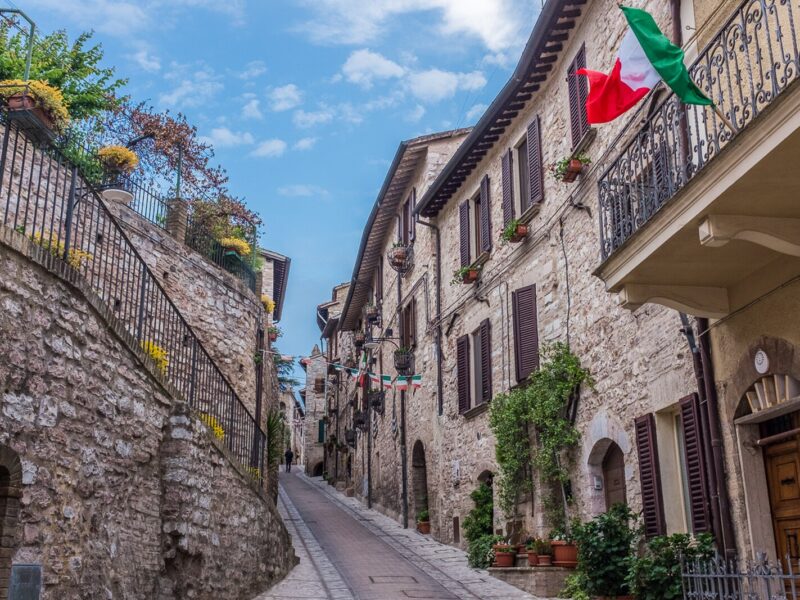
Spello
 Sea
Sea
What to see in Spello, Umbria, Italy: Roman gates, mosaic villa, medieval walls at 314 m. Discover top attractions, local food and how to get there.
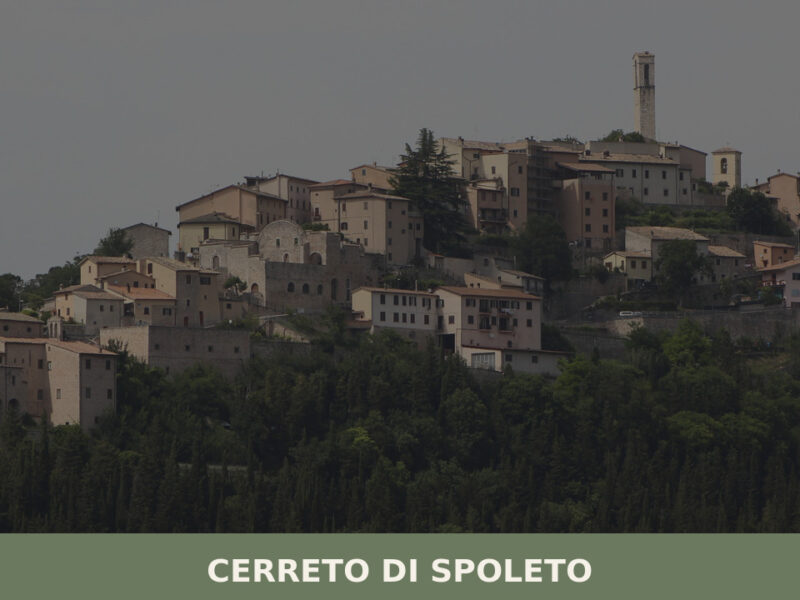
Cerreto di Spoleto
Hills
A ridge-top village of 975 inhabitants in the Valnerina, Cerreto di Spoleto holds medieval streets, scattered hamlets, and a centuries-old tradition of itinerant herbalists.


🏡 Know Cascia better than we do?
If you’re a local or have been there, your knowledge matters: add what’s missing or fix a detail on this page.