


Bastia Umbra
 Hills
Hills
What to see in Bastia Umbra, Italy: 5 top attractions, local food, and how to get there. Explore a plains town 13 km from Perugia with 21,965 inhabitants.
Discover Bastia Umbra
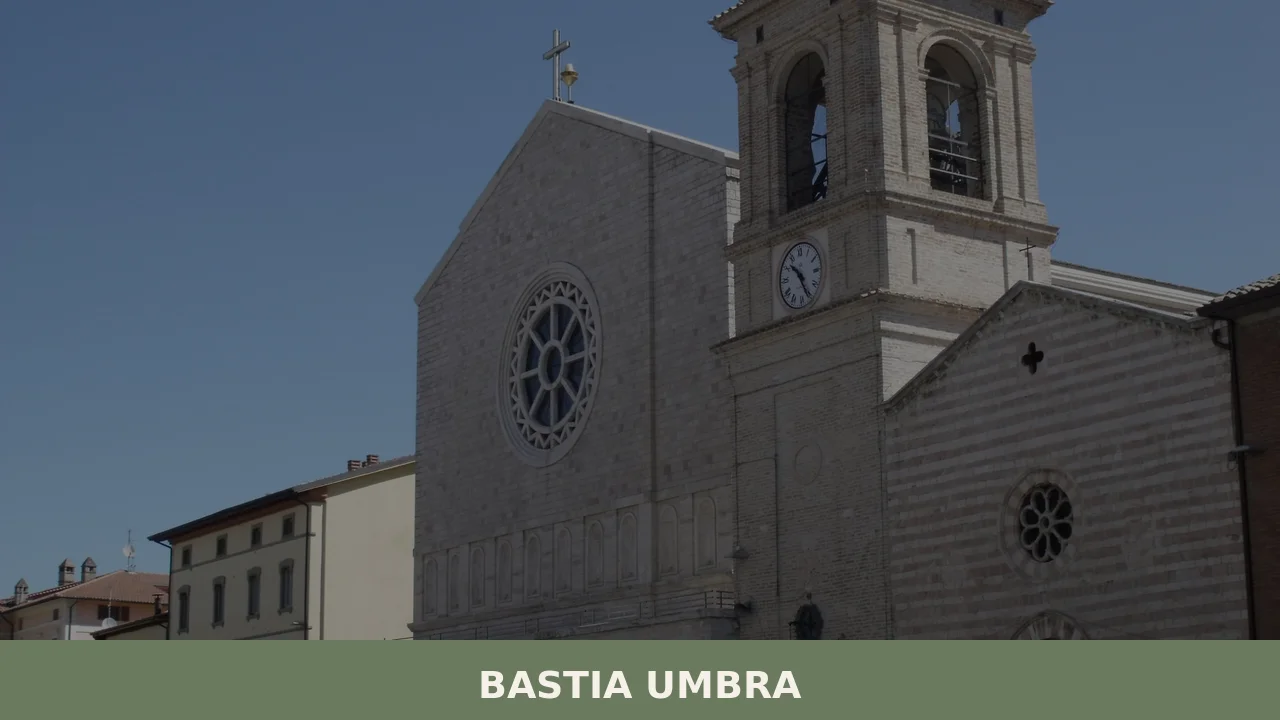
The bichrome stone of Santa Croce’s façade — quarried from Monte Subasio, 6.4 km (4 mi) to the east — absorbs the flat Umbrian light differently at each hour.
The bell tower, rebuilt between 1835 and 1839 and later cut shorter after the 1854 earthquake, still anchors the skyline of a plain that stretches without interruption toward Perugia.
Water once defined this land: marshes fed by mountain streams created the so-called Lacus Perusinus, a lake that classical authors recorded and that two Perugian nobles finally drained in the late 5th century.
Deciding what to see in Bastia Umbra becomes easier once you understand that this municipality of 21,965 inhabitants is not a hilltop fortress town but a plains settlement with a documented urban fabric reaching back to the 13th century.
Visitors to Bastia Umbra find a cluster of churches containing works by Niccolò Alunno and Tiberio d’Assisi, a fortress complex partially converted into a Benedictine monastery, and a territorial position — 13 km (8 mi) east of Perugia and 4.8 km (3 mi) from Assisi — that makes it a practical base for exploring central Umbria.
History of Bastia Umbra
The earliest recorded names for the settlement — Insula Cipi, Insula Vetus, and Insula Romana — all derive from the same geographical reality.
Extensive marshes formed by waters descending from the surrounding mountains collected in the Umbrian Valley, and the elevated dry land that emerged from these waters was described, in Latin, as a Roman island. At the end of the 5th century, two Perugian nobles named Speme and Domizio obtained permission from Theodoric, king of Italy, to drain this lake by cutting a channel near Bettona and Torgiano, gradually making the land cultivable.
The settlement is first formally documented in 13th-century records under those early island names.
By the 14th century the place had been fortified with bastions, some equipped with drawbridges, along with towers and a fortress to the north connected by an underground passage to another strong bastion.
This militarisation produced the name Bastia. Control of the town alternated for decades between Perugia and Assisi, and the settlement endured prolonged sieges involving the Sforza and papal legates.
The Baglioni family of Perugia held dominion over Bastia multiple times — on occasion by popular will, on others by force. Pope Clement VII formally granted lordship to Malatesta Baglioni, and in 1566 Pope Pius V granted it in fief to Astorre and Adriano Baglioni, who governed through a lieutenant. Conflicts between the Baglioni and the Papacy eventually led to the demolition of the town’s fortifications by papal order, after which habitation expanded eastward into an area known as the Aggiunta.
From 1580 Bastia formed part of the Papal State, a condition that persisted until the establishment of the Kingdom of Italy.
Its local statutes were formally codified in 1622. The town suffered structural damage from earthquakes in 1832, 1853, and 1854. Following Italian unification, it adopted the name Bastia Umbra, recording a population of 3,780 in 1895. The 20th century brought rapid growth: from 7,040 inhabitants in 1951, the population climbed to 11,782 by 1971 and reached 21,321 by 2025 — a trajectory unlike many Umbrian municipalities, which experienced post-war decline.
Industrial development, trade fairs such as Agriumbria beginning in 1969, and the expansion of the shop-fitting sector in the 1970s and 1980s drove this sustained urbanisation.
What to see in Bastia Umbra, Umbria: top attractions
Collegiate Church of Santa Croce
The façade of Santa Croce is faced in bichrome stone from Monte Subasio, with a central rose window and a portal lunette painted by Domenico Bruschi in 1886 — the same artist who executed the entire decorative scheme of the nave, chapels, presbytery and apse in that year.
The church was built in 1295 by the Franciscan order together with a convent that hosted, for a period, Conrad of Offida, who died in Bastia in 1306.
Standing inside the single nave, visitors see the Polyptych of Saint Angelo dated 1499 and attributed to Niccolò Alunno, a Madonna with Child and Saint Luke from 1510 by Tiberio d’Assisi, and stained glass windows produced in 1903 and 1923 by the Moretti-Caselli family.
The church underwent extensive restoration following the 1997 earthquake and reopened for worship in 2012; the bell tower visible from the square was reduced in height after the 1854 earthquake.
Church of San Paolo delle Abbadesse
This Romanesque building, standing outside the built-up area and now annexed to the municipal cemetery, dates to between the 11th and 12th century and carries a documented association with one of the most significant moments in early Franciscan history.
In 1212, at the specific request of Francis of Assisi, Clare of Assisi was received here for several weeks to protect her from her family’s attempts to force her return home.
The exterior semicircular apse features semi-columns, corbels, small arches, and a bifora surmounted by a relief of two doves. Inside, the single nave with its exposed wooden roof trusses leads to an apse where fragments of Perugian-school frescoes depict the Madonna with Child alongside Saint Paul and Saint Benedict. Traces of blocked doorways on the walls likely once connected the church to a monastery that was destroyed in 1389.
Fortress Complex and Church of Sant’Anna
The northern fortress, connected by an underground passage to a second bastion during Bastia’s period of maximum militarisation in the 14th century, survives today in partial form as a Benedictine monastery.
The church of Sant’Anna was established within part of this former fortress in 1602, and the complex now includes living quarters, a garden, and a walkway along the surviving battlements.
Frescoes attributed to Appiani decorate the church interior. Walking the battlement path gives a direct sense of the fortification’s original scale and of how the subsequent conversion preserved its outline while entirely changing its function.
The contrast between military architecture and monastic use is readable in the stonework.
Church of San Rocco
Located outside the walls near Porta Romana, the church of San Rocco was enlarged in the 17th century during a period of plague. Its principal object of interest is a painted banner depicting the Virgin in glory alongside Saint Sebastian, Saint Rocco and Christ in Limbo, attributed to Dono Doni.
A 16th-century statue of Saint Rocco stands on the main altar. The church’s position near the town gate and its documented expansion during the plague years make it a precise architectural record of how early modern communities responded to epidemic disease through religious building.
The banner’s iconographic programme — combining plague saints with a descent into Limbo — reflects the theological preoccupations of the period.
Church of San Michele Arcangelo
The current parish church of Bastia Umbra, dedicated to the town’s patron saint, stands on the site of two earlier religious buildings: one dedicated to Saint Anthony Abbot and the other to the Buona Morte. The present structure was designed by architect Antonio Bindelli and consecrated in 1962, making it the newest of the town’s main churches. It took over the collegiate and parish role transferred from Santa Croce in that same year.
In the baptistery, works by Vincenzo Rosignoli depict the Madonna Addolorata and Christ crucified. For those visiting what to see in Bastia Umbra on 29 September — the feast of the Archangel Michael — this is the church at the centre of the patron saint celebrations.
Local food and typical products of Bastia Umbra
Bastia Umbra sits in the Umbrian Valley, a stretch of flat, well-irrigated land between Perugia and Foligno where agricultural production has been recorded since at least the early medieval period.
Historical sources document the 19th-century territory yielding grain, maize, wine, mulberry leaves, and hemp, with most available land under cultivation and only limited wooded areas along the river Chiascio.
This mixed agricultural base, combined with the town’s position on a natural transit route between Perugia and Assisi, meant that Bastia absorbed culinary influences from both Perugian and Assisi traditions over several centuries, while developing its own working-class artisan food culture tied to the town’s tradespeople: blacksmiths, carpenters, basket-makers, shoemakers, and coopers are all documented in 19th-century records.
Umbrian plains cooking relies on ingredients that the land here has historically produced in quantity.
Torta al testo — a flatbread cooked on a heavy stone or iron disc, with origins in Roman-era hearth cooking — is found across the valley and eaten filled with cured meats or cooked greens.
Strangozzi, a thick hand-rolled pasta without egg, cut into rough rectangular lengths and dressed with black truffle from the nearby Umbrian hills, appears regularly on tables throughout this part of the province.
Umbrichelli, a similar thick pasta made with water and flour only, is served with wild boar ragù or a slow-cooked meat sauce. Grilled meats, particularly porchetta — boneless roasted pork seasoned with wild fennel, garlic and black pepper — are a constant presence at local markets and festivals in the valley.
The territory around Bastia Umbra sits within the production zone of the Olivo Assisano, a variety of olive cultivated on the slopes of Monte Subasio and in the plains below, whose oil is used throughout the local cooking tradition.
Umbrian extra virgin olive oil from this area of the Perugia province is produced under documented regional quality designations.
Pulses — particularly lentils from further south in Umbria and dried borlotti beans — appear in soups that were the foundation of everyday winter cooking for the agricultural population of the valley for centuries.
From 1969 Bastia Umbra has hosted Agriumbria, an agricultural trade fair that includes exhibitions of food products, livestock, and agricultural machinery.
This annual event, held at the town’s exhibition grounds, draws producers and buyers from across central Italy and provides an opportunity to encounter the full range of Umbrian agricultural production — from cereals and olive oil to cured meats and preserved vegetables — in a single location.
The fair typically takes place in spring, making it relevant for those planning a visit during the best time to visit Umbria for events alongside good weather.
Festivals, events and traditions of Bastia Umbra
The patron saint of Bastia Umbra is the Archangel Michael, and the feast day falls on 29 September each year.
The celebration of San Michele Arcangelo is centred on the parish church of the same name and involves religious processions through the town, with the local community gathering for both the liturgical and civic aspects of the day. The 29 September date places the feast in the early autumn, when harvest work in the valley is concluding and the community has historically marked the transition between agricultural seasons with collective celebration.
Agriumbria, the agricultural fair held since 1969, constitutes the town’s most significant recurring public event in terms of scale and territorial reach.
The fair combines livestock exhibitions with displays of agricultural machinery and food products.
Beyond this, the town’s documented history of confraternities — including the Confraternity of Sant’Antonio Abate, whose church contains works by Cesare Sermei — suggests a long tradition of associative religious life that structured the calendar of communal gatherings. The church of San Rocco, enlarged during a 17th-century plague, indicates that public devotion in times of crisis was expressed through collective building and processional ceremony directed toward plague-intercessor saints such as Rocco and Sebastian.
When to visit Bastia Umbra, Italy and how to get there
The best time to visit Umbria in general, and Bastia Umbra specifically, falls in two windows: April to June and September to October.
Spring brings mild temperatures to the Umbrian Valley — the town sits at 202 m (663 ft) above sea level on flat terrain — and the agricultural landscape around the Chiascio river is at its greenest. Autumn offers stable dry weather and the post-harvest period when local food markets are active. Summer temperatures on the plain can be high, and the town’s lack of altitude means less relief than the surrounding hill towns.
Winter is quiet but functional: the churches and the fortress complex are accessible year-round, and the absence of tourist traffic makes visits to smaller sites more straightforward.
Reaching Bastia Umbra from Rome takes approximately 2 hours by car: take the A1 motorway (Autostrada del Sole) north to the Orte junction, then the E45 road toward Perugia, exiting at Ospedalicchio — Bastia Umbra. The total distance from Rome is approximately 180 km (112 mi).
From Florence, the journey covers roughly 150 km (93 mi) via the A1 south and then the E45, taking around 1 hour 40 minutes. The nearest major city is , just 13 km (8 mi) to the west, making Bastia Umbra a straightforward day trip from Perugia for those already based there. The nearest railway station with regional connections is Perugia Fontivegge, served by Trenitalia regional lines; from the station, local buses connect to Bastia Umbra in approximately 20 minutes.
The nearest airport is Perugia San Francesco d’Assisi Airport, approximately 10 km (6.2 mi) northwest of Bastia Umbra, with domestic connections to Rome and Milan.
For visitors planning what to see in Bastia Umbra as part of a wider itinerary, the town’s position — 4.8 km (3 mi) from Assisi and 19 km (12 mi) from Foligno — means that three distinct destinations are accessible within a single day. International visitors should note that English is not widely spoken in smaller shops and local bars; carrying some cash in Euros is practical, as card payment infrastructure varies.
Where to stay near Bastia Umbra
Bastia Umbra’s position in the Umbrian Valley, equidistant between Perugia and Assisi, means that accommodation options in the surrounding area are varied.
The municipality of 21,965 inhabitants has the commercial infrastructure to support several types of lodging, including small hotels and agriturismi — farm-stay properties offering rooms within working agricultural holdings — located in the rural localities that form part of the municipality, such as Costano and Ospedalicchio.
Those who prefer a town base with direct access to Perugia’s urban facilities can use the official municipality website for current accommodation listings.
Assisi, 4.8 km (3 mi) away, offers a wider range of hotels at various price points for those willing to make short daily transfers.
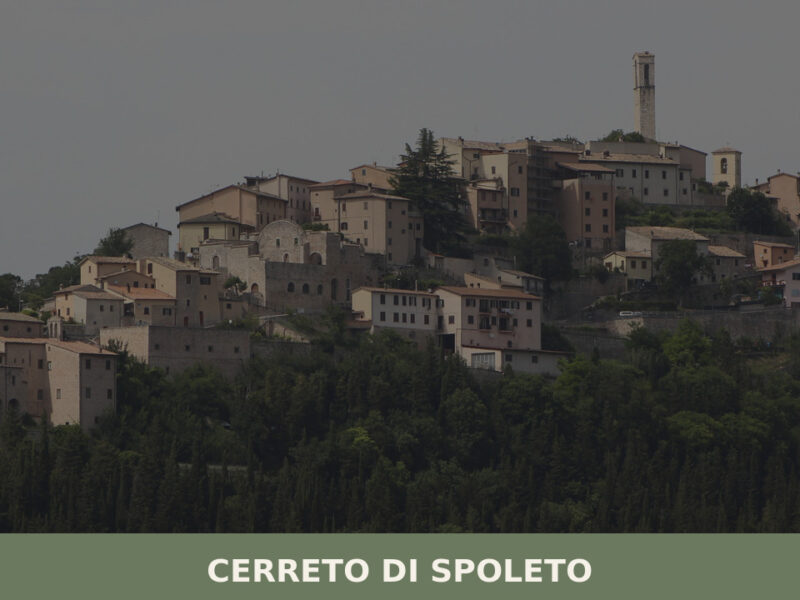
Visitors who complete the main sites of Bastia Umbra, Umbria, Italy and wish to extend their trip into less-travelled parts of the region might consider the medieval village of Cerreto di Spoleto, south of Bastia along the Valnerina, which preserves Romanesque architecture in a markedly different landscape of gorges and forested slopes. Further north, Scheggia e Pascelupo sits along the ancient Via Flaminia corridor and offers a contrasting perspective on how Umbrian settlements developed along Roman road infrastructure rather than on the valley floor.
Frequently asked questions about Bastia Umbra
What is the best time to visit Bastia Umbra?
Spring (April–June) and early autumn (September–October) offer the most pleasant conditions, with mild temperatures and the Umbrian Valley at its most photogenic. September is particularly rewarding: the feast of Saint Michael the Archangel (Arcangelo Michele), patron of Bastia Umbra, falls on 29 September and brings celebrations centred on the Church of San Michele Arcangelo. The trade fair Agriumbria, held annually since 1969, typically takes place in late March and draws agricultural and rural visitors from across the region.
What are the historical origins of Bastia Umbra?
Bastia Umbra occupies land that was once marshland — the so-called Lacus Perusinus — drained at the end of the 5th century by two Perugian nobles, Speme and Domizio, with permission from Theodoric, king of Italy. The settlement, first documented in 13th-century records under the names Insula Cipi, Insula Vetus, and Insula Romana, was fortified with bastions and towers in the 14th century — giving rise to the name Bastia. Control shifted between Perugia and Assisi before the town passed to the Papal State in 1580, remaining so until Italian unification.
What to see in Bastia Umbra? Main monuments and landmarks
The Collegiate Church of Santa Croce (1295) houses a Polyptych by Niccolò Alunno (1499) and works by Tiberio d'Assisi; its façade features bichrome Monte Subasio stone. The Romanesque Church of San Paolo delle Abbadesse (11th–12th century), near the municipal cemetery, is where Clare of Assisi sheltered in 1212. The Fortress Complex houses a Benedictine monastery with a battlement walkway and the Church of Sant'Anna (1602). The Church of San Rocco, near Porta Romana, contains a banner attributed to Dono Doni. Admission to churches is generally free; hours vary seasonally.
Are there museums, churches or historic buildings to visit in Bastia Umbra?
Bastia Umbra's main historic buildings are its churches. Santa Croce, restored after the 1997 earthquake and reopened in 2012, contains the highest concentration of artworks, including stained glass by the Moretti-Caselli family (1903 and 1923). The Benedictine monastery within the northern fortress offers a rare opportunity to walk surviving 14th-century battlements. San Paolo delle Abbadesse retains Perugian-school frescoes in its apse. The current parish church, San Michele Arcangelo (consecrated 1962), holds baptistery works by Vincenzo Rosignoli. Contact the local Pro Loco for current opening schedules.
What can you do in Bastia Umbra? Activities and experiences
Bastia Umbra's central position — 13 km from Perugia and 4.8 km from Assisi — makes it an efficient base for day trips across central Umbria. Locally, visitors can follow the Franciscan historical trail connecting San Paolo delle Abbadesse to the broader Assisi circuit. The annual Agriumbria fair (late March) offers direct access to Umbrian agricultural producers. The shop-fitting and furniture district that developed from the 1970s onwards is of interest to trade visitors. Walking the battlement path of the Benedictine monastery fortress provides a distinctive architectural experience within the town itself.
Who is Bastia Umbra suitable for? Families, couples, hikers, solo travelers?
Bastia Umbra suits travellers who prefer a functioning town with genuine local life over a tourist-facing hilltop village. Its flat terrain and good road and rail connections make it accessible for families and visitors with limited mobility. Couples and culture-focused travellers will appreciate the concentration of medieval and Renaissance church art. Historians and Franciscan heritage enthusiasts will find the Church of San Paolo delle Abbadesse — where Clare of Assisi sheltered in 1212 — particularly significant. It works well as a practical base for anyone exploring the Perugia–Assisi corridor without the higher accommodation costs of either city.
What to eat in Bastia Umbra? Local products and specialties
Bastia Umbra sits in the Umbrian Valley's agricultural heartland. Torta al testo — flatbread cooked on a stone disc, filled with cured meats or sautéed greens — is the most characteristic street food of the valley. Strangozzi pasta dressed with black truffle from the nearby Umbrian hills and umbrichelli with wild boar ragù appear on local menus. Porchetta, boneless pork roasted with wild fennel and garlic, is a fixture at markets and festivals. The territory falls within the cultivation zone of the Olivo Assisano olive variety, and locally pressed extra-virgin olive oil is widely available.
Nearby Villages near Bastia Umbra
In Umbria More villages to discover
Fratta Todina
Hills
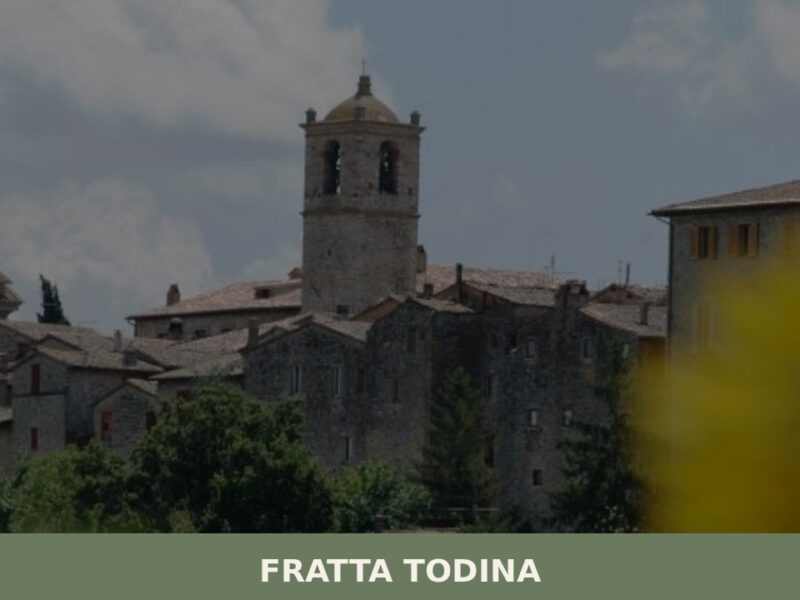
Morning light falls across a line of stone façades, turning the tufa walls the colour of raw honey. A church bell marks the hour from somewhere above the rooftops, its sound carrying across the Tiber valley below. Fratta Todina sits on a low hill in the province of Perugia, home to just 1,817 residents — […]
Cannara
 Plains
What to see in Cannara, Umbria, Italy: Roman ruins, medieval churches, and the Festa della Cipolla. Population 4,341. Discover top attractions and how to get there.
Castel Ritaldi
Hills
What to see in Castel Ritaldi, Italy: 5 top attractions, local food, and travel tips for this Umbrian village at 297 m. Discover frescoes, medieval churches & more.
Scheggia e Pascelupo
Hills
Scheggia e Pascelupo sits at 580 metres above sea level along the ancient Via Flaminia, the Roman consular road that connected Rome to Rimini from 220 BC. The municipality, formed by merging two distinct settlements in 1879, counts 1,232 inhabitants across a territory of deep gorges and limestone ridges in the province of Perugia. For […]

Orvieto
Hills
Orvieto stands on a dramatic tufa mesa above the Paglia Valley, home to a great Gothic cathedral and over 3,000 years of layered history. A essential destination in southern Umbria.
Monteleone di Spoleto
 Mountain
Monteleone di Spoleto: discover the history and art of this Umbrian village. Visit the museum and the Church of San Francesco. Plan your visit now!
Castiglione del Lago
Hills
 Lake
Lake
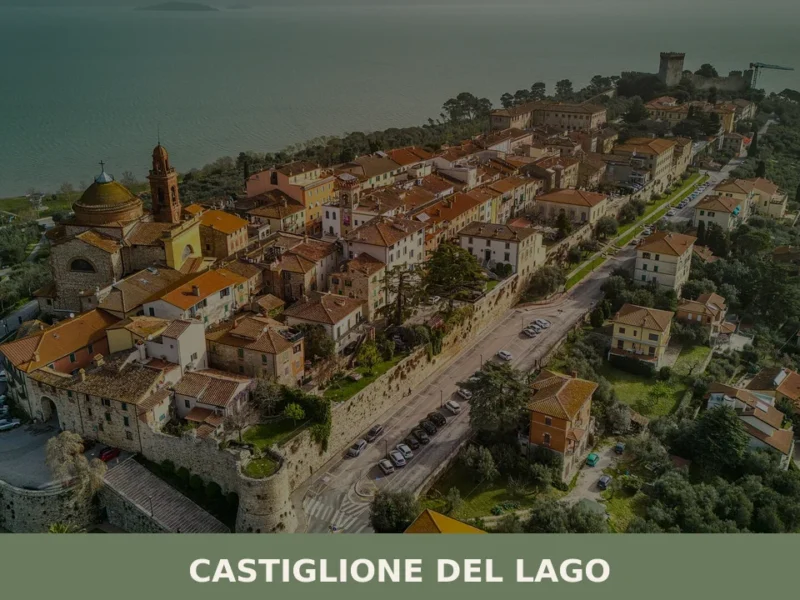
What to see in Castiglione del Lago, Umbria, Italy: explore a fortress, a frescoed palace, and Lake Trasimeno from 304 m altitude. Discover top things to do.
Terni
Lake
Plains
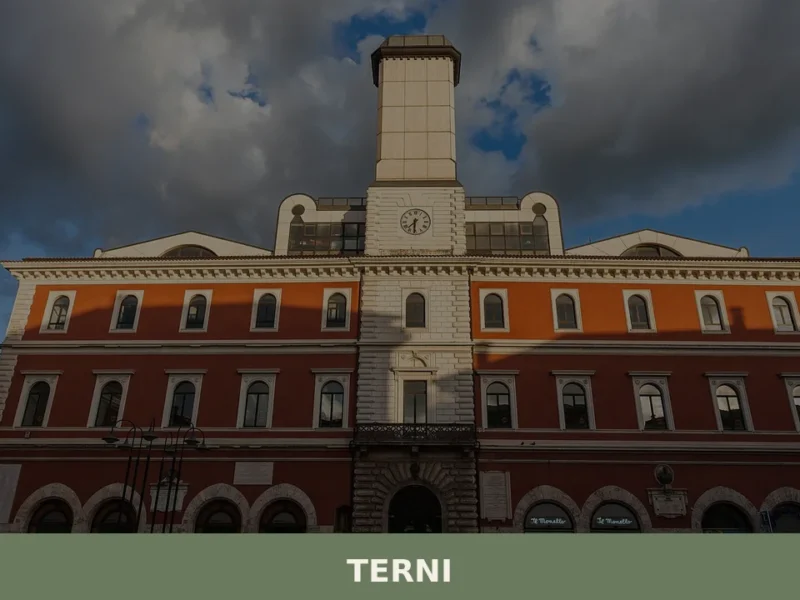
What to see in Terni: from the Marmore Falls to the historic center, discover the 5 top attractions. Plan your visit with the complete travel guide.
Spello
 Sea
Sea
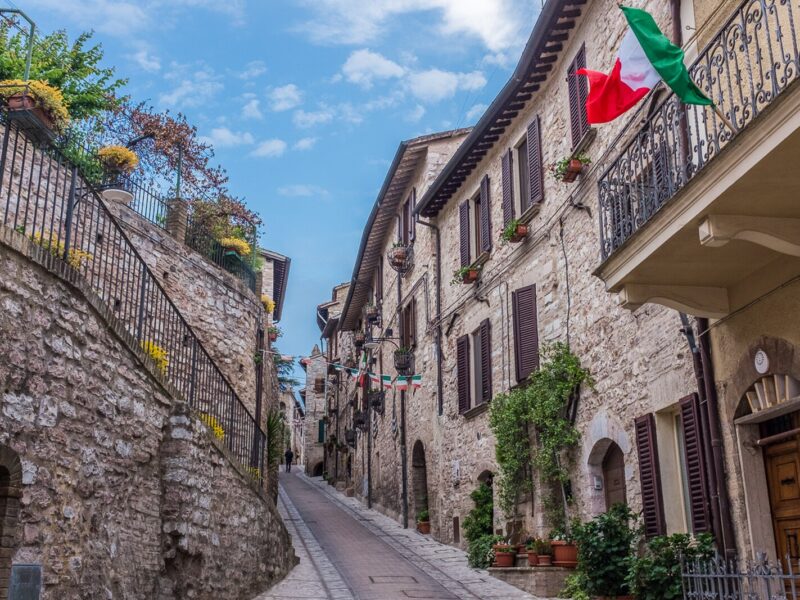
What to see in Spello, Umbria, Italy: Roman gates, mosaic villa, medieval walls at 314 m. Discover top attractions, local food and how to get there.
Paciano
Hills
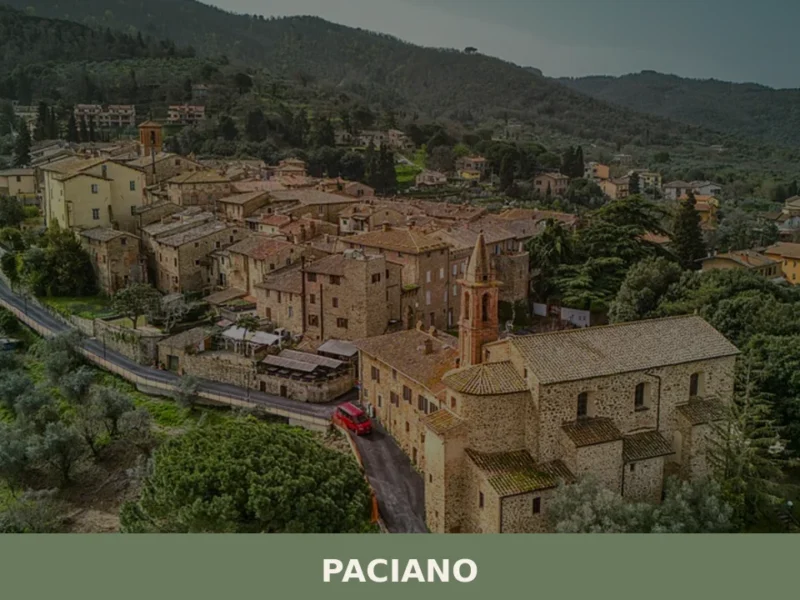
As the early morning mist begins to lift from the rolling hills, a faint scent of woodsmoke and damp earth hangs in the air. The first rays of sunlight strike the ancient stone of Paciano, illuminating a quiet street where a lone figure sweeps the flagstones outside a modest doorway. Here, life unfolds with a […]
🧀 Italian traditional products
🏡 Know Bastia Umbra better than we do?
If you’re a local or have been there, your knowledge matters: add what’s missing or fix a detail on this page.