


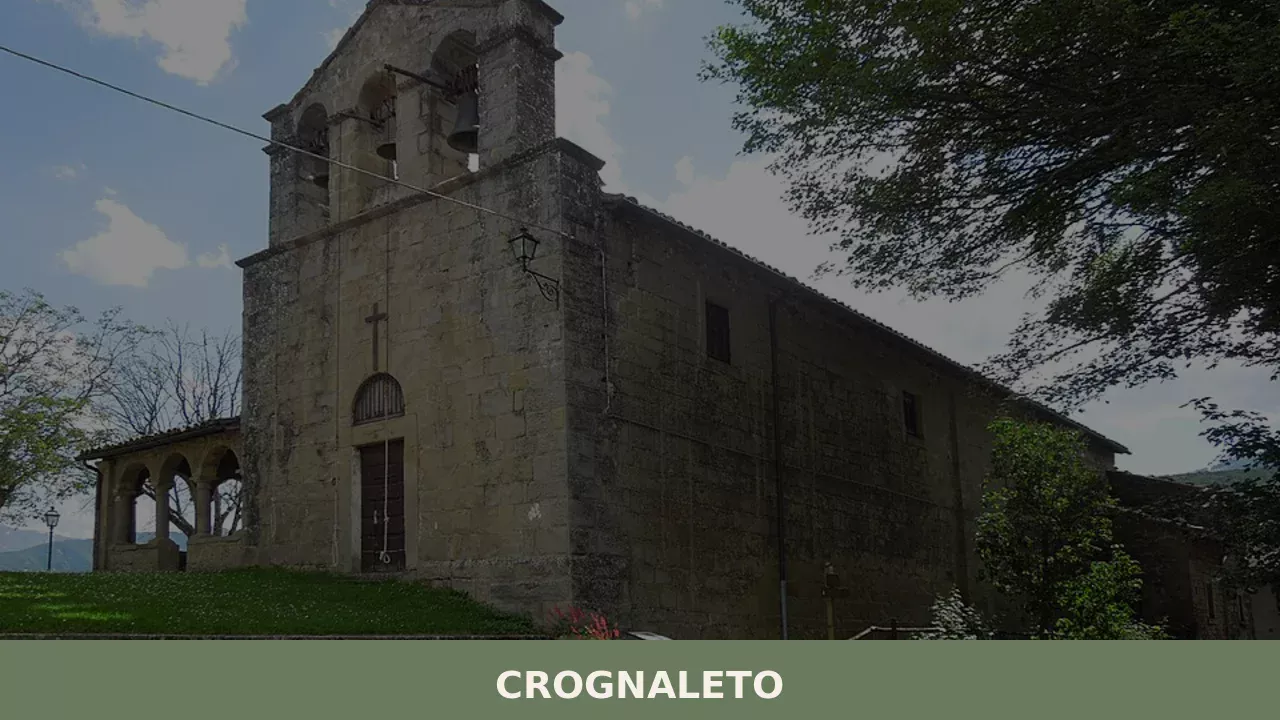
Crognaleto
Crognaleto, a scattered municipality in the province of Teramo, stands out for its average altitude of 1094 meters above sea level, positioning itself as one of the highest centers in the Gran Sasso d’Italia massif. Its territory, extensive and fragmented into over twenty hamlets, offers a diverse panorama of mountain landscapes and rural views that […]
Discover Crognaleto
Crognaleto, a scattered municipality in the province of Teramo, stands out for its average altitude of 1094 meters above sea level, positioning itself as one of the highest centers in the Gran Sasso d’Italia massif. Its territory, extensive and fragmented into over twenty hamlets, offers a diverse panorama of mountain landscapes and rural views that define the identity of this part of Abruzzo. For those wondering **what to see in crognaleto**, the municipality proposes an itinerary that ranges from local history to the untouched nature of the Gran Sasso and Monti della Laga National Park, combining cultural and hiking interests.
History and origins of Crognaleto
The name “Crognaleto” derives, according to toponymic studies, from the dialect term “corgnale,” which identifies the dogwood, a fruit tree common at these altitudes. This botanical root suggests an ancient and deep connection between the place and its characteristic flora. The origins of the inhabited center are lost in the Middle Ages, when the territory was part of a vast barony that controlled numerous feuds and castles. Historical documents attest to the existence of settlements as early as the 11th century, with the first nuclei developing around fortifications and rural churches, elements that can still be found in the various hamlets today. The history of Crognaleto has often been linked to the events of the Kingdom of Naples and, subsequently, to the internal dynamics of Abruzzo Ulteriore Primo, maintaining a predominantly agro-pastoral economy that shaped the landscape and customs. For further information on its history and territory, you can consult the
Wikipedia page dedicated to Crognaletoor the
official website of the municipality.
What to see in Crognaleto: 5 unmissable attractions
Church of Saints Peter and Paul
The main place of worship in the capital, dating back to the 18th century, the Church of Saints Peter and Paul is the center of local religious life. Its simple but solid architecture reflects mountain construction techniques, and inside it houses devotional elements that tell the story of the community’s faith.
The Historic Hamlets
The municipality of Crognaleto is a mosaic of hamlets, each with its own distinctive features. Macchiatornella, for example, preserves an urban layout with stone terraced houses, while Tottea features the remains of a medieval tower and the Church of San Silvestro, evidence of past eras.
Apennine Wolf Museum
Located in the hamlet of Cesacastina, this museum offers an educational journey dedicated to the Apennine wolf, a symbolic species of the Gran Sasso and Monti della Laga National Park. Through exhibitions and informative panels, visitors can learn more about the biology, ecology, and conservation of this predator.
Church of Santa Maria Assunta in Nerito
In the hamlet of Nerito, the Church of Santa Maria Assunta is another example of the area’s religious architecture. Although it has undergone modifications over the centuries, it maintains a structure that recalls local building traditions, with a bell tower that rises above the inhabited area.
The Sentiero Italia and the Hiking Network
The territory of Crognaleto is crossed by sections of the CAI’s Sentiero Italia and numerous hiking trails. These routes allow visitors to explore the beech forests, high-altitude pastures, and minor peaks of the Gran Sasso, offering views of the Abruzzese mountain landscape.
Typical cuisine and local products
The gastronomy of Crognaleto, like that of much of the Abruzzese inland, is deeply connected to products of pastoralism and mountain agriculture. Among the distinctive flavors, Pecorino cheeses, often aged in caves, and fresh ricotta stand out as basic ingredients for many preparations. Cured meats, such as ventricina and pork sausages, are the result of traditional methods passed down from generation to generation. There are also sheep and pork meats, cooked according to robust and flavorful recipes. Dishes such as “maccheroni alla chitarra,” seasoned with meat ragù, or “pallotte cacio e uova,” meatballs made from cheese and eggs, fried and then passed in sauce, represent the center of local dining. In autumn, the area offers porcini mushrooms and truffles, used to enrich first and second courses. Mountain honey, produced by bees that collect nectar in high-altitude pastures, is another specialty, as are lentils and potatoes, cultivated in small flat areas and mountain gardens, which are used in hearty soups and side dishes.
When to visit Crognaleto: the best time
Crognaleto offers various visiting opportunities depending on the seasons. Summer, particularly the months of July and August, is ideal for those who wish to explore mountain trails and enjoy milder temperatures compared to the plains. On June 29, for the patron saint festival of Saints Peter and Paul, the village comes alive with religious celebrations and community gatherings. Spring and autumn are suitable periods for less strenuous excursions, with nature transforming, offering blooming flowers or the colors of the foliage. Autumn is also the time for mushroom and chestnut harvesting. Winter, with snow often covering the landscape, transforms Crognaleto into a place for those seeking tranquility and winter sports in nearby equipped resorts, although the village itself is not a primary ski center.
How to get to Crognaleto
Reaching Crognaleto generally requires the use of a car, given its mountain location. *
By car: From Rome, take the A24 motorway towards Teramo, exiting at Montorio al Vomano or L’Aquila Est, then continue on provincial roads towards Crognaleto. From Teramo, the village can be reached in about 45 minutes via the SP45A. *
By train: The nearest train station is Teramo. From there, it is necessary to continue by public bus service or private transport. *
By plane: The most convenient airport is Abruzzo Airport (PSR) in Pescara, about 100 km away. Alternatively, Rome airports (Fiumicino FCO or Ciampino CIA) are about 150-180 km away.
Other villages to discover in Abruzzo
Abruzzo, with its variety of landscapes and the richness of its history, offers numerous other villages that are worth visiting. Among these, in the center of the province of Chieti, is
Canosa Sannita, a center that preserves traces of its past and stands out for its wine production. Its streets and churches tell a different story, linked to the hills and agricultural traditions of the Val di Foro. Moving towards the Majella massif,
Fara San Martinopresents itself as a village known for its high-quality pasta production, thanks to the spring waters of the Verde river. The town is also a starting point for excursions into the Gola di San Martino, a spectacular canyon that leads to the Hermitage of San Martino in Valle, offering an experience combining nature and spirituality.
In Abruzzo More villages to discover
Brittoli
Brittoli has 258 inhabitants today — fewer than it takes to fill a regional railway carriage. Yet this small settlement at 779 metres above sea level, in the western part of the province of Pescara, retains a building fabric that dates in part to the 12th century and a strategic position on the ridge separating […]
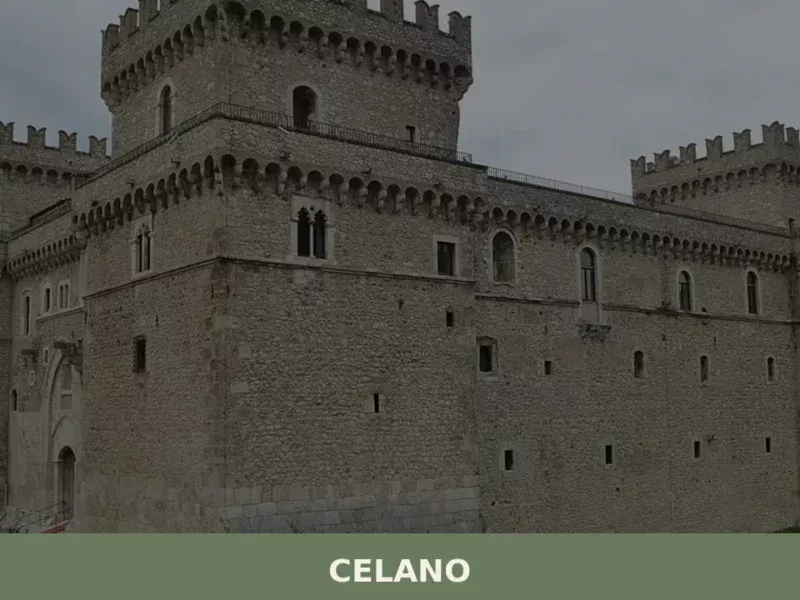
Celano
The Castello Piccolomini in Celano, with its four corner towers and curtain wall enclosing a perimeter of over one hundred metres, commands the Fucino plain from an altitude of 840 metres. Anyone wondering what to see in Celano will find an unequivocal starting point here: a fortress that has endured six centuries of history, earthquakes […]
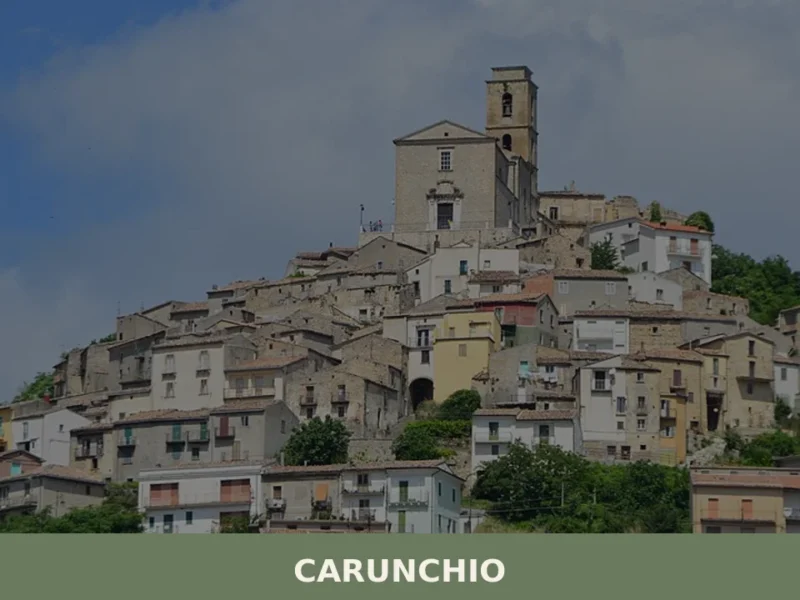
Carunchio
Carunchio is home to 565 inhabitants, spread along a ridge at 714 metres above sea level in the southern part of the province of Chieti, close to the border with Molise. The municipal territory extends between the Treste river and the Elce stream, two watercourses that have shaped the morphology of these clay hills over […]





📝 Incorrect information or updates?
Help us keep the Crognaleto page accurate and up to date.