


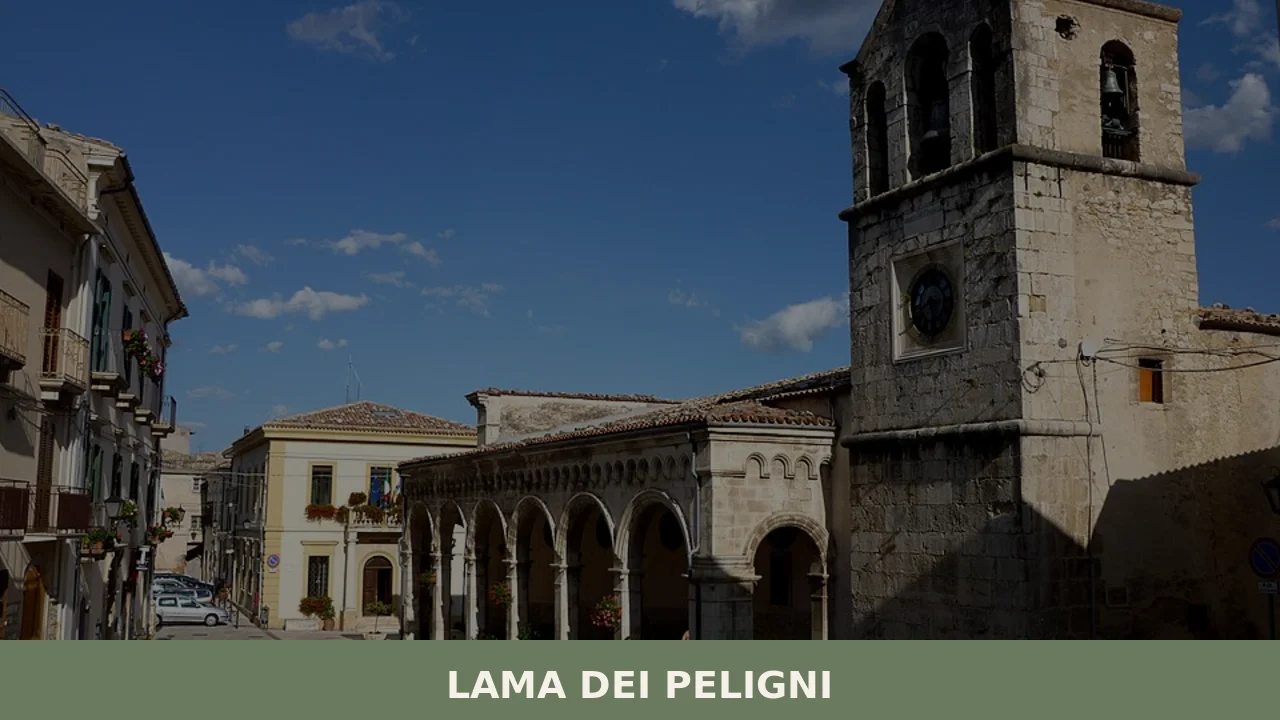
Lama dei Peligni
What to see in Lama dei Peligni: village at 669 m, Grotta del Cavallone, Majella National Park trails and arrosticini PAT. Plan your visit with this complete guide.
Discover Lama dei Peligni
At 669 metres above sea level, on the southern slopes of the Majella massif, Lama dei Peligni is a municipality in the province of Chieti with just over 1,057 inhabitants. It has a compact urban layout, a church dedicated to Saint Sebastian, and direct access to the Majella National Park.
Those looking for information on what to see in Lama dei Peligni will find a territory where the national park fundamentally reshapes the visitor experience: trails, wildlife and rock formations become as central as the monuments of the historic centre. The town has historically belonged to the land of the Peligni, the Italic people who inhabited the Aterno-Sagittario basin before the Roman conquest.
History and Origins of Lama dei Peligni
The town’s name already contains two distinct layers of history.
Lama derives from the medieval Latin lama, a term referring to a marshy area or a low-lying hollow in the terrain — a common element in central-southern Apennine place names. The addition of dei Peligni refers to the Samnite tribe of the Peligni, an Oscan-speaking Italic people who dominated this part of Abruzzo before the Roman conquest. The ethnic reference in the name was probably reintroduced or consolidated during the medieval period, when it became common practice to distinguish settlements through geographical or historical qualifiers.
The territory falls within the area known as the Conca Peligna, the drained lake basin that in Roman times included Corfinium, capital of the Italic League during the Social War of 90–88 BC.
The medieval history of the village is bound up with the fortunes of the local lordships that successively controlled the southern Majella. As historical sources document, the system of castles and rural communities in the area was structured around the control of seasonal pastures and transhumance routes, which linked the Abruzzo highlands to the Apulian plains. Lama dei Peligni lay along one of these corridors, a position that shaped both its demographic growth and its vulnerability to conflict between competing lordships.
The village came under Angevin control during the thirteenth century, along with most Abruzzo fiefs following the defeat of the Swabian rulers.
In the modern era, Lama dei Peligni followed the administrative transformations of the Kingdom of Naples and later the Kingdom of the Two Sicilies, becoming part of the province of Chieti after Italian Unification in 1861.
The twentieth century brought the demographic shifts common to many Apennine communities: progressive depopulation reduced the population from the peaks recorded in earlier centuries. The establishment of the Majella National Park in 1991, with its final approval as a national park in 1995, marked a turning point for the local economy, directing a share of resources toward nature tourism and the development of the municipality’s environmental heritage.
What to See in Lama dei Peligni: Main Attractions
Majella National Park Visitor Centre
The Majella National Park Visitor Centre in Lama dei Peligni is one of the main entry points to the entire park system on the southern Majella. The facility provides information on the fauna, flora and geology of the massif, with particular focus on the Marsican bear and the Apennine wolf that inhabit the protected area. Any visit to the territory is best started here, since the maps and materials available help visitors navigate the official trail network safely.
The centre is strategically positioned in relation to the main hiking access points on the southern section of the park.
Grotta del Cavallone
The Grotta del Cavallone is the principal natural attraction in the Lama dei Peligni area and one of the largest karst cavities in Abruzzo.
Reached by a cable car ascending from the valley floor, the cave once hosted summer performances of Gabriele d’Annunzio’s tragedy La figlia di Iorio, whose dramatic action the author partly set within the cave itself. The interior chambers reach considerable dimensions, with stalactites, stalagmites and calcite formations documented by speleologists. Guided tours cover the main sections of the cavity, which have been open to the public for decades. Knowing that a natural cave served as a venue for nationally significant theatrical productions changes the way you look at it.
Church of San Sebastiano
The church dedicated to Saint Sebastian, the town’s patron saint whose feast falls on 20 January, is the religious focal point of Lama dei Peligni’s historic centre. The building retains architectural elements from its medieval and early modern construction phases, with subsequent interventions that partially altered the façade. Inside, wooden furnishings and devotional works document the continuity of local worship.
The church’s position within the village’s urban fabric also reveals the planning logic of the historic centre, with the main square oriented around it as both a civic and religious reference point.
Viewpoint over the Valle dell’Aventino
From the southern side of Lama dei Peligni, views open out over the Valle dell’Aventino, the river that descends from the Majella toward Lake Bomba.
The panoramic points accessible on foot from the village allow visitors to take in the succession of ridges that defines this sector of the Abruzzo mountains, with the limestone buttresses of the Majella dominating the landscape to the north. Walkers following the park trails in this area move through mature beech forest alternating with high-altitude grassland. The view over the Aventino is particularly clear on the days following Atlantic weather fronts, when the air is completely washed clean.
Hiking Routes on the Southern Majella
The municipal territory of Lama dei Peligni provides direct access to several Majella National Park trails, catalogued and signposted by park staff.
The routes pass through mid- and high-mountain environments, reaching altitudes above 1,500 metres in the section of the massif that falls under the park’s jurisdiction in this sector. The trail network connects Lama dei Peligni to other park municipalities, making multi-day hikes with mountain-hut accommodation possible. Understanding what to see in Lama dei Peligni therefore means looking beyond the village itself and treating the entire system of park access points as an integral part of what the area has to offer.
Local Food and Products of Lama dei Peligni
The cuisine of Lama dei Peligni belongs to the gastronomic tradition of the Abruzzo interior, shaped by the dual influence of mountain life and pastoral farming.
The southern Majella territory has historically produced sheep and cattle meat, sheep’s and cow’s milk cheeses, legumes and cereals grown on the gentler slopes of the valley. Local cooking relies on no exotic ingredients or elaborate techniques: its value lies in the quality of the raw materials and the simplicity of the preparations, handed down within families from one generation to the next.
The pastoral economy that long defined this side of the Majella is directly reflected in the dishes of the tradition.
Among the dishes found on tables throughout this part of the province of Chieti, arrosticini hold a central place: skewers of diced sheep meat grilled over an elongated brazier called a furnacell, served in generous quantities and eaten directly from the skewer. Pasta alla chitarra, made by pressing an egg-based dough sheet through a frame strung with metal wires, is traditionally served with lamb ragù or with tomato-and-seasonal-vegetable sauces. Dishes based on inland legumes are equally present, particularly lentils and grass peas cooked into thick soups with garlic and olive oil, alongside festive sweets that include local versions of the baked goods typical of inland Abruzzo.
Among the officially recognised products found in this area of the region, the territory counts several certified specialities. Arrosticini (PAT) — provinces: L’Aquila, Chieti, Pescara, Teramo — are the most iconic product of the entire Abruzzo pastoral tradition and find one of their most established production contexts in the Majella area.
Caciocavallo abruzzese (PAT) — provinces: L’Aquila, Chieti, Pescara, Teramo — is an aged stretched-curd cheese made from whole cow’s milk, shaped like a flask with a small rounded head at the top.
Caciotta vaccina frentana (PAT) — municipalities: Lanciano, Atessa, Ortona, Vasto, Chieti — is a fresh or semi-aged cheese from the Frentano dairy tradition, produced with white cow’s milk. Cacio di vacca bianca and Caciotta di vacca (PAT) — municipalities: Chieti, Lanciano, Vasto, Ortona — complete the picture of the territory’s certified dairy production. Aglio rosso di Sulmona (PAT) — municipalities: Sulmona, Introdacqua, Pratola Peligna, Pacentro — is a native variety with a red-violet bulb, grown in the Conca Peligna just a few kilometres from Lama dei Peligni, and frequently used to flavour traditional local dishes.
The best opportunities to buy local products directly come during the summer and autumn village festivals, when producers set up their stalls in the centre of the village. The autumn period, between September and October, coincides with the harvest and early processing of several inland products, and is when local markets offer the widest range of aged cheeses, cured meats and preserves made according to the traditional methods recorded in the area’s historical recipes.
Festivals, Events and Traditions of Lama dei Peligni
The most important patron saint’s celebration of the year falls on 20 January, the feast day of Saint Sebastian.
The celebration follows the traditional liturgical calendar with a solemn mass in the parish church, followed by a procession through the streets of the historic centre carrying the statue of the saint.
Saint Sebastian is a widely venerated patron across many municipalities in inland Abruzzo, and the 20 January feast coincides with the harshest period of the mountain winter, when snow can still cover the rooftops of the village. The local community gathers around this occasion with a level of participation that retains a strongly identity-based character, rooted in the continuity of the devotion over the centuries.
Throughout the year, the patron saint’s celebration is joined by initiatives linked to the Majella National Park, which organises educational events, guided trekking days and wildlife observation activities within the municipal territory. Summer also brings the gastronomic events typical of the Abruzzo interior, where local products are offered for public tasting.
The communal dimension of Lama dei Peligni’s festivals is that of a small town where every collective event carries specific weight in community life, strengthening ties among residents and opening the village to visitors who choose to stay beyond a trip to the cave.
When to Visit Lama dei Peligni and How to Get There
The best period to explore what to see in Lama dei Peligni in full runs from May to October.
In spring, the park trails are walkable without winter gear and the vegetation is at its most lush, with the alpine flowering that characterises the high-altitude pastures. Summer, between June and August, is the peak season for hiking and for visits to the Grotta del Cavallone, when the cable car is running and park services are fully operational. Those who prefer fewer visitors can opt for September or October, months when the climate remains mild, the woodland takes on its autumn colours and visitor numbers fall noticeably.
Winter suits only those who want to experience the more self-contained side of village life, with snow transforming the Majella landscape. For updates on local events and municipal services, the Lama dei Peligni municipal website provides up-to-date official information.
If you are travelling by car, the most convenient route involves exiting at the Lanciano toll junction on the A14 Adriatic motorway, then taking an inland route of approximately 40 kilometres toward the interior through the Valle del Sangro. Alternatively, those arriving from inland Abruzzo can use the SS84 Frentana road.
The nearest railway station with regular connections is Lanciano on the Adriatic line, from which onward travel requires private transport.
The closest airport for those flying in is Abruzzo Airport in Pescara, approximately 90 kilometres away, with car rental services available directly at the terminal. The drive from Pescara takes around one hour and fifteen minutes, according to major navigation platforms.
Other Villages to Explore in Abruzzo
Those who want to extend their Abruzzo itinerary after discovering what to see in Lama dei Peligni have a range of equally worthwhile destinations across the region.
Vasto, overlooking the Adriatic in the same province of Chieti, offers a sharp contrast to the mountain setting of Lama dei Peligni: here the coastal headland, the historic centre with the Palazzo D’Avalos and the trabocchi coastline create an entirely different experience, well suited to travellers who want to combine mountains and sea within a single Abruzzo trip.
Further toward the Sirente-Velino massif, Celano offers a visit to the Piccolomini Castle, one of the best-preserved fortresses in the region, with the Celano Gorge just a few kilometres away and equally impressive from a natural standpoint.
Moving toward the western side of the Abruzzo Apennines, Carsoli serves as the gateway to the Valle dell’Aniene and the border with Lazio, with a historical heritage and an urban fabric that reflect successive layers of settlement from the medieval period onward.
Finally, for those drawn to small villages with a distinct mountain identity, Corvara, within the Majella National Park, shares with Lama dei Peligni the character of a small mountain municipality inside the park, while offering its own distinct landscape and architectural features.
An itinerary linking these four villages allows you to cross Abruzzo from east to west, taking in the coast, the central highlands and the mountains in a single coherent route.
In Abruzzo More villages to discover
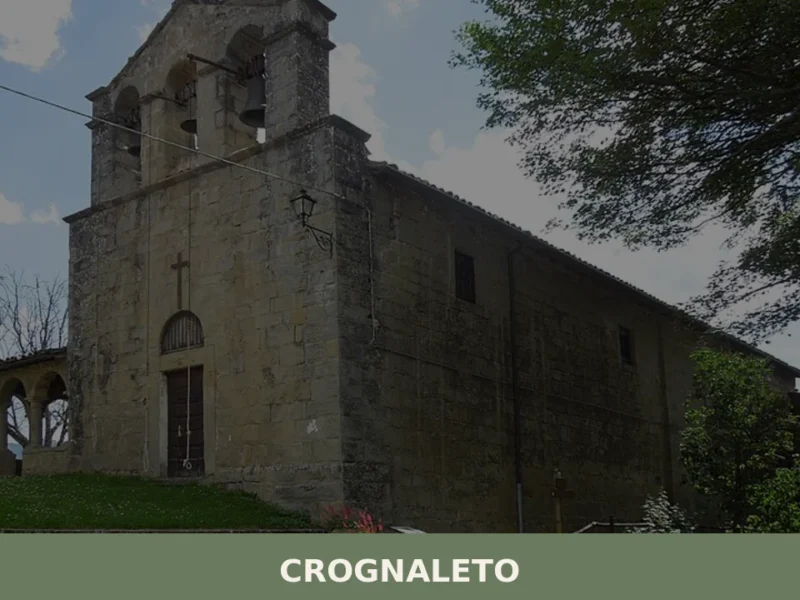
Crognaleto
Crognaleto, a scattered municipality in the province of Teramo, stands out for its average altitude of 1094 meters above sea level, positioning itself as one of the highest centers in the Gran Sasso d’Italia massif. Its territory, extensive and fragmented into over twenty hamlets, offers a diverse panorama of mountain landscapes and rural views that […]
Canosa Sannita
At 231 metres above sea level, on the plain that opens between the Maiella massif and the Teatine coast, Canosa Sannita is home to 1,268 inhabitants spread across an agricultural landscape where the cultivation of vines and olive trees marks the rhythm of the seasons. The village’s very name carries a precise indication: a reference […]
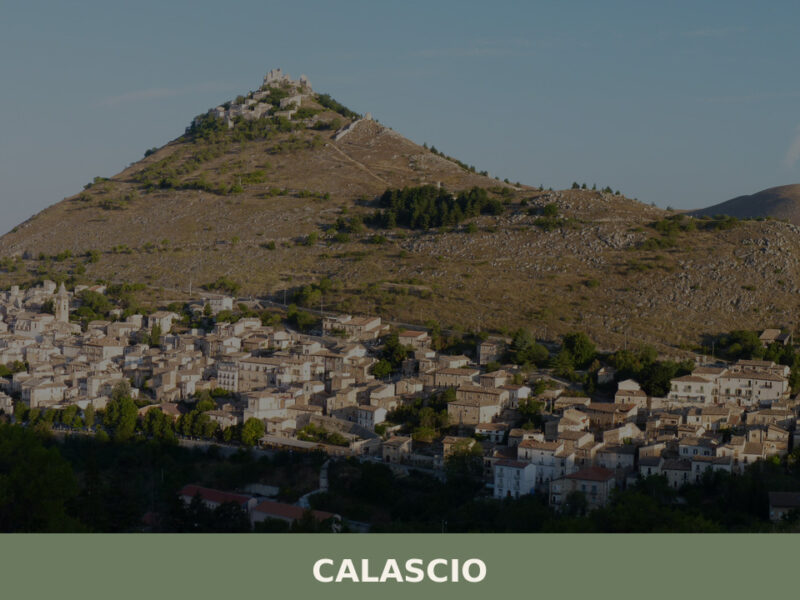
Calascio
Morning light catches the limestone walls of Rocca Calascio before it reaches the village below, turning the fortress a pale gold against the dark mass of the Gran Sasso. At 1,210 metres above sea level, the air is thin and sharp, carrying the sound of wind through empty doorways. Only 127 people live here year-round, […]


📝 Incorrect information or updates?
Help us keep the Lama dei Peligni page accurate and up to date.