


Latisana
 Plains
Latisana shaped medieval trade along the Tagliamento River for centuries. Visit for its Venetian architecture, ancient port history, and the lagoon at Aprilia Marittima.
Latisana Friuli-Venezia Giulia: History, Attractions and Travel Tips
The Tagliamento slides past quietly here, its broad gravel banks catching the afternoon light in shades of silver and amber. A medieval seal once bore the words Sigillum Comunis Portus Latisanae, and the memory of salt merchants, Carnic timber rafts, and pilgrims crossing toward northern Europe still seems to hang in the air above the main square, where Venetian-era palaces stand shoulder to shoulder with the parish church.
Latisana Friuli-Venezia Giulia rewards visitors with two things that are rare together: a genuinely layered history stretching from Roman road stations to Venetian feudal politics, and immediate access to the Marano Lagoon and the Adriatic coast just a few kilometres to the south. Sitting at 7 metres above sea level in the lower Friulian plain, the town counts roughly 13,133 residents and belongs to the province of Udine.
History and Origins of Latisana Friuli-Venezia Giulia
The name itself points to Rome. Scholars trace Latisana to a predial toponym, meaning it derived from the name of a Roman colonist — most likely Atisius or Tisius — who received a land grant during the centuriation of the Aquileian territory after legionary service. The earliest possible written trace appears in a fourth-century pilgrim’s diary, the Itinerarium Burdigalense of 333 AD, which records a mutatio called Apicilia on the ancient Via Annia between Iulia Concordia and Aquileia, at a distance consistent with Latisana’s location. Excavations carried out for the town’s water tower later unearthed mosaic tesserae, amphora fragments, and a small jug containing ashes — circumstantial but compelling evidence. As recently as August 2021, drainage work along the Latisanotta canal uncovered the walls of a Roman building dating to the first or second century AD, together with amphora sherds and a bronze fibula.
The first unambiguous documentary mention comes from 17 July 1072, when a knight identified as miles Marcqwart de Lantesana appeared in the consecration record of the Benedictine abbey of Michaelbeuern near Salzburg, listed among the distinguished entourage of the Patriarch of Aquileia. By around 1100 the town had passed under the feudal authority of the Counts of Gorizia, who held it until 1430. Under their lordship Latisana flourished as a river port in the twelfth and thirteenth centuries, trading salt from Cervia, timber from Carnia destined for Venice, grain, wine, livestock, and minerals. A formal document of 27 October 1226 records the port by name for the first time, when Count Mainardo the Elder ceded its revenues to the Patriarch of Aquileia. The commercial energy of those decades was remarkable enough that the Counts authorised the minting of a silver coin, the denaro scodellato of Latisana, inscribed Porto Tisana and bearing the comital lion rampant — seven known specimens survive today.
The fifteenth century brought a decisive political turn. On 28 August 1430 the town formally came under the Republic of Venice, becoming one of the rare terre separate in Friuli — answering directly to the Venetian Senate rather than to the lieutenant in Udine. The feudal rights passed through several noble Venetian families, including the Morosini, the Malombra, and notably the Vendramin, before settling into a consortium structure in which the Mocenigo family held the largest share. Venetian patricians built their palaces around what is now Piazza Indipendenza, and the town’s ecclesiastical standing rose accordingly: Pope Alexander VII elevated Latisana to an abbatial rank in 1655, recognising its numerous churches and three convents. One curious episode punctuates the early modern period: on 6 September 1409, Pope Gregory XII, fleeing the Council of Cividale in disguise during the Western Schism, crossed the Tagliamento at Latisana. His secretary, dressed in papal robes as a decoy, was beaten by a crowd who mistook him for the pontiff — the real Gregory slipped away by boat toward Dalmatia.
What to See in Latisana: Top Attractions
Piazza Indipendenza and the Venetian Palaces
The heart of the old town is a wide, sun-warmed square lined with palazzo facades that date from the sixteenth century onward. When Venetian noble families consolidated their hold on the feudal territory, they invested in stone residences that announced their status. Despite losses from repeated Tagliamento floods and the destruction of the Second World War — which claimed the original Vendramin palace, replaced by the current Palazzo Trevisan — several facades retain their original proportions and decorative stonework. An eighteenth-century watercolour by Antonio Banchieri, which survives in local archives, shows an aerial view of the town and captures monuments now vanished, including the Church of Santa Croce that once stood in the centre of this same square. Standing here, it is easy to understand why thirteenth-century documents called Latisana a civitas — a city — rather than a mere village.
The Church of San Giovanni Battista
Dedicated to the town’s patron saint, San Giovanni Battista, this parish church anchors the religious life of Latisana and contains the most celebrated artwork in the municipality. Inside, a large altarpiece attributed to Paolo Veronese draws art historians and general visitors alike; the painting’s warm palette and monumental figures reflect the confidence of Venetian Renaissance patronage at its height. The church’s architecture has been modified across centuries, but the interior preserves a sense of accumulated devotion — votive offerings, carved side chapels, and the quiet particular to churches that have been in continuous use for half a millennium. The feast of San Giovanni Battista brings the whole community together each year and remains the most important date in the local calendar.
The Tagliamento Riverbanks and Flood Plain Forest
The Tagliamento is considered by ecologists one of the last morphologically intact rivers in the Alps, and its wide braided channel defines the entire western edge of Latisana’s municipal territory. Walking the flood-plain embankments, you move through a landscape shaped as much by natural force as by human history: the river once ran slightly further west than its current course, and its periodic inundations deposited the alluvial soil on which the town sits. Patches of riparian woodland survive in the golena — the strip of land between the river and its levees — remnants of the ancient Silva Lupanica that covered much of this low plain into the early twentieth century. The stretch near the boundary with the Veneto region, where the hamlet of Isola Picchi sits on the opposite bank and is accessible only from Veneto, offers a striking sense of the Tagliamento as a true geographic and administrative frontier.
Aprilia Marittima, Bevazzana, and the Marano Lagoon
Few visitors expect a lagoon within the municipal boundaries of an inland river town, but the southern fringes of Latisana’s long, narrow territory reach the shore of the Marano Lagoon. The localities of Aprilia Marittima and Bevazzana face the wetland area known as Valle Pantani, a mosaic of reed beds, shallow water, and migratory bird habitat. The navigable Litoranea Veneta canal runs along this southern edge, separating the municipality from Lignano Sabbiadoro. For visitors interested in birdwatching or simply in the particular silence of brackish water landscapes, these southern reaches of Latisana offer an experience quite different from the town centre — flat light, fishing boats, and the smell of salt carried inland on a southerly wind.
The Via Annia Commemorative Plaque and Water Tower
Roman infrastructure is not always visible, but Latisana makes a point of acknowledging it. A commemorative plaque on Via Giovanni Bottari, opposite the sports hall, marks the route of the ancient Via Annia, the Roman road that connected Iulia Concordia to Aquileia and carried the pilgrim-diarist of the Itinerarium Burdigalense through what was then the way-station of Apicilia. Nearby, the imposing water tower — built in a period when its foundations cut through precisely the area where Roman artefacts were later recovered — stands as an unintentional monument above layers of buried history. The juxtaposition of nineteenth-century engineering and Roman road archaeology says something characteristic about Latisana: the past here is always just below the surface.
Food and Local Products of Latisana
The cuisine of the lower Friulian plain reflects its dual identity as both a river and a lagoon territory. Fish from the Marano Lagoon — eel, sea bass, grey mullet, and the prized schie, tiny lagoon shrimp — appear regularly on local tables, prepared simply: grilled, marinated, or folded into risotto. Freshwater fish from the Tagliamento, historically significant when the river sustained important fishing rights, appear less frequently today but still surface in traditional recipes, particularly during autumn festivals.
Inland, the agricultural plain produces the staples of classic Friulian cooking. Polenta remains a constant — coarse-ground, poured thick, left to firm up and then grilled over embers. Frico, the region’s iconic dish of fried aged Montasio cheese, appears here in both its crisp wafer form and its softer, potato-enriched variant. Cured meats from the broader Friulian tradition — prosciutto di San Daniele from the hills to the north, local musèt (a cotechino-style sausage) served with boiled turnip, and various smoked cuts — are available at the town’s weekly market and in the osterie clustered around the central square. The area’s proximity to both the Veneto and Slovenia means that the table here absorbs influences from three culinary traditions simultaneously, producing a subtle layering that rewards attentive eating.
Wine production in the lower Friulian plain tends toward the whites of the broader DOC Friuli Latisana appellation, which covers the territory around the town. Varieties such as Tocai Friulano (now officially labelled Friulano), Pinot Grigio, and Chardonnay thrive in the alluvial soils, producing wines that are clean, mineral, and well suited to fish. Local producers range from small family estates to cooperative wineries, and the autumn harvest period brings informal open-cellar events that offer a direct way into the agricultural life of the area. Visitors exploring the wider region might pair a stop here with a visit to ancient Aquileia, where the Roman roots of Friulian viticulture run deepest.
When to Visit Latisana and How to Get There
Late spring and early autumn offer the most comfortable conditions for exploring Latisana on foot. May and June bring mild temperatures, the Tagliamento running full from snowmelt, and the lagoon marshes alive with migratory birds. September and October are equally appealing: the wine harvest animates the countryside, the summer crowds at nearby Lignano Sabbiadoro have thinned, and the flat light of the lower plain turns the riverbanks and wetlands gold. July and August are hot and humid, though the proximity of the coast makes this period workable for visitors combining a cultural itinerary with beach time. Winter is quiet but not uninteresting — the town functions on its own rhythm, and the absence of tourists allows a closer look at daily life in the Bassa Friulana.
Latisana sits on the A4 motorway corridor between Venice and Trieste, making it straightforward to reach by car from either direction. The Latisana-Lignano exit is well signposted. If you arrive by car from Venice, the drive takes roughly one hour; from Trieste, allow around ninety minutes. The town also has a railway station on the Venice-Trieste line, with regional services stopping regularly. From Udine, the regional road network provides a direct connection through the Friulian plain. Visitors using Latisana as a base can reach Aiello del Friuli to the northeast within half an hour, or head deeper into the mountains toward Arta Terme for a full day’s excursion through the Carnic foothills.
| Departure | Distance | Time |
|---|---|---|
| Venice (by car, A4) | approx. 85 km | approx. 60 min |
| Trieste (by car, A4) | approx. 120 km | approx. 90 min |
| Udine (by regional road) | approx. 45 km | approx. 45 min |
| Venice (by train, regional) | approx. 85 km | approx. 75 min |
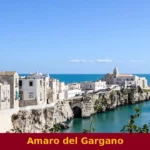
The official municipal website at www.comune.latisana.ud.it carries updated information on local events, market days, and public services. For those planning a longer route through the region, the village of Ampezzo in the Carnic Alps offers a striking contrast to the flatlands of the Bassa, while Amaro provides another quiet stopover in the Tagliamento valley upstream. Latisana sits at the geographic and cultural hinge between the Adriatic coast, the Friulian plain, and the alpine north — a position that made it important for a thousand years, and that still makes it a practical and rewarding base today.
Frequently asked questions about Latisana
Come si raggiunge Latisana in auto o in treno?
In auto, Latisana è raggiungibile dall'autostrada A4 Venezia-Trieste, uscita Latisana, a circa 70 km da Venezia e 90 km da Trieste. In treno, la stazione di Latisana-Lignano Sabbiadoro si trova sulla linea Venezia-Trieste, con collegamenti frequenti da Udine (circa 40 minuti) e Venezia (circa 60 minuti). Da lì il centro storico è raggiungibile a piedi in pochi minuti.
Quando si festeggia il patrono di Latisana e quali eventi si svolgono?
Il patrono di Latisana è San Giovanni Battista, la cui festa liturgica cade il 24 giugno. In questa occasione si tiene la tradizionale festa patronale con celebrazioni religiose nella parrocchiale dedicata al santo. Il 24 giugno coincide con il solstizio d'estate, periodo ideale per visitare la zona anche in vista della vicina costa adriatica e della Laguna di Marano, a pochi chilometri a sud.
Esistono percorsi cicloturistici o naturalistici nei dintorni di Latisana?
Sì. Latisana si trova lungo la pista ciclabile che segue il fiume Tagliamento, inserita nella rete cicloturistica della pianura friulana. A sud, la Riserva Naturale della Foce dell'Isonzo e la Laguna di Marano offrono percorsi naturalistici documentati. La Ciclovia Alpe Adria Radweg, uno degli itinerari ciclistici più famosi d'Europa, transita nella regione, collegando Salisburgo a Grado attraverso il Friuli-Venezia Giulia.
Quanto tempo occorre per visitare Latisana e dove si parcheggia?
Una visita al centro storico di Latisana richiede indicativamente 2-3 ore, sufficienti per piazza Indipendenza, la chiesa di San Giovanni Battista e i palazzi di epoca veneziana. Sono disponibili parcheggi gratuiti nelle aree limitrofe al centro, in particolare lungo le vie adiacenti al fiume Tagliamento. Per escursioni alla Laguna di Marano o alla spiaggia di Lignano Sabbiadoro è consigliabile aggiungere almeno mezza giornata.
Quali sono le specialità enogastronomiche tipiche di Latisana e della pianura friulana?
Il territorio di Latisana rientra nella zona DOC Friuli Latisana, denominazione che comprende vini bianchi come Pinot Grigio, Chardonnay e Friulano, e rossi come Merlot e Refosco dal Peduncolo Rosso. A tavola dominano i prodotti della pianura friulana: frico, polenta, prosciutto di San Daniele DOP (prodotto nella vicina area udinese) e salumi locali. La vicinanza alla laguna porta in tavola anche pesce e frutti di mare freschi.
📷 Photo Gallery — Latisana







🏡 Know Latisana better than we do?
If you’re a local or have been there, your knowledge matters: add what’s missing or fix a detail on this page.