
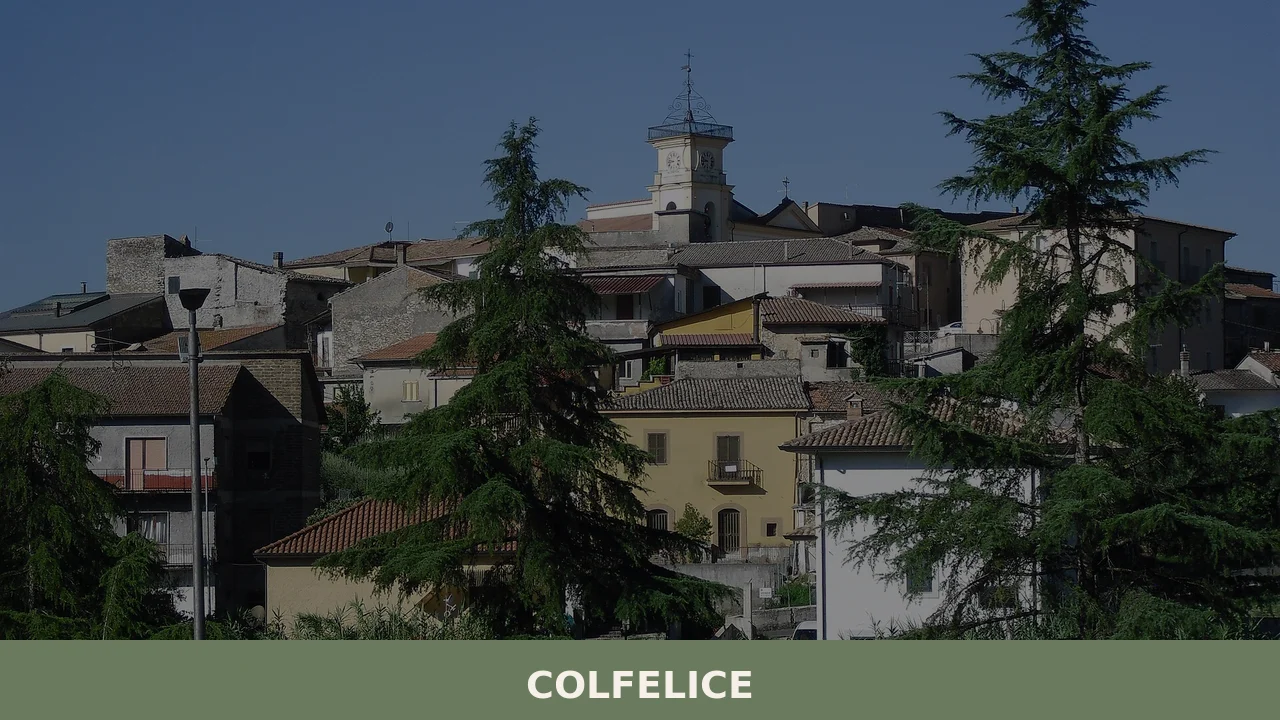
Colfelice
What to see in Colfelice, Lazio, Italy: 1,910 inhabitants, 158 m altitude, 100 km from Rome. Discover the feast of San Gaetano and the Liri Valley plain. Read more.
Discover Colfelice
The Liri plain stretches flat and wide through the southern edge of Lazio, where the foothills of the Apennines lose their elevation and agricultural land takes over.
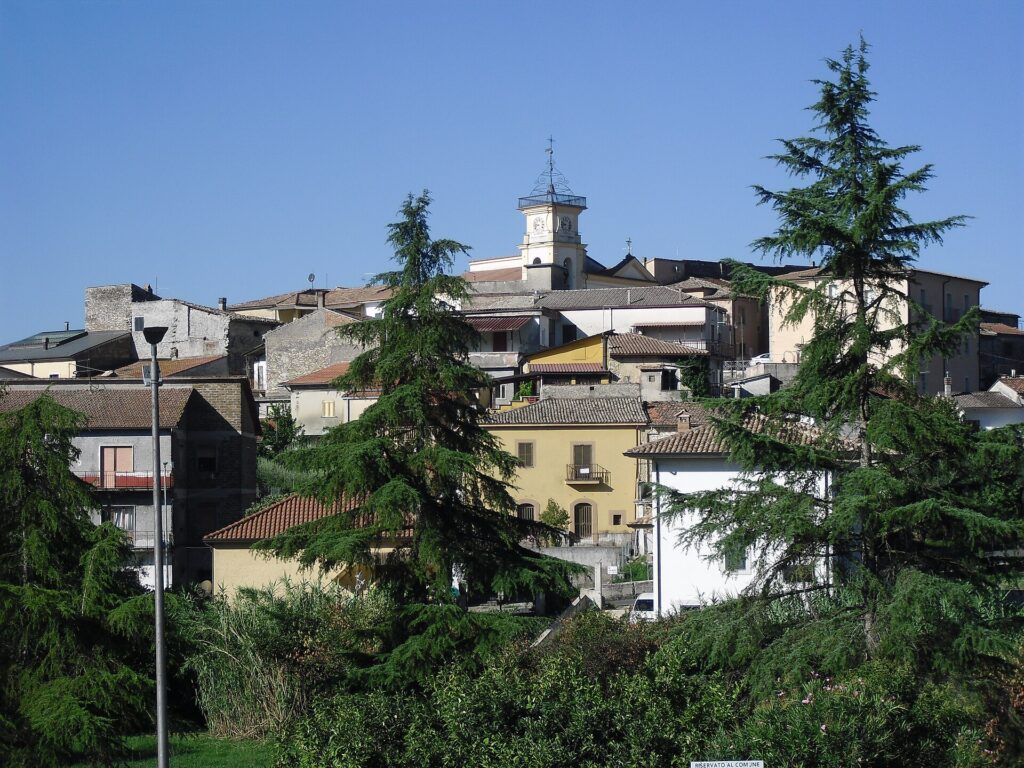
At 158 m (518 ft) above sea level, Colfelice occupies a position typical of the borghi di pianura, the lowland settlements of the Province of Frosinone, where the geometry of fields and the line of surrounding ridges define the view more than any tower or cliff.
With 1,910 inhabitants, the municipality sits at a crossroads between Arce, Rocca d’Arce, Roccasecca and San Giovanni Incarico.
For visitors planning a stop in this part of central Italy, understanding what to see in Colfelice means engaging with a place shaped by its agricultural plain, its local calendar of events and its position within the broader Ciociaria cultural area.
The village stands about 100 km (62 mi) southeast of Rome and 25 km (16 mi) southeast of Frosinone, making it a realistic destination for a day trip from the capital.
Colfelice, Lazio, Italy offers a measured, rural pace with the feast of patron saint Gaetano di Thiene on 7 August as its most concentrated public moment of the year.
History of Colfelice
The name Colfelice derives from the Latin Collis Felicis, meaning “Hill of Felix” or “Happy Hill,” a reference to the slight elevation on which the original settlement developed relative to the surrounding plain.
This kind of toponym is common across the Province of Frosinone, where Latin place names survived through the medieval period and into the modern era with relatively minor phonetic alteration.
The territory that Colfelice occupies forms part of the historical Ciociaria, a cultural and geographical area of southern Lazio whose identity was defined for centuries by transhumance routes, small-scale farming and close connections with the abbeys and religious institutions of the Liri Valley.
Throughout the medieval period, the area around present-day Colfelice fell within the sphere of influence of the major religious and feudal powers operating along the Liri corridor.
The Abbey of Montecassino, one of the most significant monastic institutions in southern Italy, exercised administrative and spiritual authority over much of this territory from the early medieval centuries onward.
Local settlements in the Frosinone plain, including those that would later coalesce around Colfelice, were part of a network of small agricultural communities dependent on ecclesiastical landholding structures.
Nearby municipalities such as Arce and Roccasecca reflect similar patterns of settlement history, each growing around points of strategic or agricultural significance along the same valley floor.
In the modern period, Colfelice was established as an autonomous comune within the administrative framework of unified Italy.
The Province of Frosinone, created in its current form during the twentieth century, brought together the municipalities of the Liri and Sacco valleys under a single provincial administration with its seat in Frosinone.
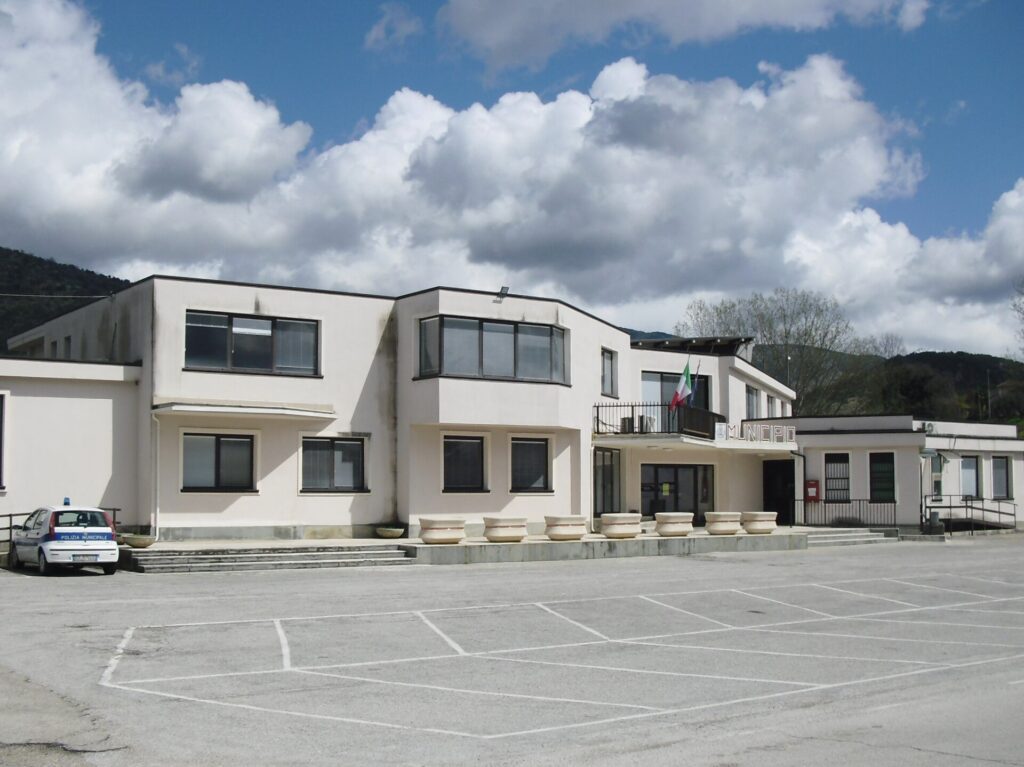
Today the municipality is governed through the official municipal website of Colfelice, which serves as the primary point of contact for administrative matters.
The population of 1,910 residents reflects the demographic reality of many lowland municipalities in central Lazio, where agricultural economies have gradually given way to mixed employment patterns tied to the larger urban centres of Frosinone and the Cassino area.
What to see in Colfelice, Lazio: top attractions
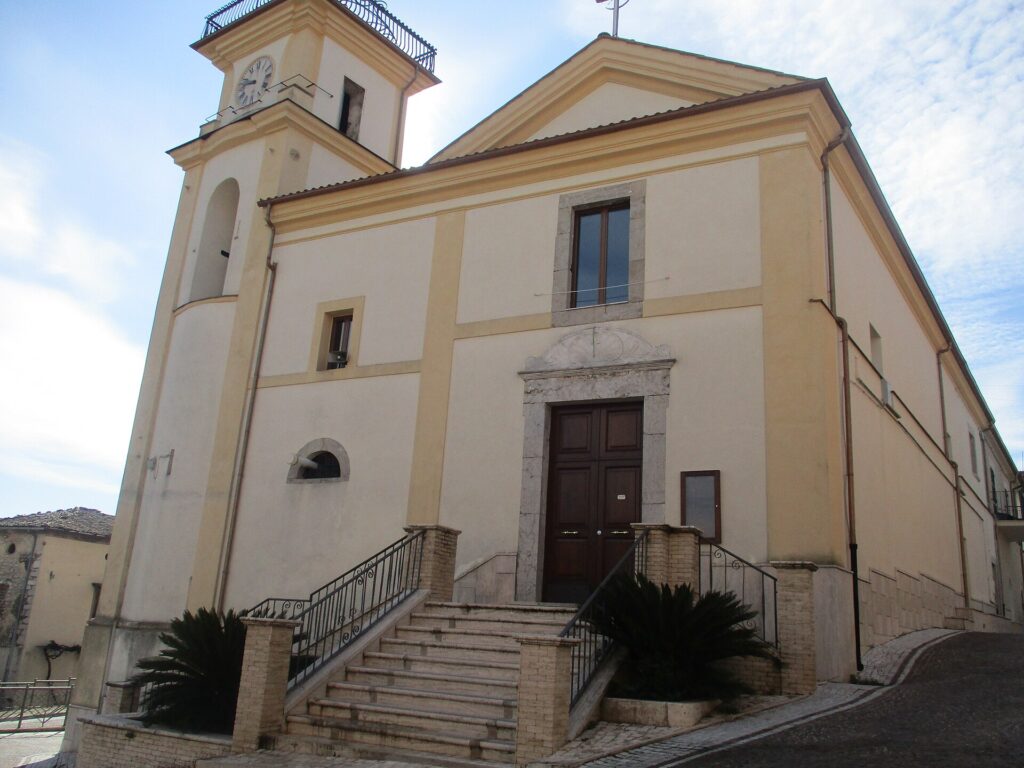
The Church of San Gaetano di Thiene
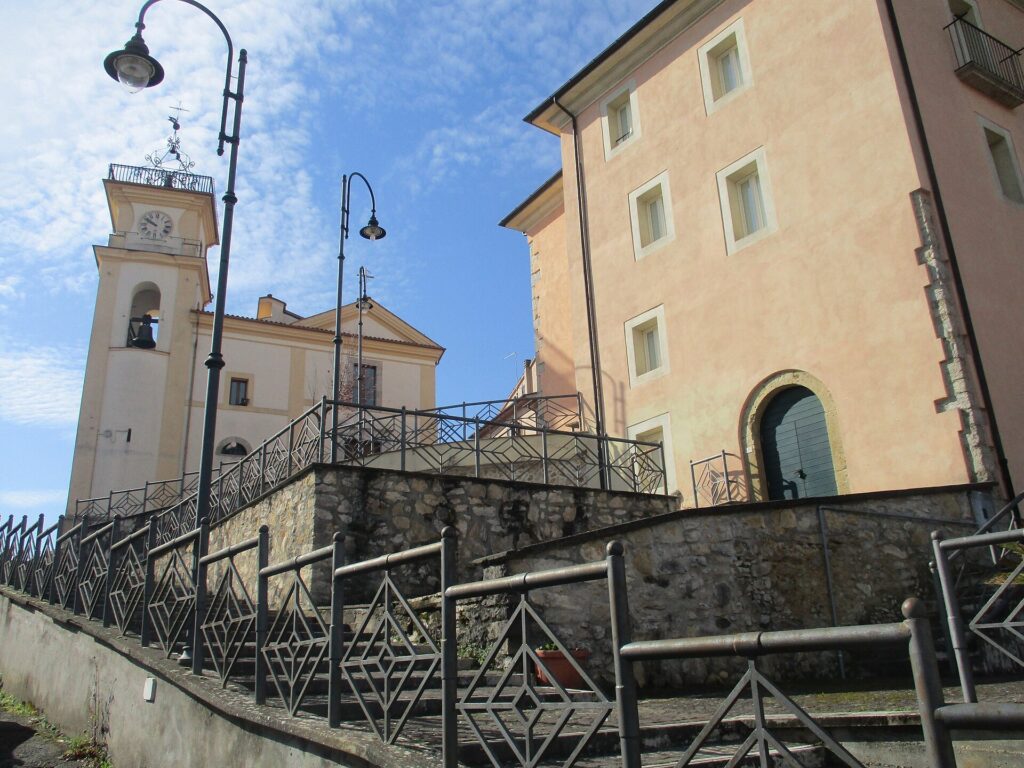
The parish church dedicated to Gaetano di Thiene anchors the religious life of Colfelice and serves as the focal point of the village’s most significant annual gathering.
Gaetano di Thiene, canonised in 1671 and known as the co-founder of the Theatine order, lends his name both to the church and to the feast day on 7 August.
The interior follows the pattern of rural southern Lazio ecclesiastical architecture, with a nave structure suited to the modest scale of a lowland agricultural community.
Visit in early August to see the church in the context of its active liturgical and civic function, when the feast draws together the full resident population and a number of returnees from nearby towns.
The Historic Village Core
The built fabric of Colfelice at its centre preserves the layout of a lowland agricultural settlement at 158 m (518 ft) elevation, where the absence of defensive heights meant that buildings clustered around civic and religious functions rather than fortification points.
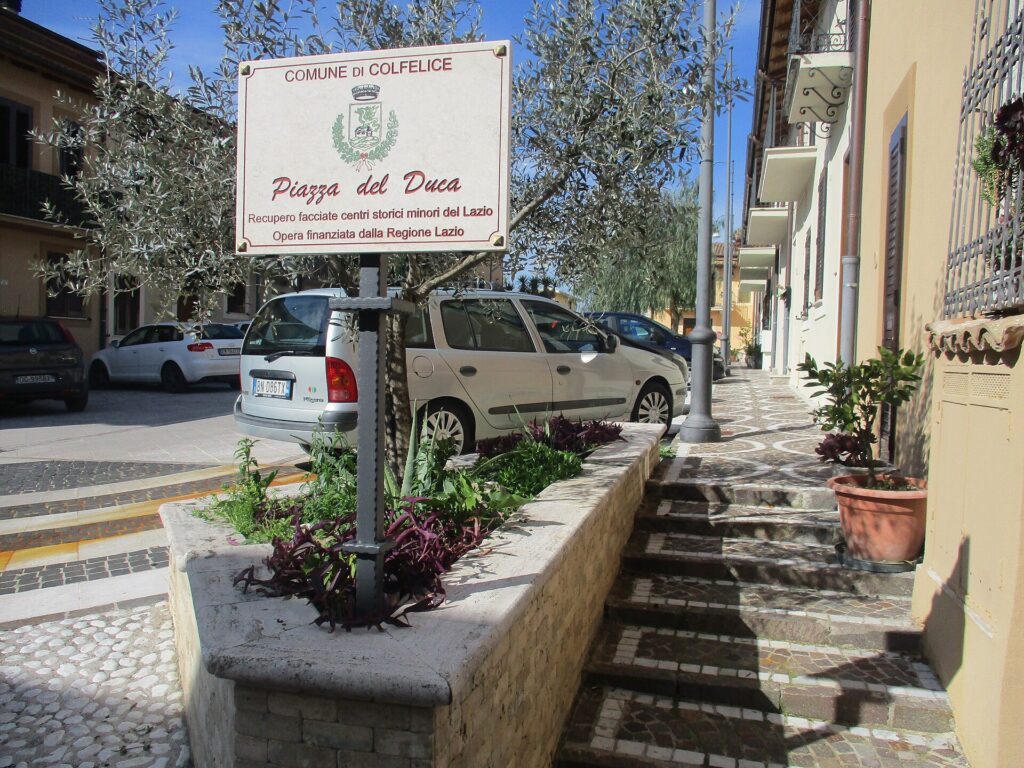
Streets in the older part of the village follow a pattern consistent with other borghi di pianura in the Province of Frosinone, with compact residential blocks and open spaces used for communal gathering.
Walking through the core in the early morning, when agricultural activity begins and the light is low across the plain, gives a clearer sense of the settlement’s functional logic than any other hour.
The boundaries of the commune connect directly with four neighbouring municipalities: Arce, Rocca d’Arce, Roccasecca and San Giovanni Incarico.
The Surrounding Agricultural Plain
The flat land surrounding Colfelice at roughly 158 m (518 ft) forms an essential part of the visit, since the village’s character is inseparable from its agricultural setting in the Liri plain.
Fields of grain, legumes and vegetable crops extend toward the foothills of the Apennines, which are visible as a low ridge to the east and north. The plain here sits about 25 km (16 mi) from Frosinone along routes that cross a landscape with few natural barriers, making it easy to understand why this corridor has been a zone of continuous human settlement since antiquity.
For those arriving by car, the approach roads across the plain offer an uninterrupted view of the terrain before the village becomes visible.
The Municipal Territory and Borders
Colfelice shares its municipal boundaries with four distinct comuni, each representing a different aspect of the Frosinone plain and its transition toward the surrounding hills.
Roccasecca, to the north, is notable as the birthplace of Thomas Aquinas in 1225, placing the entire micro-region within a zone of documented medieval intellectual and religious significance.
The proximity of these municipalities — all within a few kilometres of Colfelice’s administrative boundary — means that a visit to the area can reasonably take in multiple settlements within a single day.
The road network connecting these communes is well-maintained and direct, with distances between village centres rarely exceeding 10 km (6.2 mi).
The Viewpoints Over the Liri Valley
From the elevated edges of the village core, the terrain drops gradually toward the Liri river corridor, offering orientation points across a valley that has served as a major agricultural and communication axis since Roman times.
The valley floor is visible at a distance of several kilometres, with the Apennine foothills forming the eastern horizon at elevations significantly higher than Colfelice’s 158 m (518 ft).
These vantage points require no specific infrastructure to access and are best used in the late afternoon, when the light angles across the plain from the west and the profiles of neighbouring ridge settlements become distinct.
Visitors interested in understanding the geography of this part of Lazio will find this perspective more informative than any printed map.
Local food and typical products of Colfelice
The culinary tradition of Colfelice belongs to the broader framework of Ciociaria cooking, a style rooted in the agricultural economy of the Frosinone plain and the Liri Valley.
This is a cuisine built around preservation and seasonal availability: dried legumes, cured pork products, hard cheeses and pasta shapes that hold their form during long cooking.
The influence of monastic food culture is traceable in several preparations that rely on dried vegetables and pulses rather than fresh produce, reflecting the historical patterns of provisioning in a region where abbeys once controlled significant agricultural resources.
Among the pasta preparations common in this area, sagne ‘mpastocchiate stands out as a format specific to the Frosinone tradition — irregular, hand-torn strips of egg pasta cooked with legumes, typically dried chickpeas or lentils, and finished with local olive oil and dried chilli.
Pasta e fagioli made with local borlotti beans follows a technique of long, slow cooking in a terracotta pot, producing a dense, starchy result rather than a broth-based soup.
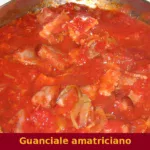
Pork features heavily in the preserved-meat tradition: guanciale, the cured pig cheek, is used both as a cooking fat and as a flavouring agent in sauces, while soppressata, a compressed cured sausage seasoned with black pepper and sometimes wild fennel seeds, is produced in small quantities by local households and a handful of agricultural producers in the Frosinone plain.
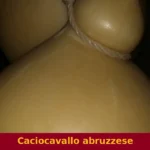
Sheep’s milk cheese from the broader Lazio uplands circulates into the Frosinone market, and pecorino aged for a minimum of 60 days appears in local kitchens both as a table cheese and as a grating cheese for pasta dishes.
The texture of well-aged pecorino from this area is compact and slightly granular, with a salt level that reflects traditional preservation techniques developed before refrigeration.
While no product from Colfelice itself carries a formal EU certification designation based on the available documentation, the village sits within a production zone for several Lazio agricultural goods whose geographic scope includes the Province of Frosinone.
Local food markets and periodic fairs in the Frosinone plain tend to concentrate in the autumn months, when the harvest of legumes and the beginning of the pig-processing season bring the widest range of local products to market stalls.
September and October are the most productive months for sourcing dried beans, cured meats and aged cheeses directly from producers in the area.
Visitors to Colfelice in August for the feast of San Gaetano will also find food stalls operating in connection with the festival, offering an opportunity to sample several of these preparations in an outdoor setting.
Festivals, events and traditions of Colfelice
The central event in Colfelice’s annual calendar is the feast of San Gaetano di Thiene, celebrated on 7 August.
Gaetano di Thiene, born in 1480 and canonised in 1671, is venerated as the patron saint of the municipality, and his feast day brings together a liturgical programme with the civic and social elements typical of Italian summer patron saint festivals.
The celebration includes a solemn Mass in the parish church, a procession through the village streets in which the statue of the saint is carried by members of the local community, and an outdoor programme of music and communal gathering that extends into the evening.
Fireworks conclude the celebrations after dark, a tradition consistent with patron saint feasts across the Province of Frosinone.
Beyond the August feast, the village participates in the broader seasonal rhythm of the Ciociaria cultural calendar, which includes periodic food markets and informal gatherings tied to the agricultural cycle.
The summer period concentrates most public activity, as the warmer months draw both resident families and those who have relocated to larger urban centres back to the village for holidays and reunions.
For international visitors, the feast of 7 August represents the most organised and publicly accessible moment to experience the social life of Colfelice directly, with a programme that requires no advance booking and takes place in the open spaces of the village centre.
When to visit Colfelice, Italy and how to get there
The best time to visit Colfelice, Italy is between late spring and early autumn, roughly from May through September.
June and early July offer warm temperatures across the Frosinone plain without the peak heat of August, making walking through the village and surrounding agricultural land more comfortable. For those whose primary interest is the patron saint feast, arriving on or around 7 August is the obvious choice, though accommodation in the immediate area should be arranged in advance given the limited options in a municipality of this size.
Autumn, from late September through October, brings cooler conditions and the activity of the harvest season to the surrounding countryside.
Colfelice sits about 100 km (62 mi) southeast of Rome, making it accessible as a day trip from the capital by car in approximately one hour and fifteen minutes under normal traffic conditions.
The most direct route from Rome uses the A1 motorway (Autostrada del Sole) heading south toward Naples, with exit at Pontecorvo or Cassino depending on the approach direction, followed by provincial roads into the Frosinone plain.
Those travelling by train can reach Cassino station on the Rome–Naples line via Trenitalia, from which Colfelice is approximately 15 km (9.3 mi) by road.
The nearest major airport is Rome Fiumicino (Leonardo da Vinci), located roughly 120 km (74.5 mi) from Colfelice, with a travel time of approximately one hour and thirty minutes by car via the A1.
International visitors should be aware that English is spoken in limited contexts in smaller municipalities of this type, and carrying euros in cash is practical for local purchases, markets and smaller food producers.
For those already in the Province of Frosinone, Colfelice connects naturally with several nearby points of interest.
The town of Roccasecca, directly bordering the municipality, carries historical significance as the documented birthplace of Thomas Aquinas.
Frosinone, 25 km (16 mi) to the northwest, provides the nearest range of urban services, hotels and transport connections.
Travellers interested in extending their visit through Lazio’s less-frequented inland areas might consider combining Colfelice with a route through the Sabine hills, where villages such as Cantalupo in Sabina represent a different dimension of Lazio’s rural landscape, set among olive groves and medieval hilltop fabric rather than the flat southern plain.
Visitors curious about the variety of Lazio’s smaller settlements can also look to the volcanic plateau country of northern Lazio.
The village of Onano, situated in the Viterbo province, offers a contrasting geography of tufa cliffs and lake-dotted highlands, useful for understanding how different Lazio’s landscape becomes across a relatively short north-south distance.
Similarly, Proceno in the Alta Tuscia area and Civitella d’Agliano in the Viterbo hills both show the geological and architectural variety that makes Lazio one of the most internally diverse regions in central Italy, well beyond the immediate pull of Rome.
Getting there
📷 Photo Gallery — Colfelice
In Lazio More villages to discover
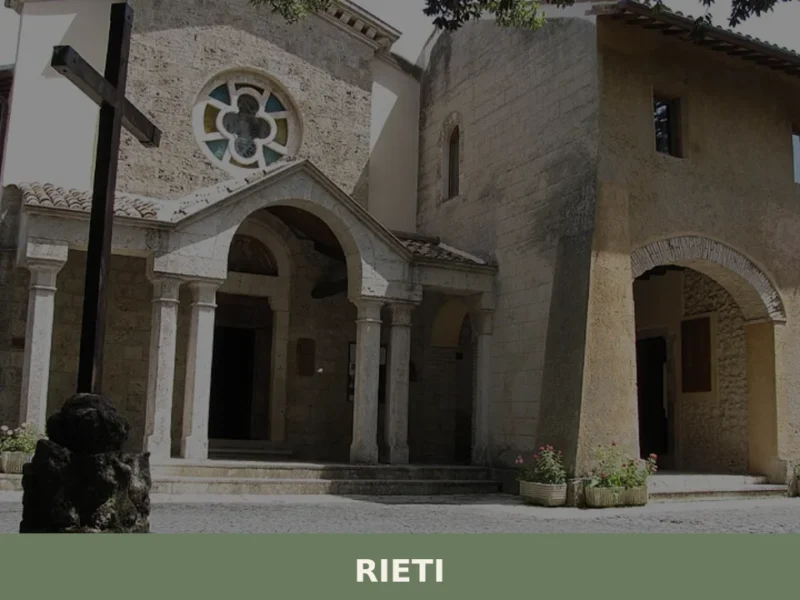
Rieti
What to see in Rieti: from the medieval walls to the Cathedral, discover the top 5 attractions. Complete guide to visiting Rieti in one day.
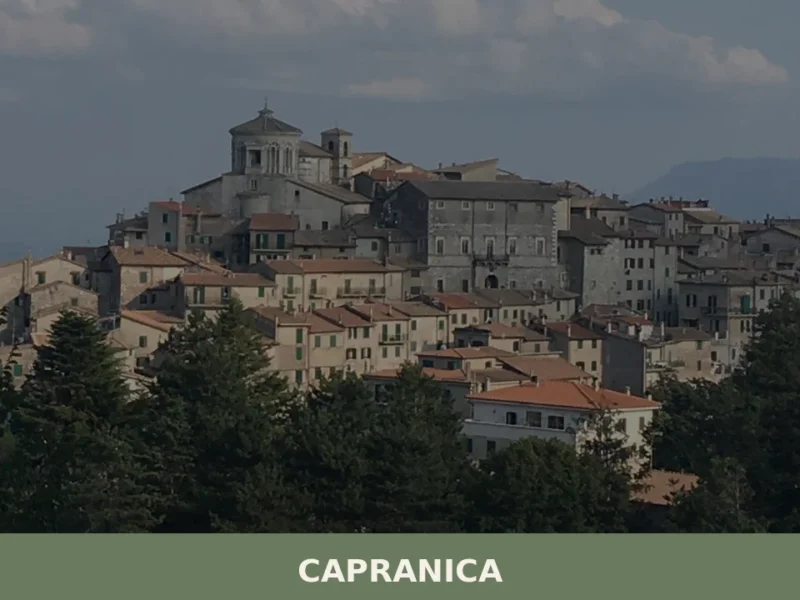
Capranica
Capranica, a Lazio village between history and nature: discover what to see, how to get there and the top places to visit. Plan your trip with this guide.
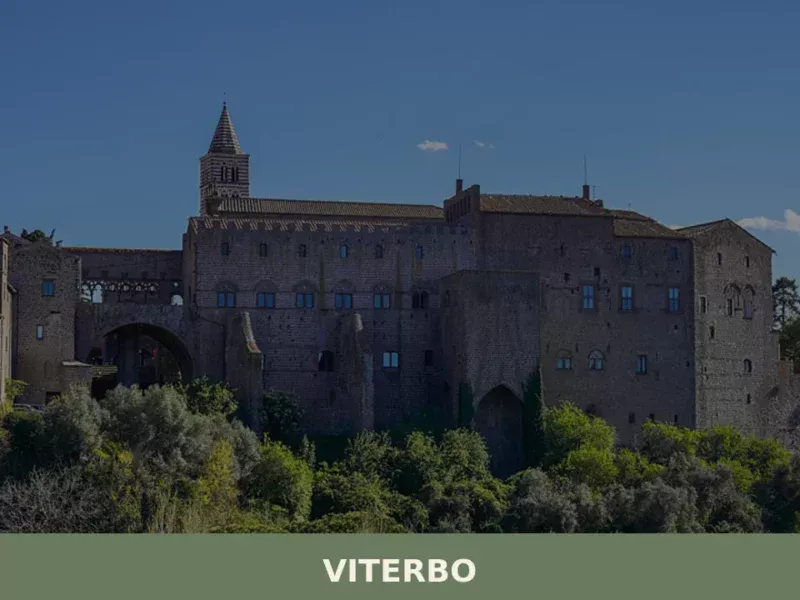
Viterbo
What to see in Viterbo: Palazzo dei Papi, San Pellegrino, Terme del Bullicame and the UNESCO festival of Santa Rosa. Practical guide with info on how to get there and when to visit.


📝 Incorrect information or updates?
Help us keep the Colfelice page accurate and up to date.