


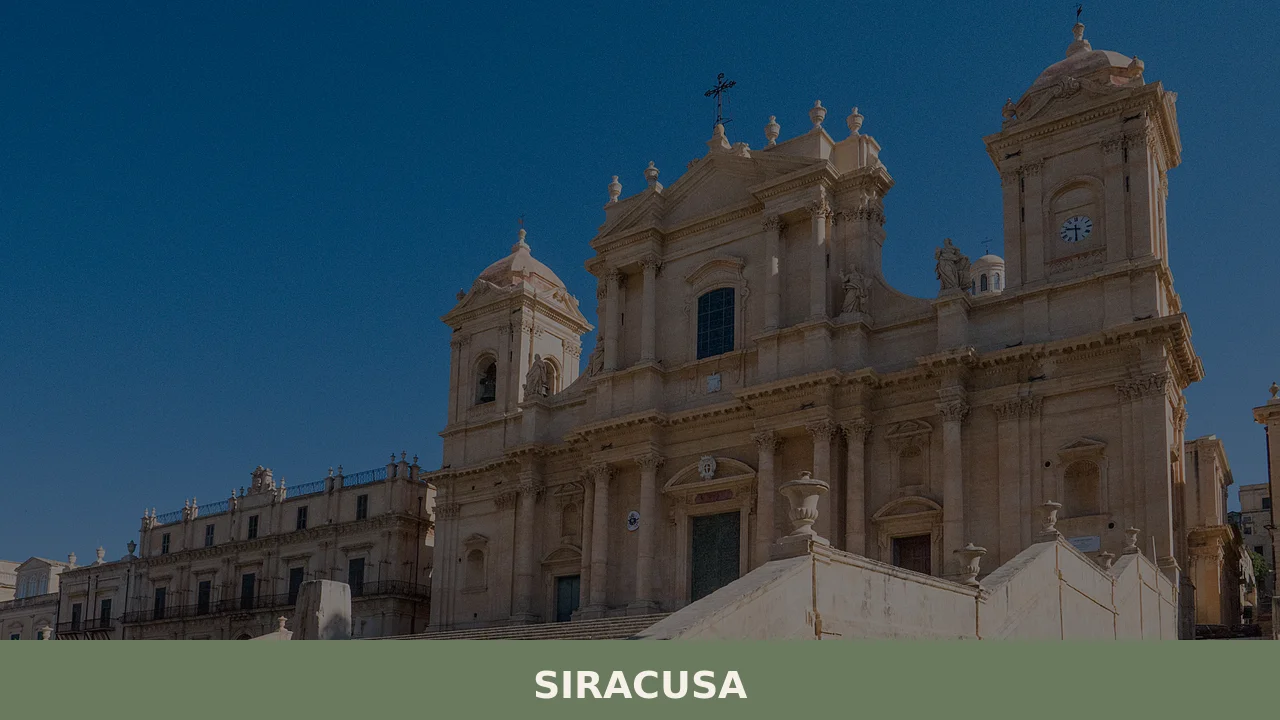
Siracusa
What to see in Siracusa: UNESCO city of 118,644 people. Explore the Greek Theatre, Ortigia, and the Catacombs of San Giovanni. Plan your visit with our complete guide.
Discover Siracusa
Siracusa carries one of the most layered historical records in the entire Mediterranean. Founded by Corinthian settlers in 734 BC, it grew within a few centuries into one of the most populous cities of the ancient world — capable of holding off Athens and dealing with Rome and Carthage as an equal.
Today, with a population of 118,644 and a historic centre inscribed on the UNESCO World Heritage List, the city rewards those who want to understand what to see in Siracusa beyond a checklist of monuments.
Every district overlaps different periods: Greek over Roman, Norman over Aragonese, Baroque over Liberty-style.
Siracusa stands at 17 metres above sea level, in the Province of Siracusa, on the south-eastern coast of Sicily.
History and Origins of Siracusa
Siracusa was founded in 734 BC, when colonists from Corinth — led, according to tradition, by Archias of Corinth — settled on the small island of Ortigia and the land facing the coast. The city’s name is thought by some etymologists to derive from the Sicel word Syrakò, a term connected to a swamp or marshy area in the original territory.
In the decades following its foundation, the colony expanded rapidly thanks to the strategic position of its natural harbour and the fertility of the surrounding land, becoming one of the central reference points of Magna Graecia.
Between the fifth and fourth centuries BC, Siracusa reached its political and military peak. Under the tyranny of Gelon, in 480 BC, the city played a decisive role in the victory at Himera against the Carthaginians. A few decades later, between 415 and 413 BC, it repelled the great Athenian expedition — an event that ancient historians, including Thucydides, described as one of the most resounding defeats in Greek history.
Under Dionysius I, who ruled from 405 to 367 BC, Siracusa became a regional power equipped with formidable defensive walls, including the famous Dionysian Walls that can still be walked today.
Archimedes of Siracusa, born around 287 BC, is the most celebrated figure associated with the city: a mathematician, physicist and engineer, he contributed to its defence during the Roman siege of 214–212 BC before being killed by the troops of Marcus Claudius Marcellus.
After the Roman conquest of 212 BC, Siracusa retained an important role as the capital of the province of Sicily.
In late antiquity it became a prominent episcopal see: Christian tradition attributes the founding of the local Church to the Apostle Paul, who passed through on his journey to Rome. During the medieval period the city passed to Byzantine control, then to Arab rule from 878 AD, and then to Norman rule from the eleventh century.
Under the Normans, and later under the Swabians and Aragonese, Siracusa underwent a phase of urban and religious reorganisation.
The earthquake of the Val di Noto in 1693 severely damaged the city, which was partly rebuilt according to the principles of Sicilian Baroque — a style that still defines many buildings in the historic centre today.
The village of Poggioreale, also marked by the consequences of the major earthquakes that struck southern Sicily, shares with Siracusa this seismic memory that reshaped the architecture of the entire region.
What to See in Siracusa: Main Attractions
The Neapolis Archaeological Park
The Neapolis Archaeological Park brings together the most significant Greek and Roman monuments in the city. Within its boundaries stand the Greek Theatre, carved directly into the rock in the fifth century BC and capable of holding more than 15,000 spectators, and the Roman Amphitheatre, built during the imperial era with a cavea partly cut from the natural stone.
The Ear of Dionysius — an artificial cave with an elongated shape rising around 23 metres — is one of the most visited structures in the park. The Altar of Hieron II, a monumental sacrificial altar nearly 200 metres long dedicated to Zeus Eleutherios, completes the picture at one of the most significant archaeological sites in the Mediterranean.
Ortigia
Ortigia is the small island where the original colony was established and it forms the historic centre of Siracusa today.
Accessible by two bridges, it concentrates monuments from a wide range of periods.
The Cathedral of Siracusa, built by incorporating the columns of a fifth-century BC Doric temple of Athena, stands as one of the most striking examples of architectural layering in the entire Mediterranean.
Piazza del Duomo, lined with Baroque palaces, and the Fountain of Arethusa — a freshwater spring located directly on the seafront, already mentioned by Pindar and Virgil — are two essential reference points for anyone trying to understand what to see in Siracusa.
The Paolo Orsi Regional Archaeological Museum
The Paolo Orsi Regional Archaeological Museum is one of the most important archaeological museums in Europe for the documentation of ancient Sicily. Founded in the early twentieth century through the work of archaeologist Paolo Orsi, the museum holds collections spanning from prehistory to the Roman period.
Among its best-known pieces is the Landolina Venus, a highly regarded Roman sculpture discovered in the nineteenth century.
The collections include material from Siracusa and across eastern Sicily, organised into thematic sections that allow a comparative reading of the region’s history.
Castello Maniace
Castello Maniace stands at the southern tip of Ortigia, on a rocky spur overlooking the entrance to the Grand Harbour.
Built on the orders of Frederick II of Swabia in the first half of the thirteenth century — most likely between 1232 and 1240 — the castle has a square plan with four corner towers and a defensive layout consistent with Swabian military architecture. Its name recalls George Maniakes, the Byzantine general who took Siracusa in 1038 on behalf of the Emperor of Constantinople. The structure has undergone significant restoration work and is now open to the public as a museum and cultural space.
The Catacombs of San Giovanni
The Catacombs of San Giovanni extend beneath the Basilica of San Giovanni Evangelista, one of the oldest religious buildings in Siracusa.
The underground complex, dating from the fourth and fifth centuries AD, is considered one of the most extensive catacomb networks in Italy after those in Rome. The tunnels stretch for several kilometres and preserve niches, arched recesses and decorated chambers with frescoes. The crypt of San Marcianus, regarded by Christian tradition as the first bishop of Siracusa, is included in the visitor route.
Those with an interest in early Christian art will find here one of the most significant settings for understanding the early spread of Christianity across eastern Sicily.
Local Cuisine and Products of Siracusa
The cuisine of Siracusa developed through centuries of cultural crossover: archaic Greek foundations, Arab influences from the medieval period, Spanish contributions from the Aragonese era, and the legacy of Jewish communities present on the island have all left recognisable traces in local cooking.
The city’s coastal position, its proximity to salt flats and fish-rich waters, has oriented the cuisine firmly towards the sea, while the agricultural land of the interior has supplied quality plant-based ingredients.
The result is a gastronomic tradition that balances ancient preservation techniques with dishes prepared for immediate consumption, drawing heavily on citrus fruits, capers, olives and oily fish.
Among the most representative dishes is pasta alla Norma, prepared with fried aubergine, tomato, basil and grated salted ricotta: a dish of Catanese origin but widespread across eastern Sicily, which in Siracusa appears in local variations. Pesce spada alla ghiotta — swordfish cooked with tomato, olives, capers, celery and pine nuts — reflects Arab influence in its sweet-and-sour combination of ingredients.
The cassata siracusana, made with sponge cake, sheep’s milk ricotta, marzipan and candied fruit, differs from the Palermo version in certain preparation details.
Granita, made with lemon juice, almonds or coffee, is a constant feature of breakfasts and summer breaks throughout the city.
Among the officially recognised products in the Siracusa area, two PAT (Traditional Agri-food Products) are listed in the national ministerial register.
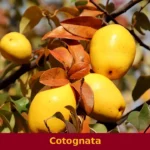
Cotognata (PAT) — municipality: Siracusa — is a solid quince preserve made by cooking quince pulp with sugar, traditionally shaped in terracotta moulds and left to dry. Natural sea salt (PAT) — municipality: Siracusa — is harvested from the salt flats along the coast through a solar evaporation process that involves no chemical treatment.
Both products represent production traditions with deep roots in the local territory.
The local market calendar offers further opportunities to buy fresh and processed products. The Ortigia market, held regularly in the square in front of the Temple of Apollo, sells fresh fish, seasonal vegetables, cheeses and local specialities. During the summer months, coinciding with the Classical Performances at the Greek Theatre, the city’s food scene expands with events focused on promoting local produce.
Those who wish to explore traditional Sicilian products further may consider a stop at Contessa Entellina, a small inland centre with its own gastronomic tradition rooted in livestock farming and grain processing.
Festivals, Events and Traditions of Siracusa
The patron festival of Siracusa is dedicated to Saint Lucy and is celebrated on 13 December.
The occasion is one of the most deeply felt in southern Sicily and includes a solemn procession through the streets of Ortigia, carrying the silver statue of the saint made by the Palermitan silversmith Pietro Rizzo at the end of the seventeenth century.
By tradition, no bread or pasta is eaten on this day: instead, people eat cuccìa, a dish of boiled wheat grains dressed with sweet ricotta or vincotto.
The 13 December celebration draws thousands of devotees and visitors from across Sicily and abroad each year, making it one of the most significant popular religious events on the island.
Among other culturally significant events, the Classical Performances at the Greek Theatre represent an annual occasion with an international reach: organised by INDA, the National Institute of Ancient Drama, they take place in May and June with productions of Greek tragedies and comedies staged in the original amphitheatre at Neapolis.
This event, running since 1914 with a few interruptions, draws tens of thousands of spectators each season and has established Siracusa as one of Italy’s leading centres for ancient theatre. The performance evenings — with the tiered seating lit up against the natural backdrop of the rock — create a theatrical setting that no other Italian site can replicate under the same conditions.
When to Visit Siracusa and How to Get There
The best time to visit Siracusa falls between April and June and between September and October.
In spring the climate is mild, with temperatures ranging from 18 to 25 degrees, and the Classical Performances bring a busy programme to the Neapolis park. Summer, with temperatures frequently exceeding 35 degrees, draws beach tourism and makes visiting the archaeological sites uncomfortable during the central hours of the day.
Autumn offers more relaxed visiting conditions and still-pleasant temperatures.
Those looking at what to see in Siracusa while avoiding the heaviest crowds should consider May or the second half of September, when the city returns to its ordinary pace after the summer peak.
To reach Siracusa by car, the A18 Messina–Catania motorway allows you to continue south on the SS114 to the city; the distance from Catania is around 60 km. Travellers coming from the interior of the island can use the SS124. Siracusa’s railway station is connected to the national network via Catania: Trenitalia operates intercity and regional services with stops at Lentini, Augusta and Catania.
The nearest airport is Catania Fontanarossa, approximately 60 km from Siracusa, reachable by car in around an hour or by direct bus services operated by regional companies.
For up-to-date information on local timetables and services, visit the official website of the Municipality of Siracusa.
Those putting together a wider itinerary through central and western Sicily can include villages such as Bompietro, a mountain centre in the Madonie with a landscape entirely different from the coastal character of Siracusa, or Cefalà Diana, known for its Norman baths, which offers a different perspective on the island’s medieval legacy.
In Sicily More villages to discover
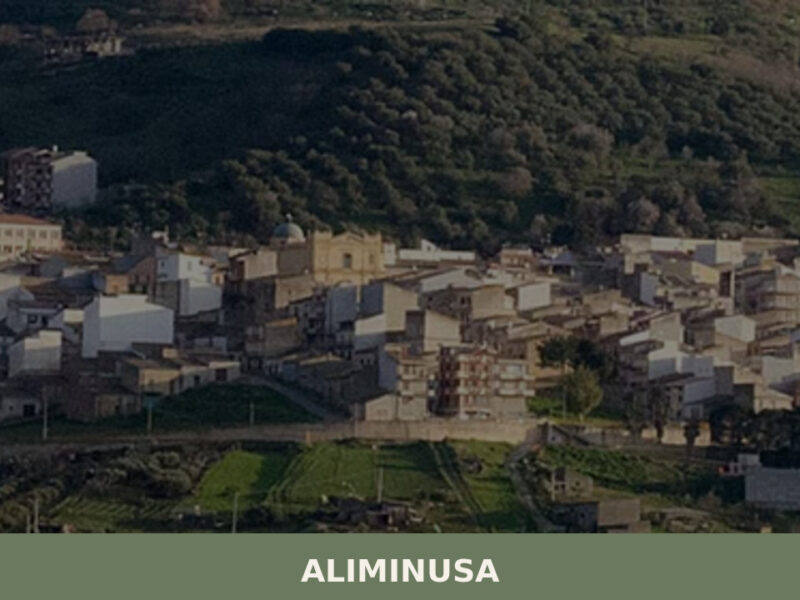
Aliminusa
Morning light hits the limestone facades along Corso Umberto at a low angle, turning the walls the colour of raw honey. A few voices carry across the piazza — unhurried, familiar. Aliminusa is a village of just over a thousand people, set at 450 metres above sea level in the hills of the Palermo province, […]
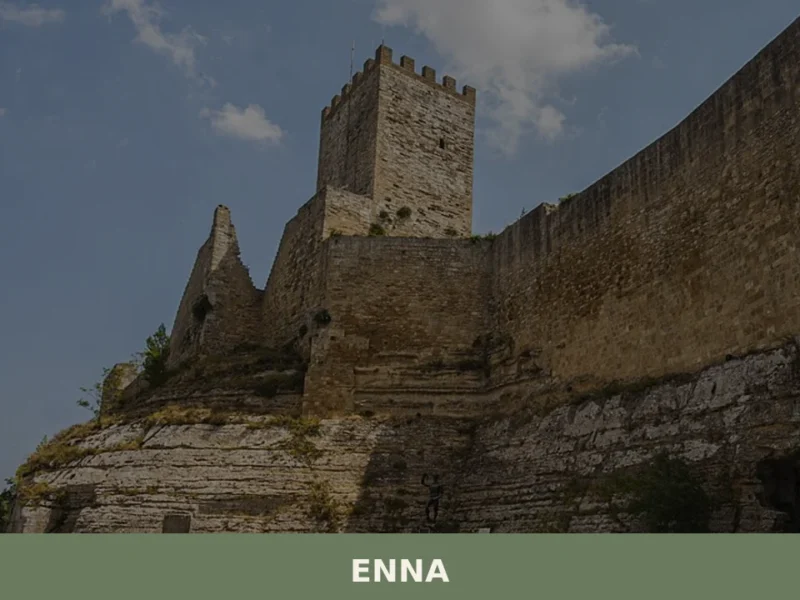
Enna
Discover Enna, a breathtaking village perched in the heart of Sicily, Italy. Explore its rich history, stunning landscapes, and timeless charm.
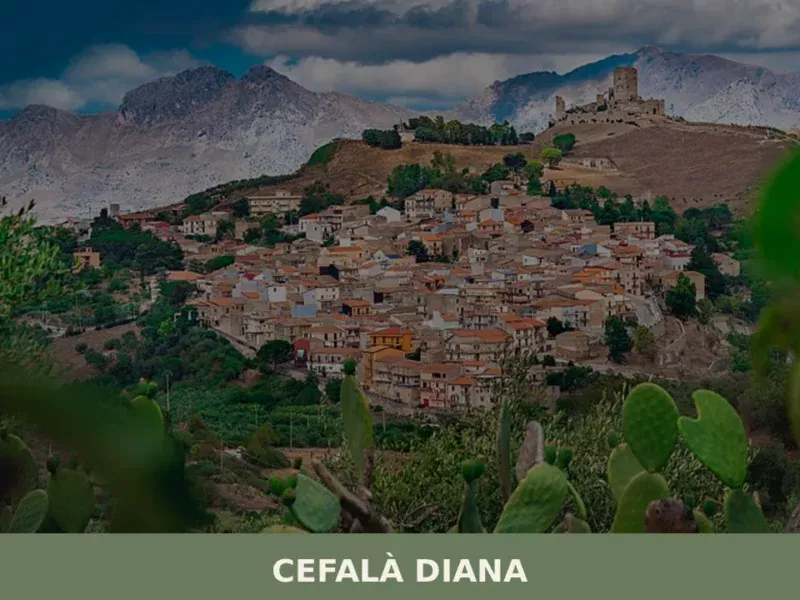
Cefalà Diana
Discover what to see in Cefalà Diana, Sicily: Arab-Norman baths, castle ruins, local food, best season to visit, and how to get there from Palermo.

📝 Incorrect information or updates?
Help us keep the Siracusa page accurate and up to date.