


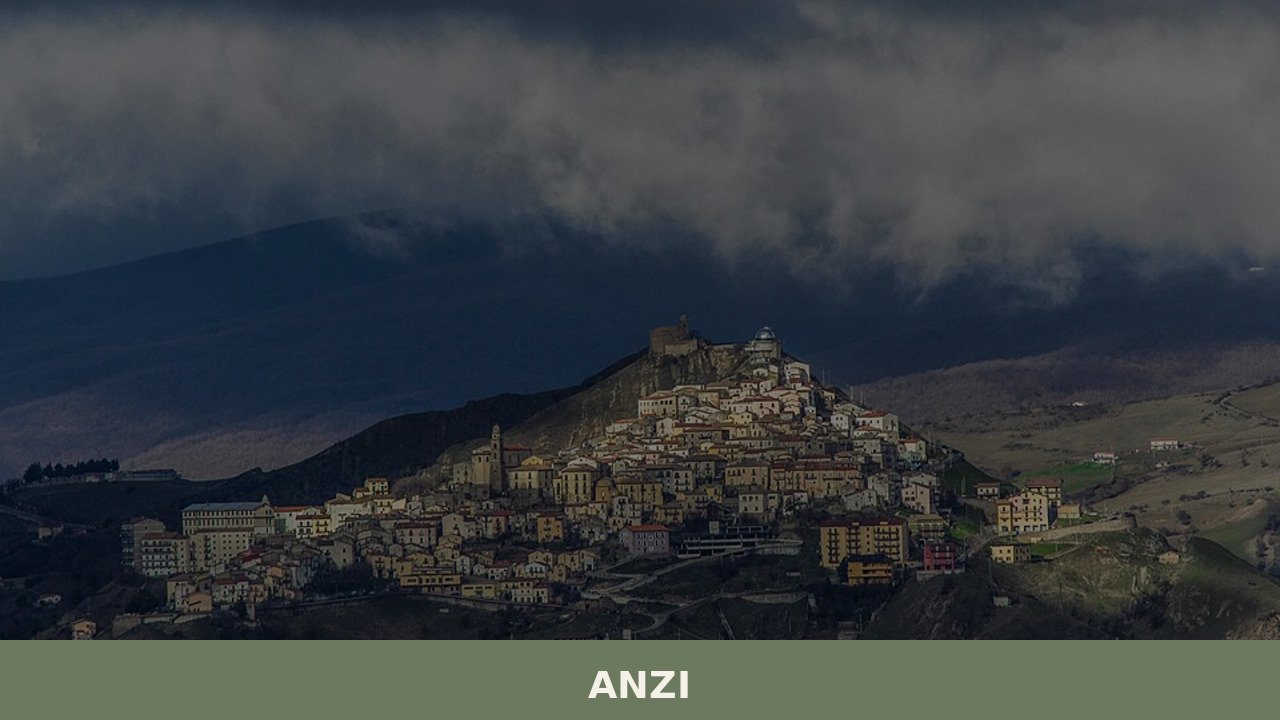
Anzi
Anzi sits at 1,008 metres above sea level in the province of Potenza, making it one of the highest settlements in Basilicata. Home to 1,745 inhabitants, this small Lucanian village occupies a rocky spur along the upper valley of the Camastra river, surrounded by dense forests of oak and chestnut. For anyone researching what to […]
Discover Anzi
Anzi sits at 1,008 metres above sea level in the province of Potenza, making it one of the highest settlements in Basilicata. Home to 1,745 inhabitants, this small Lucanian village occupies a rocky spur along the upper valley of the Camastra river, surrounded by dense forests of oak and chestnut. For anyone researching what to see in Anzi, the answer begins with the land itself — a vertical landscape where medieval stone houses climb steeply upward, and the surrounding peaks of the Lucanian Dolomites form a jagged horizon to the south.
History of Anzi
The origins of Anzi reach back to pre-Roman times. The settlement is identified by several scholars with the ancient Lucanian town of Anxia, referenced in classical sources. Archaeological finds in the surrounding territory — including coins, pottery fragments, and traces of ancient walls — suggest continuous habitation from at least the 4th century BC. The Latin name Anxia likely derives from a root meaning “narrow” or “constricted,” a fitting description for a settlement pressed between steep ridges.
During the Norman period, Anzi became part of the feudal system that reorganised southern Italy after the 11th century. The village passed through the hands of multiple noble families over the centuries, including the Sanseverino dynasty, one of the most powerful feudal houses in the Kingdom of Naples. Under successive rulers, the village served as a minor administrative centre, its economy sustained by shepherding, forestry, and subsistence farming on the surrounding uplands.
Anzi’s population peaked in the early 20th century before the waves of emigration that emptied many southern Italian hill towns. The village sent large numbers of its residents to the Americas, particularly to Argentina and the United States, a demographic shift that reshaped its social fabric permanently. Today, the built environment still reflects its layered past: Roman-era fragments embedded in later medieval walls, Baroque church façades grafted onto older structures, and narrow stone staircases connecting different levels of the hillside.
What to see in Anzi: 5 key attractions
1. Chiesa Madre di Santa Maria Assunta
The main parish church, dedicated to the Assumption of the Virgin Mary, dominates the upper part of the village. Its interior holds a carved wooden ceiling and several 17th-century canvases attributed to local and Neapolitan workshops. The bell tower, visible from kilometres away, functions as the primary vertical landmark for the surrounding valley.
2. The historic centre and its stone staircases
Anzi’s old quarter is built on a steep gradient, connected by flights of worn stone steps rather than conventional streets. The houses, constructed from local grey sandstone, press tightly against one another in a configuration designed for mutual structural support. Walking through requires genuine physical effort — the altitude gain from the lower entrance to the church square is considerable.
3. Ruins of the feudal castle
At the highest point of the settlement, fragments of the medieval fortification remain. Though reduced to partial walls and foundation outlines, the site offers a clear view of the strategic logic behind Anzi’s placement: the castle controlled sightlines across the Camastra valley and toward the mountain passes leading south into the Pollino massif.
4. Church of Sant’Antonio
Located slightly below the main church, this smaller religious building preserves a modest but intact example of provincial Baroque decoration. Its wooden altar and side chapels contain painted panels and devotional statues that document the religious culture of rural Basilicata across several centuries.
5. The Camastra river valley and surrounding forests
Below the village, the Camastra river — later dammed downstream to create the Lago del Camastra reservoir — runs through a densely wooded valley. The forests of cerro oak and chestnut provide habitat for wild boar, foxes, and numerous raptor species. Marked trails lead from the village into the surrounding woodland, offering direct access to high-altitude landscapes.
Local food and typical products
At over 1,000 metres of elevation, Anzi’s cuisine reflects a mountain economy. Pork is central — families historically slaughtered pigs in winter, producing soppressata, lucanica sausage (the word itself derives from the ancient name for Basilicata), and cured capocollo. Pasta dishes lean toward hearty formats: strascinati with crushed peppers, cavatelli with wild mushrooms gathered from the surrounding forests, and thick bean soups seasoned with dried peppers. Bread, baked in wood-fired ovens from local grain, remains a daily staple rather than a ceremonial food.
The area around Anzi also produces notable cheeses, particularly caciocavallo podolico, made from the milk of the Podolica cattle breed that grazes the high pastures of Basilicata. Local honey — chestnut, wildflower, and acacia — reflects the specific flora of the surrounding forests. Small trattorie and agriturismi in and near the village serve these products in straightforward preparations. Visitors should not expect extensive menus; the cooking here is defined by economy, altitude, and seasonal availability.
Best time to visit Anzi
Anzi’s elevation produces a markedly different climate from the Basilicata lowlands. Summers are cool relative to the rest of southern Italy, with daytime temperatures rarely exceeding 28°C in July and August — a significant contrast to the 38°C common in nearby Matera or the Metaponto coast. This makes the period from June to September the most practical window for visiting, particularly for walking in the surrounding countryside. Winters are cold, with regular snowfall from December through February; the village can be difficult to access during heavy snow events.
The annual festa patronale in mid-August draws residents and returning emigrants for religious processions, outdoor meals, and live music in the village square. This period offers the most concentrated social activity but also the greatest pressure on limited accommodation. Spring — particularly April and May — brings wildflower displays in the meadows below the village and fewer visitors. The municipality’s official website posts updated event schedules for anyone planning around specific dates.
How to get to Anzi
Anzi lies approximately 30 kilometres south of Potenza, the regional capital. By car from Potenza, follow the SS7 (Via Appia) southward and then take provincial roads toward the Camastra valley — the drive takes roughly 40 minutes on winding but well-maintained mountain roads. From Matera, the distance is about 100 kilometres, requiring approximately 90 minutes by car via the Basentana highway (SS407) and connecting provincial roads.
The nearest railway station is in Potenza (Potenza Centrale), served by Trenitalia regional lines connecting to Naples, Salerno, and Taranto. From Potenza, reaching Anzi requires a car or infrequent regional bus services operated by the local transit authority. The closest airports are Bari-Karol Wojtyła (approximately 170 km, roughly two hours by car) and Naples-Capodichino (approximately 190 km, roughly two and a half hours). Renting a car is effectively necessary; public transport connections to Anzi are sparse and not designed for tourism schedules.
More villages to discover in Basilicata
The province of Potenza contains dozens of small settlements distributed across mountain ridges and river valleys, each shaped by its specific geography and feudal history. Cancellara, located northeast of Potenza at a similar elevation, shares many characteristics with Anzi — a compact medieval core, a ruined castle at the summit, and a population that has shrunk significantly since the mid-20th century. Visiting both villages in the same day is feasible by car and gives a more complete picture of highland Basilicata’s settlement patterns.
For those exploring what to see in Anzi and the broader territory, the region rewards slow, deliberate travel. The distances between villages are short on the map but longer in practice, as roads follow contour lines and switchback across ridges. This geography, which historically isolated communities from one another, now constitutes the primary interest for visitors: each village developed its own micro-traditions, its own church decorations, its own pasta shapes. Cancellara’s Norman castle ruins, for example, tell a parallel but distinct story from Anzi’s fortification, illustrating how the same feudal system produced different architectural results depending on terrain and local materials.
In Basilicata More villages to discover
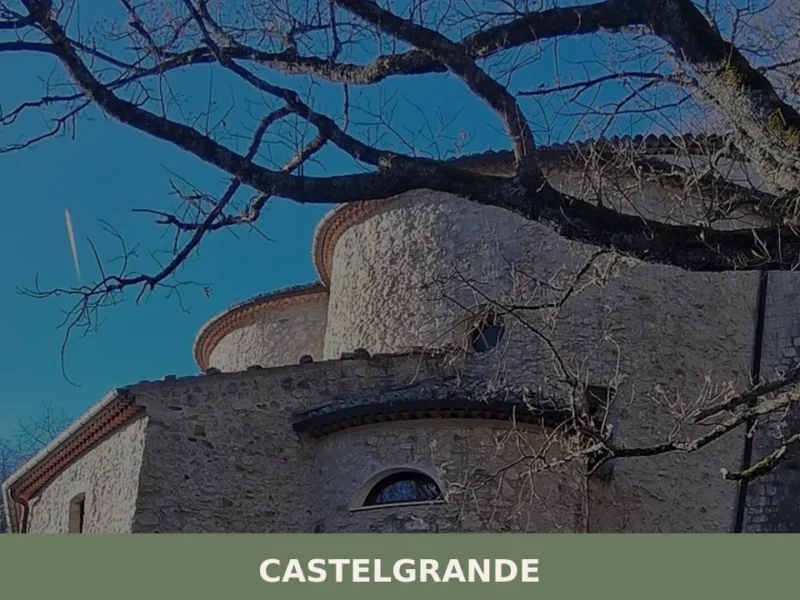
Castelgrande
Discover what to see in Castelgrande, a mountain village in Basilicata. From the Mother Church to the historic center, a journey through history and nature. Includes practical tips for your visit.
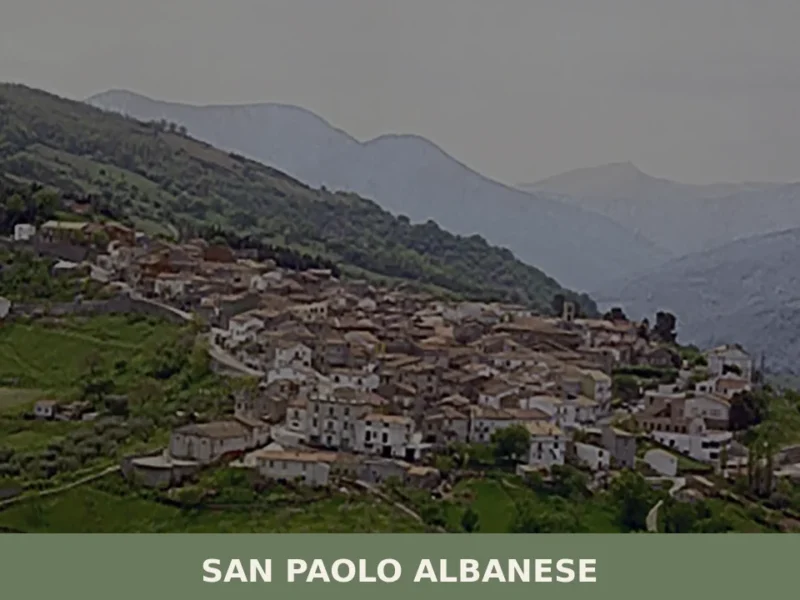
San Paolo Albanese
San Paolo Albanese, in the province of Potenza, stands out as Basilicata’s least populous municipality, recording a population of 280 inhabitants. This demographic reality gives the village an intimate dimension, where social relationships and the traditions of the Arbëreshë community remain strongly evident. For those wondering about what to see in san paolo albanese, the […]
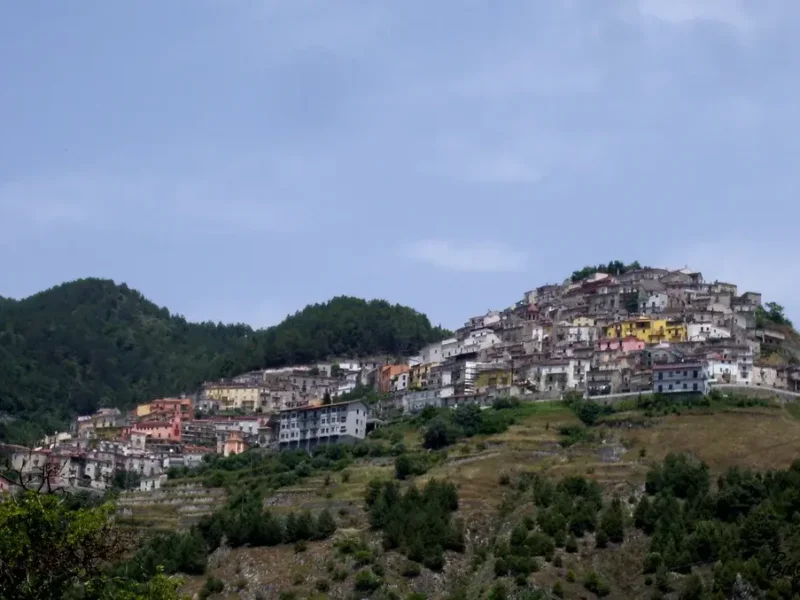
Castelluccio Superiore
At 680 meters above sea level, with a population of 860 inhabitants, Castelluccio Superiore is located in the heart of the Lucanian Apennines, in the province of Potenza. This mountain village, whose history dates back to antiquity, offers visitors a journey through layers of memory and architectures that recount its evolution. For those wondering **what […]






📝 Incorrect information or updates?
Help us keep the Anzi page accurate and up to date.