


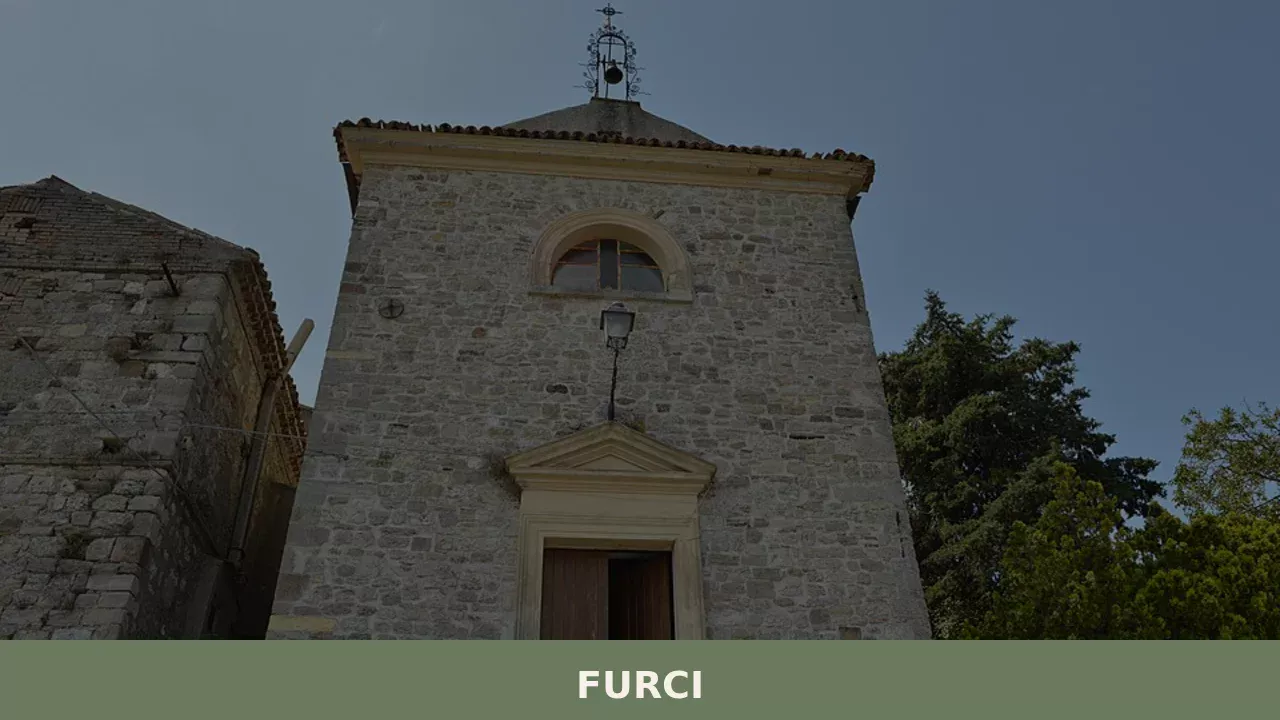
Furci
Furci has 806 inhabitants and sits at 550 metres above sea level, along the hill ridge that separates the Sinello valley from the Treste stream valley, in the southern part of the province of Chieti. Anyone looking into what to see in Furci will find a compact urban centre, organised around the main church and […]
Discover Furci
Furci has 806 inhabitants and sits at 550 metres above sea level, along the hill ridge that separates the Sinello valley from the Treste stream valley, in the southern part of the province of Chieti. Anyone looking into what to see in Furci will find a compact urban centre, organised around the main church and a baronial palazzo, with an economy still tied to olive cultivation and extra virgin olive oil production. The village owes part of its identity to Blessed Angelo da Furci, a 14th-century Augustinian friar whose figure marks the civil and religious calendar of the town.
History and origins of Furci
The first documented attestation of the place name dates back to the Norman period, when the territory fell within the feudal holdings connected to the defensive system of the Sinello valley. The name “Furci” most likely derives from the Latin furca, meaning a fork or an orographic ridge — a reference consistent with the position of the settlement on the crest between two valleys. During the Middle Ages, the fief passed through several noble families, following the events of the Kingdom of Naples and its complex dynastic successions.
The most significant historical figure linked to the village is Blessed Angelo da Furci (1246–1327), an Augustinian friar born here and later active in Naples, where he taught theology and served as prior of the convent of San Giovanni a Carbonara. Beatified in 1888 by Pope Leo XIII, Angelo remains the patron saint of the town. His birth in Furci is documented in the hagiographic sources of the Order of Saint Augustine and constitutes the village’s primary connection to the religious history of medieval southern Italy.
Between the 16th and 18th centuries, Furci followed the fate of many centres in the southern Chieti area: a subsistence agricultural economy, feudal dependence, and slow depopulation towards the coastal settlements. The current urban layout preserves the structure of that period, with the historic core gathered around the parish church and stone houses arranged along a few streets running parallel to the ridge.
What to see in Furci: 5 main attractions
1. Church of Santa Maria della Misericordia
The main church of Furci, located in the centre of the village, houses a wooden statue of Blessed Angelo and a late-Baroque high altar. The façade, reworked during the 19th century, features a carved stone portal. The single-nave interior contains paintings and sacred furnishings dating from the 17th and 18th centuries.
2. Chapel of Blessed Angelo
A small devotional building dedicated to the patron saint, it stands on the spot that tradition identifies as the birthplace of the Augustinian friar. The chapel is opened during the patron saint’s feast day and contains a relic of the Blessed. It serves as the focal point of local devotion and the starting point of the annual procession through the village.
3. Baronial palazzo
The most notable noble building in the historic centre, visible from the main street. The structure — modified several times over the centuries — retains a rectangular layout with a stone portal and balconies on the upper floor. It is a direct record of the feudal presence in the village and of the architectural layering between the 16th and 18th centuries.
4. Historic centre and medieval urban fabric
The old core of Furci can be explored in less than an hour, following the streets that run along the ridge. The houses in local sandstone, the underpasses, and the external staircases document rural building techniques typical of the southern Chieti hinterland. Several carved stone portals bear dates inscribed between the 17th and 18th centuries.
5. Panoramic viewpoints over the Sinello valley
From the edges of the village, particularly on the western side, the view reaches the Sinello valley and, on clear days, the profile of the Maiella massif to the north-west. The opposite side looks towards the Adriatic coast, roughly 25 kilometres away as the crow flies. These vantage points allow visitors to read the geography of the surrounding territory with clarity.
Local cuisine and regional products
Furci’s agricultural economy revolves around olive growing. The extra virgin olive oil produced in the area falls within the Colline Teatine district, a PDO designation recognised by the European Union. The village’s home cooking reflects the peasant tradition of southern Abruzzo: handmade pasta — particularly chitarra and sagne — dressed with lamb ragù or tomato sauce with dried peppers. Pallotte cace e ove (cheese and egg fritters fried and then simmered in tomato sauce) are a common dish in the area.
Other local products include dried legumes, particularly chickpeas and lentils, and pork cured meats prepared according to the winter cycle of home butchering — ventricina, sausages, and aged lonza. Montepulciano d’Abruzzo DOC wine is also produced in the surrounding countryside. Dining options in the village are limited to a few trattorias and agriturismi in the immediate vicinity: it is advisable to check opening times, especially outside peak season.
When to visit Furci: the best time
The feast of Blessed Angelo da Furci, celebrated on 6 February, is the village’s main religious and civic event: solemn mass, procession, and fair. It is the occasion when the community gathers in full, including residents who have moved elsewhere. Spring — from April to June — offers favourable weather conditions for visiting the historic centre and exploring the surrounding countryside, with average temperatures between 14 and 22 degrees. Autumn, between October and November, coincides with the olive harvest and with a raking light that sharply defines the profile of the hills.
Summer can be hot, but the altitude of 550 metres ensures milder temperatures compared to the coast. Winter is cold, with possible snowfall between December and February. For those wishing to combine the visit with other villages in the area, the shoulder seasons remain the most practical choice. The official website of the Municipality publishes updates on local events and initiatives.
How to reach Furci
By car, from both the north and the south, the reference point is the A14 Adriatica motorway: exit at Vasto Sud–Montenero di Bisaccia, then approximately 20 kilometres inland following signs for Furci along the SP 152. From Chieti the route is about 85 kilometres, entirely on state and provincial roads. From Pescara the distance is approximately 100 kilometres.
The nearest railway station is Vasto–San Salvo, on the Adriatic Bologna–Lecce line, about 25 kilometres from the village. From there it is necessary to continue by private transport or local bus (services are limited — check with ARPA Abruzzo). The closest airport is Pescara (Abruzzo Airport), approximately 100 kilometres away. Rome Fiumicino and Bari Palese airports are roughly 300 and 250 kilometres away respectively.
Other villages to visit in Abruzzo
Those exploring the Abruzzo hinterland starting from Furci can widen their range to include other hilltop centres in the region that share a small size and a direct connection to the surrounding agricultural landscape. Casacanditella, in the middle valley of the Foro river in the province of Chieti, offers an example of a hill village with views of the Maiella and a historic core whose original structure is still clearly legible. The distance from Furci — about 70 kilometres — makes it possible to combine the two visits in a single day.
Further north, in the Gran Sasso area, Brittoli lies in the province of Pescara, at a higher altitude and in a different landscape context — that of the Apennine mountains. The comparison between the two villages makes visible the geographical variety of inland Abruzzo: from the clay hills of the southern Chieti area, where olives are cultivated, to the pastures and beech forests of the higher elevations. Two expressions of the same regional territory, separated by fewer than 150 kilometres yet distinct in climate, economy, and architecture.
In Abruzzo More villages to discover
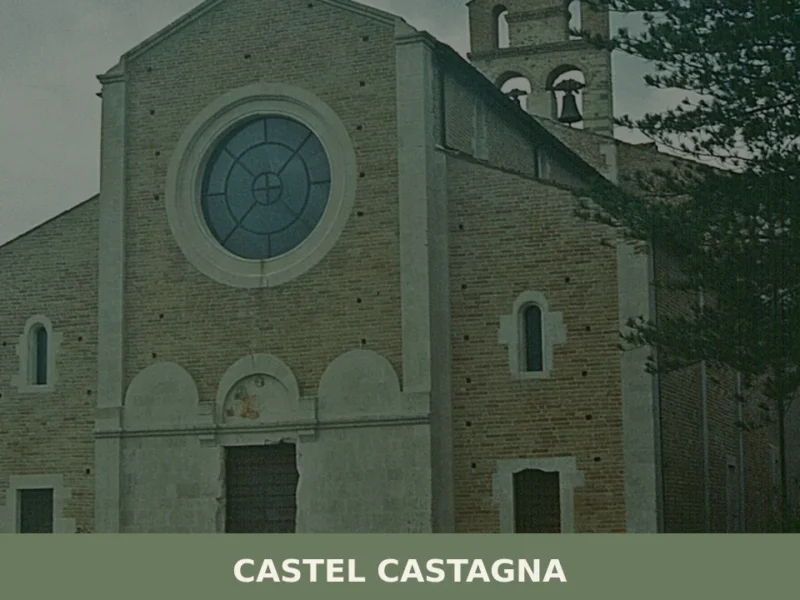
Castel Castagna
At 452 metres above sea level, on the eastern slope of the Gran Sasso, the municipality of Castel Castagna today counts 429 inhabitants spread between the main settlement and the hamlets scattered along the cultivated hillsides of the province of Teramo. Anyone wondering what to see in Castel Castagna will find answers in a territory […]
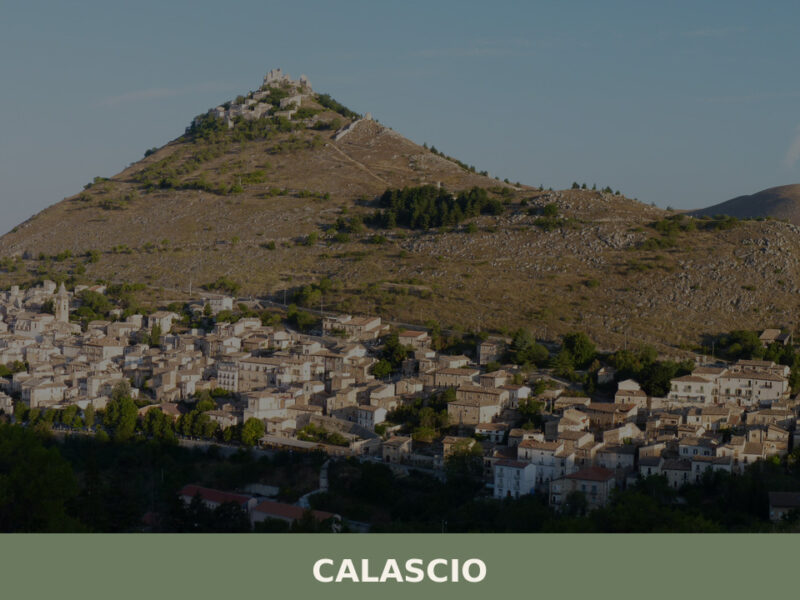
Calascio
Morning light catches the limestone walls of Rocca Calascio before it reaches the village below, turning the fortress a pale gold against the dark mass of the Gran Sasso. At 1,210 metres above sea level, the air is thin and sharp, carrying the sound of wind through empty doorways. Only 127 people live here year-round, […]
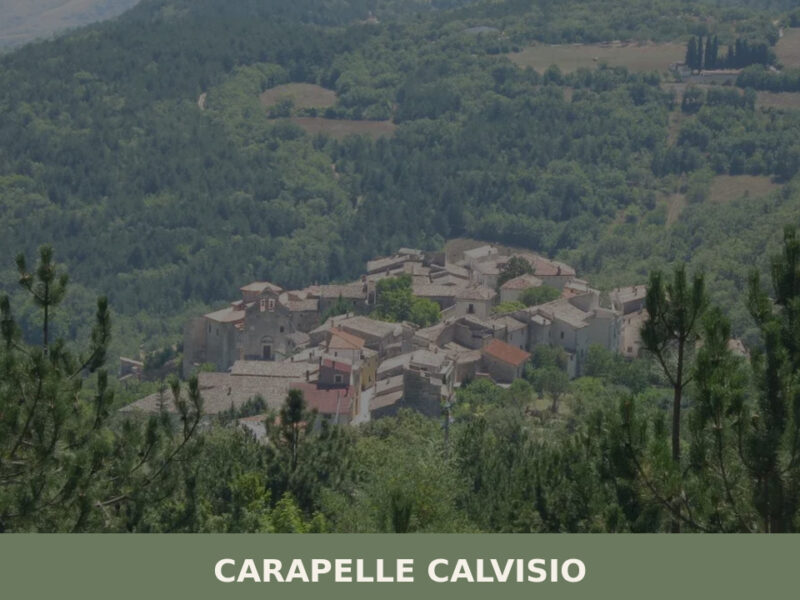
Carapelle Calvisio
In the quietest hour of dawn, Carapelle Calvisio comes alive with the soft rustle of the breeze through olive groves and the distant toll of church bells. This tiny village of 78 inhabitants, resting at 910 meters above sea level, seems untouched by time. Wandering through its cobblestone streets reveals the simple beauty embedded in […]



📝 Incorrect information or updates?
Help us keep the Furci page accurate and up to date.