


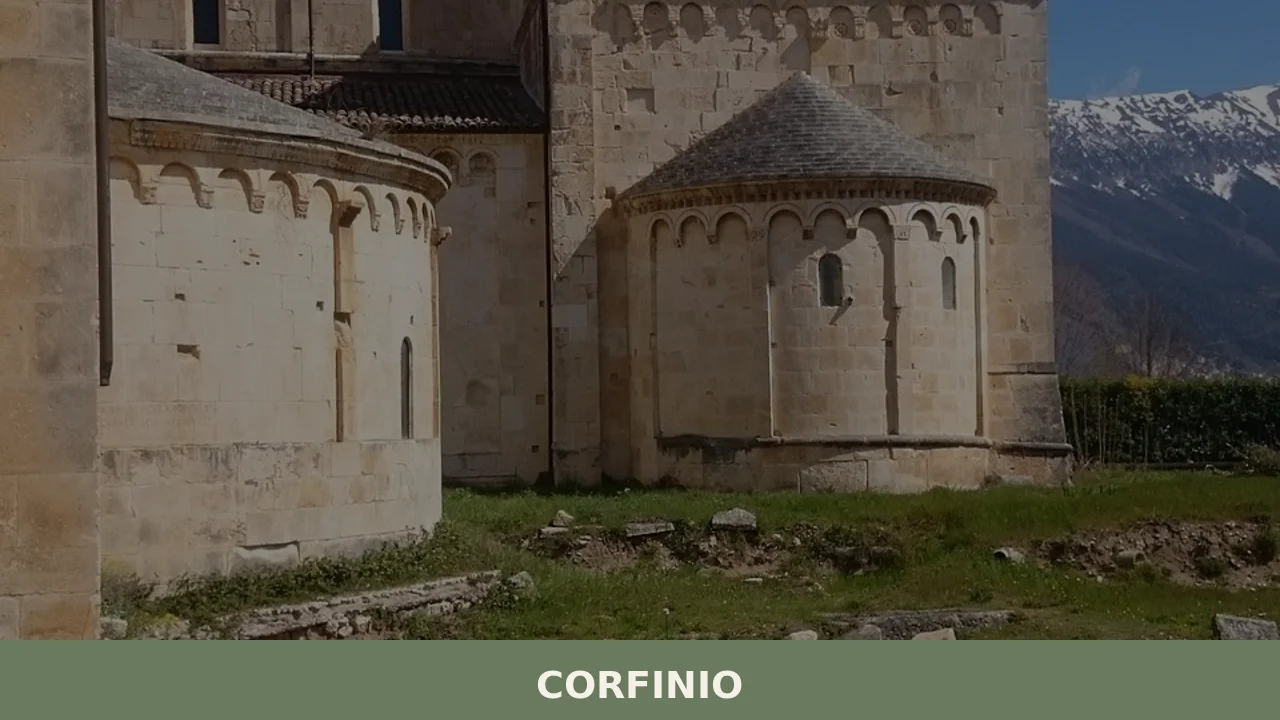
Corfinio
In 91 BC, the Italic peoples chose Corfinium as the capital of the Italic League during the Social War against Rome: for several months, this city in the Peligna Valley was renamed Italica and minted its own coins bearing the image of a bull trampling the Roman she-wolf. Today the village has 1,081 inhabitants, sits […]
Discover Corfinio
In 91 BC, the Italic peoples chose Corfinium as the capital of the Italic League during the Social War against Rome: for several months, this city in the Peligna Valley was renamed Italica and minted its own coins bearing the image of a bull trampling the Roman she-wolf. Today the village has 1,081 inhabitants, sits at 346 metres above sea level in the province of L’Aquila, and preserves beneath its streets an archaeological heritage of the first order. Understanding what to see in Corfinio means crossing twenty-two centuries of documented history, from the Italic confederation to the Christianisation of the Peligna basin.
History and origins of Corfinio
The Latin name Corfinium appears in classical sources starting from the 1st century BC. The city was the main centre of the Peligni, one of the Samnite tribes settled in inland Abruzzo. When in 91 BC the Italic allies rebelled against Rome to obtain citizenship, delegates from the various peoples — Marsi, Samnites, Lucanians, Peligni — chose Corfinium as the seat of the confederal government. The city took the name Viteliu (Italica) and a senate of five hundred members was established here. The revolt ended within two years with the granting of Roman citizenship to the allies, but the role played by Corfinium in that phase remains a fact documented by Appian, Velleius Paterculus and Strabo.
After the civil war between Caesar and Pompey — in 49 BC Caesar besieged and took Corfinium, defended by the Pompeian Lucius Domitius Ahenobarbus — the city gradually lost political importance, while remaining an active municipium along the Via Valeria. With the spread of Christianity, Corfinium became a diocesan seat: the diocese of Valva, attested at least from the 5th century, had its cathedral here for many centuries before the transfer to Sulmona. The patron saint is Pope Alexander I, a 2nd-century pontiff whose veneration attests to the early evangelisation of this area.
In the Middle Ages, the settlement contracted around the cathedral and the religious structures, while the remains of the Roman city ended up beneath cultivated fields. Archaeological campaigns conducted between the 19th and 20th centuries brought to light sections of the aqueduct, stretches of walls, inscriptions and funerary assemblages that are now housed partly in the local museum and partly in the Museo Nazionale d’Abruzzo.
What to see in Corfinio: 5 main attractions
1. Basilica of San Pelino (Valvense Cathedral)
Built between the 11th and 12th centuries, the basilica features a three-nave plan with semicircular apses and a cycle of carved capitals bearing zoomorphic figures and vegetal motifs in Romanesque workmanship. The 13th-century ambo, decorated with Cosmatesque mosaics, is one of the best-preserved medieval liturgical furnishings in Abruzzo. Adjacent to the basilica stands the Oratory of Sant’Alessandro, smaller in scale and built on a Greek-cross plan.
2. Museo Civico Archeologico Antonio De Nino
Named after the Abruzzese archaeologist who first systematically excavated the area, the museum holds finds from the Peligni necropolis, funerary stelae with inscriptions in the Oscan language, coins of the Italic League and fragments of Roman statuary. The exhibition documents daily life in Corfinium from the 6th century BC to the imperial age, with sections dedicated to ceramics and bronze objects.
3. Archaeological area of Piano San Giacomo
On the plain below the village, excavation campaigns have identified the foundations of an Italic temple, sections of the forum and remains of public buildings from the Republican period. The area is open to visitors and allows one to read the layout of ancient Corfinium, with polygonal masonry bases indicating the earliest phases of the Peligni settlement.
4. Oratory of Sant’Alessandro
Built against the Basilica of San Pelino, this small centrally planned building preserves fragmentary frescoes datable to the 12th and 13th centuries. The partially buried crypt below contains an altar that local tradition associates with the cult of the patron saint. The structure reuses Roman architectural elements — columns and capitals — visible in the perimeter walls.
5. Fonte di Bagnara and the Roman aqueduct
A short distance from the centre, the Bagnara spring fed the aqueduct that served the ancient city. Several stretches of the conduit in opus caementicium are still visible along the route towards the plain. The flow of the spring, still active today, explains why the Peligni chose this site for their main centre.
What to see in Corfinio: local cuisine and typical products
The table in Corfinio reflects the food traditions of the Peligna Valley. The most common dishes follow the agro-pastoral repertoire of inland Abruzzo: maccheroni alla chitarra with lamb ragù, sagne e fagioli, and arrosticini (skewered mutton). Sulmona’s red garlic, grown in the same basin, appears in many local preparations. Among the desserts, ferratelle (wafers cooked in a hinged iron press) and Sulmona’s confetti — produced just a few kilometres away — round off meals on festive occasions. Extra-virgin olive oil of the Gentile di Chieti variety comes from the olive groves climbing the south-facing slopes of the valley.
The area also produces pecorino cheeses aged in caves and liver sausages flavoured with chilli pepper and wild fennel seeds. Montepulciano d’Abruzzo DOC is the benchmark red wine of the entire region, while Cerasuolo — made from the same grapes with a short maceration — pairs well with first courses. Several agriturismi in the countryside around Corfinio offer menus based on their own produce.
When to visit Corfinio: the best time
The climate of the Peligna Valley is continental, with hot summers and harsh winters. Temperatures at 346 metres above sea level allow comfortable visits from April to June and from September to October, when the days are settled and the countryside changes colour. The patronal feast of Sant’Alessandro is celebrated on 3 May with a procession carrying the reliquary through the streets of the village. In summer, the proximity of the Majella and Morrone massifs makes it possible to combine the archaeological visit with hikes at higher elevations.
Winter can bring snowfall and temperatures below zero, but the Basilica of San Pelino in the low January light, with few visitors, offers ideal conditions for observing the sculptural details of the capitals. The civic museum is open all year round, with reduced hours in the winter months: it is advisable to check the schedule on the official website of the Municipality before visiting.
How to reach Corfinio
Corfinio is reached from the A25 Rome–Pescara motorway by exiting at the Pratola Peligna-Sulmona toll station, from which the village is about 5 kilometres north along the state road 5 (Via Tiburtina Valeria). From Rome the motorway route covers approximately 150 kilometres in just under two hours. From Pescara the distance is about 70 kilometres, which can be covered in one hour.
The nearest railway station is Pratola Peligna-Sulmona, served by the Rome–Sulmona–Pescara line. Pescara’s Abruzzo Airport is approximately 75 kilometres away; Rome Fiumicino Airport is about 180 kilometres away. The roads of the Peligna Valley are flat and well maintained, making access by bicycle from nearby towns straightforward as well.
Other villages to discover in Abruzzo
Visitors to Corfinio who wish to continue exploring inland Abruzzo can head north towards L’Aquila, where the Aquilana basin is home to Cagnano Amiterno, a settlement of pre-Roman origin linked to the ancient Sabine city of Amiternum. The area preserves the remains of a Roman amphitheatre and theatre along the Aterno valley, with a mountain landscape of an entirely different character compared to the Peligna plain.
To the east, on the eastern slopes of the Majella, Caramanico Terme offers a different perspective: a spa village developed along the Orfento valley, with sulphurous waters known since antiquity and direct access to the Orfento Valley Nature Reserve, one of the deepest gorges in the central Apennines. From Corfinio, Caramanico can be reached in about forty minutes by car via the San Leonardo pass.
In Abruzzo More villages to discover
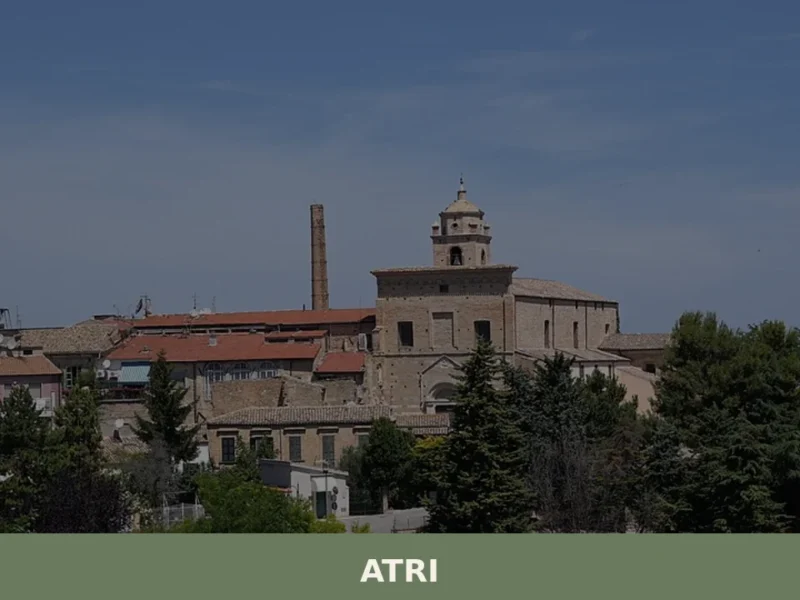
Atri
Atri, in the province of Teramo, stands at 442 meters above sea level, an altitude that allows the city to overlook the Teramo hills. Its origins lie in ancient Hatria, a Picene settlement and later an important Roman municipality, known for minting its own coins as early as the 3rd century BC. This historical richness […]
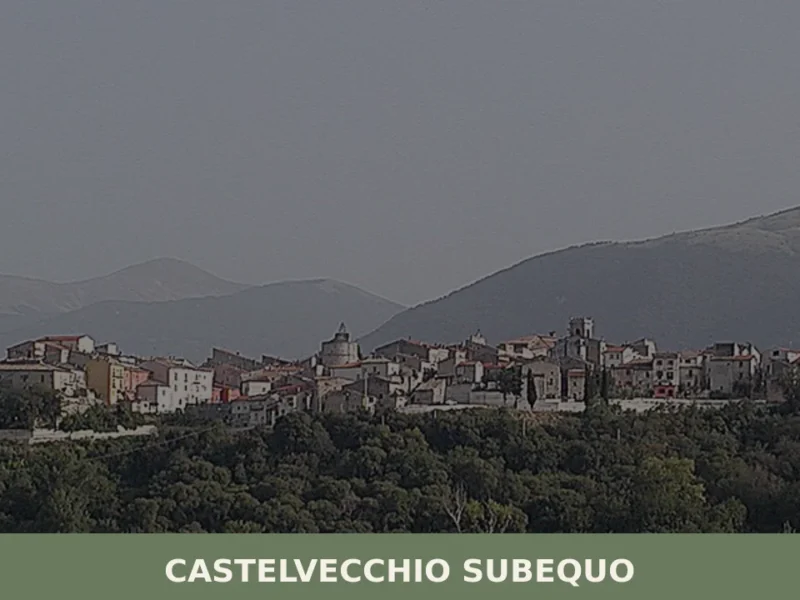
Castelvecchio Subequo
The convent of San Francesco in Castelvecchio Subequo preserves a cycle of fourteenth-century frescoes attributed to painters of the Giottesque school, among the few surviving examples in the central Apennine area. This fact alone is enough to justify a detour from the nearby A25 motorway towards a town of 832 inhabitants, at 490 metres above […]
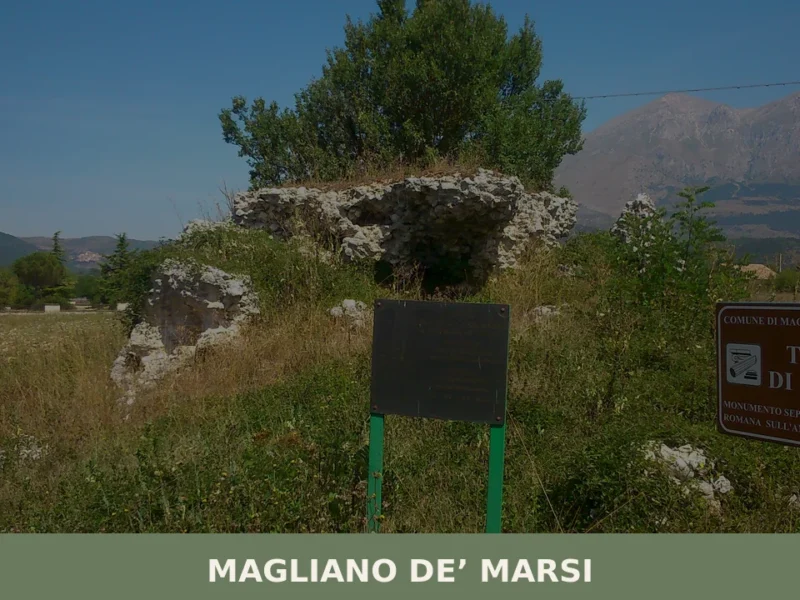
Magliano de’ Marsi
Magliano de’ Marsi has 3,739 inhabitants and extends along the western slope of the Fucino Plain, in the province of L’Aquila, at an altitude of approximately 720 metres. The town lies along the route that once connected Rome to the Adriatic coast through the Marsica basin, and its urban layout still bears the marks of […]


📝 Incorrect information or updates?
Help us keep the Corfinio page accurate and up to date.