


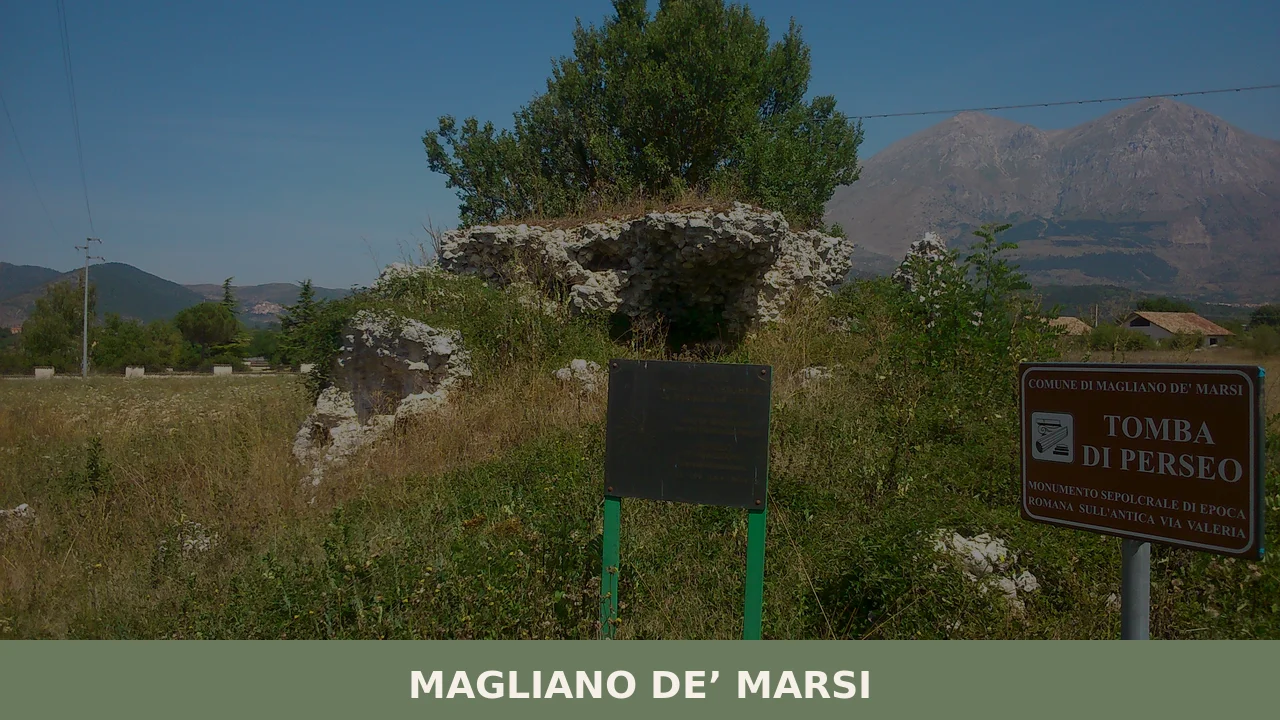
Magliano de’ Marsi
 Mountain
Magliano de’ Marsi has 3,739 inhabitants and extends along the western slope of the Fucino Plain, in the province of L’Aquila, at an altitude of approximately 720 metres. The town lies along the route that once connected Rome to the Adriatic coast through the Marsica basin, and its urban layout still bears the marks of […]
Discover Magliano de’ Marsi
Magliano de’ Marsi has 3,739 inhabitants and extends along the western slope of the Fucino Plain, in the province of L’Aquila, at an altitude of approximately 720 metres. The town lies along the route that once connected Rome to the Adriatic coast through the Marsica basin, and its urban layout still bears the marks of the rebuilding that followed the 1915 earthquake, which devastated the entire Marsica area. Asking what to see in Magliano de’ Marsi means exploring a territory where the remains of the Marsi civilisation coexist with early twentieth-century reconstruction architecture and the wide horizon of the Fucino, the lake drained by Alessandro Torlonia in 1875.
History and origins of Magliano de’ Marsi
The place name most likely derives from the Latin fundus Mallianus, referring to a Roman landed estate. The territory was part of the area inhabited by the Marsi, an Italic people who became allies of Rome after the Social War (91–88 BC). Local epigraphy has yielded inscriptions confirming the presence of settlements during the Republican and Imperial periods, connected to the nearby Alba Fucens, a Latin colony founded in 303 BC just a few kilometres away.
In the Middle Ages the town came under the control of the Counts of the Marsi, then the Colonna family, and finally the Orsini. Its position along the Marsica communication routes made it a well-frequented stopping point. The Marsica earthquake of 13 January 1915, with a magnitude of 7.0, levelled most of the settlement and caused thousands of deaths across the wider area. Reconstruction, which began in the post-World War I period and continued for decades, redesigned the town’s layout according to anti-seismic criteria that remain visible in the façades and the regular grid of the main streets. For a comprehensive overview of the history of Marsica, see the dedicated Wikipedia entry.
In the second half of the twentieth century, the reclamation of the Fucino radically transformed the local economy: the former lakebed, converted into farmland, became one of the most productive areas in central Italy for the cultivation of potatoes, carrots and sugar beet. Magliano retained an agricultural vocation that today intersects with the renewed interest in the Marsica’s archaeological heritage.
What to see in Magliano de’ Marsi: 5 main attractions
1. Church of Santa Lucia
The most significant religious building in the town centre, rebuilt after the 1915 earthquake. The façade displays the sober lines typical of ecclesiastical architecture from the Marsica reconstruction period. Inside, it preserves recovered liturgical furnishings and sacred artworks from the earlier medieval building, including wooden statues of Abruzzese craftsmanship.
2. Remains of the medieval castle
In the upper part of the town, the remains of the fortification that once controlled the valley below and the access routes to the Fucino Plain can still be identified. The surviving walls, built from local limestone, allow the plan of the original defensive enclosure to be traced. The position provides a direct vantage point over the entire Fucino basin as far as the mountains of the Vallelonga.
3. Archaeological area of Alba Fucens
A short distance from Magliano, within the neighbouring municipal territory, lies the site of Alba Fucens, one of the best-preserved Latin colonies in central Italy. The amphitheatre, the forum, the macellum and the paved streets document a city that in the 3rd century BC had approximately 6,000 inhabitants. The site is managed by the Abruzzo Region and the Ministry of Culture.
4. The Fucino Plain
The Fucino — Italy’s third-largest lake before its drainage, completed in 1875 — is today a geometric agricultural expanse, divided into regular plots visible from above. From Magliano, the full extent of the plain can be appreciated, covering approximately 160 square kilometres and bounded by the Sirente-Velino and Vallelonga mountain ranges. The drainage channels designed by the Swiss engineer Franz Mayor de Montricher remain in operation.
5. Church of the Madonna delle Grazie
Located near the town centre, this rural church preserves architectural elements predating the 1915 earthquake, including sections of stone masonry and a simply carved portal. The building is linked to a Marian devotion widespread throughout the Marsica and is one of the most noteworthy minor religious structures in the municipal territory.
Traditional cuisine and local products
The table in Magliano de’ Marsi reflects the dual identity of the territory: mountain and agricultural. The Patata del Fucino IGP, grown in the fields of the plain, is the base ingredient of numerous preparations, from soups to fried dishes. The Carota dell’Altopiano del Fucino IGP, sweet and firm thanks to the lacustrine soil, is another certified product of note. Local tables feature maccheroni alla chitarra, cut with a frame strung with steel wires and dressed with lamb or mutton ragù, and sagne e fagioli, irregular pasta cooked with borlotti beans in a broth flavoured with pork rind. Arrosticini — skewers of diced sheep meat grilled over a fornacella — are present at every communal gathering. In winter, scrippelle ‘mbusse, thin crêpes immersed in hen broth, and polenta rognosa, enriched with crumbled sausage and cheese, are prepared.
Among the cheeses are Pecorino d’Abruzzo, aged in caves or cellars, and giuncata, a fresh soft cheese made from sheep’s milk. The Marsica territory also supplies lentils grown at higher elevations and Zafferano dell’Aquila DOP, whose production area extends across the nearby Navelli plain. For desserts, ferratelle (thin wafers cooked in a patterned iron press) and mostaccioli, dense biscuits made with almonds and cooked grape must, are prepared during festive occasions. Montepulciano d’Abruzzo DOC accompanies meat dishes, while Cerasuolo d’Abruzzo DOC pairs well with legume soups. Summer food festivals — dedicated to potatoes, carrots and Fucino garden produce — bring together producers from the plain and local cooks during July and August.
When to visit Magliano de’ Marsi: the best time
Spring, between April and June, is when the Fucino Plain appears as a green mosaic: the cultivated fields reach their most intense vegetative phase and temperatures range between 10 and 22 degrees, well suited for walks towards Alba Fucens and along the hillside paths. Summer brings food festivals and outdoor evening events, but temperatures in the basin can exceed 30 degrees during the middle of the day.
Autumn coincides with the harvest of the Patata del Fucino IGP and the Carota dell’Altopiano del Fucino IGP, a period when local markets offer produce at peak freshness. Winter is harsh — minimum temperatures frequently drop below zero — but it brings clear days when the view from the hill of Magliano extends as far as the snow-covered mountains of the Sirente-Velino Regional Natural Park, a short distance away. The commemoration of the 1915 earthquake, held every 13 January, is a moment of collective remembrance for the entire district.
How to reach Magliano de’ Marsi
Magliano de’ Marsi can be reached via the A25 Roma-Pescara motorway, exiting at the Magliano de’ Marsi toll station, which connects the town directly to the motorway network. From Rome the distance is approximately 100 kilometres, covered in about one hour and ten minutes. From Pescara the journey is roughly 110 kilometres, just over an hour’s drive.
The Magliano de’ Marsi-Cappelle railway station, on the Rome–Avezzano–Sulmona–Pescara line, provides train access with services operated by Trenitalia. The nearest airport is Rome Fiumicino Leonardo da Vinci, approximately 140 kilometres away. Pescara Abruzzo Airport is about 130 kilometres distant. Avezzano, the main town of the Marsica and the area’s service hub, is just 10 kilometres away and offers bus connections to L’Aquila and Rome via TUA lines. For up-to-date information on services and transport, consult the official municipal website.
Other villages to discover in Abruzzo
Those travelling through inland Abruzzo along the axis of the province of L’Aquila can extend their itinerary towards Fagnano Alto, a scattered municipality in the Aterno Valley made up of distinct clusters — hamlets distributed between 600 and 900 metres above sea level — that preserve rural churches and stone structures linked to the pastoral economy of the L’Aquila slope. The landscape differs from the Fucino Plain: here, oak woods and abandoned terraces dominate, evidence of a mountain agriculture now partly being recovered.
Moving towards the Vestina hill belt, Catignano, in the province of Pescara, offers another variation of the Abruzzese landscape: a mid-hill territory where olive growing and viticulture mark the land with regular rows. The contrast between the Marsica of Magliano — tied to the Fucino and Roman archaeology — and these villages of the L’Aquila mountains and the Pescara hills reveals the geographical and cultural variety that runs across the region from west to east, within less than a hundred kilometres.
Frequently asked questions about Magliano de’ Marsi
What is the best time to visit Magliano de’ Marsi?
The ideal time to visit Magliano de’ Marsi is during spring, from April to June, when the Fucino Plain transforms into a vibrant green mosaic, perfect for walks towards Alba Fucens and along hillside paths with pleasant temperatures between 10 and 22 degrees. Summer, particularly July and August, is lively with food festivals celebrating local products. Don't miss the patronal feast dedicated to Santi Giovanni e Paolo and Santa Lucia, held on the last weekend of June, offering a glimpse into local traditions.
What to see in Magliano de’ Marsi? Main monuments and landmarks
Magliano de’ Marsi offers a blend of history and natural beauty. Explore the Church of Santa Lucia, a significant religious building rebuilt after the 1915 earthquake, preserving medieval artworks. Discover the evocative remains of the medieval castle in the upper town, providing panoramic views over the Fucino Plain and the Vallelonga mountains. Nearby, the Archaeological Area of Alba Fucens is a must-visit, showcasing a remarkably preserved Roman colony. Also, appreciate the unique geometric expanse of the Fucino Plain, best viewed from the town’s elevated position, and the charming Church of the Madonna delle Grazie.
What are the main natural or scenic attractions of Magliano de’ Marsi?
Magliano de’ Marsi's primary natural attraction is the vast Fucino Plain, a unique agricultural landscape spanning 160 square kilometres. Once Italy's third-largest lake, it is now a geometric mosaic of cultivated fields, offering breathtaking views, especially from the town's higher points and the medieval castle remains. From these vantage points, you can appreciate the plain's full extent, framed by the majestic Sirente-Velino and Vallelonga mountain ranges, providing stunning backdrops, particularly when snow-capped in winter.
Where to take the best photos in Magliano de’ Marsi?
For the most captivating photographs in Magliano de’ Marsi, head to the remains of the medieval castle in the upper part of the town. This location offers a direct vantage point over the entire Fucino basin, extending to the mountains of the Vallelonga, perfect for expansive landscape shots. Additionally, any elevated position within the town provides excellent opportunities to capture the geometric beauty of the Fucino Plain, especially during spring when the fields are a vibrant green, or in winter with the snow-covered Sirente-Velino mountains in the distance.
Are there museums, churches or historic buildings to visit in Magliano de’ Marsi?
Yes, Magliano de’ Marsi features several significant sites. The Church of Santa Lucia, rebuilt post-1915, houses recovered liturgical furnishings and medieval wooden statues. The Church of the Madonna delle Grazie, near the town centre, preserves architectural elements predating the 1915 earthquake. The remains of the medieval castle offer a glimpse into the town's defensive past. Just a short distance away, the Archaeological Area of Alba Fucens is an essential visit, presenting an incredibly well-preserved Latin colony with an amphitheatre, forum, and paved streets.
What can you do in Magliano de’ Marsi? Activities and experiences
In Magliano de’ Marsi, you can immerse yourself in history by exploring the local churches and the medieval castle remains, or delve into ancient Roman life at the nearby Alba Fucens archaeological site. Nature lovers can enjoy walks along hillside paths and appreciate the unique landscape of the Fucino Plain. Food enthusiasts will delight in the local cuisine, tasting IGP products like Patata del Fucino and Carota dell'Altopiano del Fucino, and experiencing summer food festivals in July and August that celebrate the region's rich agricultural heritage.
Who is Magliano de’ Marsi suitable for? Families, couples, hikers, solo travelers?
Magliano de’ Marsi is ideal for travelers seeking a blend of history, nature, and authentic Abruzzese culture. It appeals strongly to history and archaeology enthusiasts keen to explore Roman remains at Alba Fucens and medieval castle ruins. Nature lovers and hikers will appreciate the panoramic views of the Fucino Plain and the surrounding mountains, with opportunities for walks. Foodies will enjoy the traditional cuisine and summer food festivals. Its quiet charm and diverse attractions make it suitable for couples, families looking for cultural experiences, and solo travelers desiring a tranquil retreat with rich heritage.
What to eat in Magliano de’ Marsi? Local products and specialties
Magliano de’ Marsi’s cuisine reflects its mountain and agricultural identity. Don't miss the Patata del Fucino IGP and Carota dell'Altopiano del Fucino IGP, key ingredients in many dishes. Savor traditional maccheroni alla chitarra with lamb ragù, sagne e fagioli, and the iconic arrosticini. Winter specialties include scrippelle 'mbusse and polenta rognosa. Local cheeses like Pecorino d'Abruzzo and fresh giuncata are excellent. For dessert, try ferratelle and mostaccioli, paired with Montepulciano d'Abruzzo DOC or Cerasuolo d'Abruzzo DOC wines.
📷 Photo Gallery — Magliano de’ Marsi
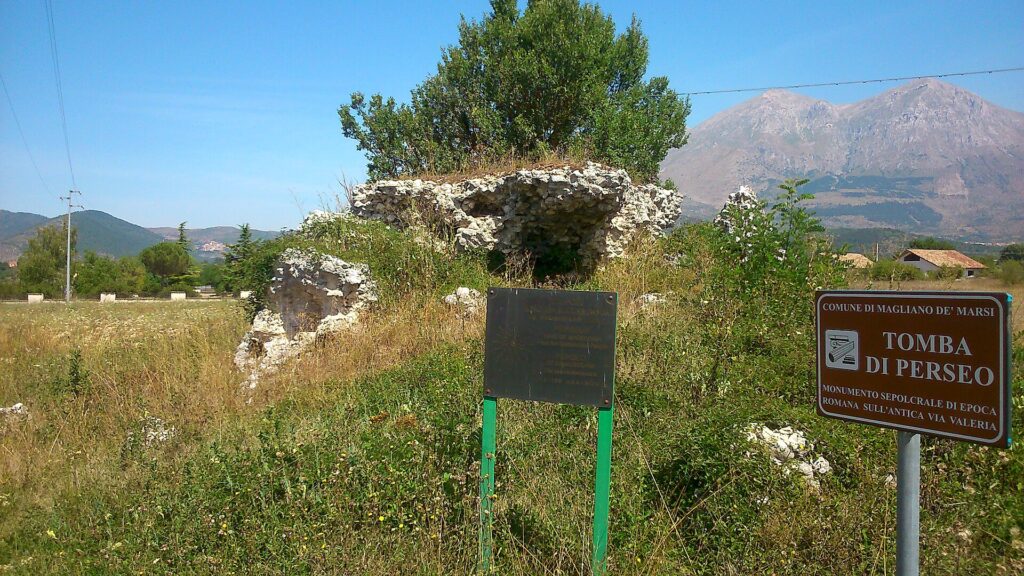
Nearby Villages near Magliano de’ Marsi
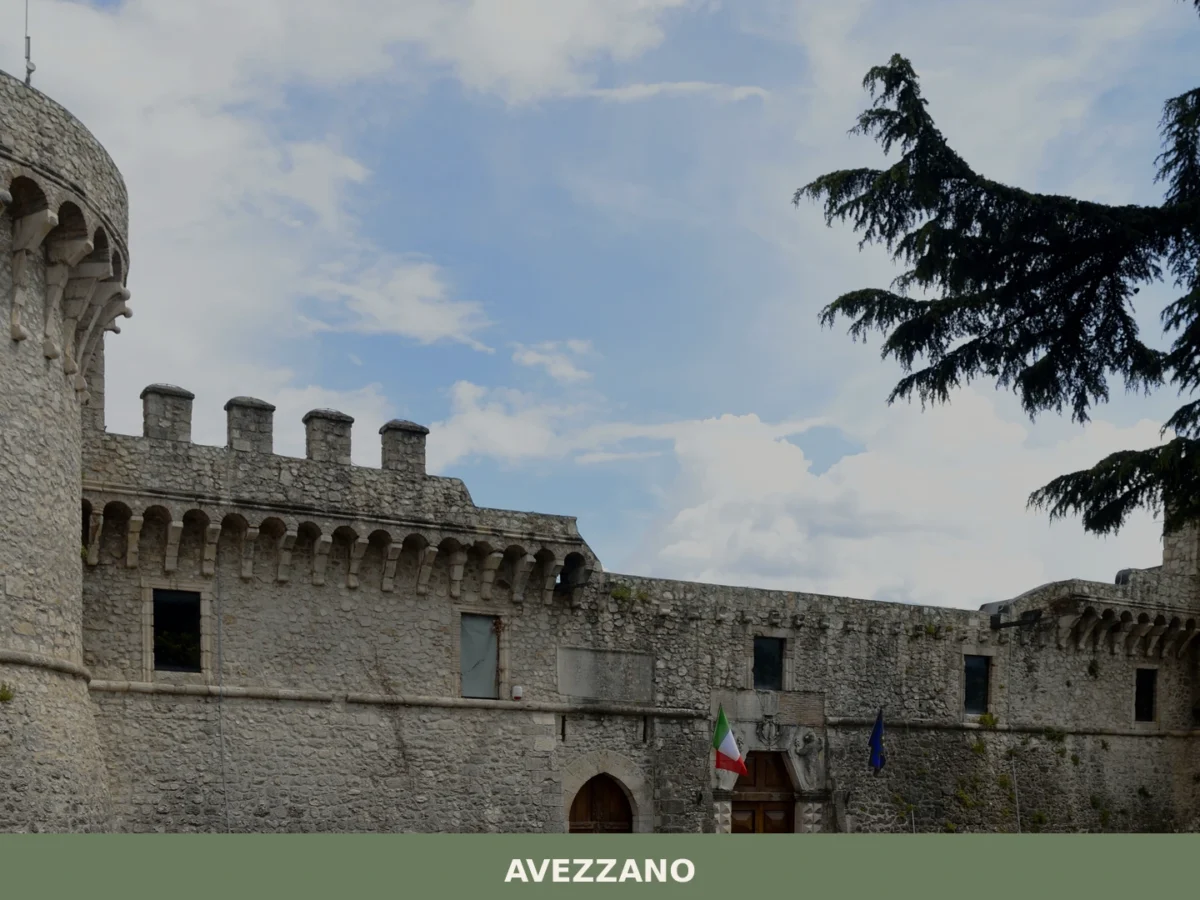
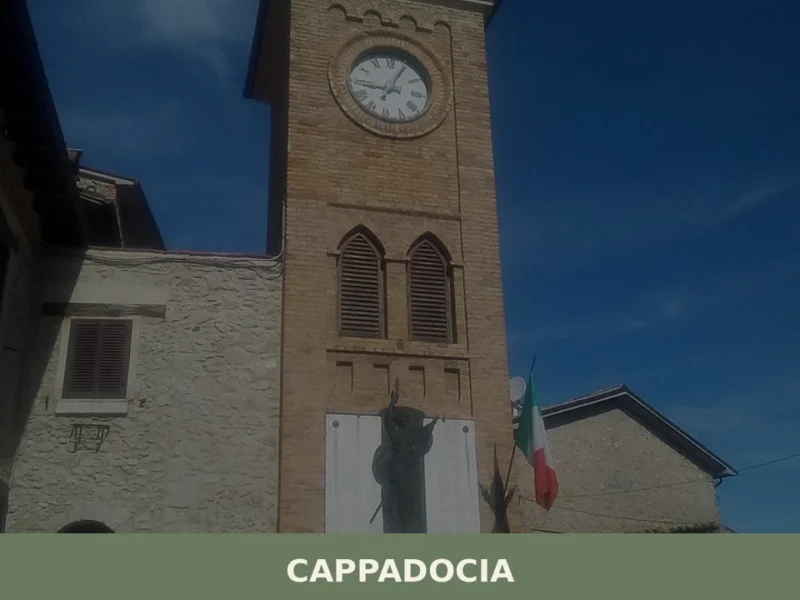
In Abruzzo More villages to discover
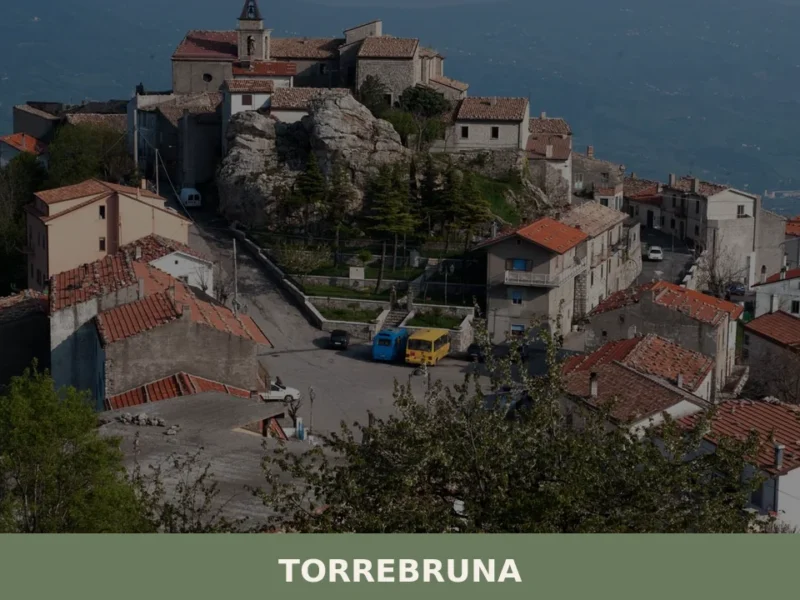
Torrebruna
Mountain
What to see in Torrebruna, Italy: 3 historic monuments, 879 inhabitants, fortified boroughs and a 17th-century church. Discover how to get there and when to visit.
Aielli
Mountain
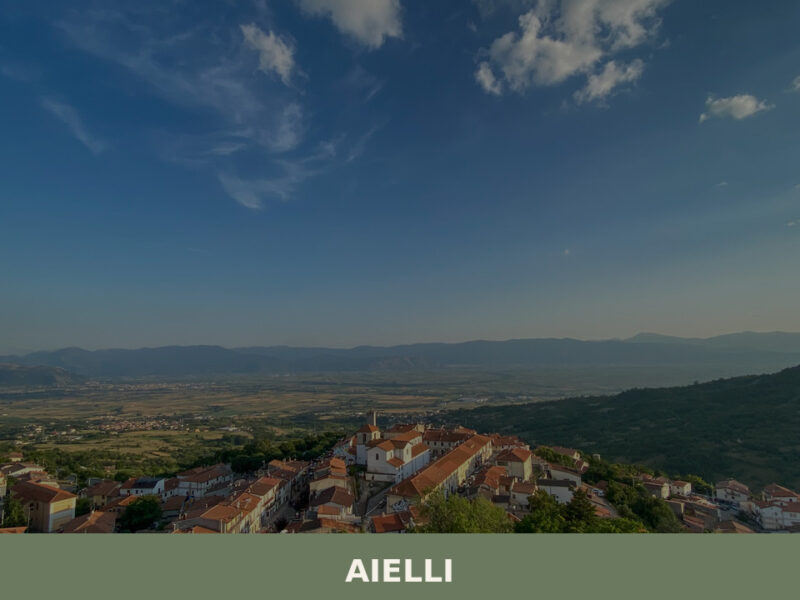
Morning light falls across a wall of painted figures three storeys tall, their colours sharp against old stone. A narrow street turns, and another mural appears — an astronomical chart, its constellations precise enough to navigate by. Aielli sits at over 1,000 metres on the Fucino plateau in the province of L’Aquila, a village of […]
Villalago
 Lake
Mountain
Lake
Mountain
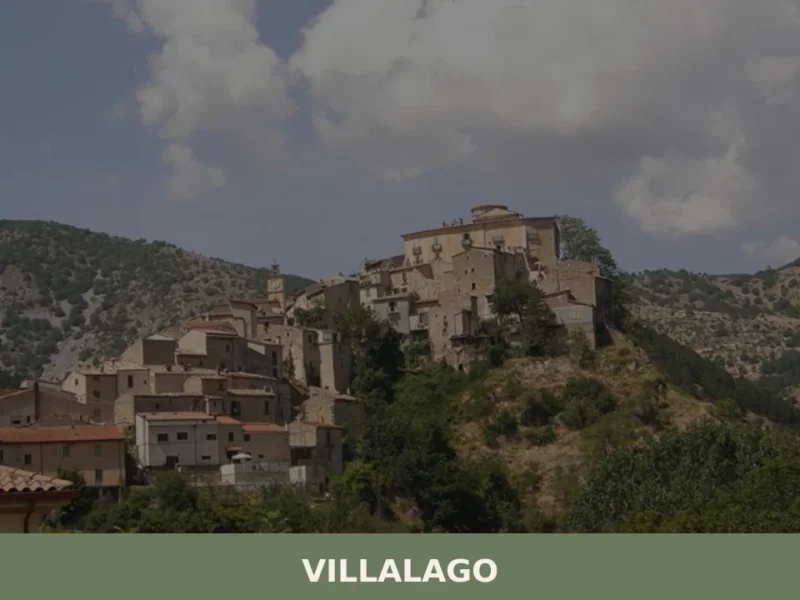
What to see in Villalago, Italy: Discover this Abruzzo village of 579 inhabitants. Explore the Rocca and Hermitage of San Domenico. Read our guide for your trip to Abruzzo.
Picciano
 Hills
Hills
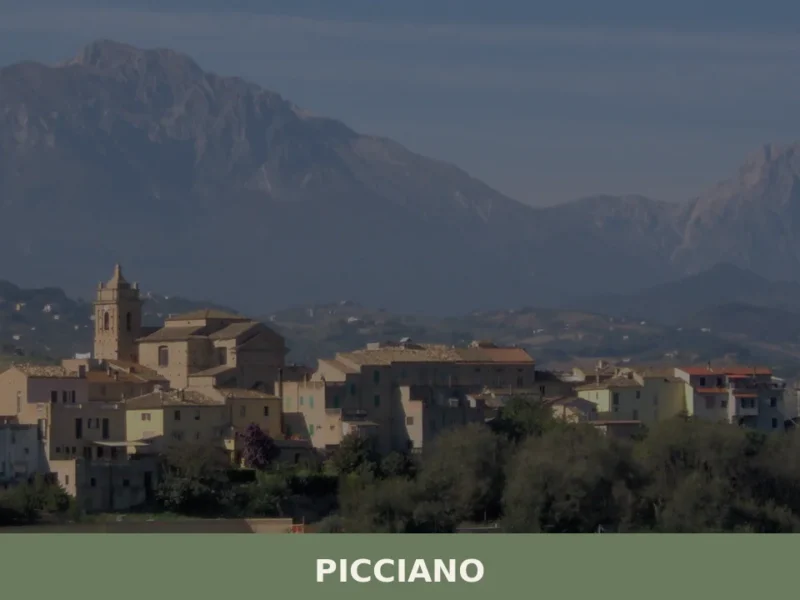
What to see in Picciano, Italy: Discover the historical village of Picciano (population 1,398). Explore its early medieval origins and panoramic Abruzzo views.
Montebello sul Sangro
Mountain
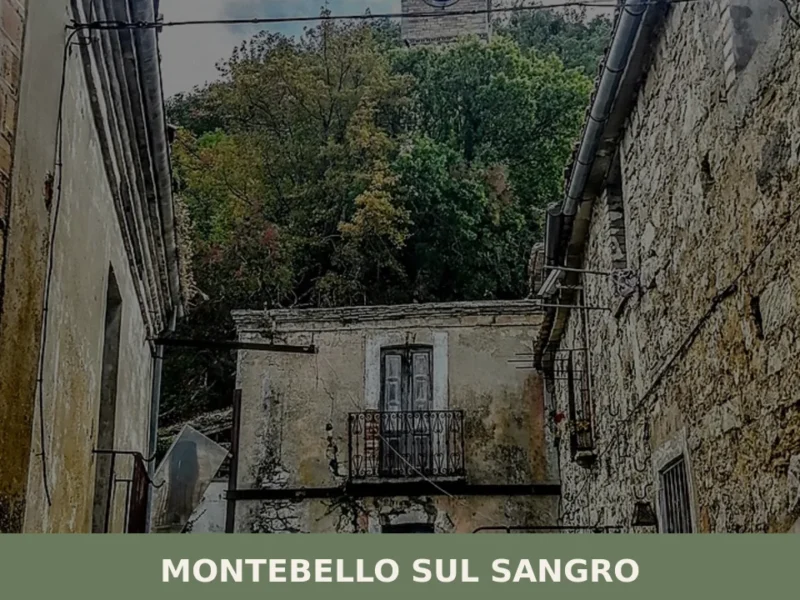
what to see in montebello sul sangro? Discover 5 attractions: Church of San Ciriaco and scenic vistas. With 81 inhabitants, explore this mountain village.
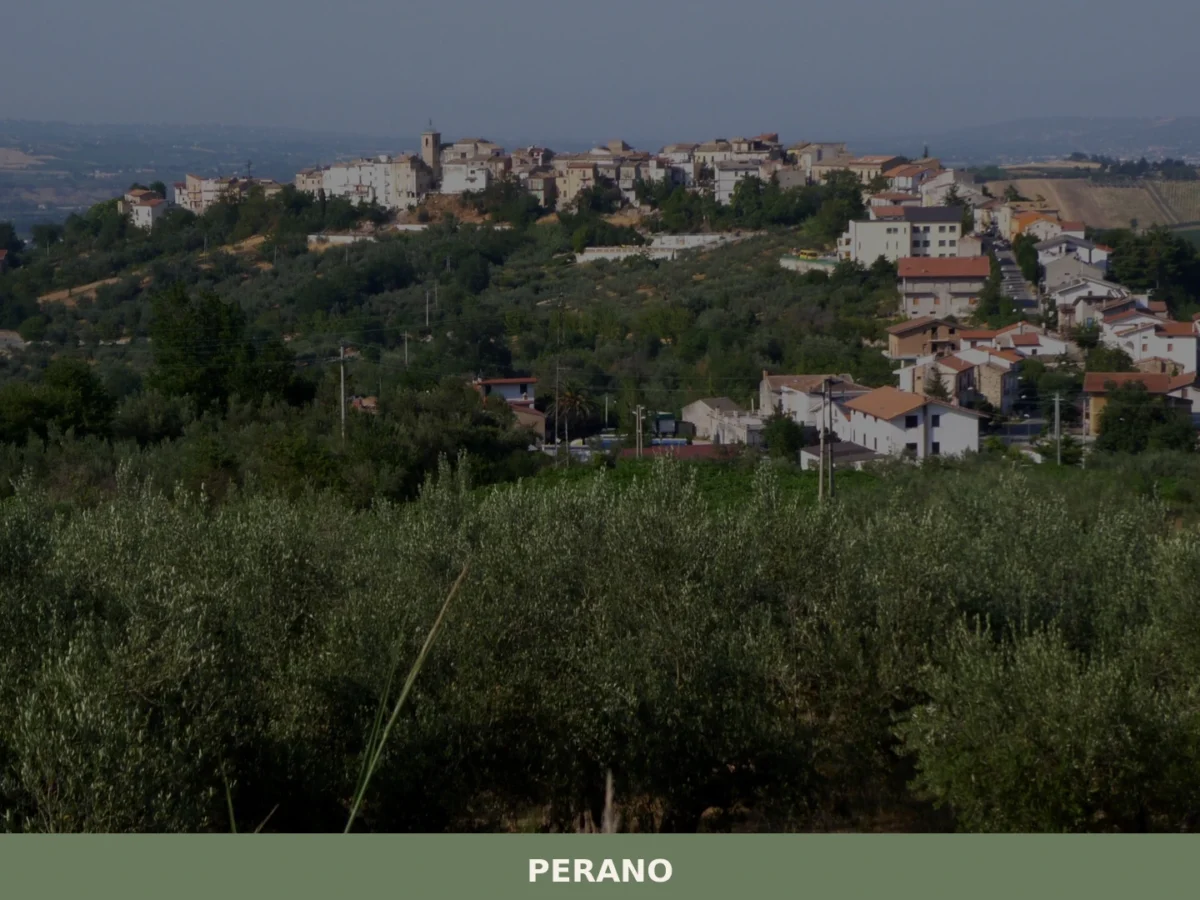
Perano
 Plains
What to see in Perano? Discover the complete guide to the 3 unmissable attractions of this Abruzzo village. Plan your visit now!
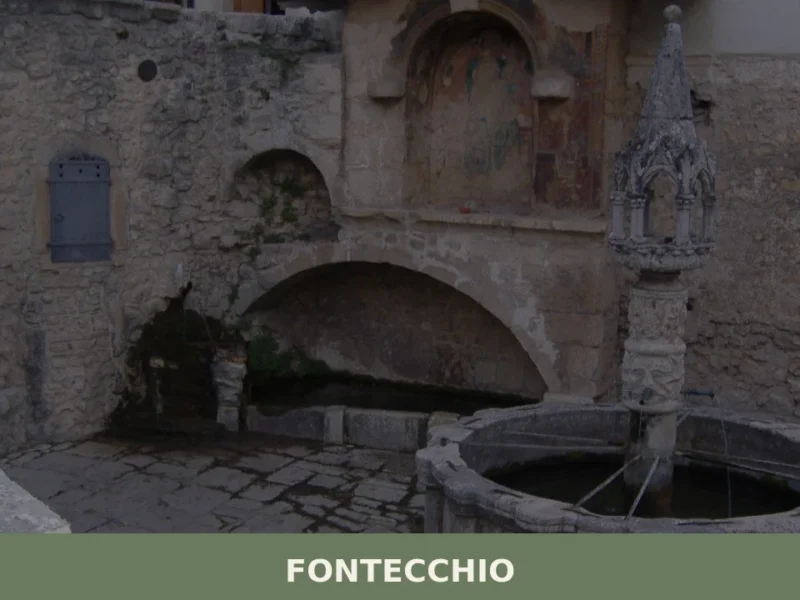
Fontecchio
Mountain
The fourteenth-century fountain with a fourteen-spouted stone basin, dated 1355, still marks the centre of Fontecchio’s main square — a village of 291 inhabitants at 668 metres above sea level in the middle Aterno Valley, province of L’Aquila. Anyone wondering what to see in Fontecchio should start right here, at this hydraulic structure that has […]
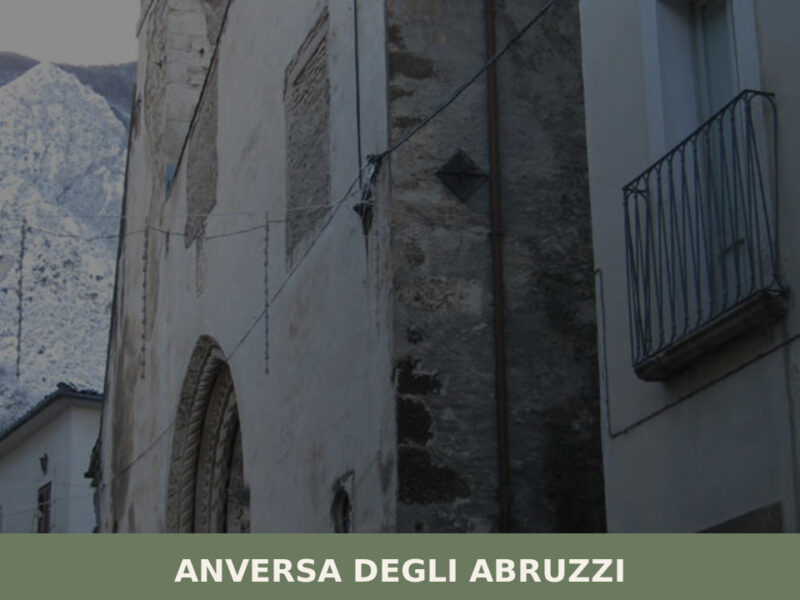
Anversa degli Abruzzi
Hills
Morning light strikes the limestone walls of the old quarter at an angle that turns them the colour of raw honey. Below, the Sagittario Gorge drops away — a vertical wound in the rock that swallows sound. The air carries a faint mineral chill even in July. With only 368 residents, Anversa degli Abruzzi holds […]
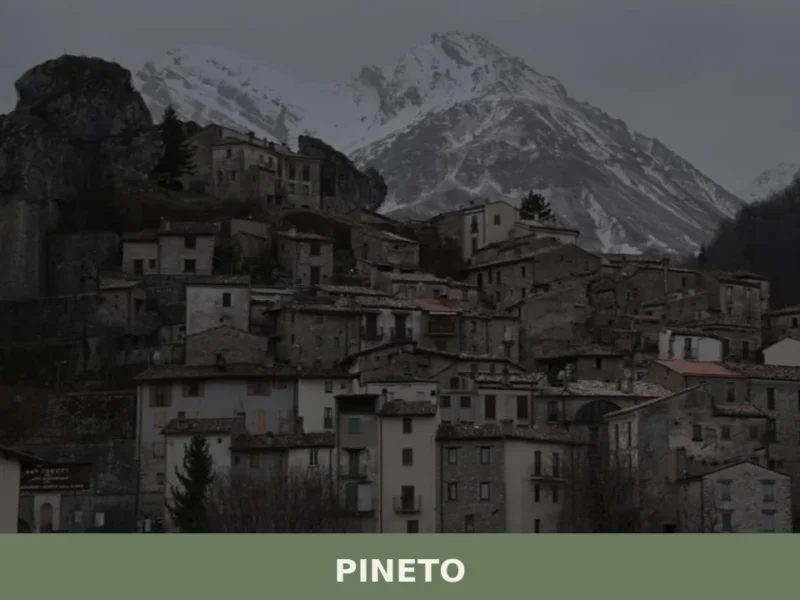
Pineto
 Sea
Sea
what to see in pineto, Italy: Explore a coastal town at 4 m a.s.l., discover the historic Torre di Cerrano, and experience traditional festivals in Mutignano. Read our guide.
Canosa Sannita
Hills
At 231 metres above sea level, on the plain that opens between the Maiella massif and the Teatine coast, Canosa Sannita is home to 1,268 inhabitants spread across an agricultural landscape where the cultivation of vines and olive trees marks the rhythm of the seasons. The village’s very name carries a precise indication: a reference […]




🏡 Know Magliano de’ Marsi better than we do?
If you’re a local or have been there, your knowledge matters: add what’s missing or fix a detail on this page.