


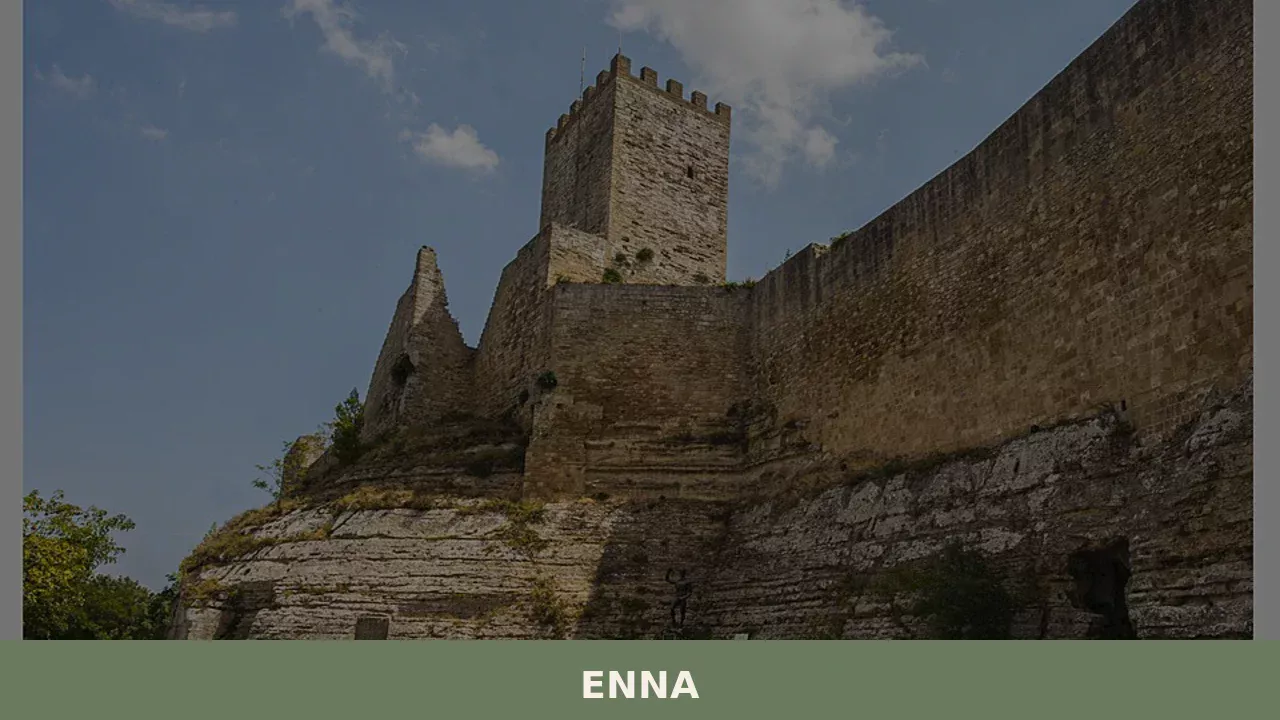
Enna
Discover Enna, a breathtaking village perched in the heart of Sicily, Italy. Explore its rich history, stunning landscapes, and timeless charm.
Discover Enna
At 936 metres above sea level, Enna stands at the top of a plateau that commands the geographical centre of Sicily.
As the provincial capital and one of the highest cities in Italy, its identity has always been shaped by its strategic position — a factor that defined every phase of its history, from the Bronze Age through the Norman and Aragonese periods to Italian unification.
Anyone exploring what to see in Enna quickly discovers a city where every monument reflects genuine historical layering: castles, cathedrals, museums and a compact historic centre, home today to 27,876 residents, overlooking a landscape of cultivated hills that slope outward in every direction across the island.
History and Origins of Enna
The earliest evidence of permanent settlement in the Enna area dates to the Bronze Age, when Sicanian populations occupied the plateau and made use of its natural defensive advantages.
The Sicels later replaced the Sicanians, and the city took the name Henna, attested in both Greek and Latin sources. Its connection with the Demeter myth was already documented in antiquity: according to Greek religious tradition, Lake Pergusa, situated just outside the city, was the site where Persephone was abducted by Hades, and the sanctuary of Demeter at Enna was among the most venerated in the Mediterranean world.
This religious significance gave the city a symbolic authority that extended well beyond its military function.
In 214 BC, Enna was the scene of one of the most violent episodes of the Second Punic War: the Roman praetor Marcus Pinarius ordered a massacre of the local population to prevent the city from defecting to Carthage.
The episode is recorded by Livy and stands as one of the most precisely documented events in the city’s ancient history. Following the Roman conquest, Henna remained an important centre of worship and a significant military garrison.
In 135 BC, the surrounding countryside saw the outbreak of the First Servile War — the first major slave revolt in the Roman world — led by a Syrian slave named Eunus, who proclaimed himself king under the name Antiochus and held Rome at bay for several years before being defeated in 132 BC.
During the Arab conquest of Sicily, which unfolded gradually between the 9th and 10th centuries, the city was renamed Qasr Yanni — a toponym from which the current name is believed to derive.
The Arabs strengthened the site’s defences and made it a significant administrative hub in the organisation of the island. The Normans took the city in the 11th century and began construction of the castle that still defines the city’s skyline.
Under Swabian rule, during the reign of Frederick II, Enna consolidated its role as a military stronghold at the heart of Sicily. The subsequent Aragonese period left a deep imprint on the civic and religious architecture of the historic centre, contributing to the city’s present-day appearance.
Anyone approaching this city’s past will find documented evidence in every surviving building — which makes knowing what to see in Enna through a chronological lens all the more rewarding.
What to See in Enna: Main Attractions
Castello di Lombardia
The Castello di Lombardia is the most imposing fortified structure in Enna and one of the best-preserved in Sicily. Built by the Normans and extended by the Swabians and the Aragonese, the complex originally had twenty towers, of which six remain standing today. The tallest, the Torre Pisana, offers a 360-degree view over the plateau and surrounding hills — reaching as far as Etna on clear days.
The castle also contains an open-air theatre used for summer performances.
Tower of Frederick II
The Tower of Frederick II stands alone in a public park at the centre of the city and is one of the most recognisable medieval structures in Enna’s historic core.
Built in the 13th century during the reign of Frederick II of Swabia, the tower has an octagonal plan — an architectural form that recurs throughout Frederician buildings in Sicily and Apulia. Its total height exceeds twenty-four metres.
The structure was most likely part of a wider defensive system, no longer legible within the current urban fabric.
Enna Cathedral
The Cathedral of Enna, dedicated to the Madonna della Visitazione — the city’s patron saint — was founded in 1307 at the behest of Eleanor of Aragon, wife of Frederick III of Sicily. Damaged by fire in 1446, it was rebuilt and enlarged over the following centuries, acquiring the Baroque features visible today in the naves and altars. The exterior façade retains Renaissance elements, while the interior houses paintings and sculptures dating from the 16th and 17th centuries.
The cathedral is the city’s principal place of worship and the defining architectural landmark of the historic centre.
Museo Alessi
The Museo Alessi is housed in the Palazzo Varisano, adjacent to the cathedral, and holds the collection donated by canon Giovanni Alessi in the 19th century.
The museum contains an extensive numismatic section featuring Greek, Roman and medieval coins from the Enna area, alongside ecclesiastical goldwork, silverware and paintings.
The collection includes the so-called Treasury of the Cathedral, comprising liturgical objects of considerable historical and artistic value. It is one of the most complete diocesan museums in central-eastern Sicily.
Lake Pergusa
The Lago di Pergusa lies a few kilometres from the centre of Enna and is the only natural lake in Sicily. The basin is of karstic origin and has no surface inflows or outflows. Mentioned in Greek mythological sources as the site of Persephone’s abduction, the lake carries a well-documented historical and cultural significance alongside its natural interest.
The surrounding area forms part of the Riserva Naturale Speciale del Lago di Pergusa, established to protect the aquatic flora and migratory birdlife that use the lake as a seasonal stopover.
Local Cuisine and Products of Enna
The food tradition of the Enna area reflects the province’s inland geography, far from the coast, built on centuries of grain farming, sheep and goat herding, and the curing of pork and lamb.
The central Sicilian plateau was for centuries one of the most productive grain-growing areas in the Mediterranean, and this agricultural vocation is evident in a cuisine where fresh handmade pasta, pulses and aged cheeses hold a central place.
Arab, Norman and Spanish influences have left recognisable marks in the use of spices, in confectionery preparations and in certain preservation techniques still practised today.
Among the dishes documented in local tradition are pasta con le fave, made with dried broad beans, onion and extra-virgin olive oil, and maccarruni di casa, a hand-rolled fresh pasta served with pork or lamb ragù.
Frittedda — a sweet-and-sour preparation of broad beans, peas and artichokes — is found across Sicily, but in the interior it tends to be prepared in more rustic, less elaborate versions than those along the coast.
Local cheeses, particularly the varieties of pecorino produced on the plateau’s farms, are a staple of the Enna table both as a cooking ingredient and as a standalone product.
Among the certified products of the territory, two are worth noting.
Cotognata (PAT) — associated with the municipalities of Enna — is a firm quince preserve made by cooking quince with sugar over a long period, traditionally poured into terracotta moulds and left to dry. The result is a dense, red-amber sweet with a gelatinous texture and an intense aromatic profile. It is eaten as a dessert on its own or paired with aged cheeses.
Natural sea salt (PAT) — also listed in the territorial database for the Enna area — is another certified product, with a tradition of hand harvesting and processing attested across Sicilian production areas.
Visitors to the city during the summer months will find sellers of local products in the neighbourhood markets of the historic centre, including honey, preserved tomatoes, fresh ricotta and cheeses.
Some typical products of the Enna area also appear at the agricultural markets of nearby villages: the Sicilian confectionery tradition, for example, is well represented in Bompietro, a small centre in the province of Palermo that shares with the Enna hinterland a long history of mountain farming and artisan production.
Festivals, Events and Traditions of Enna
Enna’s patron festival is dedicated to the Visitation of the Blessed Virgin Mary and is celebrated on 2 July.
The occasion involves a solemn procession carrying the statue of the Madonna, accompanied by the city’s confraternities and the municipal band.
Marian devotion runs deep in the history of the cathedral itself, founded in 1307 in honour of the Virgin, and the 2 July celebration is the year’s most significant moment of religious and civic gathering for the people of Enna.
Of national standing is Enna’s Holy Week, which takes place in the days leading up to Easter and involves the city’s historic confraternities in nocturnal processions of considerable ritual intensity.
Some of these confraternities date back to the medieval period; their members march in traditional dress carrying polychrome wooden statues depicting scenes from the Passion. The event draws visitors from across Sicily and from abroad, and is regarded as one of the most thoroughly documented and widely attended Holy Week observances on the island, recognised for the historical continuity of its rites and the solemnity of its night-time ceremonies.
When to Visit Enna and How to Get There
The best time to visit Enna runs from late spring through to early autumn.
Spring, between April and May, brings mild temperatures and the surrounding countryside in full growth. Summer is the most visited season, thanks to the cultural events held at the Castello di Lombardia and the open-air theatre programme.
Visitors wanting to explore what to see in Enna without the burden of high temperatures may prefer September, when the climate remains pleasant and tourist numbers drop considerably.
Winter, with frequent fog and temperatures that can fall below zero, is not well suited to extended visits — though the spring Holy Week celebrations are a compelling enough reason to make the trip regardless of conditions.
By car, the main access route is the A19 Palermo–Catania motorway, with the Enna exit at approximately 130 kilometres from Palermo and 90 kilometres from Catania. Enna’s railway station is served by the Palermo–Catania line, with stops managed by Trenitalia; note that the station is located in the lower part of the city, roughly five kilometres from the historic centre, accessible by shuttle or taxi.
The nearest airport is Catania Fontanarossa, about 90 kilometres away. Travellers arriving from Palermo Airport cover approximately 130 kilometres heading east along the A19.
For administrative information and event updates, the official reference is the Enna municipal website.
Those planning an itinerary through the Sicilian interior can extend their route towards Cefalà Diana, a centre in the metropolitan city of Palermo known for its medieval Arab baths, or towards Aliminusa, a small village in the Palermo province that shares with the Enna area its agricultural character and the geographic isolation typical of Sicily’s inland settlements.
Those arriving from the north-western part of the island may also include Poggioreale, in the Trapani area — a centre with a complex history marked by the 1968 Belice earthquake, which offers a very different but equally significant perspective on inland Sicily.
In Sicily More villages to discover
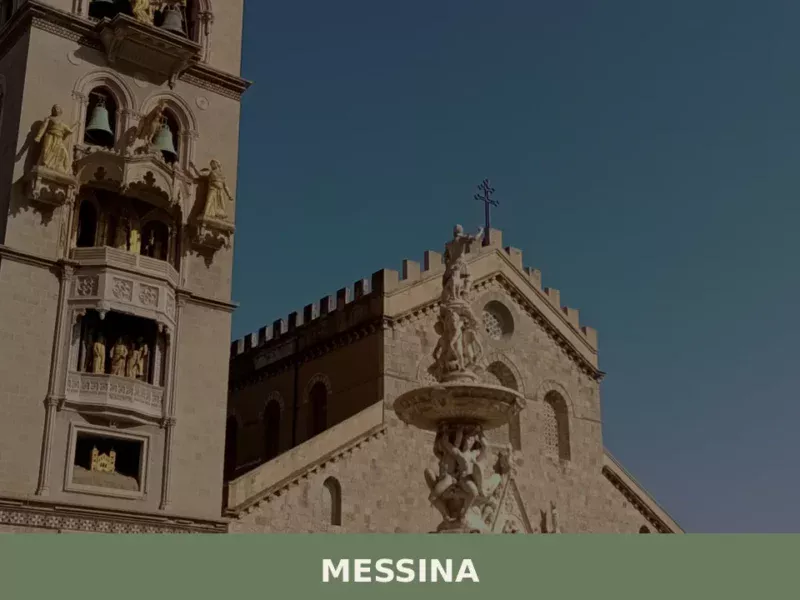
Messina
What to see in Messina: 242,267 inhabitants, the astronomical clock tower, two Caravaggios and the Norman Cathedral. Plan your visit and discover how to get there.
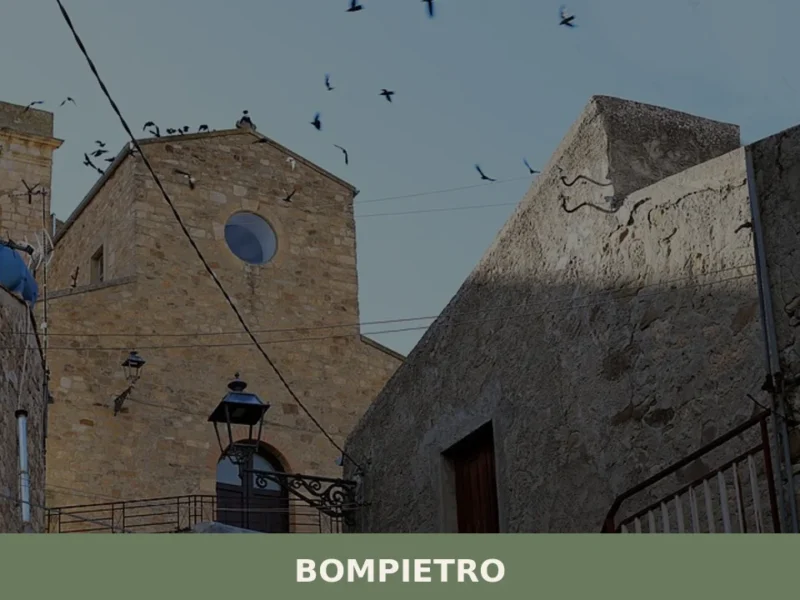
Bompietro
Morning light reaches Bompietro slowly, climbing over the Madonie range before it pours across the rooftops and into the narrow streets where older residents already occupy doorstep chairs. At 685 metres above sea level, the air carries a sharpness absent from the coast — part wild oregano, part cold stone. Fewer than 1,200 people live […]
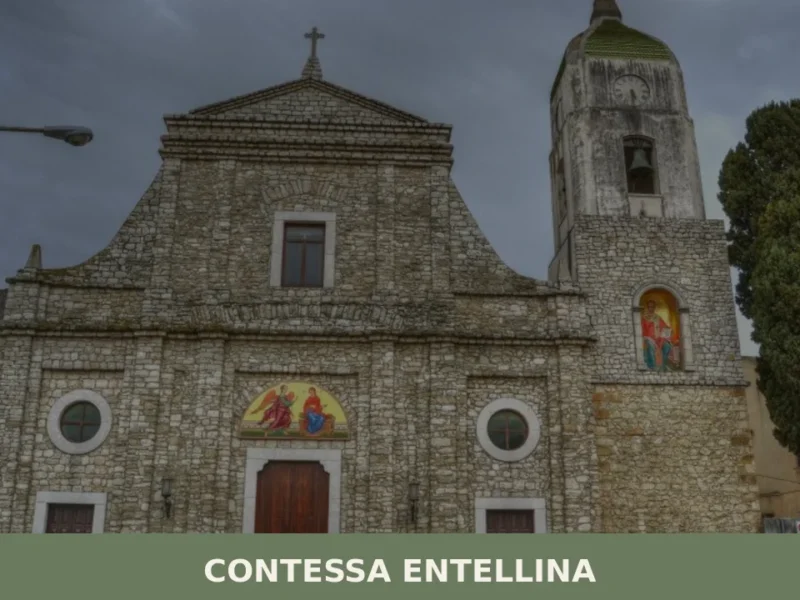
Contessa Entellina
Discover what to see in Contessa Entellina: Arbëreshë heritage, Rocca d'Entella ruins, Byzantine-rite churches, local food, and practical travel tips.
📝 Incorrect information or updates?
Help us keep the Enna page accurate and up to date.