


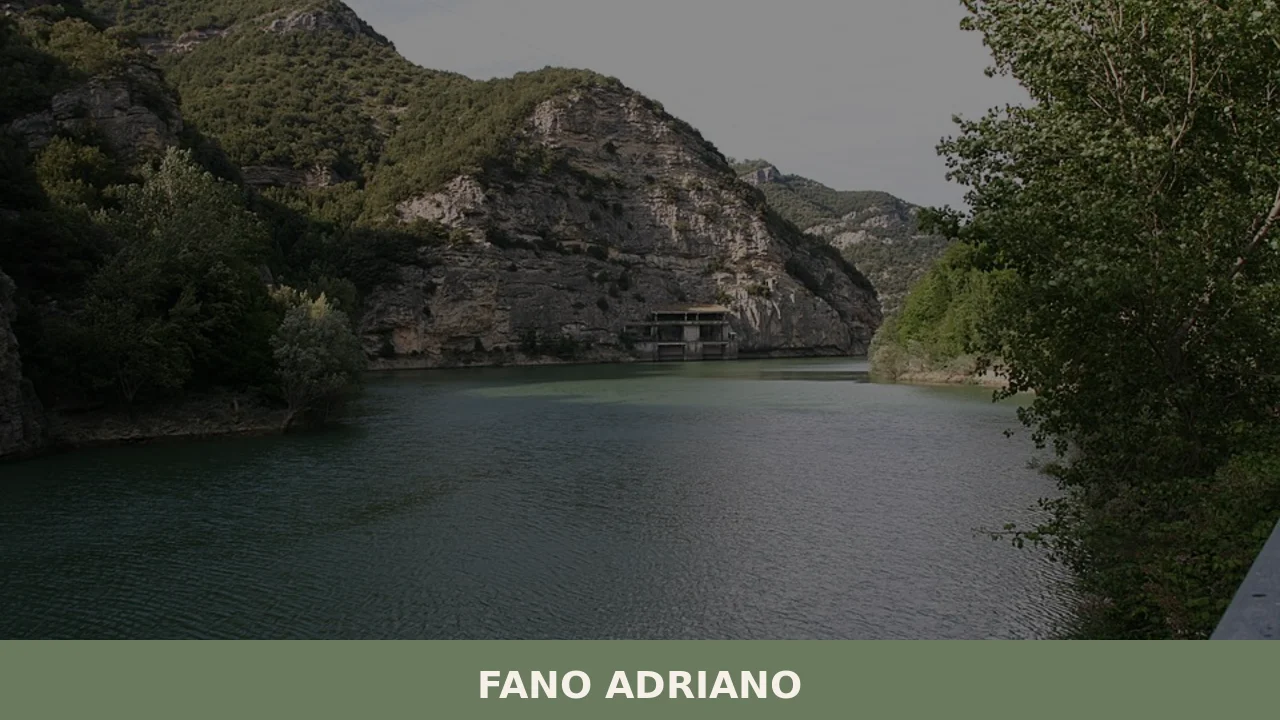
Fano Adriano
Fano Adriano, 750 meters above sea level in the province of Teramo, appears as an alpine settlement in the heart of mountainous Abruzzo, with a current population of 249 inhabitants. Its core, developed along the ridges leading to the Gran Sasso massif, documents centuries of human presence in a geographical context that has influenced its […]
Discover Fano Adriano
Fano Adriano, 750 meters above sea level in the province of Teramo, appears as an alpine settlement in the heart of mountainous Abruzzo, with a current population of 249 inhabitants. Its core, developed along the ridges leading to the Gran Sasso massif, documents centuries of human presence in a geographical context that has influenced its architecture and customs. For those wondering what to see in fano adriano, the village offers a sequence of elements that narrate its relationship with the environment and history, from stone structures to traces of an economy linked to pastoralism and the forest, situated within the Gran Sasso and Monti della Laga National Park.
History and Origins of Fano Adriano
The origins of the name Fano Adriano refer to a Roman era, with the hypothesis that ‘Fanum’ indicated a place of worship and ‘Adriani’ referred to the Roman gens or Emperor Hadrian himself, evidencing an ancient presence in the territory. The first documented records date back to the 12th century, when the village was listed among the possessions of the Benedictine monks of Montecassino, a connection that defined its religious and cultural development for a long time.
Over the centuries, Fano Adriano passed under the control of various feudal families, including the D’Aquino, Orsini, and Mendoza, each of whom left an imprint on the village’s structure and its fortifications. Its strategic position, controlling mountain transit routes, made the village a point of interest for local lordships and a defensive outpost against external incursions.
The current urban layout retains its medieval structure, with stone houses adapting to the terrain’s morphology, creating narrow streets and sudden open spaces. This arrangement reflects a design dictated by the need for defense and space optimization in a mountain environment, forming an example of spontaneous architecture that evolved over centuries. More details on the municipality’s history are available on the official website of the Municipality of Fano Adriano and on Wikipedia.
What to see in fano adriano: 5 must-see attractions
1. The Church of San Valentino
Dedicated to the village’s patron saint, San Valentino of Terni, the parish church forms a focal point for the community. Its structure, despite having undergone alterations over time, retains architectural elements that document its older origin. Inside, one can observe sacred works and wooden furnishings that reflect local devotion, particularly during the feast day on February 14.
2. The Medieval Tower
A surviving element of the village’s ancient fortifications, the Medieval Tower stands as evidence of the defensive needs that characterized Fano Adriano. Its position, likely integrated into a larger wall system, offered visual control over the surrounding valleys. Today, the tower is a historical and architectural reference that identifies the village’s profile.
3. The Museum of Traditions and Rural Civilization
This exhibition space collects objects, tools, and documents that illustrate rural life and the typical agro-pastoral activities of the area. Through the reconstruction of environments and the presentation of artifacts, the museum offers an insight into the customs and daily work of past generations, preserving the memory of a mountain economy.
4. The Historic Core of the Village
Walking through the streets of the center, one observes the spontaneous architecture of the stone houses, which follow the contours of the terrain. The dwellings, often with carved stone portals and small balconies, form a compact urban fabric. The layout of the streets and smaller squares evokes the medieval genesis of the village, adapted to the mountain slopes.
5. Views of the Gran Sasso Massif
Given its altitude and position, Fano Adriano offers various points from which perspectives open onto the Gran Sasso d’Italia massif. From the surrounding heights or specific open spaces in the village, it is possible to observe the highest peaks, such as Corno Grande, and the valleys below, perceiving the proximity to the alpine environment of the National Park.
Typical Cuisine and Local Products
The cuisine of Fano Adriano reflects its mountain and pastoral identity, with dishes that highlight the resources of the territory. Undisputed protagonists are the arrosticini, skewers of sheep meat cooked over coals, an expression of the transhumance tradition. Alongside these are pecorino cheeses, produced with milk from local farms, which vary in aging and aromatic intensity. There are also cured meats such as liver sausages, prepared according to traditional recipes.
Preparations based on legumes, such as lentils, and cereals, such as farro, form the basis of warming soups and stews in the colder months. Although not directly cultivated in Fano Adriano, the Abruzzo territory is also known for Saffron of L’Aquila PDO, which can enrich some local preparations. The simplicity of the ingredients and the robustness of the flavors define a gastronomic experience linked to the cycle of the seasons and the work of the land and pastoralism.
When to visit Fano Adriano: the best period
The ideal period to visit Fano Adriano depends on the activities one intends to undertake. The summer months, from June to September, offer mild temperatures and are favorable for excursions in the Gran Sasso and Monti della Laga National Park, with trails that extend through high-altitude forests and meadows. During this period, the natural environment manifests in its full botanical and faunal variety.
Winter transforms the landscape into an alpine setting, with the possibility of practicing winter sports in nearby ski resorts. The patron saint’s feast day of San Valentino, on February 14, offers an opportunity to observe local traditions, with religious rites and community gatherings that enliven the village, albeit in a colder climate. Spring and autumn, with their changing colors, allow one to appreciate the transition of the seasons, with fewer tourist flows and a more intimate atmosphere.
How to get to Fano Adriano
To reach Fano Adriano, one can opt for various transport solutions. By car, from Rome or Pescara, take the A24 motorway (Rome-Teramo), exiting at Colledara/San Gabriele and then continuing on State Road 81 towards Montorio al Vomano, before taking Provincial Road 45.
The nearest railway station is Teramo, from which local bus services can then be used, although
In Abruzzo More villages to discover
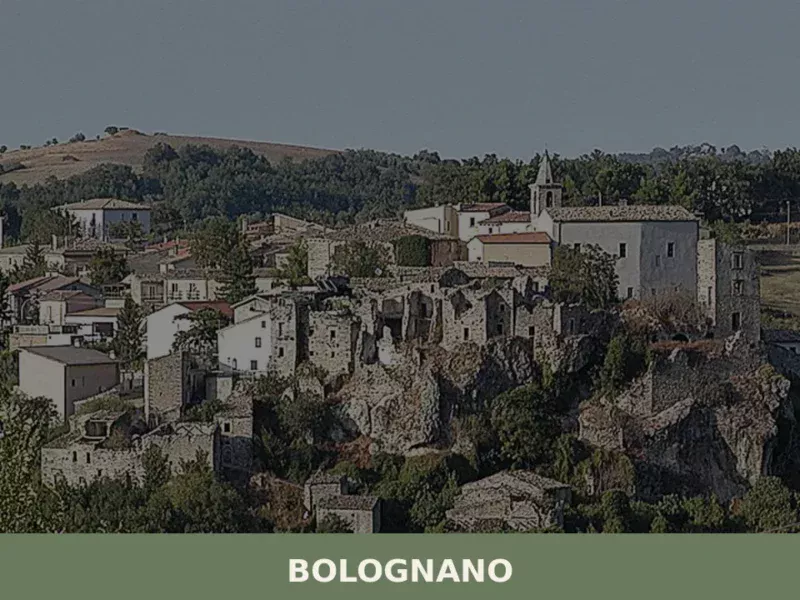
Bolognano
At 276 metres above sea level, along the Orta valley, Bolognano has a current population of 1,002 and occupies a stretch of flatland in the province of Pescara that served, between 1989 and 1992, as the site of an international art experiment conceived by the German artist Joseph Beuys. Asking what to see in Bolognano […]

Ateleta
Morning fog lifts off the Alto Sangro valley in slow, deliberate sheets, revealing stone houses arranged along a ridge at over 750 metres above sea level. The air carries woodsmoke and the faint sound of a church bell marking seven o’clock. Ateleta, a village of 1,157 inhabitants in the province of L’Aquila, occupies a quiet […]
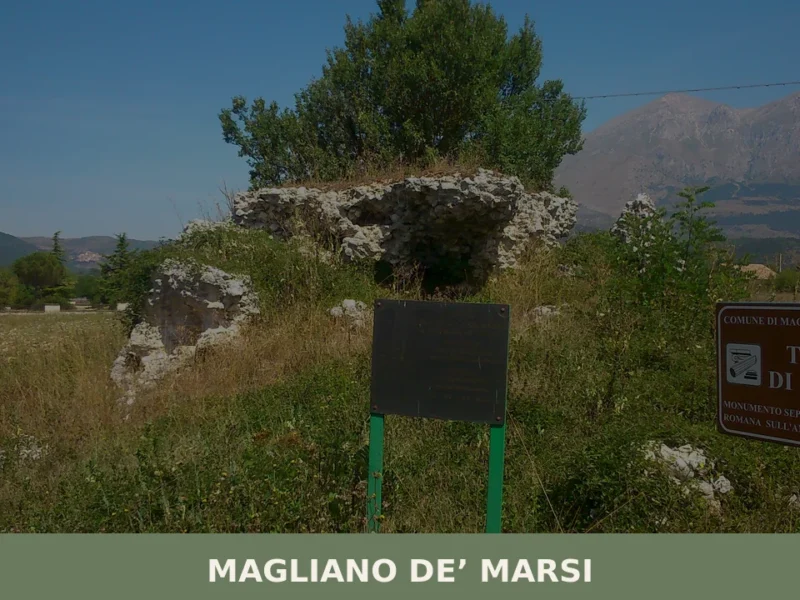
Magliano de’ Marsi
Magliano de’ Marsi has 3,739 inhabitants and extends along the western slope of the Fucino Plain, in the province of L’Aquila, at an altitude of approximately 720 metres. The town lies along the route that once connected Rome to the Adriatic coast through the Marsica basin, and its urban layout still bears the marks of […]
🧀 Italian traditional products






📝 Incorrect information or updates?
Help us keep the Fano Adriano page accurate and up to date.