


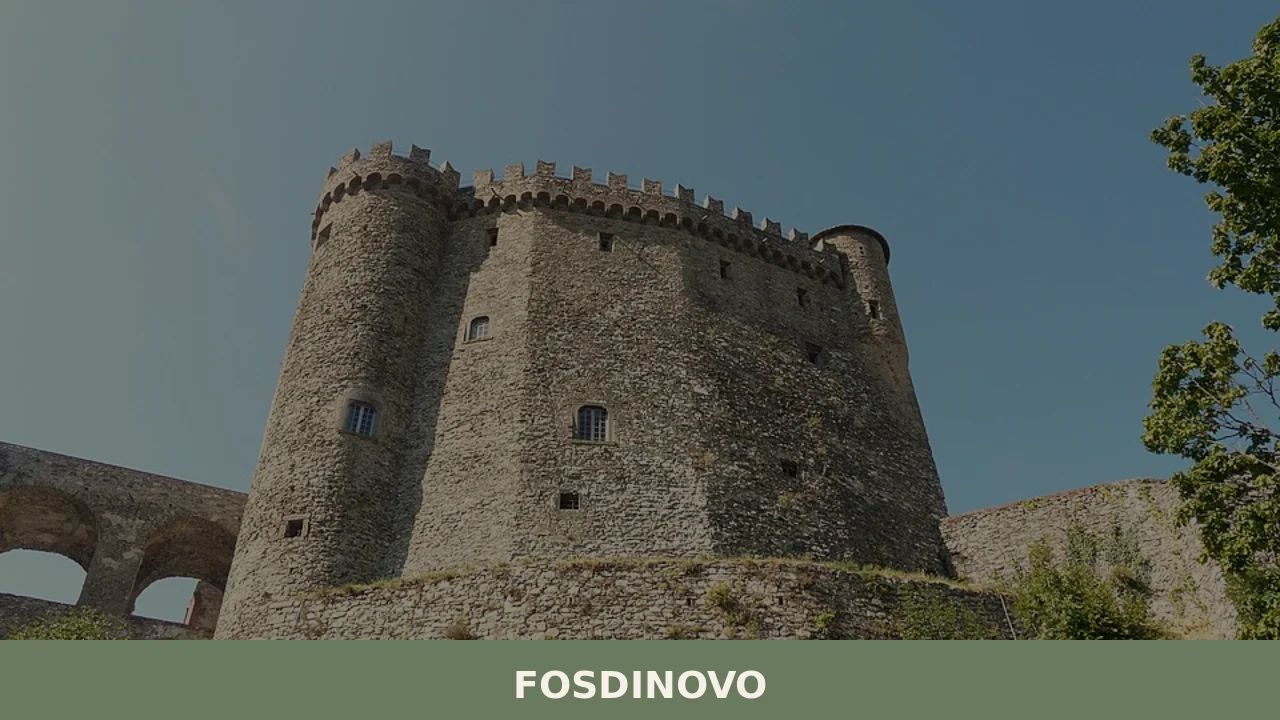
Fosdinovo
The Malaspina Castle of Fosdinovo has dominated the ridge separating the Val di Magra from the Apuan coast for over seven hundred years, with its four circular towers and a sentry walkway that can still be traversed. At 500 metres above sea level, this town in the province of Massa and Carrara has 4,982 inhabitants […]
Discover Fosdinovo
The Malaspina Castle of Fosdinovo has dominated the ridge separating the Val di Magra from the Apuan coast for over seven hundred years, with its four circular towers and a sentry walkway that can still be traversed. At 500 metres above sea level, this town in the province of Massa and Carrara has 4,982 inhabitants and preserves a medieval urban layout defined by walls, gates and alleyways arranged according to the defensive logic of the fief. Understanding what to see in Fosdinovo means reading the layers of a feudal power that governed Lunigiana for centuries, leaving clear marks in the sandstone and in archival documents.
History and origins of Fosdinovo
The name Fosdinovo appears for the first time in a document from 1084, in the form Fosdenova, probably derived from the Latin fossa and nova, referring to a newly constructed defensive ditch. The village entered the Malaspina orbit in the 13th century, when the Guelph family of the Spino Fiorito branch consolidated control over much of eastern Lunigiana. In 1340, Spinetta Malaspina the Great obtained the fief, which from that point followed the fortunes of the marchional branch for over four hundred years. The marquisate of Fosdinovo was among the last to fall: it was annexed to the Grand Duchy of Tuscany only in 1797, with the arrival of Napoleonic troops.
Local tradition links Fosdinovo to the name of Dante Alighieri, who according to several sources stayed with the Malaspina family during his exile. A document from 1306 — the so-called Peace of Castelnuovo — attests to the poet’s presence in Lunigiana as procurator for Marquis Franceschino Malaspina. A plaque in the castle commemorates this visit, and some scholars have suggested that verses from Purgatorio (Canto VIII, lines 121–132) allude precisely to the hospitality he received in these lands. The village maintained strategic importance in subsequent centuries as well: during the Second World War, the Gothic Line ran just a few kilometres to the north, and Fosdinovo was the site of partisan operations documented by the Apuan Institute for the History of the Resistance.
What to see in Fosdinovo: the 5 main attractions
1. Malaspina Castle
Built from the 12th century onwards and expanded in the 1300s, the castle preserves frescoed halls, a courtyard of honour with a loggia, the family chapel and a system of underground passageways. The four circular corner towers, added in the 15th century to withstand firearms, are still intact. The building can be visited with a guide and houses a museum itinerary dedicated to the Malaspina family.
2. Church of San Remigio
The parish church, dedicated to the patron saint Remigius of Reims whose feast day falls on 1 October, dates in its current structure to the 13th century, with a sandstone façade and an ogival portal. Inside are a white Carrara marble baptismal font from the 15th century and a wooden crucifix dating to the 1300s. The three-nave layout reflects the model of the Lunigiana parish churches.
3. Oratory of the Bianchi
Seat of the Confraternity of the Disciplinati, this small 17th-century building contains a polychrome marble altar and stucco decorations of the Genoese school. The structure, set against the southern walls of the village, documents the confraternal network active in Lunigiana between the 16th and 18th centuries and the movement of Ligurian craftsmen into the Apuan hinterland.
4. The medieval walls and gates
The defensive walls of Fosdinovo, largely preserved, extend for approximately six hundred metres with three access gates. Porta Nord and Porta di Sotto retain their original pointed arches. The route along the walls offers a direct view of the Apuan Alps to the east and the Gulf of La Spezia to the west, with the islands of Palmaria and Tino visible on clear days.
5. Via Dantesca and CAI trail 39
CAI trail number 39, also known as the Via Dantesca, connects Fosdinovo to Castelnuovo Magra along a route of approximately 8 kilometres through chestnut and olive groves. The path follows the ridge overlooking the lower Val di Magra and passes through rural hamlets such as Caprognano and Ponzanello, with stretches on original cobblestone paving and moderate elevation changes suitable for a day hike.
Food and local products
The cuisine of Fosdinovo is that of inland Lunigiana, built on chestnut flour, olive oil and vegetables. Testaroli, discs of flour-and-water batter cooked on red-hot cast-iron plates and then dressed with Genoese pesto or fresh olive oil, are the most representative dish of the area. Torta d’erbi — a very thin pastry shell filled with chard, borage and pecorino — is still prepared in savoury versions and, at Easter, in a sweet variant with rice. Focaccette di Aulla, fried in lard and filled with cured meats or stracchino cheese, can be found at local fairs in the surrounding area. Miele della Lunigiana DOP, in both the acacia and chestnut varieties, is produced at altitude in the chestnut groves above the village. Olio Extravergine di Oliva Toscano IGP, with the Lunigiana geographical designation, comes from local cultivars such as razzola and frantoio, cold-pressed in the mills of the valley floor.
Chestnut flour from Lunigiana is protected by the PAT designation of the Tuscany Region and is ground in water-powered mills still operating in the area around Comano and Fivizzano. This flour is used to make necci, thin crêpes filled with fresh ricotta, and castagnaccio, enriched with pine nuts, rosemary and raisins. Candia dei Colli Apuani DOC, a white wine produced on the slopes between Massa and lower Lunigiana from vermentino and albarola grapes, accompanies fish dishes that come up from the coast. The Wild Boar Festival, held in autumn, offers pappardelle with game ragù and grilled meats, while the patron saint’s feast on 1 October includes a food market with local producers. The Municipality of Fosdinovo publishes the updated calendar of food events on its institutional website.
When to visit Fosdinovo: the best time
The location at 500 metres above sea level ensures cooler summers compared to the Versilia coast, with average July temperatures around 24 °C. Spring, from April to June, is the most suitable period for walking the CAI trails and the Via Dantesca, when the chestnut woods are in full leaf and the olive groves are in bloom. Autumn brings the chestnut harvest and olive pressing, with festivals concentrated between October and November. Winter can bring cold and foggy days, but offers the best visibility of the snow-covered Apuan Alps from the castle terrace.
On 1 October, the feast of San Remigio, the village hosts a procession and a traditional market. During summer, the Malaspina Castle becomes a venue for theatre and music events organised by the municipality. Those who prefer to avoid the crowds of the Versilia summer season will find that Fosdinovo sees modest visitor numbers even in August, with dining and tour services operating regularly.
How to reach Fosdinovo
By car, from the A12 Genova–Livorno motorway take the Sarzana exit and follow the SP57 for approximately 14 kilometres in a north-easterly direction, with a travel time of twenty minutes. From the A15 Cisa motorway, the most convenient exit is Aulla, from which Fosdinovo is 18 kilometres away along the SP32. The nearest railway station is Sarzana, on the Genova–Pisa line, connected to the village by Autolinee Toscane buses with approximately four daily services on weekdays. Pisa Galileo Galilei Airport is 100 kilometres away, reachable in about one hour and twenty minutes via the A12. Genova Airport is 130 kilometres away. From Florence the journey takes approximately two hours, following the A11 to Lucca and then the A12 to Sarzana.
Other villages to discover in Tuscany
Lunigiana and Garfagnana offer a network of smaller centres that share with Fosdinovo the same geological and cultural foundation — sandstone, chestnut trees and ancient feudal jurisdictions. Comano, in the Taverone valley to the south-east, preserves a Malaspina castle of the Spino Secco branch and water-powered mills where chestnut flour is still ground. Its territory marks the boundary between the Lunigianese and Garfagnana spheres of influence, with a dialect and cuisine that reflect this transitional position.
Further south, along the Garfagnana side of the Apuan Alps, Careggine sits at 865 metres above sea level on the edge of the artificial Lake Vagli, known for the submerged village of Fabbriche di Careggine, visible during the rare drainings of the reservoir. The proximity to the Apuan Alps Regional Park makes both villages access points for high-altitude hikes, from Monte Pisanino to Pizzo d’Uccello — peaks that can be clearly distinguished from Fosdinovo looking eastward on winter mornings.
In Tuscany More villages to discover
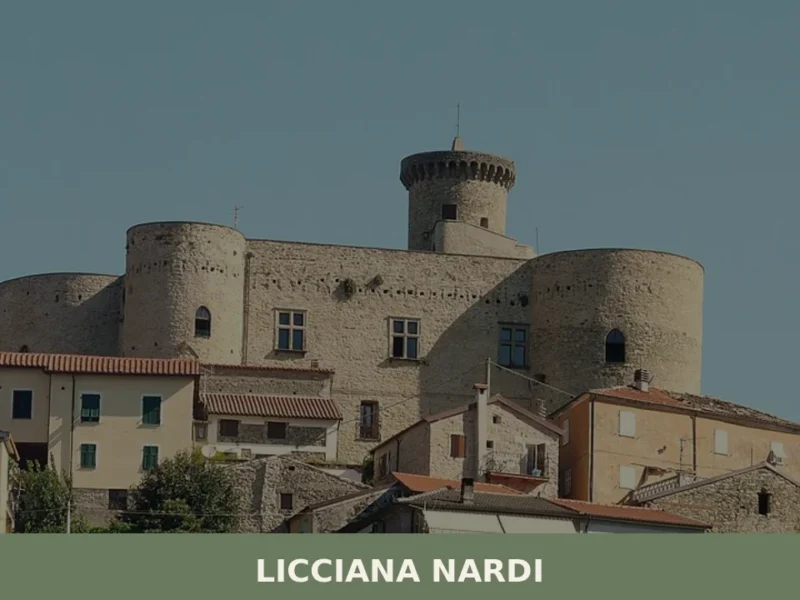
Licciana Nardi
The territory of Licciana Nardi includes six castles spread between the valley floor and the Apennine slopes, a concentration of defensive structures that documents the strategic role of this stretch of Lunigiana in controlling the routes between the Po Plain and the Tyrrhenian coast. With its 4,894 inhabitants distributed across 55 square kilometres at an […]
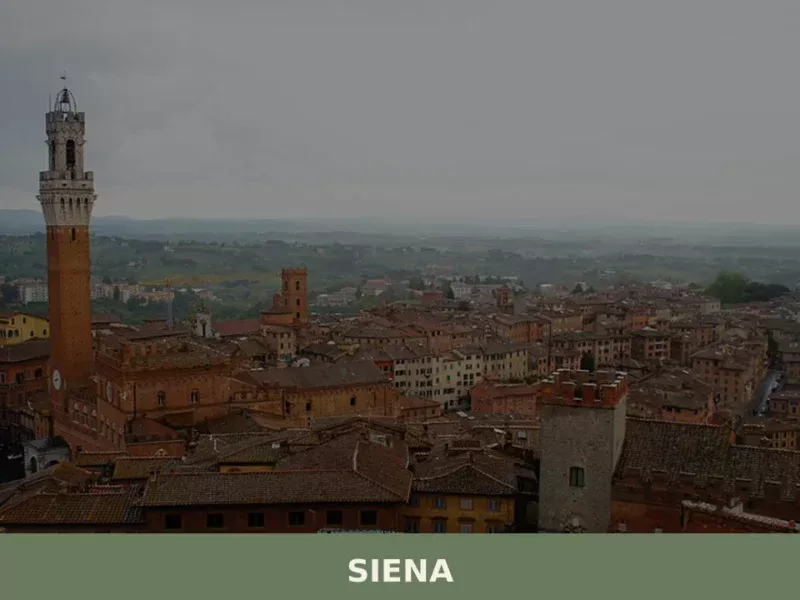
Siena
What to see in Siena: UNESCO centre at 322 m, population 52,883. Explore Piazza del Campo, the Cathedral, the Palio, and local foods like panforte and pici. Plan your visit.
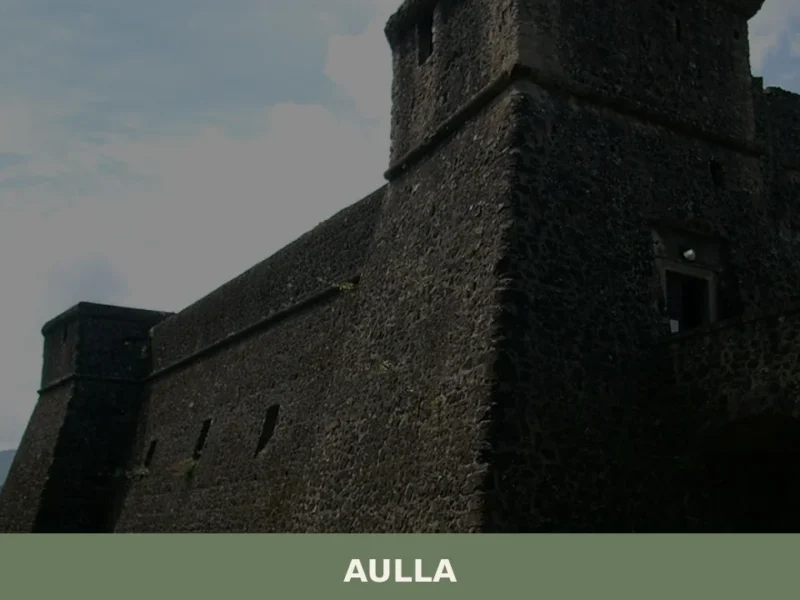
Aulla
In 884 AD, Marquis Adalbert of Tuscany founded an abbey dedicated to Saint Caprasius at the confluence of the Magra and Aulella rivers, transforming a modest valley-floor settlement into an obligatory stopping point on the Via Francigena. Today, anyone wondering what to see in Aulla will find a lowland town at 64 metres above sea […]



📝 Incorrect information or updates?
Help us keep the Fosdinovo page accurate and up to date.