


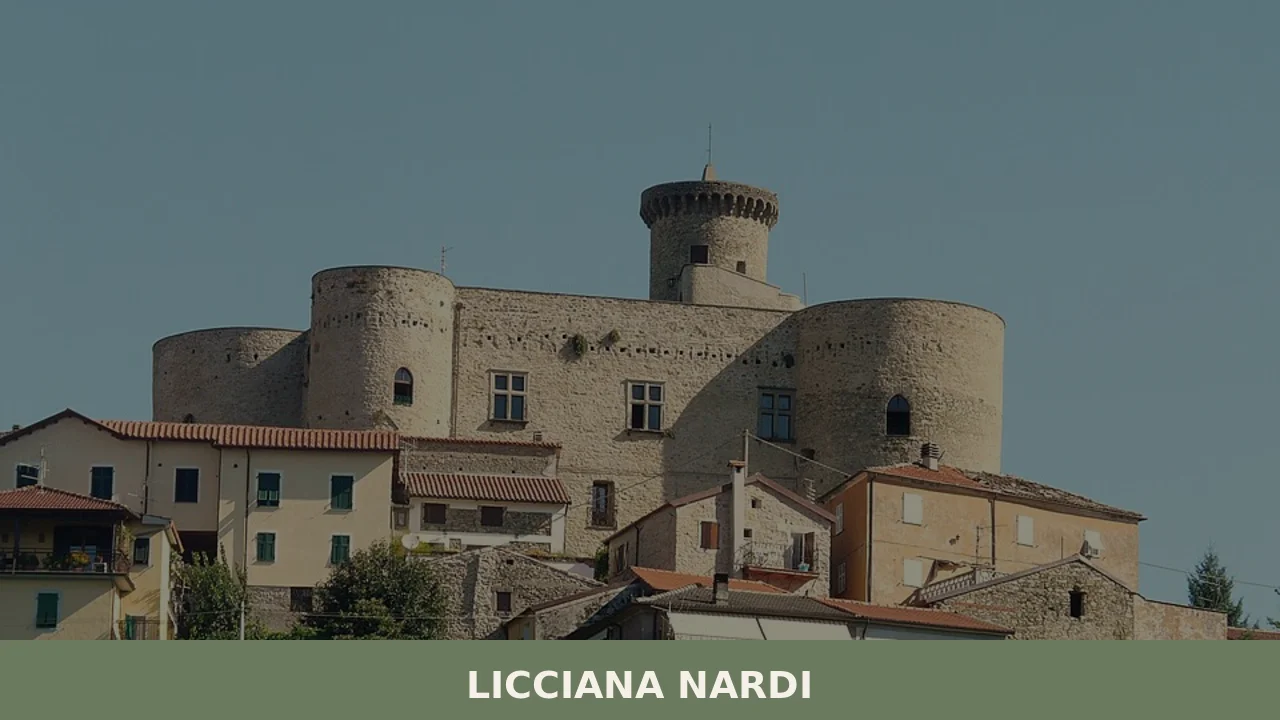
Licciana Nardi
The territory of Licciana Nardi includes six castles spread between the valley floor and the Apennine slopes, a concentration of defensive structures that documents the strategic role of this stretch of Lunigiana in controlling the routes between the Po Plain and the Tyrrhenian coast. With its 4,894 inhabitants distributed across 55 square kilometres at an […]
Discover Licciana Nardi
The territory of Licciana Nardi includes six castles spread between the valley floor and the Apennine slopes, a concentration of defensive structures that documents the strategic role of this stretch of Lunigiana in controlling the routes between the Po Plain and the Tyrrhenian coast. With its 4,894 inhabitants distributed across 55 square kilometres at an altitude of 210 metres, the municipality extends along the course of the Taverone torrent, a tributary of the Magra. Understanding what to see in Licciana Nardi means crossing a landscape where the feudal structures of the Malaspina family still define the profile of the outlying hamlets, from Monti to Bastia, Panicale to Terrarossa.
History and origins of Licciana Nardi
The name “Licciana” first appears in a document from 1077 linked to the properties of the Malaspina marquises, the dynasty that governed much of Lunigiana for over four centuries. The addition of “Nardi” dates to 1933, when the municipality was named after Anacarsi Nardi, a Risorgimento patriot born in the hamlet of Panicale in 1800 and executed by firing squad in Cosenza in 1844 following the insurrectionary attempt led by the Bandiera brothers. Nardi’s story is documented in the records of the Bourbon trial and in the historiography of the southern Risorgimento.
The territory followed the political fortunes of the Malaspina marchesate of the Spino Secco, a branch of the family that from the 13th century controlled the middle and upper Magra valley. In 1221, the inheritance division among the Malaspina — formalised through the Parma arbitration — assigned this portion of Lunigiana to the branch led by Corrado l’Antico. The castles of Bastia, Monti and Licciana itself date from that period of feudal fragmentation, when every inhabited settlement required its own defensive structure. In the 15th century, part of the territory came under the control of Florence and subsequently of the Grand Duchy of Tuscany.
During the Second World War, the hills around Licciana Nardi were the scene of partisan operations along the Gothic Line. The town suffered bombing and roundups between 1944 and 1945. Post-war reconstruction altered the layout of the valley floor, while the higher hamlets preserve their medieval structure more visibly.
What to see in Licciana Nardi: 5 top attractions
1. Castle of Bastia
Built by the Malaspina in the 13th century on the right bank of the Taverone, the Castle of Bastia has a quadrangular plan with a central tower and inner courtyard. The local sandstone walls reveal the layered traces of various interventions between the 14th and 16th centuries. The structure, partially restored, can be viewed from the outside and overlooks the confluence of two valleys.
2. Castle of Monti
In the hamlet of Monti, at around 400 metres above sea level, the castle retains its wall circuit and a cylindrical tower that sets it apart from the other fortifications in the area. Documented from the 14th century, the complex served as a garrison on the ridge between the Taverone valley and the Magra valley. The settlement preserves its concentric layout around the fortification.
3. Church of San Giacomo Maggiore
The parish church, dedicated to the patron saint celebrated on 25 July, stands in the centre of Licciana. The current building is the result of 18th-century renovations to an earlier structure. Inside are marble altars and a restored organ. The façade in local stone features a portal with a carved architrave.
4. Apella and the Tuscan-Emilian Apennine National Park
The hamlet of Apella, located in the upper part of the municipal territory, is one of the access points to the Tuscan-Emilian Apennine National Park. From here, trails lead to Monte Matto (1,837 m) and the Lagastrello Pass. The village of Apella retains its rural stone architecture with roofs made of sandstone slabs, locally known as “piagna”.
5. Castle of Terrarossa
Located along the road connecting Aulla to Licciana, the Castle of Terrarossa takes its name from the colour of the rock on which it is built. The structure, dating from the 15th century in layout, functioned as a customs checkpoint between the various Malaspina fiefs. Today it hosts events and exhibitions. Its valley-floor position makes it easily accessible compared to the castles at higher elevations.
Traditional cuisine and local products
The cuisine of Licciana Nardi is that of inland Lunigiana, rooted in chestnut flour and wheat flour processing. Testaroli, considered the oldest pasta in Italy, are cooked in cast-iron “testi” heated over a fire and dressed with Genoese pesto or with extra virgin olive oil and pecorino. Torta d’erbi — a thin pastry casing filled with wild greens, particularly chard, leeks and borage — is cooked in the testi following the same principle. Focaccette di Aulla, small discs of wheat flour fried or cooked in the testi, accompany local cured meats and cheeses. Farina di castagne della Lunigiana DOP (Lunigiana chestnut flour PDO), made from varieties such as Carpinese and Bresciana dried in traditional “gradili” (drying houses), is used to prepare pattona — a sweet polenta — and castagnaccio, enriched with pine nuts, walnuts and rosemary. Miele della Lunigiana DOP (Lunigiana honey PDO), in both its acacia and chestnut variants, is the other protected designation product from this territory.
Among cured meats, spalla cotta di Filattiera and lardo di Colonnata IGP, produced in the marble quarries of the nearby Apuan Alps, appear frequently on the menus of local trattorias. Porcini mushrooms gathered in the chestnut and beech woods between September and November are a central element of local gastronomy, prepared fried, sautéed with garlic and parsley, or preserved in oil. In autumn, the Chestnut Festival and woodland produce markets enliven the hamlets. Also worth noting is Panigaccio, a disc of unleavened dough cooked between stacked terracotta plates, found throughout Lunigiana and served with stracchino cheese, pesto or sliced cured meats. Wine produced on the surrounding hills falls under the IGT Toscana designation, with a prevalence of Vermentino and Ciliegiolo grapes.
What to see in Licciana Nardi and surroundings: the best time to visit
The feast of San Giacomo Maggiore, on 25 July, is the main communal gathering in the centre of Licciana. Summer, from June to September, allows visitors to combine castle tours with hikes in the National Park: the trails towards the Lagastrello Pass are snow-free from May to October. Autumn — October and November — is chestnut harvesting season, when the “gradili” smoke in the woods above Apella and Panicale, and festivals celebrating woodland produce follow one another across the hamlets.
Winter brings cold temperatures to the higher hamlets, with possible snowfall above 600 metres. Spring, from April onwards, offers favourable conditions for those who prefer walking without the summer heat: the flowering meadows along the Taverone and in the chestnut groves make the landscape visually distinct from the rest of the year. The municipal website publishes an updated calendar of events.
How to reach Licciana Nardi
By car, Licciana Nardi is reached from the A15 Parma–La Spezia motorway, Aulla exit. From there, the provincial road climbs the Taverone valley for approximately 8 kilometres. From Parma the distance is around 100 km (one hour and twenty minutes); from La Spezia around 50 km (forty-five minutes); from Florence around 170 km following the A11 and then the A15.
The nearest railway station is Aulla-Lunigiana, on the Pontremolese line (Parma–La Spezia), served by regional trains. From Aulla, local buses connect Licciana Nardi and the main hamlets. The closest airport is Pisa-Galileo Galilei, approximately 120 km away. Parma-Giuseppe Verdi Airport is about 110 km away. For those arriving from the north, the Lagastrello Pass — open in summer — provides a direct link with Emilia via a scenic mountain road.
Other villages to discover in Tuscany
A few kilometres to the north-west, heading up the Magra valley, Casola in Lunigiana shares the same Malaspina origins as Licciana Nardi but presents a different landscape, more tightly enclosed between the limestone walls of the Lucido valley. The village is known for its chestnut flour production and its compact historic centre, where the local grey stone replaces the reddish sandstone of Terrarossa.
To the south, still along the course of the Magra, Bagnone offers a direct comparison with Licciana Nardi in terms of territorial structure: here too a Malaspina castle dominates a valley-floor village, but the torrent that runs through it — the Bagnone, as it happens — creates a system of bridges and mills that gives the urban layout its own distinct character. The two towns are less than twenty minutes apart by car and lend themselves to a combined itinerary through the Lunigiana of feudal estates.
In Tuscany More villages to discover
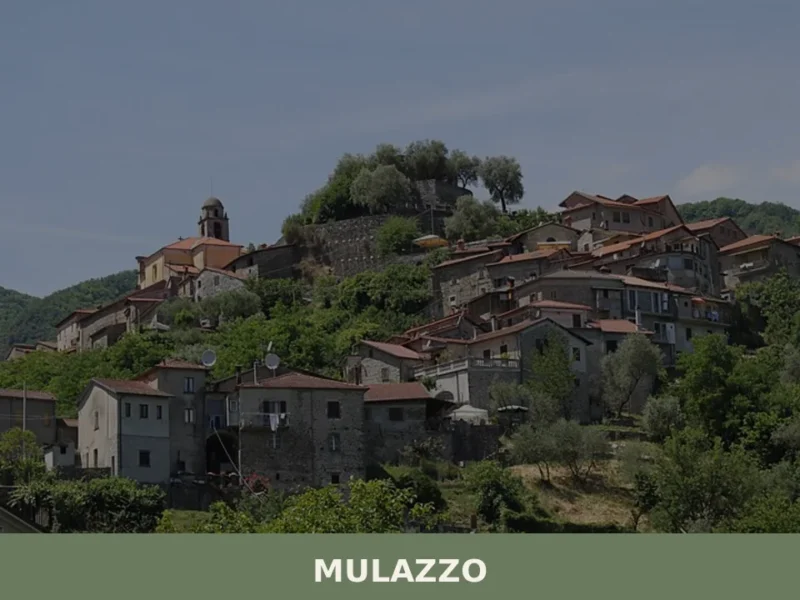
Mulazzo
In 1306, a notary from the village of Mulazzo signed the deed granting hospitality to Dante Alighieri, exiled from Florence and welcomed by Marquis Franceschino Malaspina. That document — known as the Peace of Castelnuovo — ties Mulazzo to Dante’s biography in a direct and documented way. Anyone wondering what to see in Mulazzo today […]
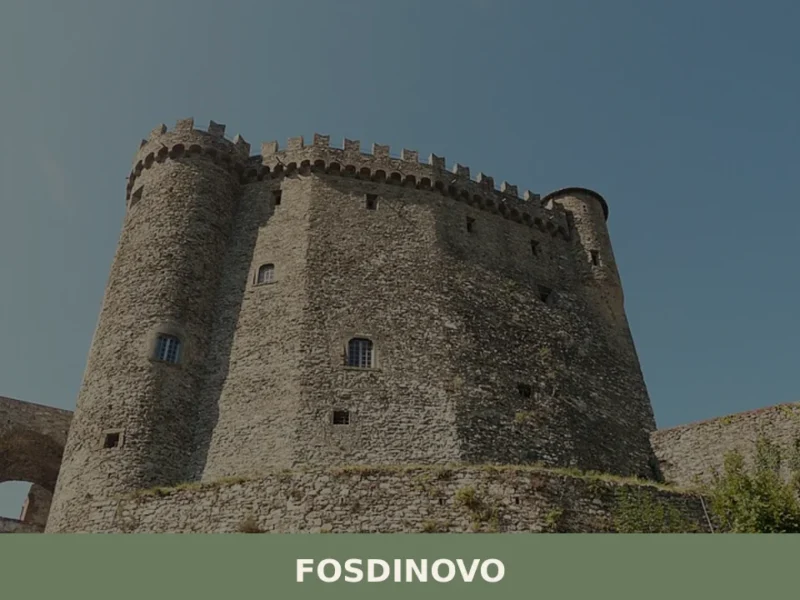
Fosdinovo
The Malaspina Castle of Fosdinovo has dominated the ridge separating the Val di Magra from the Apuan coast for over seven hundred years, with its four circular towers and a sentry walkway that can still be traversed. At 500 metres above sea level, this town in the province of Massa and Carrara has 4,982 inhabitants […]
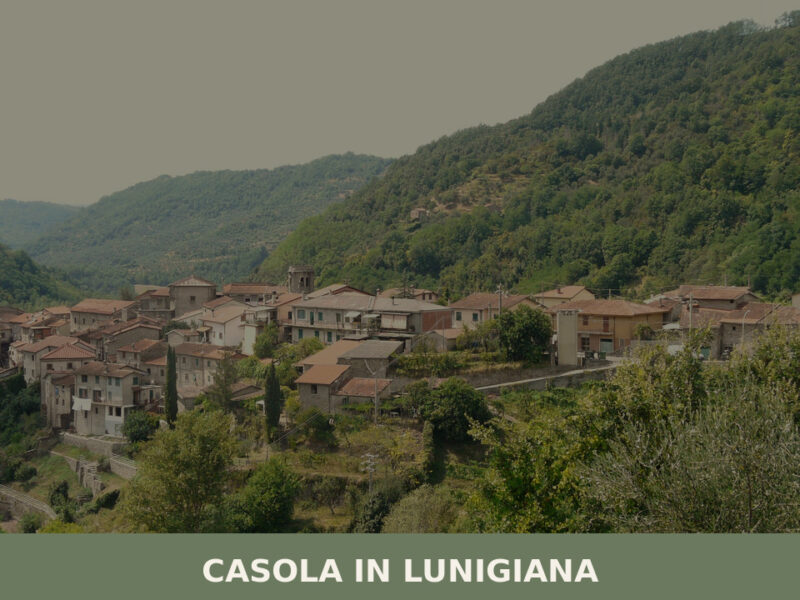
Casola in Lunigiana
Morning fog lifts slowly from the Aulella valley, revealing stone walls the colour of dried clay and a bell tower that has marked the hours here for centuries. The air carries woodsmoke and the faint mineral scent of chestnut groves climbing the surrounding slopes. With roughly one thousand inhabitants, Casola in Lunigiana remains one of […]



📝 Incorrect information or updates?
Help us keep the Licciana Nardi page accurate and up to date.