


Messina
What to see in Messina: 242,267 inhabitants, the astronomical clock tower, two Caravaggios and the Norman Cathedral. Plan your visit and discover how to get there.
Discover Messina
Messina looks out over the strait that bears its name — one of the busiest sea passages in the Mediterranean — and this position has shaped every phase of its history. With 242,267 inhabitants, it is the third-largest city in Sicily by population and the main urban centre of the province of the same name.
For anyone wanting to know what to see in Messina, it helps to know that the city sits just 3 metres above sea level, along a coastline that faces Calabria directly across a stretch of water only a few kilometres wide, crossed by ferries for centuries.
Every corner of the city centre tells a piece of Greek, Norman, Spanish and Italian history, with monuments that have survived earthquakes, wars and reconstructions.
History and Origins of Messina
The city was founded by Greek settlers from Chalcis around the 8th century BC under the name Zancle, a term that in the local language referred to the sickle shape of the natural harbour.
Around 488 BC, Anaxilas, the tyrant of Reggio, conquered the city and renamed it Messana, after his homeland in the Peloponnese. This new name became established over the centuries until it evolved into the present-day Messina.
Its position on the strait made the city strategically important for controlling trade between the Tyrrhenian and Ionian seas, drawing the interest of Athens, Syracuse and later Carthage during the long wars that ravaged Sicily in the classical period.
Under Norman rule from the 11th century onwards, Messina entered a period of considerable commercial prosperity. Roger I and later Roger II developed the port into one of the most active in the southern Mediterranean. During the Crusades, the city served as a required stopping point for Christian armies heading to the Holy Land: Richard I of England wintered here in 1190–1191 before setting sail on the Third Crusade, and his stay is well documented in the chronicles of the period.
In the following centuries the city passed under Swabian rule with Frederick II, then Angevin and finally Aragonese control, while consistently maintaining a leading commercial and maritime role in the central Mediterranean.
The earthquake of 28 December 1908 marks the most dramatic turning point in Messina’s modern history.
The tremor, estimated at around seventh to eighth degree on the Mercalli scale in its most violent form, razed much of the city to the ground and caused tens of thousands of deaths — estimates range between 75,000 and 200,000 fatalities when including Reggio Calabria.
The reconstruction that followed over the subsequent decades completely redesigned the urban layout with a grid street plan and buildings in Liberty and Rationalist styles.
This explains why the present-day historic centre of Messina has a predominantly twentieth-century appearance, with very few architectural structures from before 1908 having survived the disaster.
What to See in Messina: Main Attractions
Cathedral of Santa Maria Assunta and the Astronomical Clock Tower
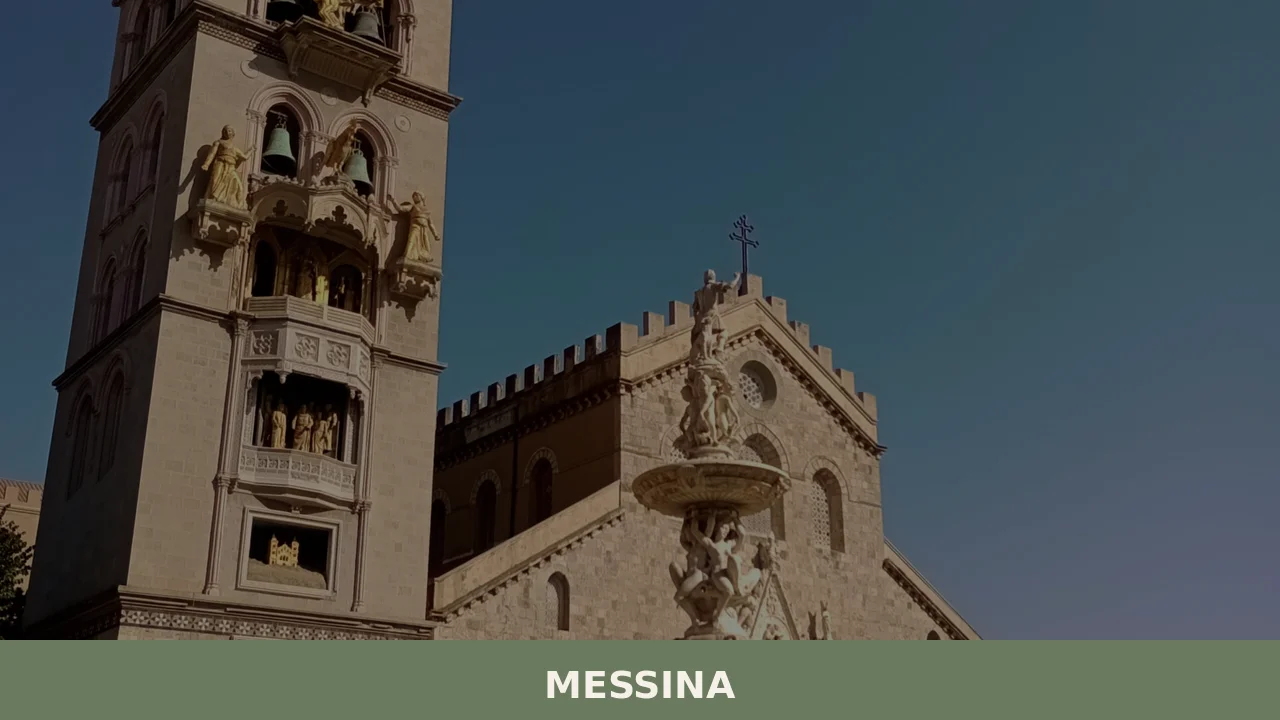
The Cathedral of Messina, dedicated to Santa Maria Assunta, stands in the heart of the historic centre and is the city’s most important religious building.
Founded in the Norman period in the 12th century at the behest of Roger II, it was destroyed by the 1908 earthquake and subsequently rebuilt in keeping with its original Romanesque-Norman forms.
On the left side rises the bell tower, which houses one of the largest astronomical clocks in the world, built by the Ungerer firm of Strasbourg in 1933. Every day at noon, the clock sets in motion an elaborate system of mechanical figures: a lion roars, a cockerel crows, and a series of animated automata moves through its sequence marking the cycle of life.
It is worth arriving a few minutes before twelve to watch the full display.
Regional Interdisciplinary Museum of Messina
The Regional Interdisciplinary Museum of Messina, located along Via della Libertà in the former Mellinghoff silk mill, holds a collection of artworks of considerable historical value.
Among the most significant pieces are two large canvases by Caravaggio painted during the artist’s stay in Sicily: the Raising of Lazarus and the Adoration of the Shepherds, both dated 1609.
The museum also houses works by Antonello da Messina, the city’s most celebrated native son and a key figure in fifteenth-century Italian painting, alongside sculptures, sacred furnishings and materials salvaged from buildings destroyed in the 1908 earthquake. For anyone exploring what to see in Messina from an artistic perspective, this is the most important stop.
Fountain of Orion
The Fountain of Orion, created by Giovanni Angelo Montorsoli between 1547 and 1553, occupies the centre of Piazza del Duomo and is considered one of the masterpieces of the Renaissance in Sicily.
Montorsoli, a pupil of Michelangelo, sculpted the figure of the giant Orion — the city’s mythical founder according to tradition — at the centre of a composition arranged across three superimposed basins, decorated with allegorical figures representing the rivers Nile, Tiber, Ebro and Camaro.
The fountain was commissioned to celebrate the completion of the aqueduct that brought drinking water to the city.
Partly surviving the 1908 earthquake, it was restored and returned to its original position during the twentieth century.
Sanctuary of Montalto
The Sanctuary of Montalto rises above the city from the hilltop that bears its name, accessible via a scenic road that offers a sweeping view of the strait and the Calabrian coastline.
The religious complex is tied to the veneration of the Madonna of Montalto, whose cult among the people of Messina dates back to at least the 13th century. The current church, rebuilt after 1908, preserves a devotional tradition that over the centuries has drawn pilgrims from across eastern Sicily. The ascent to the sanctuary, which can be made by car or on foot along wooded paths, also provides an unusual perspective on the city’s geography and its port.
The Port and Seafront Promenade
The port of Messina is one of the oldest and busiest harbours in the Mediterranean, with a continuous history going back to the city’s Greek founding.
The sickle-shaped harbour — the crescent form that gave the city its original name of Zancle — is still clearly visible from the quayside today. A walk along the seafront promenade allows visitors to watch the steady flow of ferries connecting Sicily to Calabria, which run continuously throughout the day.
Along the route stand the statue of the Madonna della Lettera on the entrance pillar to the port, erected in 1934, along with several monuments commemorating the 1908 earthquake and the Second World War.
Traditional Food and Local Products of Messina
Messinese gastronomy reflects centuries of cultural exchange: Greeks, Arabs, Normans, Spanish and mainland Italians have all left their mark on local cooking techniques and ingredient combinations.
The city’s position on the sea has made fish the central element of local cuisine, while the hilly hinterland of the province has contributed agricultural produce, cheeses and preserves.
The proximity to Calabria, separated by just 3 kilometres of water, has encouraged constant culinary exchange, making some preparations difficult to assign exclusively to one shore of the strait.
Among the dishes most deeply rooted in the city’s culinary tradition, pesce spada alla messinese holds a central place: swordfish fillets cooked with tomato, olives, capers, pine nuts and raisins, using a technique that balances savoury and sweet in a well-judged combination.
The pitone messinese is a filled bread roll made with escarole, tuma cheese, tomato and anchovies, baked or fried, widely available as street food in the historic centre.
Pane cunzato, seasoned with oil, fresh tomato, cheese and basil, accompanies everyday meals and is still sold in traditional bakeries in the city centre.
For dessert, pignolata — small balls of fried dough coated on one side with chocolate icing and on the other with lemon icing — are the city’s defining sweet, particularly during Carnival.
Among the certified products associated with the territory of Messina, two are recognised at national level. Cotognata (PAT) — Messina is one of the traditional production areas for this preserve made by slowly cooking quinces with sugar, then pressing the mixture into decorative moulds and leaving it to dry until it reaches a firm consistency. It can be eaten on its own or paired with aged cheeses.
Natural sea salt (PAT) — production is documented along the Sicilian coastal strip, where the combination of wind and solar radiation creates favourable conditions for evaporation in traditional salt pans.
Both products appear on the national list of Traditional Agri-food Products (PAT) maintained by the Ministry of Agricultural Policies.
For those looking to buy local products, the Mercato di Capo and the Mercato di Viale Gazzi are where the people of Messina do their everyday shopping, with stalls selling fresh fish, vegetables, cheeses and preserves.
The summer months bring a greater number of food festivals in the towns of the province, many of them dedicated to tuna, swordfish and garden produce. Anyone exploring northern Sicily and looking for gastronomic continuity between villages can stop at Aliminusa, a small inland Sicilian village with its own tradition of local agricultural products.
Festivals, Events and Traditions of Messina
The most important celebration in the city’s calendar is the feast of the Madonna della Lettera, patron of Messina, held on 3 June.
According to tradition documented in ecclesiastical sources, the Virgin sent a letter to the people of Messina in the first century AD in response to their declaration of faith, entrusting it to the apostle Paul. This letter, preserved in the cathedral, lies at the centre of a popular devotion that each year draws processions, religious ceremonies and large gatherings of the faithful.
The statue of the Madonna della Lettera on the port entrance pillar, visible from all incoming ferries, symbolically expresses the bond between the city and the sea.
The Carnival of Messina is one of the most widely attended events of the winter season, with floats parading through the historic centre and the traditional pignolata distributed throughout the city.
In summer, Messina hosts various cultural events connected to its Mediterranean identity, including concerts, theatre festivals and events celebrating the culture of the strait.
The Vara is another historically significant procession with deep roots among the people of Messina: a large ceremonial structure that is pulled by hand by hundreds of devotees every year on 15 August, for the feast of the Assumption. The Vara, described in city chronicles from at least the 16th century, is listed among the most significant folk traditions of eastern Sicily.
When to Visit Messina and How to Get There
The best time to visit Messina is from April to June and from September to October.
In spring, temperatures range between 15 and 22 degrees, the sky is generally clear and the city has not yet been reached by the summer tourist influx. September and October offer similar conditions with the added advantage of a sea still warm enough for swimming.
July and August bring intense heat — often exceeding 35 degrees — and a significant increase in traffic, particularly at the port for ferries crossing to Calabria.
Those interested in the feast of the Madonna della Lettera should aim for 3 June, when the historic centre comes alive with the patronal procession. Summer is also the ideal season for exploring the inland villages of the Messina province, such as Poggioreale, reachable in around two hours by car heading into the Sicilian interior.
For those travelling by car, the A18 Messina–Catania motorway and the A20 Messina–Palermo motorway both converge on the city: the Messina Nord junction is the main entry point for those coming from Calabria via the Villa San Giovanni ferry.
The ferry crossing — operated by Ferrovie dello Stato and private operators — takes around 20–25 minutes.
Messina Centrale railway station has connections to Catania, Palermo and, via ferry, to the Calabrian rail network; timetables and information are available on the Trenitalia website.
The nearest airport is Catania-Fontanarossa International Airport, approximately 90 kilometres away, from which Messina can be reached in around one hour by car on the A18. Reggio Calabria airport is closer — around 15 kilometres from the strait — but has a more limited range of domestic and international flights.
For official information about the municipality, visit the Comune di Messina website.
Where to Stay in Messina
The accommodation offer in Messina is broad and varied, in keeping with the scale of a city of over 240,000 inhabitants with an active port and a constant flow of travellers.
The historic centre has hotels across various categories, B&Bs and holiday apartments close to the cathedral and the seafront. The port area offers convenient options for those needing to catch an early ferry.
For a quieter stay, several agriturismos can be found on the hills behind the city, in the area rising towards the Peloritani mountains, with views over the strait and easier access to the natural landscape of the provincial hinterland.
Those who want to explore the inland villages of Sicily can consider itinerant stays that include destinations such as Cefalà Diana, in the Palermo area, or Campofiorito, two small centres that offer a completely different pace of travel compared to the city.
Both are within reasonable distance along the A20 motorway towards Palermo, and make a worthwhile addition to an itinerary that begins with what to see in Messina and extends into the northern Sicilian interior.
In Sicily More villages to discover
Trapani
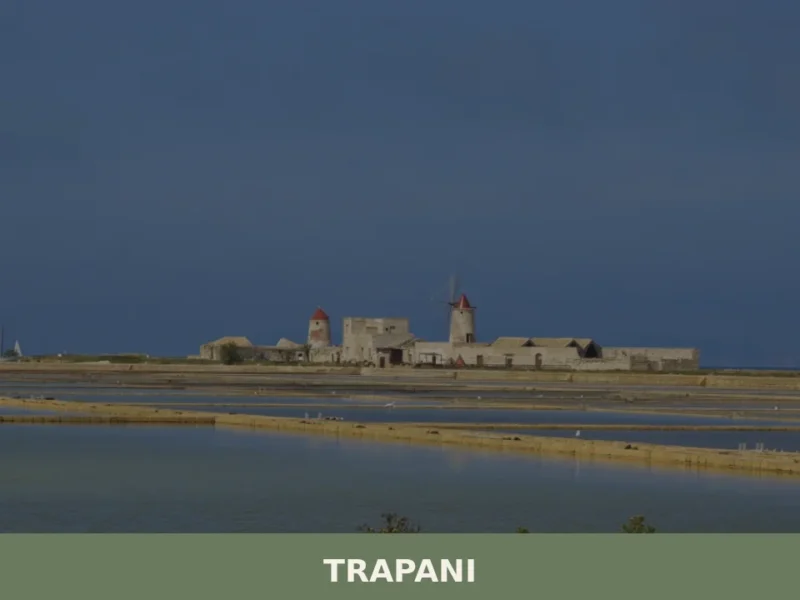
What to see in Trapani: salt pans, Pepoli Museum, Procession of the Misteri and Trapanese pesto. City of 68,967 inhabitants. Plan your visit now.
Poggioreale
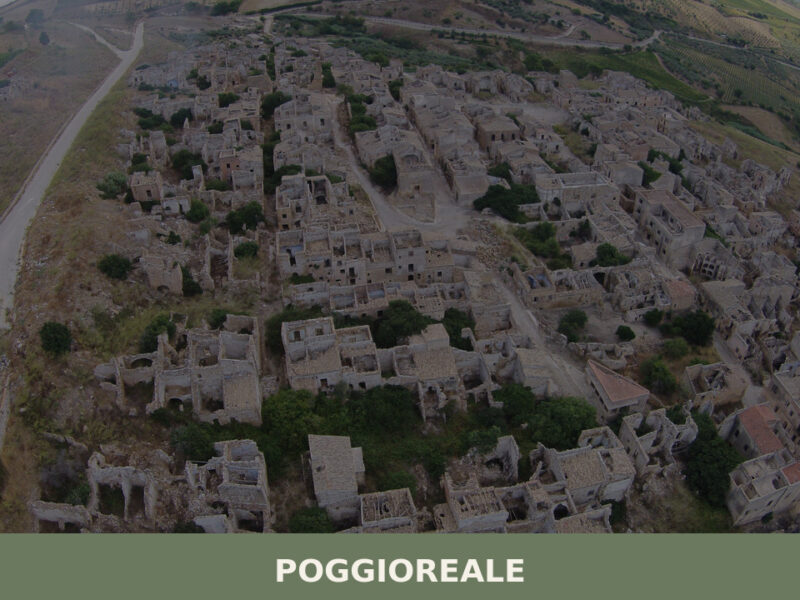
Morning light falls across cracked stone walls and doorways that open onto nothing but sky. In Poggioreale, silence is the dominant sound — the kind that presses against your ears and demands attention. This small community of roughly 1,505 inhabitants sits in the western interior of Sicily, within the province of Trapani, where the Belìce […]
Enna
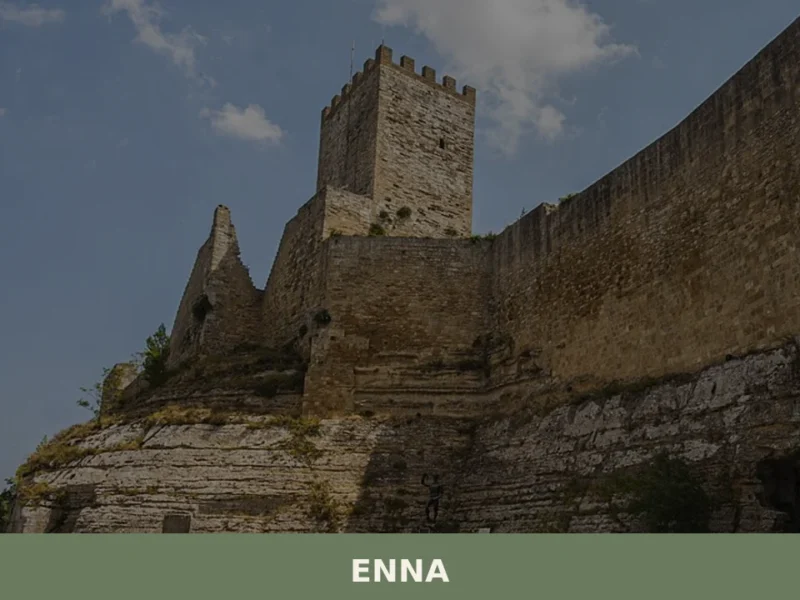
Discover Enna, a breathtaking village perched in the heart of Sicily, Italy. Explore its rich history, stunning landscapes, and timeless charm.
📝 Incorrect information or updates?
Help us keep the Messina page accurate and up to date.