


Pistoia
Discover Pistoia, a charming village in Tuscany, Italy. Explore its rich history, stunning architecture, and authentic Italian culture off the beaten path.
Discover Pistoia
Pistoia carries a weighty political past: it was a free medieval commune that competed with Florence and Lucca for supremacy over centuries, and the marks of that civic era are still visible on the walls of the historic centre.
With 88,904 inhabitants and an elevation of 67 metres above sea level, the city sits on the plain between the Tuscan-Emilian Apennines and the Arno Valley, in a position that has favoured commercial and cultural exchange since antiquity.
Anyone researching what to see in Pistoia will find a compact urban centre where, within a few kilometres on foot, Romanesque squares, Renaissance hospitals decorated with glazed Della Robbia ceramics, and botanical gardens of international standing follow one after another.
Pistoia is the provincial capital of the Tuscan province that bears its name, and it celebrates its patron saint, James the Greater, on 25 July.
History and Origins of Pistoia
The origins of Pistoia go back to Roman times: the city developed as a Latin military settlement, probably in the second century BC, along the road connecting the Po Valley with Etruria.
The name itself — Pistoria in Latin sources — appears in documents from the Republican period, and it was near Pistoia that the battle took place in 62 BC in which Lucius Sergius Catilina was killed, defeated by the consular forces of Gaius Antonius Hybrida during the suppression of the Catilinarian conspiracy.
This episode, recounted by Sallust in the De Catilinae coniuratione, places Pistoia on the stage of major Roman history as early as the late Republican period, well before it became an organised Christian centre.
With the fall of the Western Roman Empire and the barbarian invasions, Pistoia went through a prolonged period of instability.
Under the Lombards it became the seat of a gastaldate, and later, under the Carolingians, the capital of a county. The decisive turning point came in the early Middle Ages, when the city gained the status of a free commune: by the twelfth century Pistoia already had its own consuls and an autonomous institutional structure.
During that period, the main Romanesque monuments that still define the city’s appearance were built, and the cathedral dedicated to San Zeno underwent continuous expansions and embellishments.
The rivalry with Florence and Lucca left a deep mark on Pistoia’s political life between the twelfth and fourteenth centuries: the factional struggles between the Whites and the Blacks — the same conflicts that led to Dante Alighieri’s exile — found one of their focal points in Pistoia, with violence, the destruction of noble towers, and the banishment of entire families.
In 1306 Pistoia was conquered by Florence, permanently losing its communal independence. From that point on, the city remained within the Florentine and later the Medicean orbit, passing through a period of relative stability that encouraged the growth of manufacturing — particularly ironworking — and significant architectural renewal during the fifteenth and sixteenth centuries.
The modern era brought no major upheavals: Pistoia remained part of the Grand Duchy of Tuscany until Italian Unification in 1861.
In the twentieth century the city established itself as an industrial centre, with deep roots in mechanical engineering and nursery plant production, a sector that continues to characterise the provincial economy in a significant way.
What to See in Pistoia: Main Attractions
Piazza del Duomo
Pistoia’s main square is considered one of the most harmonious in Italy, owing to the presence of medieval buildings of exceptional quality.
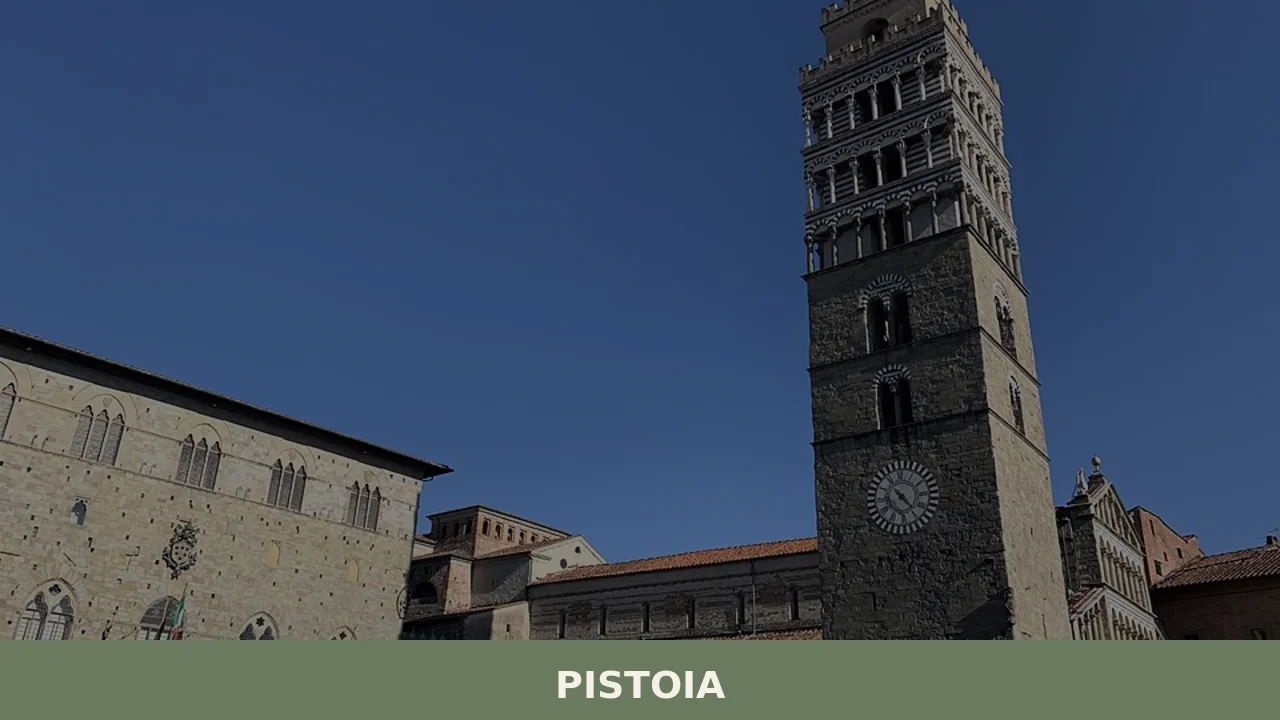
On the northern side stands the Palazzo del Comune, built between 1294 and 1385, flanked by the thirteenth-century Palazzo del Podestà. At the centre rises the octagonal Baptistery of San Giovanni in Corte, clad in white and green marble, constructed between 1337 and 1359 to a design by Andrea Pisano. The square also includes the Civic Tower, standing approximately 45 metres tall and offering a panoramic view across the entire city.
For anyone working out what to see in Pistoia, this is the essential starting point — one that rewards a careful, unhurried look at every façade.
Cathedral of San Zeno
The Cathedral of San Zeno, dedicated to the diocese’s original patron, has a Romanesque façade with three arches and an upper loggia, its porch enriched by a fourteenth-century fresco attributed to the workshop of Giovanni Pisano.
Inside, the cathedral houses the Dossale di San Giacomo, one of the most important works of medieval goldsmithery in Europe: begun in 1287 and completed over the course of two centuries, it is made up of more than 600 silver figures. Tradition holds that one of its panels was executed by a young Filippo Brunelleschi, before his departure for Florence.
The cathedral also preserves the relics of Saint James the Greater, the city’s patron saint, whose feast is celebrated on 25 July.
The Ospedale del Ceppo and Its Friezes
Founded in 1277, the Ospedale del Ceppo owes its international reputation to the majolica frieze decorating the sixteenth-century portico, created by Giovanni della Robbia between 1514 and 1525. The seven polychrome panels in glazed terracotta depict the Works of Mercy with remarkable narrative energy and chromatic vitality.
The arcaded entablature, inspired by that of the Spedale degli Innocenti in Florence, is a fully realised example of Tuscan Renaissance hospital architecture.
The building served a medical function until the 1990s and is now open to visitors as a museum.
Pistoia Botanical Garden
Founded in 1811 at the behest of the Napoleonic government, the Pistoia Botanical Garden is among the oldest in Tuscany still in operation. It occupies approximately one hectare in the historic centre, a short distance from the cathedral, and houses collections of medicinal plants, Mediterranean species, and fruit trees of historical varieties. Its existence reflects the broader nursery-growing tradition of the Pistoiese territory, which today represents one of Europe’s leading districts for the production of ornamental plants.
For those planning what to see in Pistoia, a visit to the Botanical Garden offers an unusual perspective on the city, away from the more frequently visited sites.
Church of Sant’Andrea and Giovanni Pisano’s Pulpit
The Church of Sant’Andrea, documented from the eighth century onwards, contains one of the masterpieces of Italian medieval sculpture: the pulpit by Giovanni Pisano, completed in 1301.
The work, carved in white marble, is supported by columns resting on lion-bearing bases and features five narrative panels depicting scenes from the life of Christ with extraordinary sculptural intensity.
Scholars regard it as a pivotal point in the evolution of Italian Gothic sculpture, directly derived from the pulpit of the Baptistery of Pisa carved by Giovanni’s father, Nicola. The church also has a sober Romanesque façade, typical of the Pistoiese style, with two-tone striped decoration.
Traditional Food and Local Products of Pistoia
Pistoiese gastronomy sits within the broader Tuscan culinary tradition, with certain characteristics shaped by the geography of the province: the alluvial plain to the south, suited to growing vegetables and cereals, and the Apennine mountains to the north, traditionally given over to livestock farming and the gathering of mushrooms and chestnuts.
This dual geographical character is reflected in a cuisine that favours simple ingredients, long cooking times, and a skilled use of legumes — particularly beans, cultivated in the mountain areas of the province since the sixteenth century, following the introduction of the American bean to Italy.
Among the dishes most deeply rooted in local tradition, bean and rind soup (minestra di fagioli con le cotiche) stands out as a winter first course made with borlotti or cannellini beans, pork rind, beaten lard, and seasonal vegetables, cooked slowly in a terracotta pot.
Equally widespread is zuppa pistoiese, the local take on Florentine ribollita, prepared with stale bread, cavolo nero, beans, and red onion. Scottiglia — a stew of mixed meats including chicken, rabbit, pork, and lamb, cooked in red wine with tomato and chilli — is a dish of the hill farming tradition and can still be found in trattorias in the Apennine area.
In the autumn months, chestnuts from the Pistoiese mountains appear in many sweet and savoury preparations, from roasted chestnuts to oven-baked pastries.
As far as certified products are concerned, the available data does not record any DOP, IGP, or PAT designations specifically attributed to the municipal territory of Pistoia.
However, the province falls within production areas for Tuscan wines with a controlled designation of origin, and the extra virgin olive oil produced on the Pistoiese hills is part of a well-documented local agricultural tradition. The nursery sector, for which the territory is recognised across Europe, relates primarily to ornamental plants rather than certified food products.
In July, coinciding with the feast of the patron saint James, the city hosts events that include food and wine moments centred on local produce.
The markets in the historic centre — particularly the Saturday morning market in Piazza del Duomo and the surrounding streets — offer the chance to buy fresh vegetables from the Pistoiese plain, pecorino cheeses from the mountains, and artisan preserves.
For those wishing to explore the gastronomy of the wider region, it is worth visiting the villages of the Lunigiana, such as Pontremoli, where the tradition of testaroli and mountain products reflects an Apennine culinary identity that closely echoes that of the higher-altitude areas of the Pistoiese province.
Festivals, Events and Traditions of Pistoia
Pistoia’s civic and religious calendar revolves around the figure of Saint James the Greater, patron of the city, whose feast falls on 25 July. The celebrations include a solemn pontifical mass in the Cathedral of San Zeno, during which the relics of the saint housed in the famous silver Dossale are displayed.
The day is accompanied by civic initiatives and cultural events across the historic centre.
The tradition linked to Saint James has medieval roots: Pistoia was a stop on the pilgrimage route to Santiago de Compostela, and the city still maintains a symbolic connection with the Jacobean Way in Spain.
Among the well-documented events of note is the Pistoia Blues Festival, an international music event held each July in Piazza del Duomo, which over its various editions has hosted world-renowned artists.
The city also runs Pistoia Sottosuolo, a guided tour of the medieval tunnels dug beneath the historic centre, open on special occasions and during cultural events. In autumn, chestnut-related initiatives take place in the mountain municipalities of the province, with local fairs and markets in the Apennine villages. The official website of the Municipality of Pistoia publishes the up-to-date calendar of all annual events.
When to Visit Pistoia and How to Get There
The most favourable period for visiting Pistoia runs from April to June and from September to October.
In spring the historic centre is easy to explore on foot, temperatures are mild, and the city has not yet been reached by the intense tourist flows that characterise Florence and its immediate surroundings during the summer.
July is the month of the patron saint’s feast and the Blues Festival, making it lively but also more crowded. The Tuscan summer brings intense heat to the plain, while autumn offers pleasant temperatures and the opportunity to explore the mountain province. Those looking for quieter conditions and lower prices can also consider the winter months, when the historic centre is frequented almost exclusively by residents.
Pistoia is well connected to the main transport networks. By car it is reached from the A11 Florence-Sea motorway, Pistoia exit, approximately 35 kilometres from Florence.
Pistoia railway station is served by the regional Florence-Viareggio line, with frequent trains operated by Trenitalia: the journey to Florence Santa Maria Novella takes approximately 45 minutes.
The nearest airport is Florence-Peretola Amerigo Vespucci International Airport, approximately 30 kilometres away.
From Pistoia it is easy to reach other villages in northern Tuscany by car: those wishing to extend their itinerary towards the Lunigiana may consider a stop at Fivizzano or Filattiera, two inland Tuscan villages that share with the Pistoiese area an Apennine historical background and a strong connection with mountain territory.
Where to Stay in Pistoia
Pistoia offers a range of accommodation suited to different types of visitor. In the historic centre there are small and medium-sized hotels, often housed in restored historic buildings, family-run bed and breakfasts, and short-term rental apartments.
The proximity to Florence — less than half an hour by train — makes the city a practical and more affordable base for exploring central Tuscany, with an accommodation offer that is generally more accessible than in the regional capital.
In the mountain municipalities of the province, towards the Apennines, agriturismos and rural properties are available for those who prefer to stay in a more rural setting, with opportunities for hiking on the trails of the Tuscan-Emilian Apennine Park.
Those visiting Pistoia who wish to continue exploring northern Tuscany can also include Mulazzo in their itinerary — a Lunigiana village with a distinctive medieval historical profile, reachable in approximately one hour by car along the Apennine road network.
In Tuscany More villages to discover
Lucca
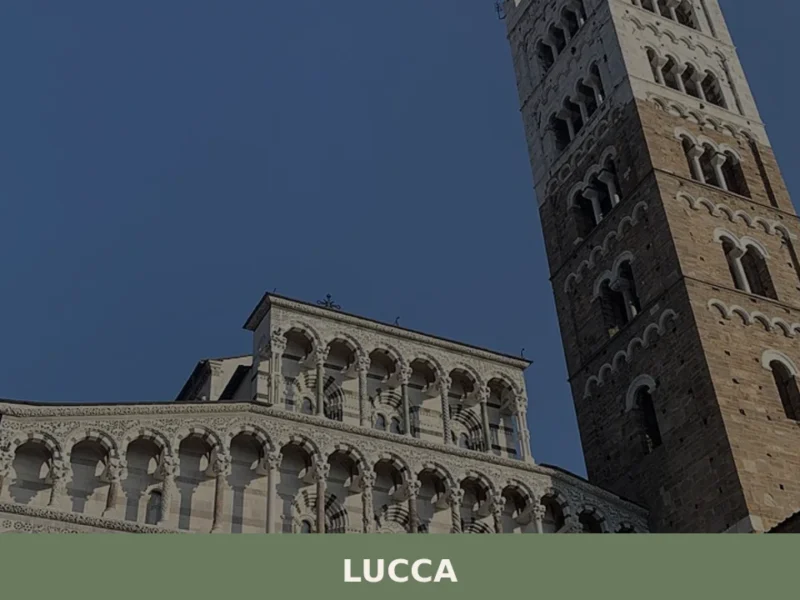
Discover Lucca, Tuscany's enchanting walled village in Italy. Explore medieval streets, stunning architecture, and rich culture in this timeless Italian treasure.
Firenze
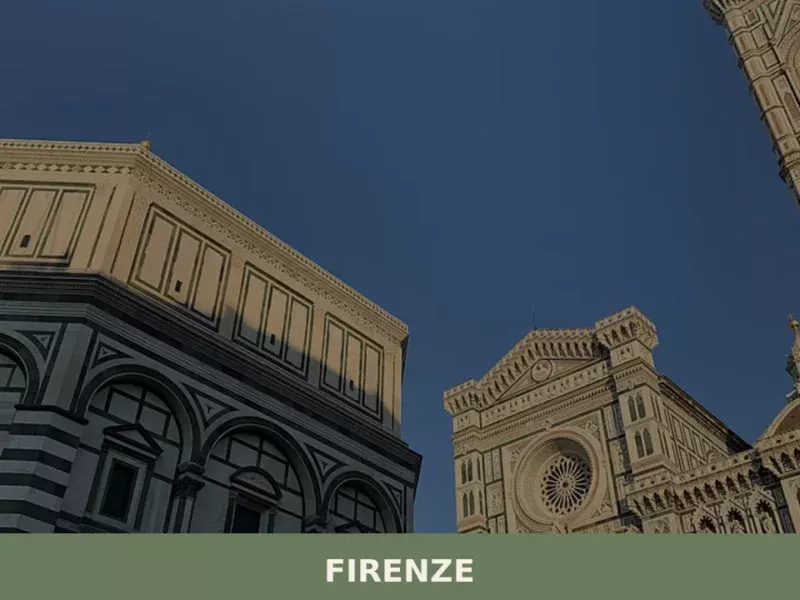
Founded by the Romans as a military colony around 59 BC under the name Florentia, the city we know today as Florence has passed through nearly two millennia of history without ever ceasing to reinvent itself. The regional capital of Tuscany, it sits 50 metres above sea level along the banks of the Arno, with […]
Fivizzano
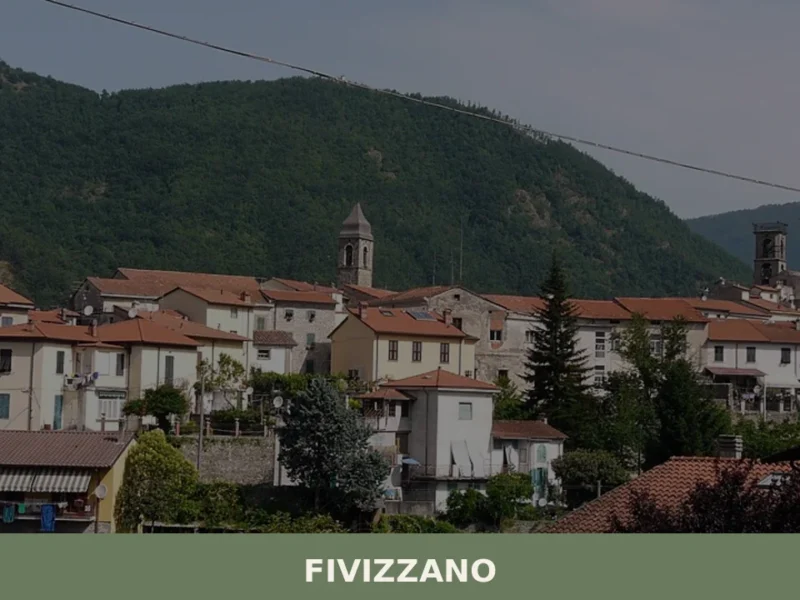
In 1477 a printing press active in Fivizzano produced an edition of Cicero’s Epistolae ad familiares, making this Lunigiana town one of the first places in Italy — and in Europe — to host the art of movable-type printing. The village stands at 326 metres above sea level in the province of Massa and Carrara, […]

📝 Incorrect information or updates?
Help us keep the Pistoia page accurate and up to date.