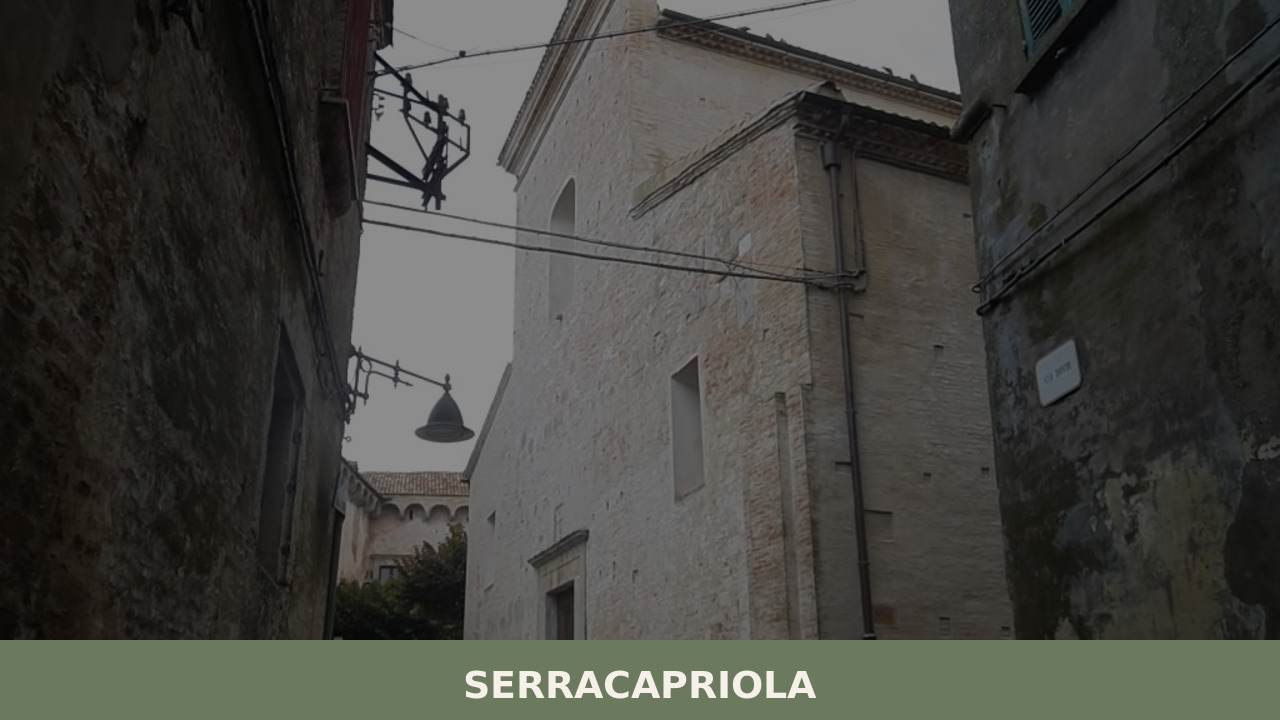
A hilltop village of 3,656 people overlooking the Fortore valley in Foggia province. Serracapriola offers a Norman castle, medieval alleys, and honest Puglian cooking far from the crowds.
Morning light hits the limestone walls along Corso Garibaldi in long, amber slabs, and the air carries the scent of wood-fired bread from a forno that has operated since before anyone on the street can remember. A stray cat stretches across a warm step. Below the ridge, the Fortore river valley opens toward the Adriatic, green and silent. This hill town of 3,656 people, set at 270 metres above sea level in the province of Foggia, rarely appears on itineraries — which is precisely why knowing what to see in Serracapriola rewards the unhurried traveller.
The name itself maps the landscape: serra, a ridgeline, and capriola, likely derived from the wild roe deer (caprioli) that once moved through the oak forests covering these hills. Settlement here predates the medieval period — the elevated position offered a natural defensive advantage over the Fortore valley and the coastal plain stretching toward the Adriatic. By the Norman era, the town had acquired strategic importance as a fortified outpost along the routes linking the Gargano promontory to the Apulian Tavoliere plain.
Under successive feudal lords — from the Normans through the Angevins and Aragonese — Serracapriola’s compact urban core took shape around its castle and principal churches. The town became a ducal seat, and the noble families who governed it left behind palazzi that still line the centro storico, their portals carved in local stone, their inner courtyards visible through half-open gates. The Bourbon period brought a modest expansion, but the old street plan, with its narrow vicoli and stepped passages, has remained largely intact.
Emigration in the twentieth century reduced the population sharply, a pattern common to many inland towns of northern Puglia. What remains is a place that carries its layers visibly — Norman foundations beneath Baroque façades, medieval well-heads set into nineteenth-century walls — a place that has not been renovated into uniformity.
The castle dominates the highest point of the ridge, its origins rooted in Norman military architecture. Successive modifications through the Angevin and Aragonese periods added residential quarters and a courtyard. The structure retains thick curtain walls and a commanding view over the Fortore valley. It is the building around which the entire town plan organises itself, visible from every approach road.
The principal church, dedicated to Santa Maria in Silvis — “of the woods,” recalling the dense forests that once surrounded the town — contains an interior of restrained Baroque decoration. Stone columns separate the nave, and side altars hold painted panels attributed to regional workshops. The façade, plain and pale, anchors the main piazza with a gravity that more ornate churches sometimes lack.
Set just outside the old centre, this Capuchin convent dates to the sixteenth century. Its cloister, modest in scale, is planted with citrus and bordered by a low colonnade. The attached church holds wooden furnishings crafted by the friars themselves. The complex offers a quiet counterpoint to the denser streets of the town — functional architecture, built for contemplation rather than display.
The centro storico is best experienced on foot, without a destination. Narrow alleys — some barely shoulder-width — connect small piazzette where elderly residents set out chairs in the late afternoon. Stone arches span the passages overhead. Doorways reveal brief glimpses of tiled interiors. The fabric is medieval in its bones, organic in its layout, and largely free of commercial signage or tourist infrastructure.
At several points along the town’s southern edge, the land falls away and the view extends across the Fortore river basin toward the Adriatic coast, visible on clear days as a thin line of silver. In autumn, the valley floor is patchwork: olive groves in grey-green, ploughed earth in red-brown, and the river itself tracing a slow curve through alluvial flats. There is no railing, no ticket booth — just the view.
Serracapriola sits at the intersection of two culinary traditions: the wheat-and-lamb economy of the Tavoliere plain and the olive oil culture of the Gargano foothills. Handmade pasta — orecchiette, cavatelli, and the local troccoli, cut with a ridged rolling pin — forms the base of most meals, dressed with slow-cooked ragù of lamb or with turnip tops and anchovy. Bread here is baked in large loaves with a thick, dark crust, the flour milled from durum wheat grown on the surrounding plateau. The extra-virgin olive oil produced in the area belongs to the broader Dauno DOP designation, characterised by a grassy, slightly bitter profile that complements raw vegetable dishes and legume soups.
Local trattorias tend to be family-run, with short menus that change by season. In winter, expect cardoncelli mushroom dishes and chickpea soups thickened with stale bread. In summer, raw tomato sauces and grilled lamb dominate. Wine is typically from the surrounding province — robust reds from Nero di Troia grapes that pair well with the forthright flavours of the local table. Dining in Serracapriola is not a performance; it is sustenance treated with seriousness and generosity.
The climate follows the pattern of inland northern Puglia: hot, dry summers with temperatures regularly exceeding 30°C, and cool winters when fog can settle in the Fortore valley and the hilltop feels exposed to winds from the north. Spring — late April through June — is the most comfortable season for walking the old centre and exploring the surrounding countryside, when wildflowers cover the uncultivated margins and the light is warm without being harsh. Autumn, particularly October, brings the olive harvest and a return to temperate conditions.
The town’s principal festa, like many in the region, centres on its patron saint and typically involves processions, outdoor dining, and brass bands that play in the piazza after dark. Check with the Comune di Serracapriola for exact dates, as schedules shift year to year. Weekdays are quieter than weekends, and outside of festa periods, you may find yourself the only visitor in the streets — which, depending on temperament, is either a drawback or the entire point.
By car, Serracapriola is reached from the A14 Adriatica motorway — take the Poggio Imperiale exit and follow provincial roads south for approximately 15 kilometres. From Foggia, the drive covers about 75 kilometres and takes roughly one hour, winding through the Tavoliere plain before climbing to the ridgeline. From Bari, count on approximately two hours (180 km). The nearest railway station with regular service is at Chieuti-Serracapriola, on the Adriatic line connecting Bologna to Lecce; from the station, local transport or a taxi covers the remaining distance to the town centre. The closest airports are Bari Karol Wojtyła (approximately 190 km) and, for travellers arriving from the north, Pescara (approximately 160 km). Parking is available at the edges of the old centre, though the narrower streets within are accessible only on foot.
Serracapriola occupies a transitional zone between the flat grain fields of the Tavoliere and the wooded limestone uplands of the Gargano. Travellers moving south toward the promontory will find San Marco in Lamis, a town set deeper into the Gargano’s interior, where beech forests and pilgrimage routes create a landscape markedly different from Serracapriola’s open ridgeline. The contrast is instructive — within a short drive, the terrain, the vegetation, and even the dialect shift perceptibly.
Further along the Gargano coast, Rodi Garganico offers the maritime counterpart to Serracapriola’s inland character: citrus groves running down to a working harbour, salt air replacing the scent of wheat stubble. Together, these three villages sketch a cross-section of northern Puglia — from the interior ridge to the mountain forest to the sea — and each rewards a slow, attentive visit on its own terms.
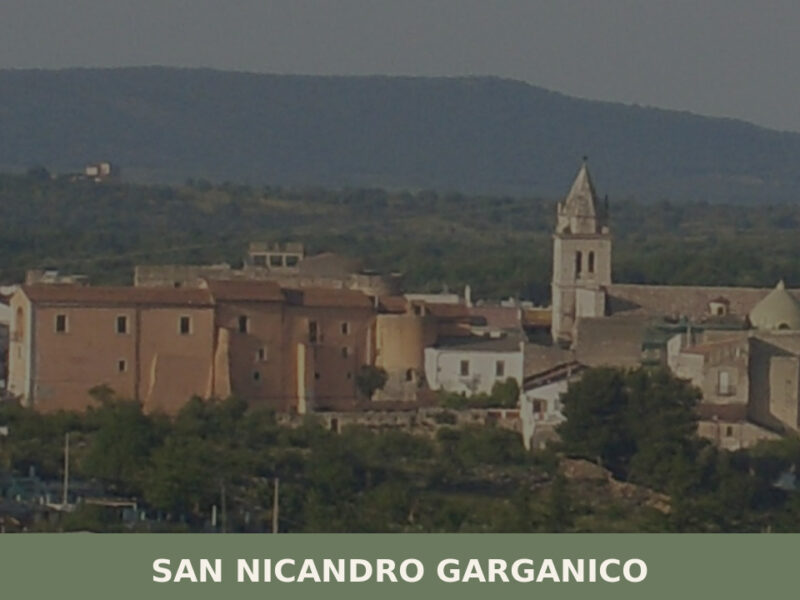
A hilltop settlement on the Gargano promontory with a Norman castle, prehistoric dolmen, and a living agricultural culture shaped by wheat, olives, and limestone.
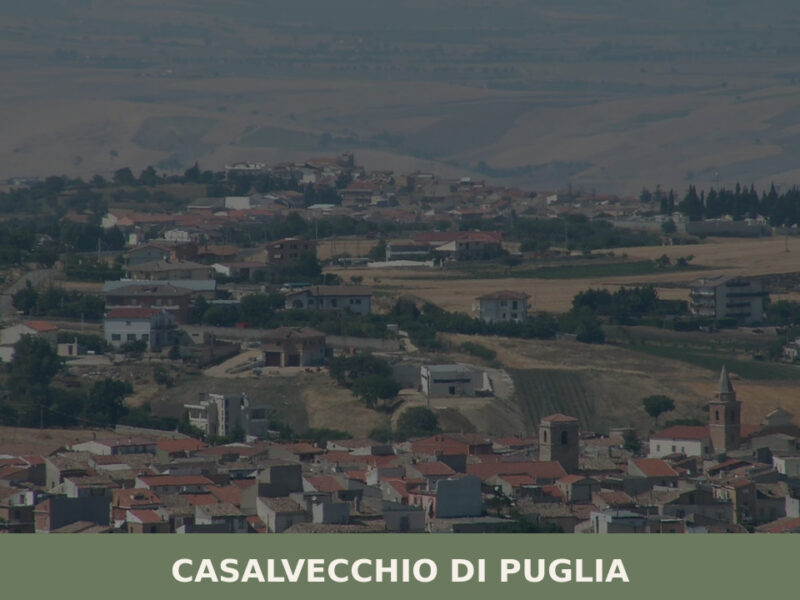
An Arbëreshë village of 1,689 inhabitants perched at 465 metres in the Daunia hills. A guide to its historic centre, rural paths, and slow-paced southern Italian life.
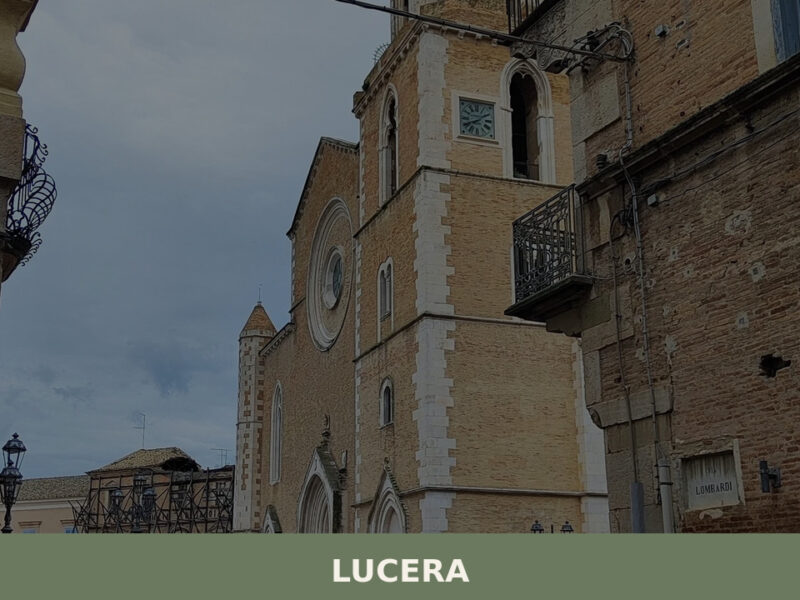
Discover Lucera, a historic hilltop city in Puglia where Roman ruins, a Saracen past, and Angevin grandeur converge amid the sun-drenched Tavoliere plain.
📝 Incorrect information or updates?
Help us keep the Serracapriola page accurate and up to date.