In the wild and generous heart of Abruzzo, where transhumance has shaped landscapes and traditions, a cheese emerges that encapsulates the very essence of its land: the caciofiore aquilano. This cheese, whose origin is tied to the high-altitude pastures of the L’Aquila province, stands out for an unusual and intriguing ingredient: vegetable rennet derived from…
In the wild and generous heart of Abruzzo, where transhumance has shaped landscapes and traditions, a cheese emerges that encapsulates the very essence of its land: the caciofiore aquilano. This cheese, whose origin is tied to the high-altitude pastures of the L’Aquila province, stands out for an unusual and intriguing ingredient: vegetable rennet derived from wild thistle. Its mild flavor and delicate milky aroma make it a discovery for palates seeking genuineness and a bond with the region.
Caciofiore aquilano is a soft cheese, produced with whole, raw sheep’s milk. Recognized as a Traditional Agri-Food Product (PAT) from Abruzzo, it owes its name and distinctiveness to the use of vegetable rennet extracted from the flower of the wild thistle, specifically the *Carlina acaulis*, a plant that grows spontaneously in the pastures of Abruzzo. This element gives the cheese not only the suggestive name “Caciofiore” but also a distinctive aromatic and taste profile. Sometimes, its paste can take on a faint straw-yellow color thanks to the addition of saffron, another valuable spice cultivated in the same region.
The history of caciofiore aquilano is rooted in the agricultural and pastoral practices of Abruzzo, particularly in the area of L’Aquila and its province. The use of wild thistle rennet is not a recent trend but an age-old custom, handed down from generation to generation by shepherds who, in the high-altitude pastures, found in this plant a natural resource for milk coagulation. This choice was not only dictated by availability but also by the awareness of the sensory properties that the vegetable rennet imparted to the cheese, making it unique and appreciated for its particular flavor. The production of this cheese thus represents an indissoluble bond with the cheesemaking techniques of the past, an example of how human ingenuity and the richness of the land could give rise to excellent products.
Although the oldest tradition places the production of caciofiore aquilano specifically in the high-altitude pastures of the L’Aquila province, its diffusion today extends throughout Abruzzo. The region, with its vast mountainous and hilly territories, offers the ideal environment for sheep farming and for the growth of the *Carlina acaulis*, the key ingredient for the rennet. The provinces of L’Aquila, Chieti, Pescara, and Teramo contribute to the production of this cheese. The L’Aquila province, in particular, with its plateaus and mountain areas, remains central to this tradition. Villages like Cansano or Fossa, while not the only production centers, well represent the rural and pastoral context where caciofiore aquilano was born and developed, maintaining its close relationship with the surrounding environment and its natural resources.
The production of caciofiore aquilano follows a traditional process that excludes the use of additives, focusing on the purity of ingredients and artisanal mastery. It begins with whole, raw sheep’s milk, sourced from the most common breeds in Abruzzo. The milk is coagulated at a controlled temperature, without thermal treatments that would alter its properties. The crucial phase is the addition of vegetable rennet, obtained from the infusion of wild thistle flowers (*Carlina acaulis*). This coagulation, defined as rennet coagulation with raw paste, is slow and delicate.
Once the curd is formed, it is broken and placed into traditional rush baskets, which impart its characteristic imprint on the absent rind. The cylindrical shape, with flat faces of about 13-15 cm and a heel of 7-8 cm, is the result of this process. The weight of each wheel generally varies between 0.5 and 1 kg. After salting, caciofiore aquilano is intended for immediate consumption or a short aging period, which further enhances its sensory qualities. The eventual addition of saffron occurs at this stage, giving the paste its peculiar straw-yellow color.
Caciofiore aquilano presents itself as a table cheese with sensory characteristics that make it appreciated for its delicacy. Its shape is cylindrical and regular, with a practically absent rind, replaced by the typical texture left by the rush baskets used for shaping. The paste is soft and creamy, cream-white in color, which can lean towards a faint straw-yellow if saffron was used during production. It is distinguished by the absence of holes.
To the nose, it offers a delicate aroma reminiscent of fresh sheep’s milk, with barely perceptible vegetal nuances due to the thistle rennet. On the palate, the flavor is mild and very refined, with a pleasant persistence and a slight sweet note, balanced by a subtle saltiness. Its melting texture makes it particularly enjoyable. It is a rich cheese, ideal for those seeking a flavorful but not overwhelming tasting experience, capable of expressing the purity of the ingredients and the Abruzzese cheesemaking tradition.
Caciofiore aquilano is a versatile cheese, primarily intended for fresh consumption, but one that can enrich various culinary preparations. Its soft paste and delicate flavor make it perfect for enjoying plain, as a table cheese. It pairs well with homemade bread, perhaps lightly toasted, which enhances its creaminess.
For a more elaborate pairing, it complements fruit preserves that are not too sweet, such as pear or fig, or delicate honeys, particularly sulla or wildflower, which respect its refinement. In cooking, it can be used to enrich mixed salads, cut into cubes or shavings, or to cream risottos or pasta dishes, adding it at the end of cooking to preserve its softness and aroma. Its delicacy also makes it an excellent ingredient for savory pies or light fillings. As for beverages, it pairs well with young, fresh white wines, with good acidity to cleanse the palate from its creaminess.
The singularity of caciofiore aquilano lies in several factors that distinguish it within the panorama of Italian traditional food products. The first and most evident is the use of vegetable rennet derived from the flower of the *Carlina acaulis*, the wild thistle. This choice is not merely a tribute to tradition but an element that gives the cheese an enzymatic and aromatic profile different from cheeses made with animal rennet, imparting a delicacy and refinement of flavor that is difficult to replicate.
Furthermore, its close association with the Abruzzo region, particularly with the high-altitude pastures of the L’Aquila province, where sheep graze freely and the *Carlina acaulis* grows spontaneously, contributes to its uniqueness. The artisanal processing, which involves the use of raw milk and the absence of additives, preserves the integrity and genuineness of the raw materials. The caciofiore aquilano is therefore a concrete example of how local biodiversity and traditional practices can give rise to a product of great gastronomic value, an expression of an ecosystem and a culture.
Caciofiore aquilano is officially recognized as an Italian Traditional Agri-Food Product (PAT). This certification, issued by the Ministry of Agricultural, Food, and Forestry Policies, attests that the cheese is produced according to methods, processes, and preservation techniques established over time and homogeneous throughout the interested territory, for a period of no less than 25 years. The PAT recognition is a guarantee of genuineness and respect for tradition, which enhances the indissoluble bond between caciofiore aquilano and its region of origin, Abruzzo. Although it does not hold European certifications like PDO or PGI, the PAT underscores its cultural and gastronomic importance at a national level, protecting its peculiarities and history. Further insights into this cheese can be found on its dedicated Wikipedia page, which outlines its definition and main characteristics.
To savor the true caciofiore aquilano, the best choice is to travel directly to Abruzzo, where production is most widespread. It can be found at local dairies, small shops specializing in traditional products, and local markets, especially in the L’Aquila province and other Abruzzese areas where it is produced. During festivals and food and wine events dedicated to traditional products from ABRUZZO, caciofiore aquilano is often a highlight, offering an excellent opportunity to taste and purchase it directly from producers.
Many agritourism farms and restaurants in the region include it on their menus, allowing discovery of its most successful pairings. Visiting places like Cansano or Fossa, or exploring the rural areas around L’Aquila, offers the chance not only to purchase this cheese but also to delve into the pastoral culture that gave rise to it. The experience of seeking out and acquiring caciofiore aquilano thus becomes an integral part of a journey to discover the traditions and genuine flavors of Abruzzo.
📷 Photo: Segnaposto · Uso interno · All credits →
In the heart of Abruzzo, where the landscape unfolds in a succession of valleys and hills, a gastronomic...
When the unmistakable aroma of a golden soffritto begins to spread, it is often guanciale amatriciano that takes...
Nelle cucine abruzzesi, il profumo dolce e leggermente acidulo del pomodoro maturo evoca immediatamente l'estate e la generosità...
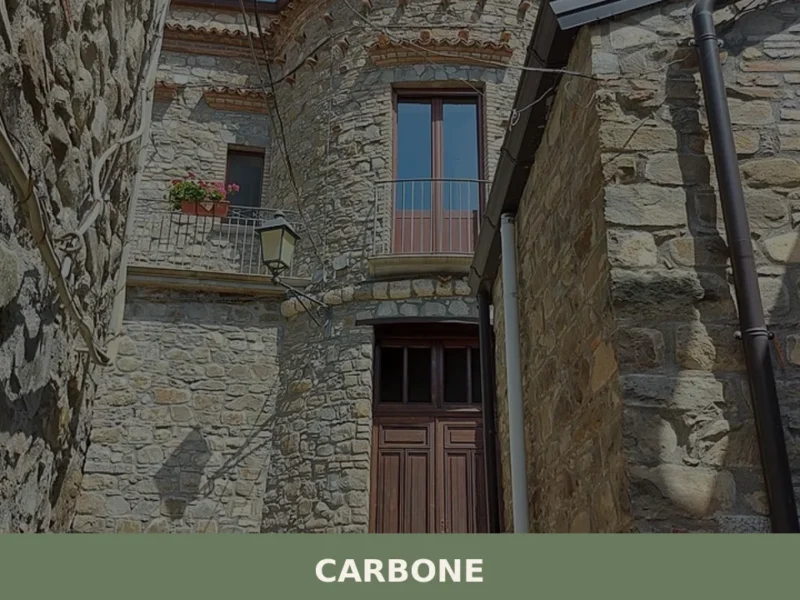
In the heart of Basilicata, 692 meters above sea level, lies Carbone, a settlement whose history is deeply connected to the 10th-century foundation of the Abbey of San Luca by Basilian monks. This monastic settlement, which became one of the most influential in Southern Italy, influenced the village’s identity, affecting its architecture and culture for […]

Arriving in Airasca along the provincial road that connects Pinerolo to Turin, the first thing you notice is the bell tower of the parish church of San Bartolomeo, a vertical landmark in a horizontal landscape of cultivated fields and rows of poplars. The municipality, home to 3,842 inhabitants at 257 metres above sea level, occupies […]

Founded by the Romans as a military colony around 59 BC under the name Florentia, the city we know today as Florence has passed through nearly two millennia of history without ever ceasing to reinvent itself. The regional capital of Tuscany, it sits 50 metres above sea level along the banks of the Arno, with […]
📝 Incorrect information or updates?
Help us keep the Caciofiore aquilano page accurate and up to date.