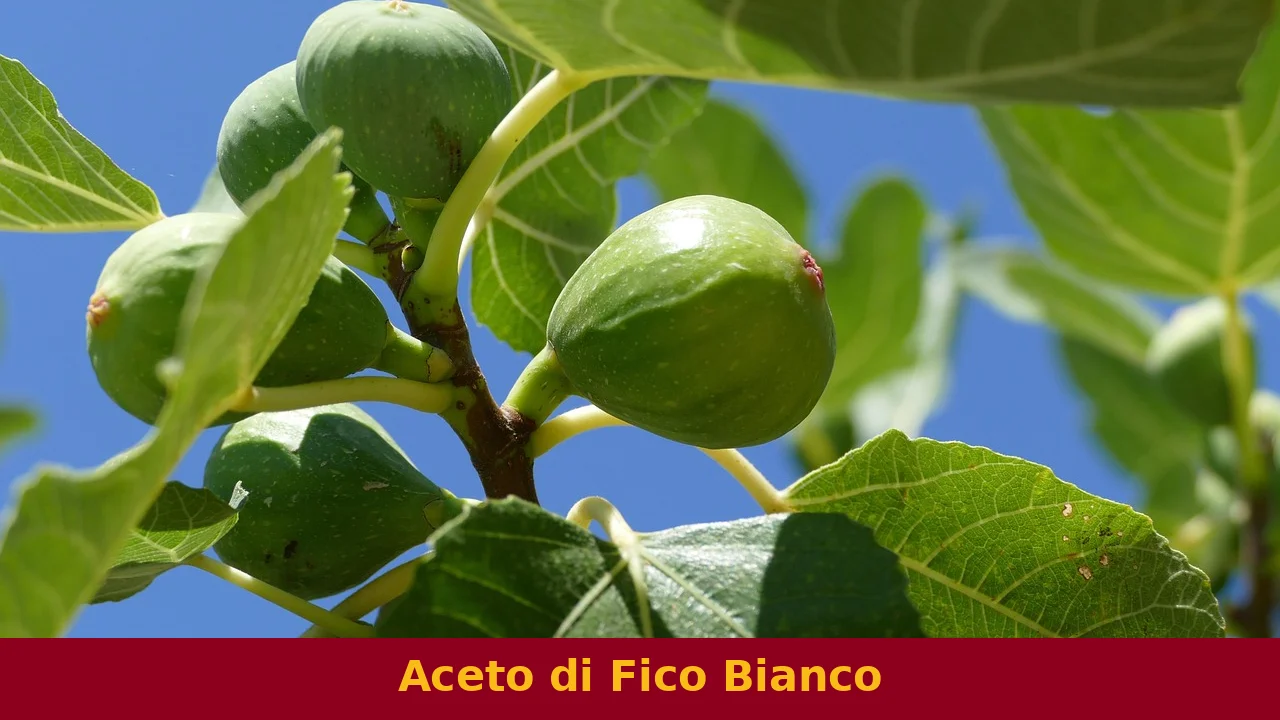
Among the remarkable flavors Campania holds, aceto di fico bianco emerges as a true expression of the region, offering an unexpected aromatic and taste profile. This condiment, representing ancient rural wisdom, stands out for its complexity, rooted in the richness of the Cilento land. Aceto di fico bianco is not merely an ingredient, but a…
Among the remarkable flavors Campania holds, aceto di fico bianco emerges as a true expression of the region, offering an unexpected aromatic and taste profile. This condiment, representing ancient rural wisdom, stands out for its complexity, rooted in the richness of the Cilento land. Aceto di fico bianco is not merely an ingredient, but a narrative of traditions and a deep connection with the generous fruits of this region.
Aceto di fico bianco is a traditional condiment from Campania, recognized as a Traditional Agri-food Product (PAT). It presents an intense brown color, brilliant and clear, which anticipates its richness. To the nose, it releases a characteristic, persistent scent of dried fruit, inviting a taste. The flavor is bittersweet, peculiar, and well-balanced, the result of careful artisanal processing. It is sold in sealed ampoules or elegant glass bottles, preserving its integrity and quality. It is not a simple vinegar, but a concentrate of aromas and flavors that elevates every dish.
The history of aceto di fico bianco is deeply intertwined with the agricultural and culinary customs of Cilento. Its production is not a recent innovation, but the fruit of practices passed down from generation to generation, which have refined techniques and secrets. A central element of this tradition is the “mother of the vinegar,” the autochthonous starter that initiates the acetification process. The acetaie, the premises dedicated to aging, and the valuable wooden barrels, often inherited themselves, are silent witnesses to this ancient knowledge. This transmission of knowledge and tools from generation to generation underscores not only the continuity of production but also the cultural importance of aceto di fico bianco for the communities of Cilento, making it a true product of identity.
The production area for aceto di fico bianco is Cilento, a subregion of the province of Salerno, in Campania. This land, facing the Tyrrhenian Sea, is known for its varied landscape, ranging from rocky coasts to inland hills, up to the mountains. The mild climate, abundant sunshine, and soil composition create ideal conditions for fig cultivation, particularly the white fig, a typical variety of the area. The agricultural richness of Cilento is not limited to figs but also includes local grape varieties that provide the base wine for the vinegar. This environment fosters biodiversity and the presence of high-quality raw materials, essential for producing excellences like aceto di fico bianco, which enriches the panorama of traditional products from CAMPANIA.
The production of aceto di fico bianco follows a traditional and meticulous method. The process begins with vinegar derived from the acetification of wine obtained from local grape varieties, both white and red. Crucial is the use of autochthonous starters, the so-called “mother of the vinegar,” which ensures the correct initiation and specificity of the process. To this base vinegar, dried and crushed white figs are added and infused. This mixture is then brought to a temperature of 63° Celsius and maintained for 48 hours. Subsequently, the compound is filtered to separate the solid parts and moved to the aging phase. Aging is a crucial step and takes place in valuable wooden barrels, such as oak or chestnut. These barrels are kept in specially constructed premises, often traditionally made of wood, highly permeable to the wind, and positioned with appropriate exposure. This configuration promotes progressive evaporation of the product, concentrating its flavors and aromas. At regular intervals, the vinegar is decanted into smaller containers, never completely full, to optimize contact with air and maturation. This artisanal method imparts aceto di fico bianco its complexity and uniqueness.
The taste and sensory characteristics of aceto di fico bianco are what make it immediately recognizable and appreciated. The color is an intense brown, a rich and deep hue, with a brilliant luster and a clear consistency that reveals its purity. On the nose, a characteristic scent of dried fruit stands out, which is not only present but also persistent, evoking the sweet and concentrated notes of dried figs. It is a complex aroma, suggesting careful maturation and accurate processing. On the palate, the flavor is bittersweet, a delicate balance between the typical acidity of vinegar and the natural sweetness of figs. This balance makes it versatile and pleasant, with a final note that recalls fruit and leaves a round and satisfying sensation. Its personality is marked and distinctive, reflecting the quality of the raw materials and the mastery of the production process.
Aceto di fico bianco is a versatile condiment that extends far beyond simple salad dressings. Its bittersweet profile and dried fruit notes make it ideal for enriching a variety of dishes. It is an excellent dressing for mixed salads, where it can enhance the flavor of fresh vegetables with an unusual touch. It proves particularly interesting for roasts, both meat and game, where it can be used to create marinades that tenderize the meat and impart a distinctive aroma. It can also be brushed onto meat during cooking to form a caramelized and flavorful glaze. Even in fish-based preparations, aceto di fico bianco finds a surprising application, especially with oily fish or crustaceans, to which it gives a fresh and slightly sweet note that balances the savoriness of the sea. It can be used to dress fish carpaccios or to deglaze seafood. It is not limited to savory dishes: a few drops can enhance aged cheeses, or become an unexpected ingredient in reductions for fruit-based desserts or ice creams, adding a unique aromatic complexity. Its ability to combine sweetness and acidity makes it a valuable ally for culinary experimentation.
Aceto di fico bianco stands out for several reasons that attest to its uniqueness among Italian traditional food products. Firstly, its specific geographical origin in Cilento, an area renowned for the cultivation of white figs, ensures the use of an excellent raw material. The choice of dried and crushed white figs, rather than other varieties or fruits, confers an unmistakable aromatic profile and a well-defined bittersweet flavor. Secondly, the production method is deeply rooted in tradition. The use of the “mother of the vinegar” passed down through generations and aging in valuable wooden barrels, such as oak or chestnut, in ventilated premises, are steps that require time, care, and artisanal knowledge refined over centuries. This attention to detail and ancient practices distinctly differs from industrial productions. Finally, its versatility in the kitchen, ranging from dressing salads and roasts to fish dishes, makes it a valuable ingredient for those seeking genuine and surprising flavors. It is not a simple vinegar, but a concentrate of history, region, and mastery.
Aceto di fico bianco is recognized as an Italian Traditional Agri-food Product (PAT). This certification, issued by the Ministry of Agricultural, Food and Forestry Policies, certifies that the product is obtained using processing, preservation, and aging methods consolidated over time, uniform throughout the interested territory, according to traditional rules, and for a period of no less than twenty-five years. The PAT is an important recognition that enhances the tradition and typicality of regional agri-food products, contributing to the preservation of Italian gastronomic heritage. For the consumer, PAT certification is a guarantee of authenticity and a connection to the product’s origins. Further details and information on traditional products of the Campania region can be found on the official portal of the Campania Region’s Department of Agriculture: agricoltura.regione.campania.it.
To fully discover and appreciate aceto di fico bianco, the best way is to go directly to its land of origin: Cilento, in the province of Salerno. Here, you can find this condiment in small family-run farms, often directly at the acetaie that produce it with dedication. The local markets of Cilento represent an excellent opportunity to meet producers, learn the history of the product, and taste aceto di fico bianco before purchasing. Many specialty food shops and wine cellars in the Salerno area and the Cilento villages also offer it. Numerous farm stays and restaurants in the area have included aceto di fico bianco in their menus, offering dishes that enhance its qualities, from the simplest salads to elaborate meat or fish main courses. Participating in local food and wine festivals, especially during the summer or autumn season, can be an opportunity to taste the product and discover other specialties of Cilento. Visiting Campania offers not only the chance to savor this unique condiment but also to immerse oneself in a region rich in history, landscapes, and a deeply rooted culinary culture. An experience that goes beyond a simple purchase, transforming into a true sensory journey. You can explore villages like Ailano, Conca della Campania, and Ciorlano to find local producers.
📷 Photo: dgazdik · Pixabay License · All credits →
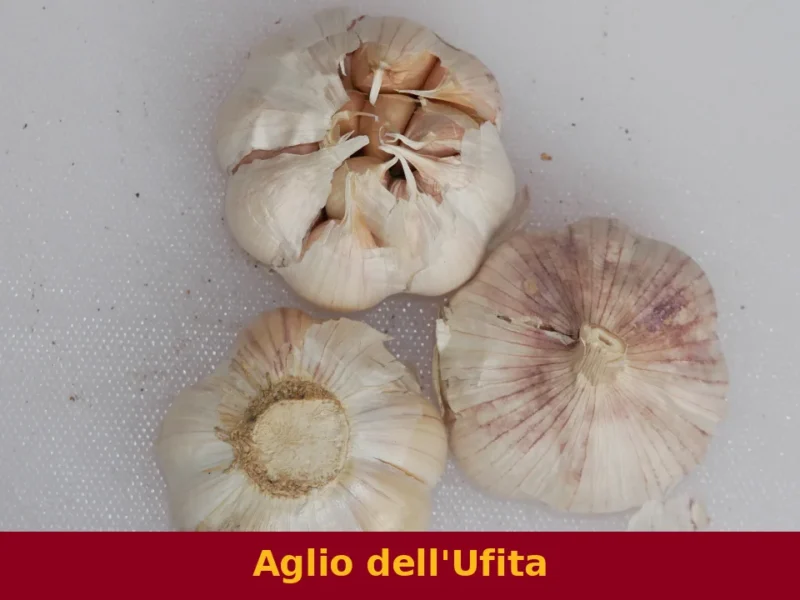
From the generous land of Irpinia, where the Ufita river traces its course through hills and fields, a...
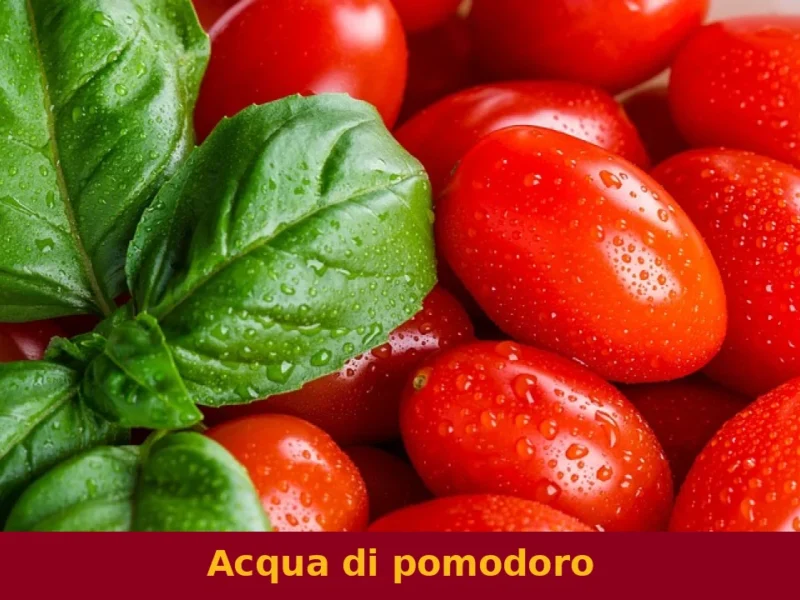
In the heart of Campania, where the sun generously bathes the fertile land, a liquid is born that...

The unmistakable aroma of a slow-cooked ragù, simmering for hours, immediately conjures the image of a pasta dish...

In 1309, a notarial deed drawn up in Udine recorded the transfer of certain feudal rights relating to the territory of Basiliano, confirming the existence of a settlement already organised along the route connecting Udine to Codroipo. Today that route partly coincides with regional road 464, and anyone travelling along it crosses a plain where […]

What to see in Verona, a UNESCO city of 255,000 people. Explore the Roman Arena, Juliet's House, San Zeno Basilica and local dishes like bollito and pearà. Plan your visit now.
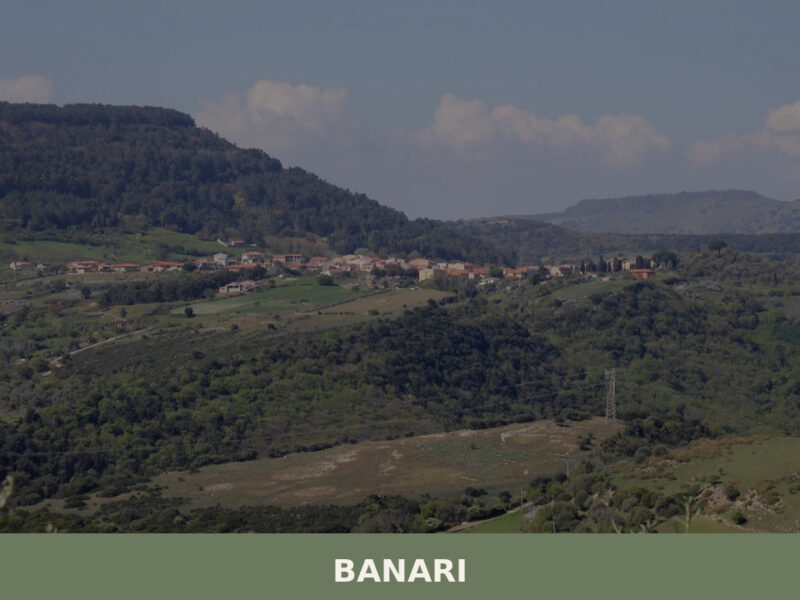
Morning light catches the limestone facades along Via Roma, turning them the colour of raw honey. A rooster calls from behind a courtyard wall. Somewhere below, the Meilogu plain stretches north toward Sassari, its patchwork of olive groves and grain fields still holding the night’s mist. Banari — population 516, perched at 419 metres above […]
📝 Incorrect information or updates?
Help us keep the Aceto di Fico Bianco page accurate and up to date.