


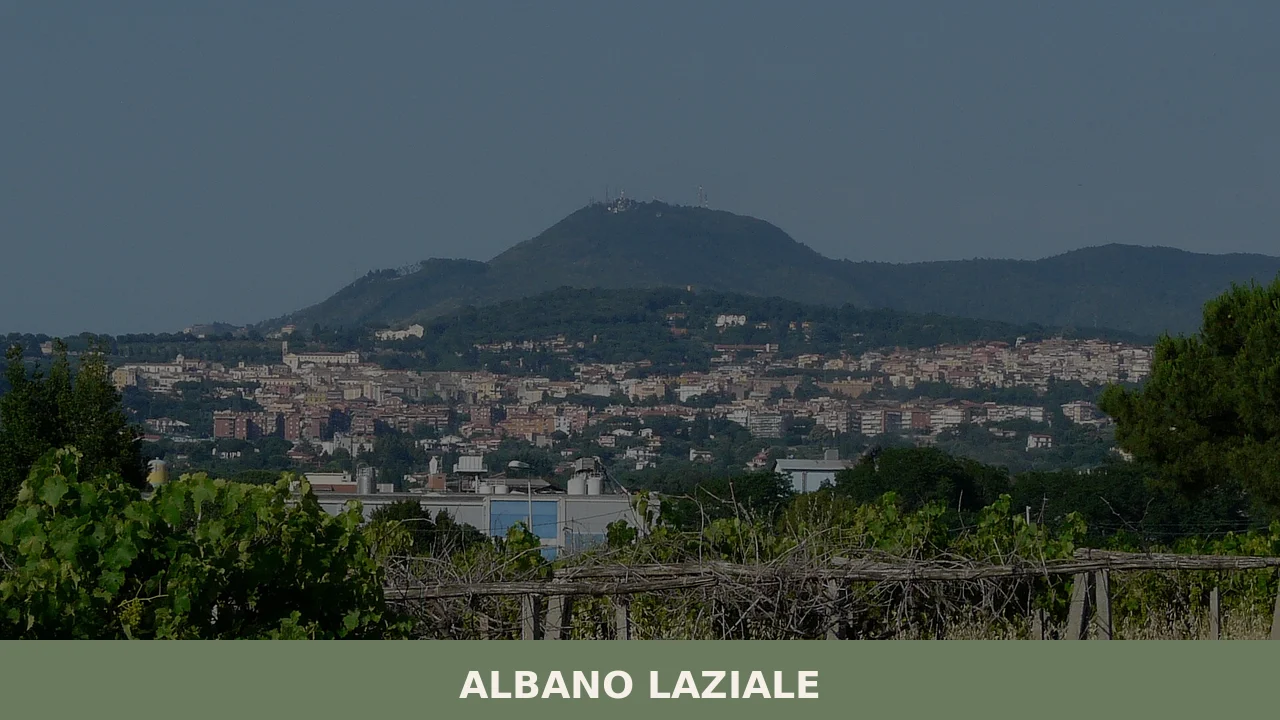
Albano Laziale
 Hills
Hills
 Lake
Lake
What to see in Albano Laziale, Italy: Lake Albano, Roman catacombs, and the Cathedral of St. Pancras at 400 m. Explore 38,983-inhabitant Lazio hill town. Discover now.
Discover Albano Laziale
At 615 m (2,018 ft), the Colle dei Cappuccini rises above a pine forest that borders the Capuchin Monastery, and from its summit the eye travels unbroken across Lake Albano, the flat expanse of the Agro Romano, and the outline of Monte Cavo.
Below, the historic centre of Albano drops along an 11% gradient, the Cathedral of San Pancrazio at 384 m (1,260 ft) and the Church of St Paul at 431 m (1,414 ft) marking opposite ends of a slope that the town’s main streets have followed since they were laid over the ancient Roman decumanus and cardo, the orthogonal axes of a military camp built under Emperor Septimius Severus around 202 AD.
Deciding what to see in Albano Laziale means working through several distinct layers: Roman military infrastructure still standing at street level, a cathedral rebuilt in 1721 over an early Christian foundation, volcanic lake shores shared with the papal enclave of Castel Gandolfo, and underground catacombs with frescoes dated between the fifth and ninth centuries.
The town sits in the Metropolitan City of Rome Capital, 25 km (16 mi) from the capital, at an altitude of 400 m (1,312 ft), with a population of 38,983.
Visitors to Albano Laziale find a working commercial centre that also functions as one of the principal municipalities of the Roman Castles Regional Park.
History of Albano Laziale
The oldest physical evidence of human settlement in this area dates from the early first millennium BC, when communities occupied the hills at Tor Paluzzi, Castel Savelli, and Colle dei Cappuccini.
From the Laziale IIB period, spanning roughly 830 to 730 BC, traces begin to appear associated with the legendary Latin capital of Alba Longa. The coat of arms of Albano still carries the white boar described in Virgil’s Aeneid, the animal that tradition says guided Ascanius, son of Aeneas, to the site where he should found the new city.
Alba Longa was, by the same tradition, the birthplace of Romulus and Remus.
The name Albano itself derives most probably from the Indo-European root alb or alp, indicating a high place, with the Mons Albanus — now Monte Cavo — as the most likely referent. The suffix Laziale was added formally in 1873 to distinguish the town from Albano Sant’Alessandro in Bergamo, Albano Vercellese in Vercelli province, and Albano di Lucania in Potenza province.
The Roman military imprint is the most durable physical legacy.
Around 202 AD, Emperor Septimius Severus established the Castra Albana, a permanent camp for the Legio II Parthica, on land previously held as an imperial estate by Domitian. The baths built by Severus’s son Caracalla remain partly visible today.
Before that, the territory had drawn wealthy Roman families who built suburban villas along the slopes of the Alban Hills: Pompey’s villa, the Albanum Pompeii, left ruins later enclosed within the Villa Doria Pamphili, while a villa attributed to Seneca occupied the southern ridge of Lake Albano.
Domitian eventually absorbed all of these estates into a single imperial fund, the Albanum Caesaris, with a monumental residence whose remains are now largely contained within the Villa Barberini at Castel Gandolfo. In 326, Emperor Constantine I ordered the founding of a cathedral dedicated to St John the Baptist, donating sacred vessels and agricultural estates to the new foundation. Albano has functioned as a suburbicarian bishopric since the fifth century, one of the seven dioceses immediately subordinate to the Bishop of Rome.
The medieval period brought repeated destruction.
In 1142, the town was sacked by the Saracens. After the Battle of Monte Porzio in 1168, Roman forces looted and razed Albano as punishment for its alliance with Emperor Frederick Barbarossa. Pope Innocent III subsequently granted the ruined settlement to the monastery of St Paul Outside the Walls.
In 1436, Cardinal Giovanni Maria Vitelleschi, acting on orders from Pope Eugenius IV, razed Albano again alongside Castel Savelli.
Feudal control had passed to the Savelli family following the investiture granted by Emperor Otto I to Virginio Savelli in 964, and from 1699 to 1798 the town became the inalienable possession of the Holy See. On 18 February 1798, during the French occupation tied to the events of the Revolution in the Papal States, Albano declared itself a sister republic of the nascent Roman Republic, only to be occupied and looted by the troops of Murat shortly afterwards.
Allied bombing on 1 February 1944 caused severe damage to the historic centre, striking the cloistered convent of Poor Clares in Piazza Pia and the structures of the Porta Pretoria of the Castra Albana.
What to see in Albano Laziale, Lazio: top attractions
Cathedral Basilica of Saint Pancras
The current structure of the Cathedral Basilica of Saint Pancras dates from 1721, though the site carries a Christian history reaching back to 326 AD when Constantine I ordered the founding of an Albanense cathedral dedicated to St John the Baptist.
The building stands at 384 m (1,260 ft) above sea level in the historic centre, at the lower end of the town’s main slope.
On 21 September 2008, Pope Benedict XVI travelled from the Pontifical Villas of Castel Gandolfo specifically to re-consecrate the basilica after restoration works completed that year. The cathedral is dedicated to San Pancrazio, the town’s patron saint, whose feast on 12 May draws the largest annual gathering in Albano.
When visiting, note the relationship between the building’s baroque exterior and the layers of earlier foundations that the 1721 reconstruction was built over.
Porta Pretoria and the Castra Albana
The Porta Pretoria is the most intact surface remnant of the Castra Albana, the military camp established by Septimius Severus around 202 AD to house the Legio II Parthica.
The gate’s masonry follows the standard Roman defensive layout, and its position makes clear how the modern street plan of Albano still traces the original military grid: the main roads correspond directly to the ancient decumanus maximus and the cardo maximus.
Allied bombing in February 1944 damaged part of the structure, making what survives a documented record of both Roman construction and twentieth-century destruction. The Castra Albana remained operational until the end of the third century AD, giving Albano roughly a hundred years of continuous military occupation as its founding urban context.
Visitors can walk the perimeter of the original camp footprint by following the current street layout, which has changed very little in two thousand years.
Church of St Mary of the Star and the Catacombs of Saint Senatore
The Church of St Mary of the Star holds two points of interest that are separated by roughly sixteen centuries.
Inside the church stands the tomb of Maria Theresa of Austria, Queen of the Two Sicilies, a marker of the dynastic connections that tied this part of Lazio to European royal history in the modern era. Beneath the church lie the catacombs of Saint Senatore, a citizen of Albano who died in the third century AD.
The underground passages contain frescoes dated to between the fifth and ninth centuries, spanning a period from late antiquity through the early medieval era.
Access to the catacombs requires advance arrangement, but the church itself is reachable on foot from the historic centre.
The combination of a post-Roman burial complex, early Christian fresco cycles, and a nineteenth-century royal tomb in a single site makes this one of the more layered stops on any visit to what to see in Albano Laziale.
Lake Albano
Lake Albano occupies a volcanic crater that forms the primary hydrographic feature of Albano Laziale’s territory, though the lake’s full official name — Lake Albano and Castel Gandolfo — reflects the fact that most of the shoreline falls within the municipality of Castel Gandolfo, with the remainder under Albano’s jurisdiction. The lake basin is administered by the Metropolitan City of Rome.
From the Colle dei Cappuccini at 615 m (2,018 ft), the full extent of the lake is visible alongside the Agro Romano and Monte Cavo, giving a clear sense of the volcanic topography that defines the entire Colli Albani. The lake is included within the Roman Castles Regional Park, which partially covers the territory of Albano Laziale.
The southern ridge of the lake, bordering the municipality of Ariccia, is the area where ancient sources place a villa attributed to Seneca, and where the wealthy of Aricia built suburban residences during the Roman imperial period.
Santuario di Santa Maria della Rotonda
The Santuario di Santa Maria della Rotonda was built over the ruins of a structure belonging to Domitian’s villa, the same imperial estate that Septimius Severus later incorporated into the Castra Albana complex.
Its design draws directly from the Pantheon in Rome, and the bell towers replicate those of the Roman original closely enough to register as a deliberate architectural quotation rather than a general stylistic reference.
The sanctuary sits within the broader zone of the former imperial estate, giving it a foundation depth that predates its current ecclesiastical function by many centuries. The Domitian connection is consistent with the pattern across this part of the Alban Hills, where the emperor consolidated earlier private villas into a single fund covering much of the territory that later became Albano and Castel Gandolfo.
The sanctuary is accessible from the town centre and pairs logically with a visit to the Castra Albana remains nearby.
Local food and typical products of Albano Laziale
Albano Laziale sits at the centre of the Castelli Romani, the ring of hill towns southeast of Rome that has historically supplied the capital with wine, vegetables, and dairy products.
The volcanic soil of the Colli Albani, classified by the Geological Survey of Italy as predominantly of volcanic origin consistent with the wider Colli Albani formation, produces conditions suited to viticulture that have been exploited since the Roman period.
The territory’s annual precipitation of 900 to 1,000 mm, carried by moist currents from the Tyrrhenian to the southwest, sustains agricultural production across elevations that range from 110 m (361 ft) at the fraction of Pavona to 615 m (2,018 ft) at the Colle dei Cappuccini.
The food culture of the Castelli Romani area draws from the Roman cucina povera tradition, built on dried legumes, local cured pork, and seasonal vegetables.
Abbacchio alla romana, milk-fed lamb roasted with rosemary, garlic, white wine, and anchovies, is the dish most consistently associated with the area around Rome and its hill towns. Cacio e pepe, pasta finished with aged sheep’s cheese and cracked black pepper, uses Pecorino Romano produced in the Lazio region.
Porchetta, whole pig stuffed with wild fennel, garlic, rosemary, and black pepper and slow-roasted in a wood oven, is sold from roadside stalls throughout the Castelli Romani and is particularly associated with the towns along the Via Appia.
The wines of the Castelli Romani, produced under the Denominazione di Origine Controllata classification, are predominantly white, made from Malvasia and Trebbiano grapes grown on the volcanic slopes surrounding Albano.
No certified DOP or IGP products are recorded in the available data specifically attributed to Albano Laziale. The town benefits from the broader agricultural identity of the Castelli Romani district, where locally produced wine, olive oil, and fresh cheeses circulate through the weekly markets.
The mercato held in the town centre is the primary point of access to seasonal produce from the surrounding territory, including the volcanic-soil vegetables — chicory, artichokes, and broad beans — that define the spring table across this part of Lazio.
Spring, from March to May, is the period when the local agricultural calendar is most active.
Artichokes from the broader Roman countryside and broad beans from the Castelli Romani fields appear in combination in dishes such as vignarola, a braised vegetable stew made with fresh peas, broad beans, artichokes, guanciale, and white wine.
This preparation follows the rhythm of what is in the fields rather than a fixed recipe, and its appearance on local menus signals the seasonal shift between winter and summer in this part of Lazio, Italy.
Festivals, events and traditions of Albano Laziale
The feast of San Pancrazio, celebrated on 12 May, is the central annual event in Albano Laziale’s calendar. San Pancrazio is the patron saint of the town and also gives his name to the Cathedral Basilica that dominates the historic centre.
The feast typically involves a solemn religious procession through the streets of the town, with the saint’s image carried from the cathedral and accompanied by civic authorities, religious confraternities, and residents.
The date falls in late spring, when conditions in the Alban Hills are reliably clear and the surrounding countryside is fully green after the rainy season, making the outdoor elements of the celebration consistently feasible.
Albano Laziale’s position as a borgo di collina, a hill settlement with a continuous urban history reaching back to the Roman military camp of the third century, gives its local traditions a civic rather than purely agricultural character.
The town’s commercial role as a busy centre within the Roman Castles Regional Park means that seasonal markets and local fairs draw visitors from the surrounding municipalities throughout the year. The connection to the Holy See, formalized from 1697 and lasting until 1798, and the papal pastoral visit by Benedict XVI in September 2008 illustrate the continuing relevance of the ecclesiastical calendar to public life in Albano.
Events tied to the liturgical year, including the re-consecration ceremonies of the kind held at the basilica in 2008, remain part of the documented tradition of the town.
When to visit Albano Laziale, Italy and how to get there
The climate of Albano Laziale is temperate Mediterranean, with annual precipitation of 900 to 1,000 mm concentrated in autumn and winter.
Summer temperatures can reach 35 °C (95 °F) and in rare cases peak at 37 °C (99 °F), though the altitude of 400 m (1,312 ft) keeps conditions noticeably cooler than Rome’s urban centre, 25 km (16 mi) to the northwest.
The best period to visit for those combining sightseeing with comfortable outdoor movement is April through June, when the Colli Albani are at their greenest and temperatures remain manageable for walking the historic centre’s 11% gradient. September and October offer similar conditions, with the added interest of the harvest season in the surrounding vineyards.
Winter brings occasional snow but rarely sustained cold, and the town functions year-round as a commercial centre with services open throughout the week.
From Rome, Albano Laziale is directly accessible by regional train on the Roma Termini–Velletri line operated by Trenitalia, with journey times of approximately 40 to 50 minutes depending on the service.
The station of Albano Laziale sits at the fraction of Cecchina, at 212 m (696 ft) above sea level, with connections upward to the town centre by local bus. By car, the most direct route from Rome follows the Via Appia Nuova, State Road 7, the same road that Pope Pius VI ordered rearranged beginning in 1780 to create a fast link between Rome and Terracina.
The Ariccia viaduct section, completed between 1839 and 1849 under Popes Gregory XVI and Pius IX, is part of the current alignment. From Rome’s Grande Raccordo Anulare ring road, the exit toward Albano Laziale via the Appia direction is the standard approach by car. The nearest international airport is Rome Fiumicino (Leonardo da Vinci), approximately 45 km (28 mi) from Albano Laziale, reachable by rail via Rome Termini with a change, or by car via the ring road in roughly 50 to 60 minutes outside peak hours.
International visitors should be aware that English is not widely spoken in smaller shops and local bars; carrying euros in cash remains practical for markets and smaller establishments.
Those arriving by car from the south can approach via the same State Road 7, entering the Alban Hills from the Pontine plain direction through Velletri.
This route passes through the lower reaches of the Roman Castles Regional Park before climbing to Albano’s altitude.
Travellers interested in extending their stay in Lazio’s volcanic hill country might consider visiting Barbarano Romano, a smaller settlement in the Viterbo area built entirely on volcanic tufa, which shares the same geological origins as the Colli Albani though it lies further north in Lazio’s Tuscia region.
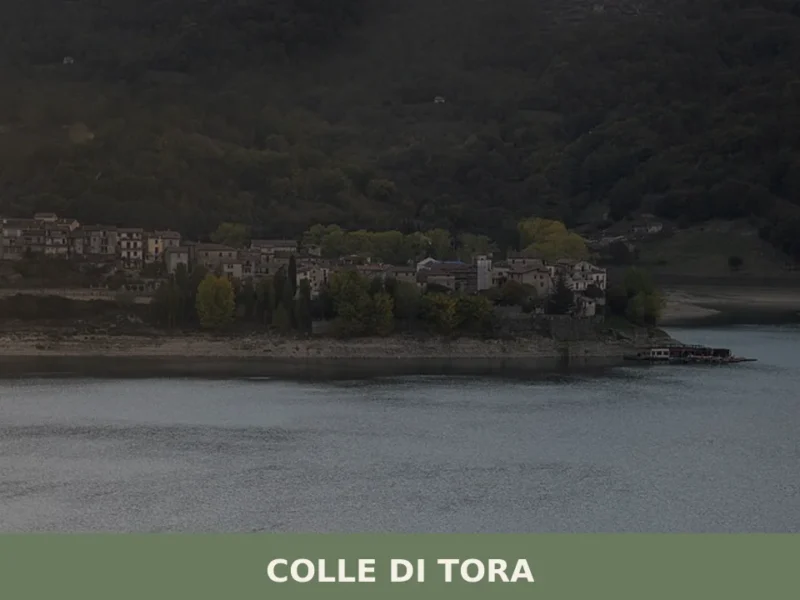
For a different landscape entirely, the lakeside village of Colle di Tora on the Turano reservoir in the Rieti hills offers comparable hill-town scale with a water-facing position, making it a practical extension for those travelling through central Lazio by car.
Where to stay near Albano Laziale
Albano Laziale functions as a commercial hub within the Roman Castles Regional Park, and accommodation options in the area span the range typical of a town of nearly 39,000 inhabitants with strong weekend traffic from Rome.
The surrounding municipalities — Castel Gandolfo, Ariccia, and Rocca di Papa — offer additional options for those who prefer smaller settings while remaining within 10 km (6 mi) of Albano’s historic centre.
The town’s rail connection to Rome Termini means that visitors who prefer to base themselves in the capital and visit Albano as a day trip can do so in under an hour each way, which is a practical option for those whose main destination is Rome itself.
Visitors planning a longer stay in the Castelli Romani area will find that Albano’s position on the Via Appia places it within easy reach of the other hill towns that form the Roman Castles circuit.
Frequently asked questions about Albano Laziale
What is the best time to visit Albano Laziale?
Late spring and early autumn offer the most comfortable conditions, with mild temperatures at 400 m altitude and clear skies ideal for lake and panoramic views. May is particularly rewarding: the feast of San Pancrazio on 12 May draws the largest annual gathering in the town, centred on the Cathedral Basilica. Summer brings day-trippers from Rome escaping the heat of the plain, so weekday visits avoid the busiest crowds. Winter is quiet but fully functional, with the historic centre and catacombs accessible year-round.
What are the historical origins of Albano Laziale?
The earliest settlements date from the early first millennium BC, with traces from the Laziale IIB period (c. 830–730 BC) linked by tradition to Alba Longa, legendary Latin capital and birthplace of Romulus and Remus. The town's name derives from the Indo-European root alb, meaning high place, referencing Mons Albanus (Monte Cavo). The decisive urban foundation came around 202 AD when Emperor Septimius Severus established the Castra Albana for the Legio II Parthica on land previously held by Emperor Domitian. Albano has functioned as a suburbicarian bishopric since the fifth century.
What to see in Albano Laziale? Main monuments and landmarks
Key sites include: the Cathedral Basilica of Saint Pancras (re-consecrated by Benedict XVI in 2008), rebuilt in 1721 over a 4th-century foundation; the Porta Pretoria, the best-preserved surface remnant of the Castra Albana (202 AD), whose gate layout still dictates the modern street grid; the Santuario di Santa Maria della Rotonda, modelled on the Pantheon and built over Domitian's villa; and the Church of St Mary of the Star, beneath which lie the Catacombs of Saint Senatore with frescoes dated between the 5th and 9th centuries. Catacomb visits require advance arrangement.
What are the main natural or scenic attractions of Albano Laziale?
Lake Albano occupies a volcanic crater and is the primary natural feature of the area, included within the Roman Castles Regional Park, which partially covers Albano's territory. The Colle dei Cappuccini, rising to 615 m above a pine forest bordering the Capuchin Monastery, offers an unobstructed view across the lake, the Agro Romano, and Monte Cavo. The volcanic topography of the Colli Albani gives the entire landscape its distinctive character, with crater lakes, forested ridges, and abrupt elevation changes across a compact area.
Where to take the best photos in Albano Laziale?
The summit of Colle dei Cappuccini at 615 m provides the broadest panoramic view available in the area: Lake Albano, the Agro Romano, and the silhouette of Monte Cavo are all visible in a single frame. The main slope of the historic centre, descending at an 11% gradient between the Church of St Paul at 431 m and the Cathedral at 384 m, offers urban streetscape shots that reveal the Roman military grid beneath the modern town. The lake shore, shared with Castel Gandolfo, adds waterside compositions to a compact photographic itinerary.
Are there museums, churches or historic buildings to visit in Albano Laziale?
Albano has several documented historic buildings. The Cathedral Basilica of Saint Pancras (1721, over a Constantine-era foundation) is the main religious landmark. The Porta Pretoria is the most intact above-ground remnant of the 202 AD Roman military camp. The Santuario di Santa Maria della Rotonda preserves the Pantheon-referencing design built over Domitian's villa. The Church of St Mary of the Star contains the tomb of Maria Theresa of Austria, Queen of the Two Sicilies, and access to the early Christian catacombs below. Catacomb access requires advance booking; most churches are freely accessible.
What can you do in Albano Laziale? Activities and experiences
Walking the historic centre along the ancient Roman decumanus and cardo routes is a self-guided activity requiring no booking. The Colle dei Cappuccini pine forest offers accessible woodland walking near the Capuchin Monastery. The Roman Castles Regional Park, which partially covers Albano's territory, provides broader hiking and cycling opportunities across the Colli Albani. The feast of San Pancrazio on 12 May is the main annual public event. Lake Albano's shore, accessible from both Albano and Castel Gandolfo, is used for walking and relaxation throughout the warmer months.
Who is Albano Laziale suitable for? Families, couples, hikers, solo travelers?
Albano Laziale suits a wide range of visitors. History and archaeology enthusiasts will find two thousand years of layered remains — Roman military infrastructure, early Christian catacombs, and baroque churches — within walking distance of each other. Couples and cultural travellers benefit from the proximity to Castel Gandolfo and Lake Albano for scenic half-days. Families find the town compact and manageable, with open spaces at the lake and the Colle dei Cappuccini pine forest. Day-trippers from Rome, only 25 km away, make up a significant share of visitors, and the town functions equally well as a short or extended stay.
What to eat in Albano Laziale? Local products and specialties
Albano Laziale sits within the Castelli Romani food and wine zone, whose most documented product is Frascati DOC and the broader Castelli Romani DOC white wines produced from Malvasia and Trebbiano grapes across the volcanic soils of the Colli Albani. Porchetta, slow-roasted seasoned pork, is the defining street food of the Castelli Romani area and widely available in Albano. The town's commercial centre has a working market and food shops reflecting everyday local supply rather than a tourist-curated offer, which keeps prices and authenticity consistent with the broader Roman hill town tradition.
Nearby Villages near Albano Laziale
In Lazio More villages to discover
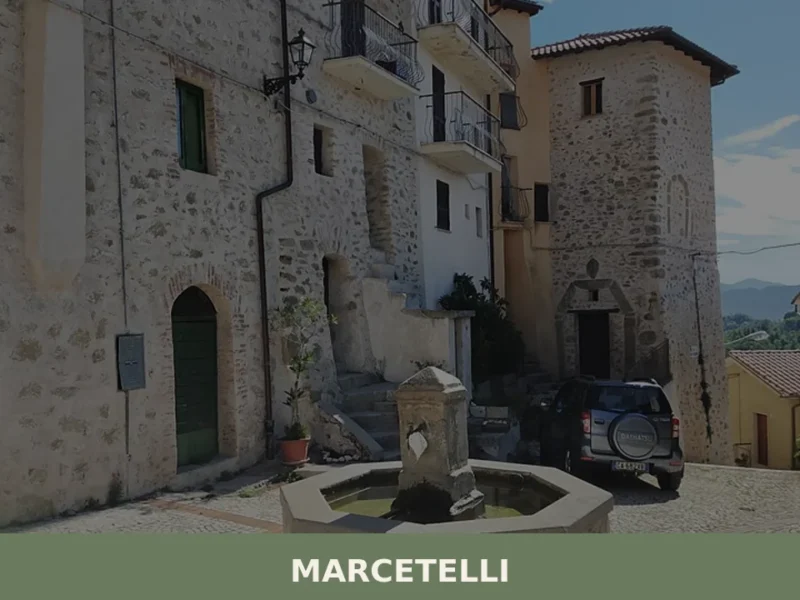
Marcetelli
Lake
 Mountain
What to see in Marcetelli, a village at 930m in Rieti province with 82 residents. Explore Lago del Salto, the Church of San Venanzio and PAT-certified Guanciale amatriciano. Plan your visit now.
Casalattico
Hills
What to see in Casalattico, Lazio, Italy: a village at 420 m with a Norman tower, a Benedictine monastery from 780 AD and an Irish festival. Discover it now.
Atina
Mountain
What to see in Atina, Lazio, Italy: explore polygonal walls, a DOC wine zone, and a Baroque cathedral. Discover top things to do in this Frosinone village.
Borgo Velino
Hills
What to see in Borgo Velino: discover 5 key attractions in this village of 996 inhabitants at 460m. Explore Palazzo Brancaleoni and taste Cacio fiore. Plan your visit now.
Antrodoco
Hills
What to see in Antrodoco: discover the 5 main attractions, the history of this Lazio village and how to plan your visit. A complete guide for your itinerary.
Calcata
Hills
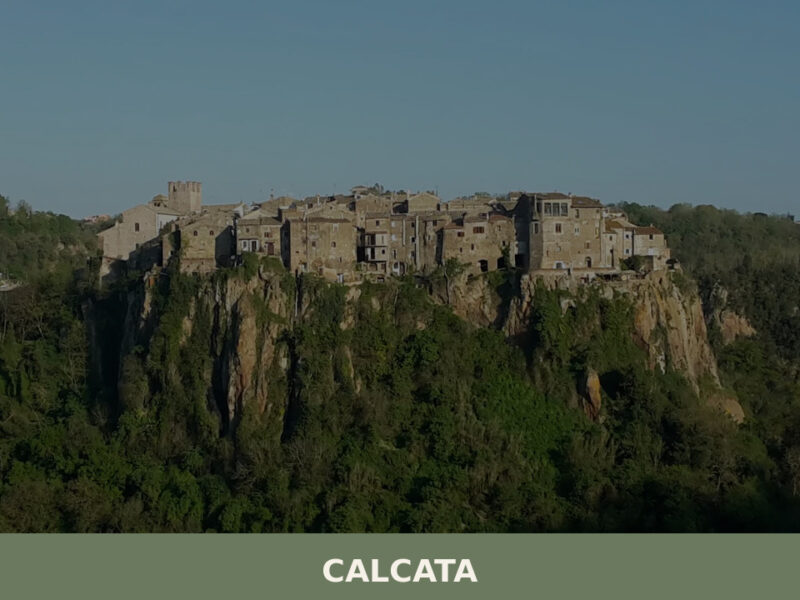
In 1935, the Italian government declared Calcata Vecchia a village to be abandoned due to the instability of the tuff cliff on which it stands. Fifty years later, the village was reborn as an artistic center, now offering visitors a unique experience. If you are wondering what to see in Calcata, the village appears as […]
Frosinone
Hills
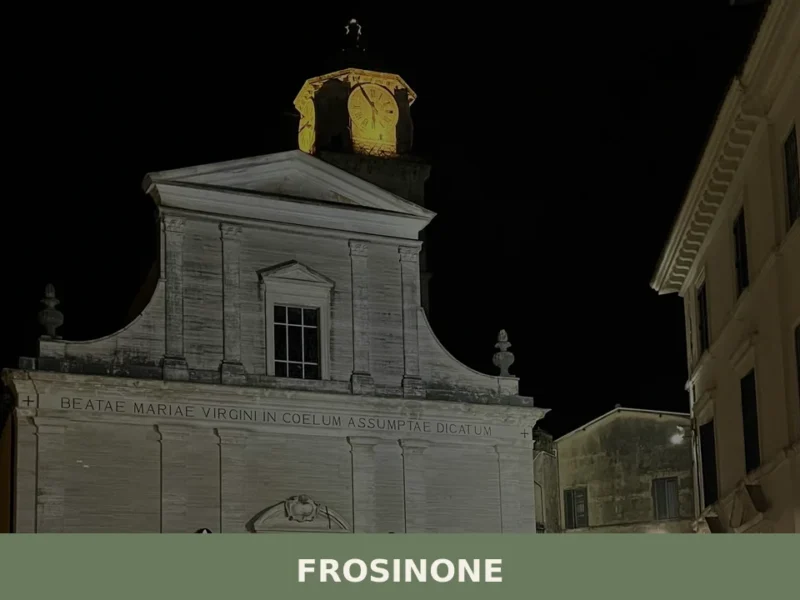
What to see in Frosinone: from the Cyclopean walls to the medieval old town. Discover the 5 top attractions and plan your visit.
Canepina
Hills
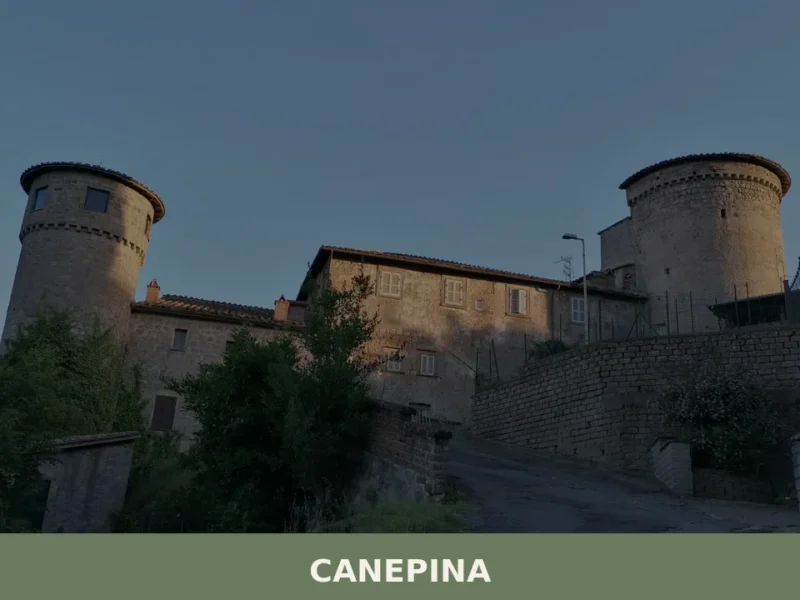
What to see in Canepina, Lazio, Italy: explore this 3,127-inhabitant hill village 60 km from Rome. Discover its hemp heritage, patron saint feast and local cuisine.
Colle di Tora
Hills
Lake
What to see in Colle di Tora: a village at 542 m on Lake Turano with 381 residents, a medieval centre and 3 PAT-certified products. Plan your visit today.
Bracciano
Hills
Lake
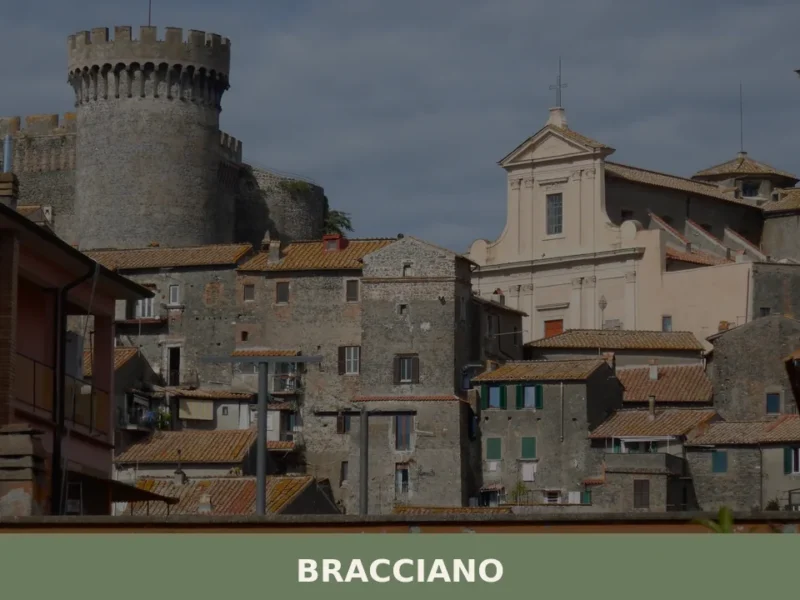
What to see in Bracciano, Italy: Discover its medieval castle and volcanic lake. Located 30 km (19 mi) from Rome, explore this Lazio village for a memorable day trip.




🏡 Know Albano Laziale better than we do?
If you’re a local or have been there, your knowledge matters: add what’s missing or fix a detail on this page.